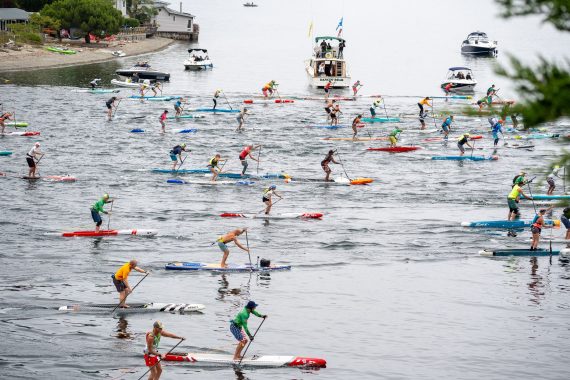
Your First Paddle Board Race
An eight-week training plan, pacing, fueling, and a race-day timeline for a first SUP race, built around Battle of the Bay.
Read guide

For the recreational paddler and the athlete. Trip reports, training plans, and gear notes from lakes, rivers, and open flatwater.
Apple Watch data from every paddle I logged between September 24, 2025 and September 5, 2026. The training guides and speed benchmarks in this collection are built on this set.
I log every session and go through the data afterward. What lands in these guides comes from three places: peer-reviewed research, my own time on the water testing technique, and a year of tracked progress. Here is how I measure moving pace.
Science-backed strength, endurance, and racing guides. ACSM, JSCR, and real Apple Watch data over modeled numbers.
An eight-week training plan, pacing, fueling, and a race-day timeline for a first SUP race, built around Battle of the Bay.
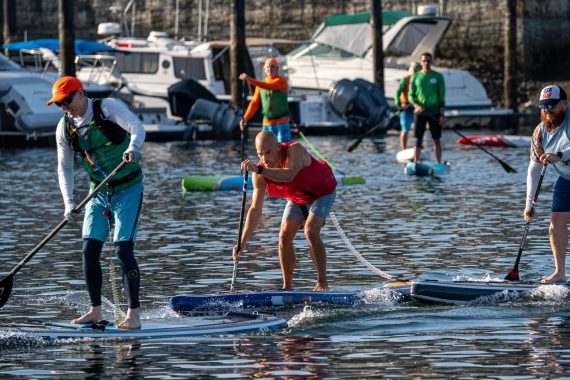
Six-week strength program built on ACSM and JSCR research. Posterior chain, rotational core, the lifts that transfer.
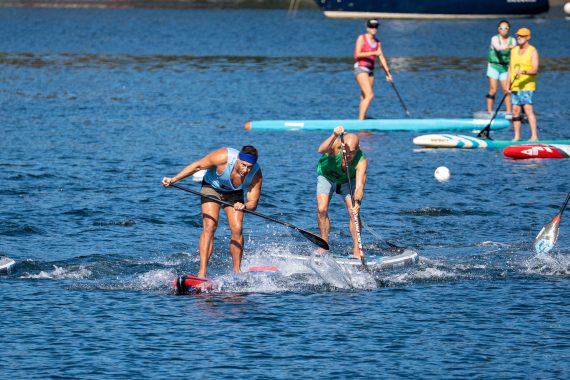
What 3, 4, and 5 mph feel like on a 14-foot inflatable, with split data you can compare against.
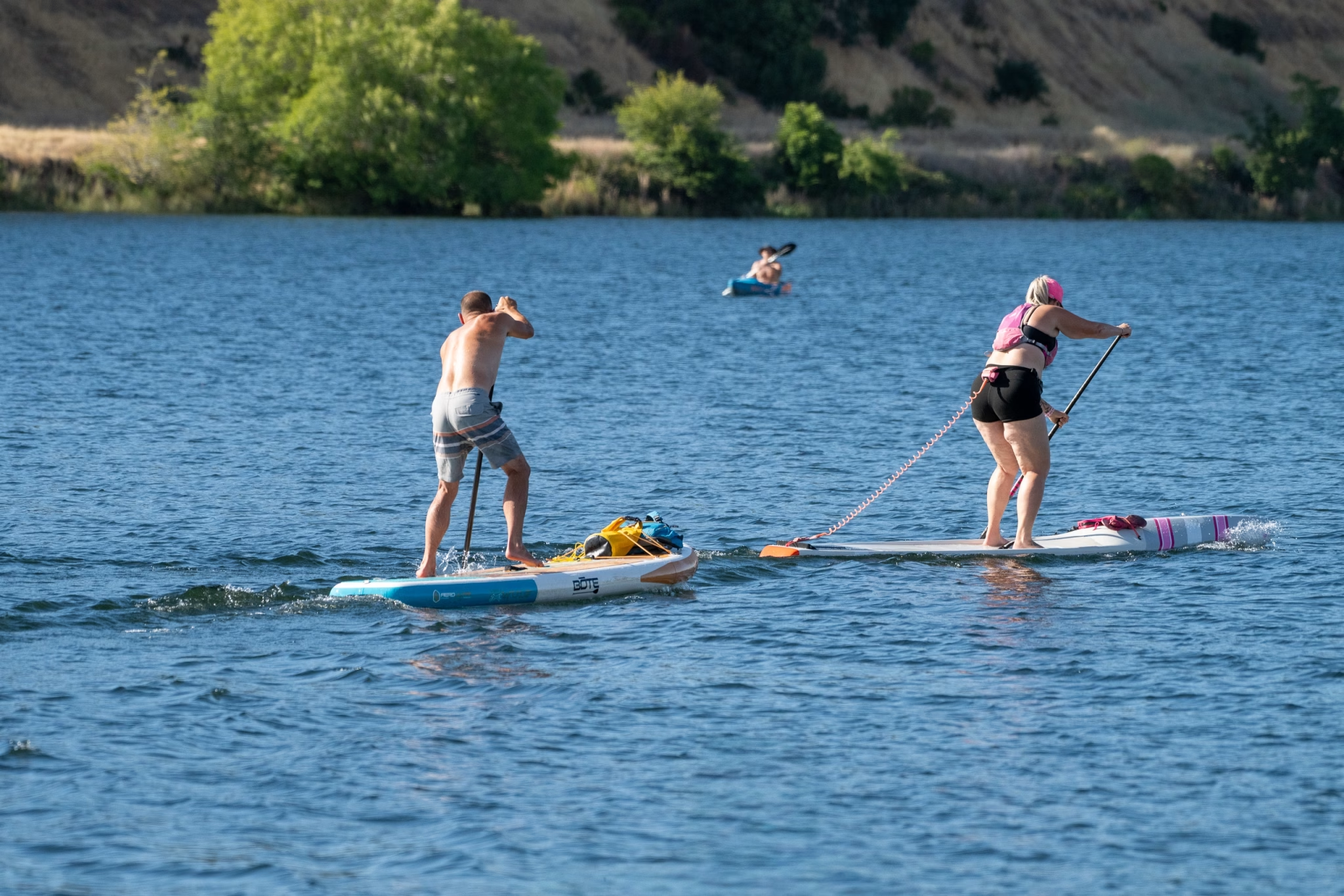
The carbohydrate math behind paddle fatigue, plus the in-session fueling that keeps you upright past hour two.
Targeted stretching, grip and hand work, mobility, tendon care, and post-session recovery.

A 12-minute post-paddle routine for obliques, shoulders, and chest.

Why your hands hurt after long paddles, and the grip-pressure changes that stop dorsal hand pain.

A five-minute daily routine covering the three nerve pathways that paddling compromises.
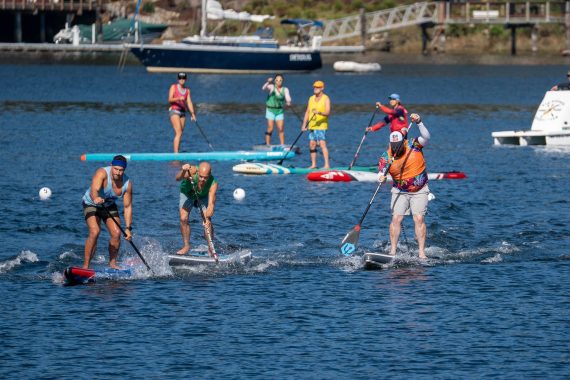
Holds that build a tendon’s tolerance for load, with where the research supports them and where it stops.

Earlier piece on what a typical paddle session burns and how recovery should look on the days after.

The arm that gave out in a Nationals race sprint, a normal X-ray, and what peer-reviewed research says it could be.

The program I built after a clean MRI: a pain rule, three strength stages and a staged return to paddling.
Tools for long paddles and recovery, picked from gear I've used on the water.


Four sunscreens tested over full days on the water. What reef-safe means, and which ones I trust.
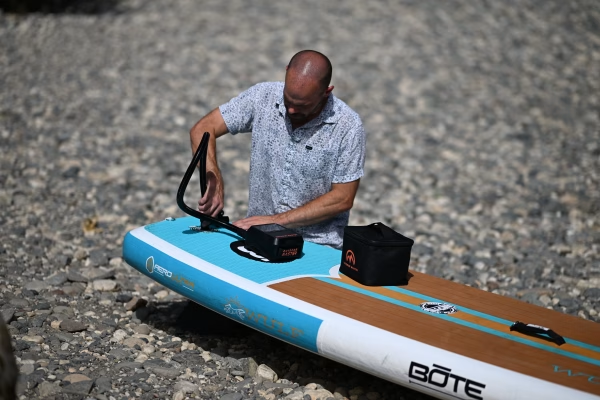
Electric, cordless, or manual. PSI headroom, heat shutoffs, and altitude failures, with the pumps worth buying and the ones to skip.

What trials found for kinesiology tape, three elbow applications from published protocols, and the evidence on wear time and water.
Trip reports and access guides from launches I've paddled. Parking, water conditions, the windows that work.
Sacramento guide: restaurants, outdoors and things to do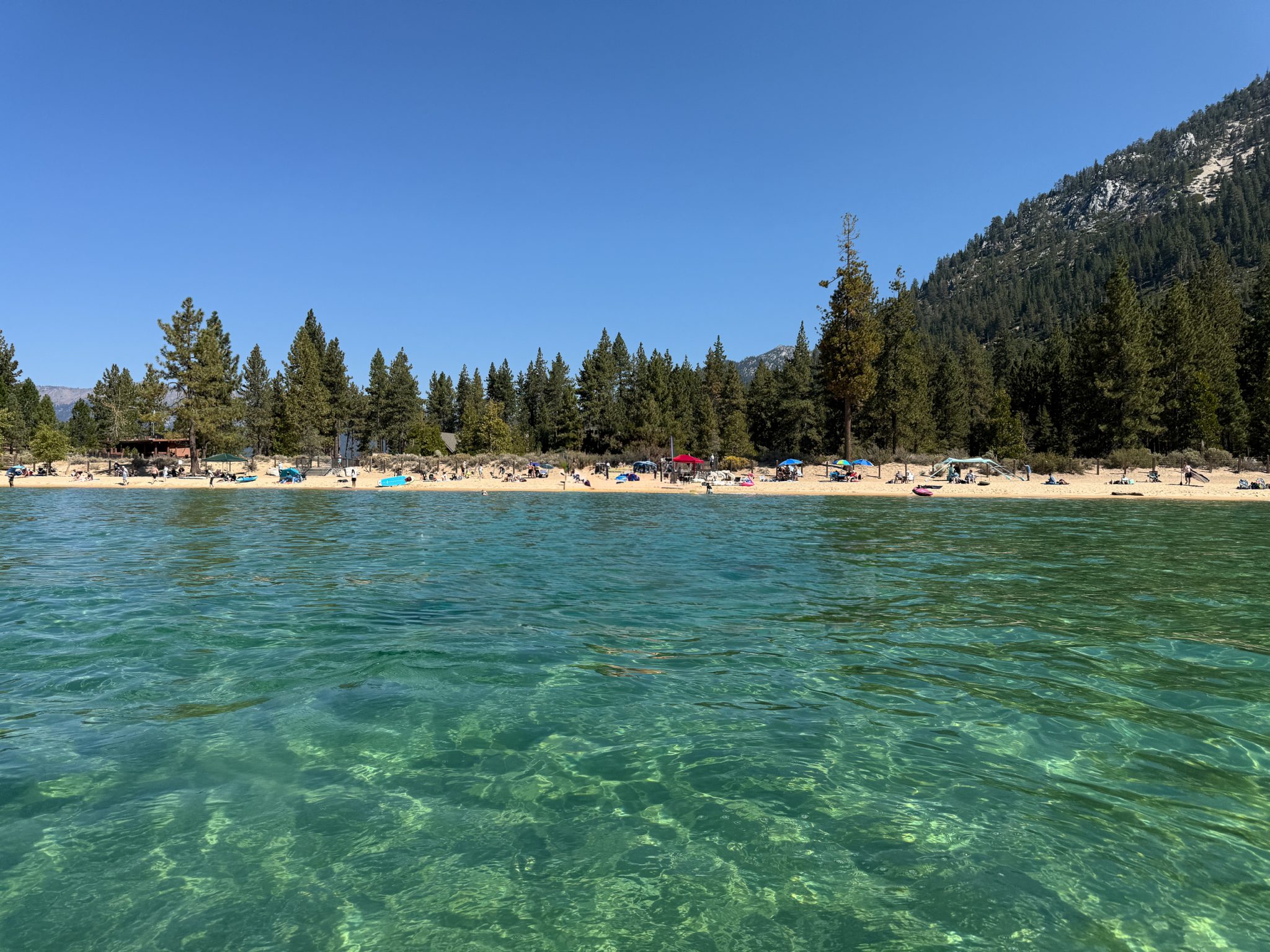
Tahoe east-shore launch with the alpine-postcard view. Parking, entry, wind, and best paddle windows.

About an hour from Sacramento. A 5 mph zone in the narrows, and clean, dry paddleboards skip the golden mussel quarantine.

Smaller Sierra reservoir at 5,400 feet, about 24 winding miles from Nevada City. Quiet water and a granite shoreline.

Folsom flatwater with a 5 mph limit and hand-launched craft only. Glassy mornings, the everyday training paddle.

Entrances, fees, and parking for a flood-control reservoir that is drawn down every fall and refilled each spring.

Deep-canyon reservoir below Auburn. Granite walls, a paddle-friendly upper lake, and water skiing on the lower.

The largest lake in Lassen Volcanic National Park, at 6,800 feet. The road reopened in July 2026; the campground and day use area are still closed.
What to expect on a stand-up paddle race course at every level, from a local festival with a First Timer’s Race to a national championship: courses, board classes, race-day logistics and results.

Three races in one Sunday morning and three first places: the 8 Mile in 1:49:01, the First Timer's Race, and the four person relay.

The first Nationals with a separate inflatable division. Sprints on Friday, a 10K on tidal salt water Saturday, and a technical course Sunday.
The 15th annual race launches from Dunphy Park, with SUP, surfski, outrigger, prone and rowing shells on one course. Proceeds go to Play Marin.
Every training claim has a citation. I lean on peer-reviewed scientific studies and academic papers from well-researched professionals: ACSM, JSCR, Frontiers in Physiology, and the Compendium of Physical Activities.
Gear reviews come from equipment I've tried and played with thoroughly. Speed claims come from my own Apple Watch data on actual paddles.
Fellow paddleboarders help evaluate gear, pressure-test the data, and refine techniques. Whether you're race-curious or out for the slow-Sunday float, you're welcome to weigh in: send me a DM on Instagram.
Why do you have to be so good at everything!
Megan, “Pink Menace,” after run-launching for the first time after she demonstrated it to me.
Start on flat water. Lake Natoma is the Sacramento default.
See the lake guideHit a wall at 90 minutes? The bonk has a fix.
Read the fixHand pain at mile three has a mechanical fix.
Read the techniqueNot on calm water. Standing up on flat water usually happens in the first session on a board 32 inches or wider. The learning curve is steeper for paddling efficiency than for balance.
An hour on the water feels comfortable after three or four sessions. Getting fast is a different question. The math of pace, stroke rate, and board waterline starts to matter after you've put in about a year of regular paddling. The SUP Strength Program accelerates the strength side; pace comes from miles on the water.
Give it eight weeks. Start with aerobic base building (long, easy paddles), add tempo and interval work in weeks three and four, and keep strength sessions on land alongside, such as the SUP Strength Program. The full week-by-week plan is in Your First Paddle Board Race.
Close to town: Lake Natoma for a sheltered paddle with a 5 mph limit, and Folsom Lake for a bigger day. About an hour out: Jenkinson Lake (Sly Park), with a 5 mph zone in the narrows. Farther out: Sand Harbor on Tahoe, best in the morning before the afternoon wind builds.
Loosen your grip. Squeezing the shaft harder than the stroke needs causes dorsal hand pain after the first hour. The fix is mostly conscious relaxation between strokes plus the grip-position adjustments in Paddle Grip and Hand Position. Nerve glides (covered in Nerve Glides for Paddlers) help if it's already chronic.
On a 14-foot inflatable, 4 mph sustained for an hour is solid recreational pace. 5 mph for the same hour is competitive at the local-race level. Rigid boards run roughly 5 to 6 percent faster at the same effort. Full benchmark data with Apple Watch splits is in Speed Benchmarks.
September 25, 2026: Added my bicep strain recovery program to Recover.
September 24, 2026: Added my SUP elbow injury report to Recover and the KT tape elbow guide to Gear.
September 15, 2026: Added a Races section, Folsom Lake, Juniper Lake, isometric exercises, and a browsable list of every paddleboarding article. Corrected lake rules, routine lengths, and program details on several cards and in the FAQ. Updated the Juniper Lake, Jenkinson Lake, and Fuller Lake cards to match those guides' corrections.
May 24, 2026: Launched the collection with 13 articles across Train, Recover, Gear, and Spots.
Every guide, trip report, and race report in the collection, newest first.

Real Apple Watch data and honest speed benchmarks for inflatable racing SUPs. What’s fast, what’s average, and why your PSI matters more than you think.

Science-backed exercise program for paddle boarders. Core stability, balance training, shoulder strength, and mobility work with sets, reps, and peer-reviewed citations.

Science-backed stretches for paddle boarders targeting tight obliques, shoulders, and pectorals. Dynamic warm-ups, static cool-downs, and PNF techniques with peer-reviewed evidence.

Science-backed grip techniques to prevent dorsal hand pain on long SUP paddles. Intersection syndrome, De Quervain’s, exercises, and when to see a doctor.

Science-backed nerve glide exercises for SUP paddlers. Median, ulnar, and radial nerve routines to prevent tingling, numbness, and hand pain after long paddles.

At mile 4.5 of an 8.19-mile paddle, having eaten nothing since launch, I bonked: my arms went heavy, my head went foggy, and I started scanning the shore for a place to pull over and eat. The berries and coconut water I had on the board did not bring the power back, and I stopped …

The place for paddleboarding at Jenkinson Lake, also known as Sly Park, is the Narrows, the upper lake where every boat is held to 5 mph. The 640-acre drinking water reservoir sits at 3,482 feet in El Dorado County, ringed by pine forest and granite outcroppings, and the El Dorado Irrigation District runs it as …
Sand Harbor State Park, a Nevada State Park on Lake Tahoe’s east shore, is the launch point for paddle boarding to Bonsai Rock 1 mile south, Hidden Beach about 1.5 miles north, and beaches as far as Skunk Harbor, about 5 miles south. The water is clear over granite boulders, and from May 15 through …

Fuller Lake is a roughly 70-acre mountain lake at 5,400 feet in the Sierra Nevada, about 24 miles from Nevada City. PG&E runs it as a day-use site for paddling, trout fishing, and hiking. Helpful Links: How to Get There Fuller Lake is in Nevada County. From Nevada City, take Highway 20 east for about …

Stand-up paddleboarding (SUP) works the shoulders, core, back, and lower body while demanding cardiovascular output and dynamic stabilization. Post workout recovery after a session rests on fluid with sodium, carbohydrate and protein within two hours, active and passive recovery work, and 7–9 hours of sleep. That applies whether the session lasts for miles across open …