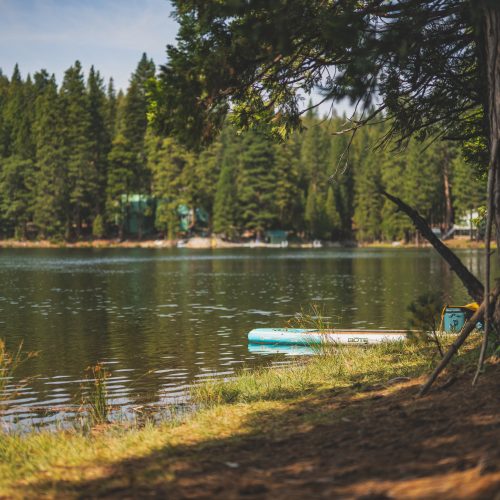
Sacramento sits in the middle of an absurd amount of geography. Wine country to the west, the Sierra and Lake Tahoe to the east, the Pacific a couple hours out, and a whole chain of Gold Rush towns strung up Highway 49. Most of it is close enough to leave after breakfast and be home for dinner.
Most of these are weekend habits by now. Here are the day trips worth the gas, sorted by how far you feel like going.
One note on the drive times below: they are the easy-Sunday, no-traffic numbers. Summer weekends on I-80 to Tahoe or US-50 over the hill add an hour, sometimes more. Leave early and you skip most of it.
✦ Key Takeaways
- Sacramento’s edge is its location. Wine country, the Sierra, the coast, and a dozen Gold Rush towns all sit within a day’s reach.
- Under an hour: Apple Hill in the fall, the Gold Country towns (Auburn, Placerville, Nevada City and Grass Valley), Davis, and the Lockeford sausage run.
- One to two hours: Napa and Sonoma wine country, San Francisco by train, and the small-town food in Winters.
- Two-plus hours: Lake Tahoe, the Sonoma coast at Bodega Bay, wild Point Reyes, and the living Gold Rush town at Columbia.
- Honest overnights: Yosemite, Mendocino, and Mount Shasta are a stretch for one day. Yosemite dropped its reservation requirement for 2026.
- Take the train. The Amtrak California Zephyr climbs over Donner Pass from Colfax to Reno, a ride worth taking for its own sake.
- Traffic is the real enemy. Summer weekends back up hard on I-80 and US-50. Leave early.
Under an Hour: Close Enough for a Half Day
These barely count as trips. You can go for the afternoon and still have your evening.
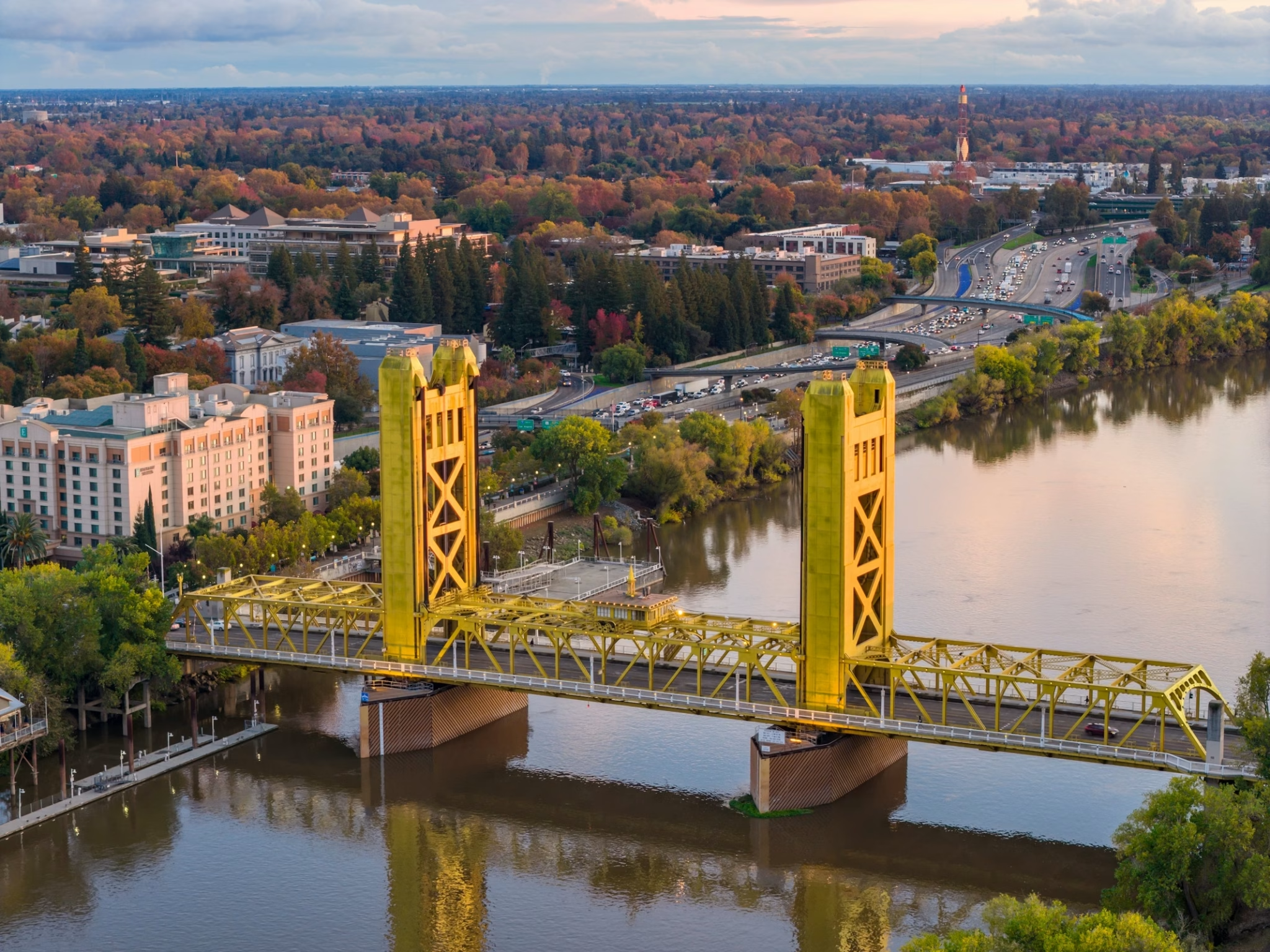
Some of the best ones do not even leave the city. The California Automobile Museum on the Old Sacramento riverfront is a full afternoon for fourteen dollars, its floor of classic cars rearranged often enough to reward a return visit. The same goes for a slow morning of antique and vintage shopping, from 57th Street Antique Row to the monthly Antique Faire, or a Saturday morning at one of the city’s farmers markets.

Apple Hill (about 50 minutes, US-50 to Camino) is the fall ritual. Around fifty grower farms spread across the El Dorado County ridge, selling apples, pies, cider donuts, and u-pick everything from Labor Day weekend into November.
It is also a traffic nightmare on October weekends. Go on a weekday, get there by mid-morning, and start at High Hill Ranch before the lot fills. I wrote up the whole season here.
Heads up: Apple Hill is seasonal, roughly Labor Day weekend through November, and each farm sets its own hours. Confirm before you drive up.
Auburn (about 40 minutes, I-80) is the easiest Gold Country hit. The Old Town still wears its 1850s architecture, the clock tower anchors the whole thing, and the Placer County Museum sits inside the 1851 courthouse for free. It is also the gateway to the American River canyon and Lake Clementine just up the road.
Placerville (about 50 minutes, US-50) runs on a historic Main Street with the Cary House Hotel at its center and Pony Express history threaded through downtown. It is also the gateway to Apple Hill, so the two pair into one good day in the fall.
Davis (about 20 minutes) is almost too close to call a trip, and it earns the spot anyway. The UC Davis Arboretum is free, a hundred-plus acres with a 3.5-mile loop along the creek.
The Davis Farmers Market runs Saturday mornings and again Wednesday evenings, when the summer “Picnic in the Park” turns it into dinner. It is a bike town with a real craft-beer bench, so leave the car parked once you arrive.
Lockeford (about 45 minutes southeast, toward Lodi) is a drive with one purpose: the sausage. Lockeford Meat & Sausage Service on North Cotton Street is the kind of single-location butcher counter people drive hours to reach.
The counter turns out fresh and smoked sausages, jerky, salami, bacon, and marinated tri-tip, in flavors from Italian and bratwurst to apple-cinnamon and jalapeño-cheddar. Go on a weekday if you can, because weekends bring a line.
Bring a cooler.
Colfax (about 50 minutes up I-80) is a small Sierra-foothills town with an outsized railroad past. The Central Pacific reached it in 1865 and used it as the railhead for two years while crews fought their way over the summit. Theodore Judah surveyed the route over the mountains right through here, and the restored 1905 depot now holds the town museum.
Colfax also turns into something bigger if you let it. The Amtrak California Zephyr stops in town on its way out of Sacramento and climbs straight over the Sierra to Reno, rounding Donner Lake, cresting the summit through the old tunnels and snowsheds, and dropping along the Truckee River into Nevada.
It runs about five hours by rail against two by car, so the train is the trip, not the shortcut. Ride it over the pass, spend the night in Reno or drive the half hour down to Carson City, and come home the next day. Check the live Amtrak schedule before you plan around it.
One to Two Hours: The Core Day Trips
This is the range that makes Sacramento worth living in. Wine country, the coast’s edge, and the best of the old mining towns all land here.
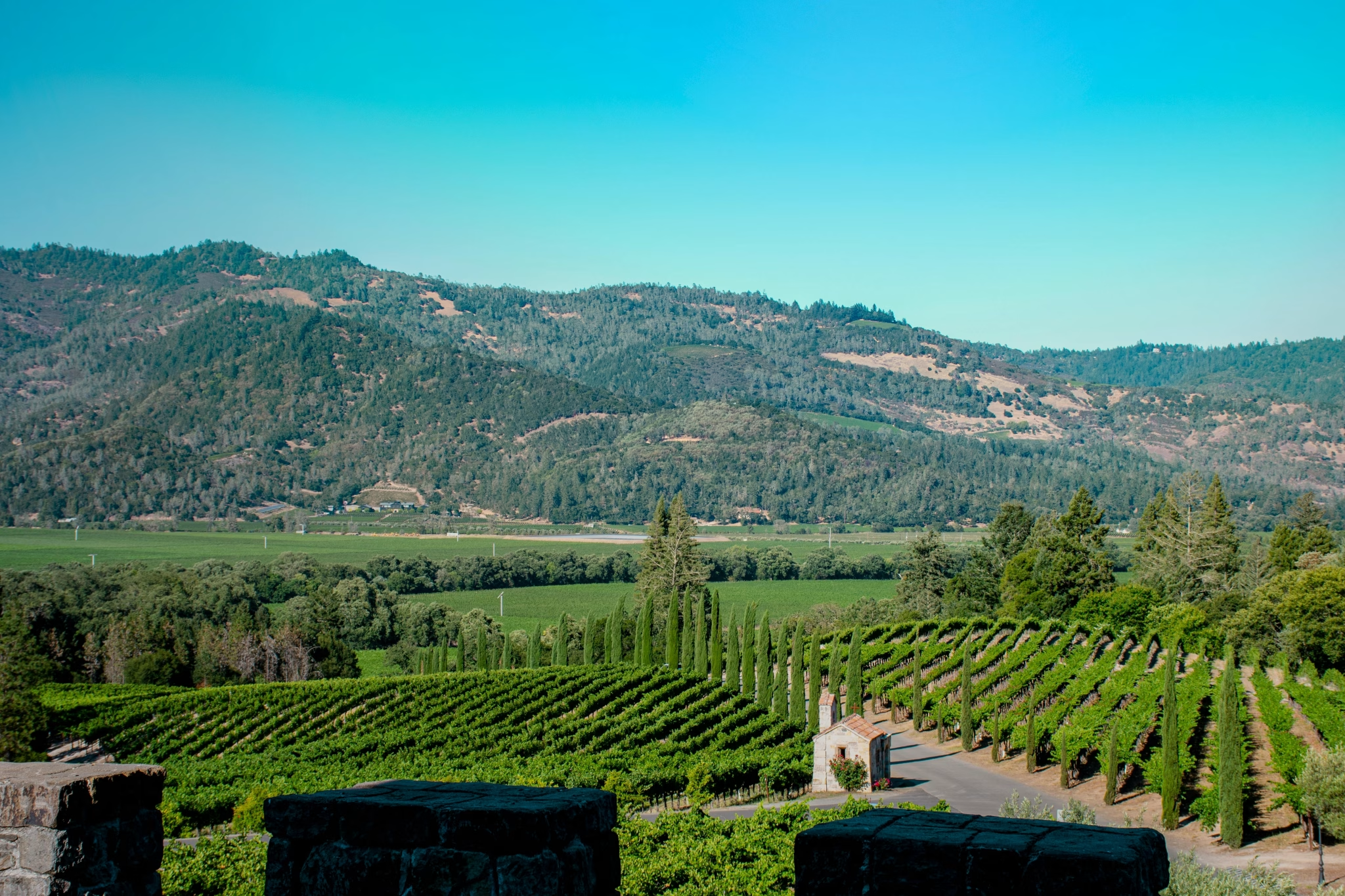
Napa (about an hour) is the famous one. You already know the wine is good and the tasting fees are steep. The thing locals learn is that the valley keeps going another 30-some miles north to Calistoga, so trying to “do Napa” in a day means picking two or three stops and accepting you will miss the rest.
For timing, harvest runs late August into October: peak color, peak crowds, peak prices. I broke down the seasons here.
Sonoma (about an hour and fifteen) is the one I send people to when the budget matters. Tasting fees run lower than Napa, most of the wineries are still family-owned, and the town itself is the draw.
Sonoma Plaza is the largest town square in California, eight and a half acres, a National Historic Landmark ringed by tasting rooms and the last of the California missions.
Park once and walk the whole day.
Nevada City and Grass Valley (about an hour to an hour and ten) are twin Gold Country towns four miles apart that split the personality between them. Nevada City is the prettier one: Victorian homes climbing tree-lined hills, the Nevada Theatre standing since 1865, a downtown built for an afternoon of wandering.
Grass Valley carries the heavier mining history. Its Empire Mine was one of the deepest and richest hardrock gold mines in the state, 367 miles of shafts now flooded and silent under 856 acres of forest.
The state park runs $5 and opens daily, and you can walk the mine yard, the owner’s English-manor cottage, and a scale model of the workings that drop away beneath your feet. Do both towns in a day. They sit close enough.
San Francisco (about an hour and a half by car) is the trip where the smart move is to skip the car. The Amtrak Capitol Corridor runs from the Sacramento Valley Station toward the Bay, with a connection across the bridge into the city, and you can park at Lot 293 right in front of the station.
Trading two hours of bridge traffic and a $60 garage for a train seat you can nap in is the easiest upgrade on this list.
Winters (about 40 minutes, with Lake Berryessa another half hour past it) eats far better than a town its size should. A few walkable blocks sit at the edge of the Coast Range foothills, anchored by the Putah Creek Cafe, a thirty-five-year institution that landed on Guy Fieri’s show for its cioppino.
Preserve, over on Railroad Avenue, does farm-to-table dinners built on the surrounding farmland, and its walk-up taco window is a local favorite. The taco trucks around town are reliably good too.
Up the road, Lake Berryessa hides the “Glory Hole,” a giant funnel-shaped spillway that swallows the overflow in wet years. When it is running it is a genuine spectacle. In a dry year it is a big concrete ring, so check before you build the trip around it.
Two Hours Plus: The Long Day Trips
These work as day trips if you commit to the early start. Treat them as lazy and you spend the good light driving home.
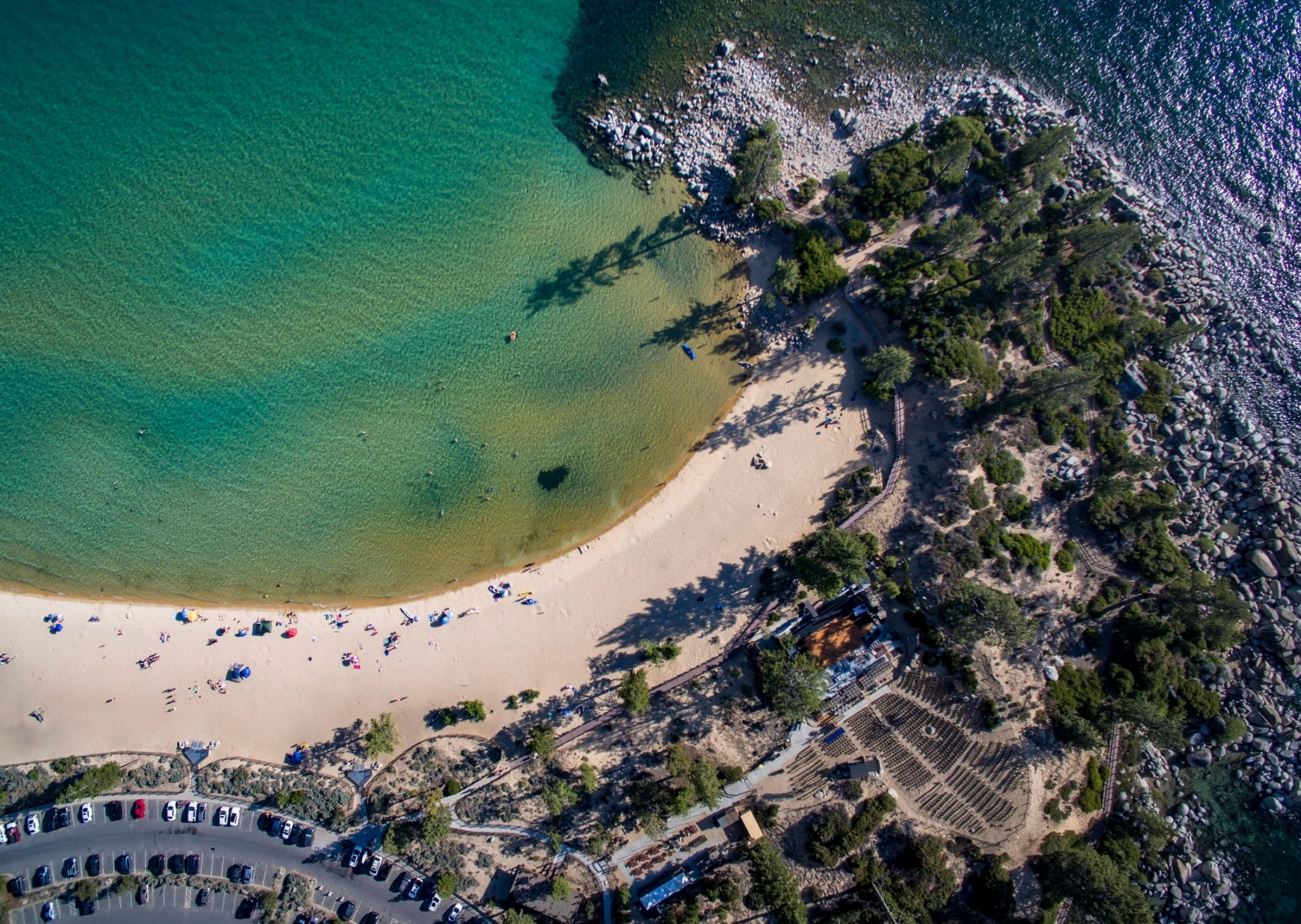
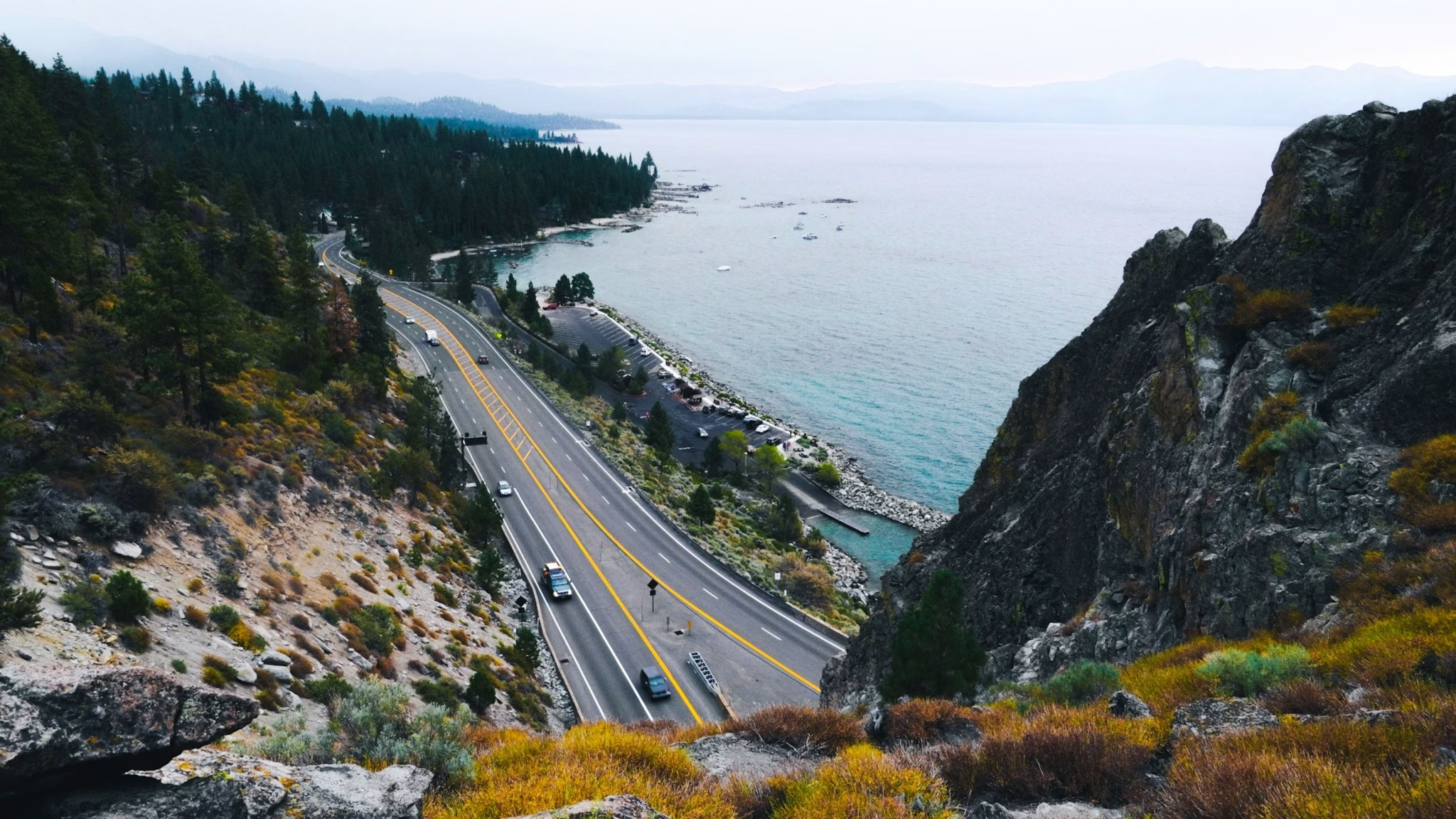
Lake Tahoe (about two hours fifteen to South Lake via US-50) is the big one, and the one most worth planning. South Lake is the developed, casino end with the shorter drive. The north and east shores stay quieter.
For swimming, Sand Harbor on the Nevada side is the postcard, all turquoise water and granite boulders, and Kings Beach has the warmest water of the bunch. One reality check: Tahoe is a cold lake, 60 to 70 degrees even in August. It is a quick-dip lake, not a float-all-day one.
Heads up: Sand Harbor now requires a day-use parking reservation in summer (about mid-May through September), and the lot fills by 8 or 9 AM. Reserve through ReserveNevada, or ride the free East Shore Express shuttle.
Bodega Bay (about two hours) is a working fishing harbor with a film-history streak. Hitchcock shot The Birds here in 1963, and the owner of the Tides Wharf reportedly made him agree to three conditions to use it: the town in the movie would be called Bodega Bay, the lead would be named Mitch, and the owner would get a speaking part.
Order the barbecued oysters, walk out to Bodega Head, and if it is winter, watch for gray whales running the coast from December into April.
Point Reyes (about two to two and a half hours, depending which end) is the wild Marin coast at its best. The 1870 lighthouse sits at the bottom of a 308-step staircase, the Cypress Tree Tunnel is a near-century-old corridor of planted cypress, and Tomales Bay has been selling oysters off the dock since 1909.
I put a fuller Marin coast trip here.
Heads up: The Point Reyes lighthouse keeps limited days (recently Thursday through Monday) and the stairs close in high wind. Confirm current hours on the park site before the drive.
Columbia State Historic Park (about two hours) is the Gold Rush town that still works like one. About thirty original 1850s buildings, no cars on the main street, costumed staff, stagecoach rides, and gold panning you can actually try.
It reads as more real than the dry Main Streets because you walk through the streetscape, not past it.
Virginia City, Nevada (about two hours forty-five) is the silver-boom town that built San Francisco. The Comstock Lode came out of this hill in 1859, and C Street still has the board sidewalks, swinging saloon doors, and a stack of small museums.
Mark Twain got his start at the newspaper here. The town also bills itself as one of the most haunted in the country, which is its own kind of fun. I came back for the camel races, which is a sentence I did not expect to write.
Worth an Overnight, Doable If You Commit
I will be straight with you: these three are a stretch for a single day. The driving math runs seven to eight hours round trip before you have done anything. Go if you are willing to start at dawn, or just book a night and do them right.

Yosemite (about three and a half hours to the Valley) is the one worth the stretch. Tunnel View is the highest-payoff stop if your clock is tight, and the waterfalls run hardest on late-spring snowmelt, so aim for May or June before the big ones go dry. I mapped the easily walkable sights here.
Mendocino (about three hours forty) is a New England village dropped onto the California bluffs, and the drive out Highway 128 is half the reason to go. The route threads Anderson Valley wine country and redwoods before it spills out at the coast.
This is the one I would tell you to make an overnight.
The town is built for it, and the restaurant scene rewards a slow evening.
Mount Shasta (about four hours up I-5) is a 14,000-foot volcano with a mystic-town culture at its base and alpine water all around it. Castle Lake is the easy payoff, a glacial lake eleven miles from town with swimming and flat-water paddling.
Burney Falls, a little east, is the kind of waterfall that makes the drive feel earned. I have gone up for the morel foraging in spring more than once.
More Small Towns Worth the Drive
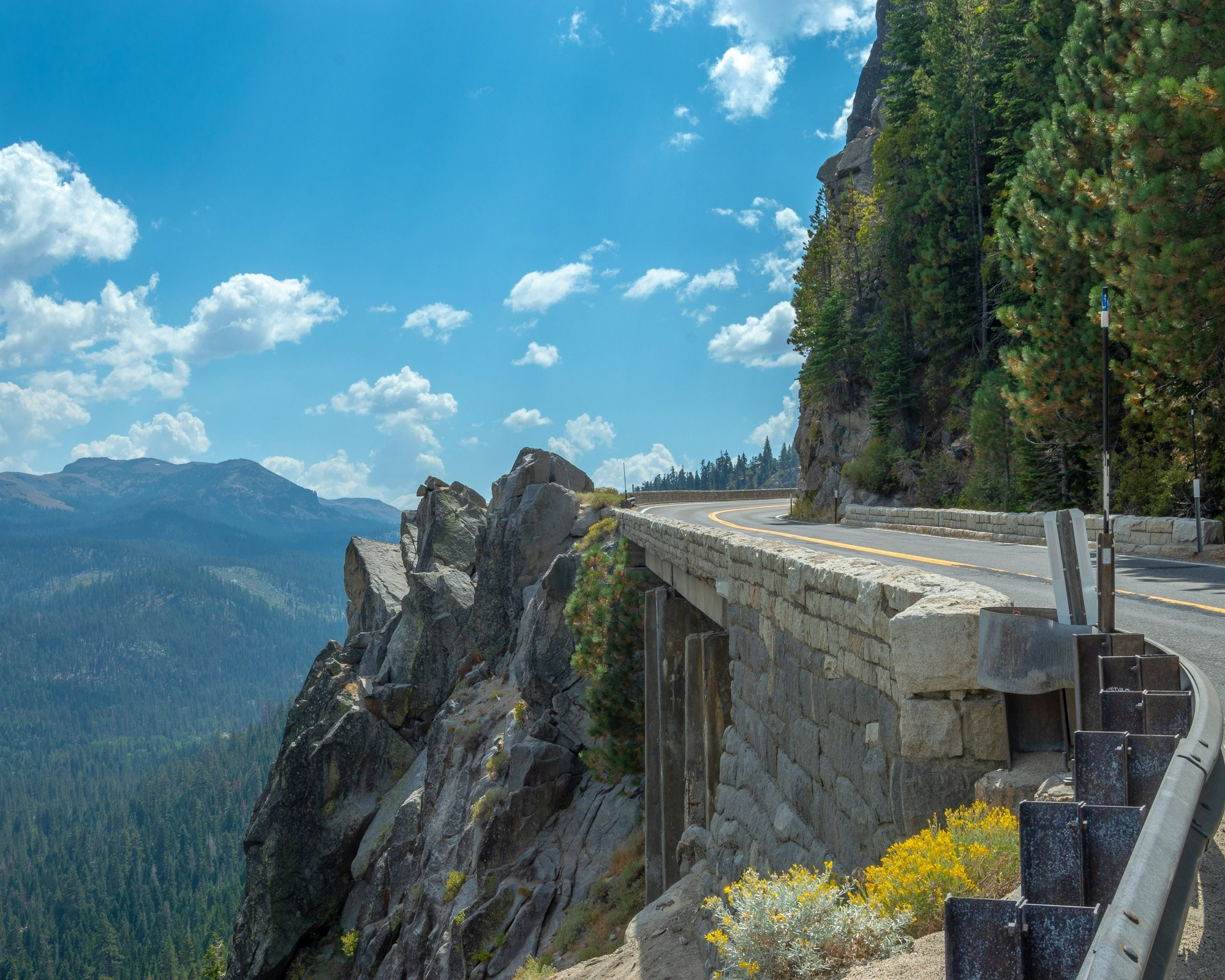
The big-name trips get the attention. The real luxury of living here is how many small towns sit within an hour or two, each good for an afternoon.
Locke (about 30 minutes into the Delta) is the most unusual of them. It is the only town in the country built by Chinese immigrants for Chinese immigrants, a National Historic Landmark dating to 1912, with a former gambling hall now the Dai Loy Museum and the cheerfully divey Al the Wop’s still pouring on the main street.
Locke is also a stop on one of the best slow drives around. Highway 160 runs down the Sacramento River from town to Rio Vista, past the levee towns and a string of taco trucks worth pulling over for.
Woodland (about 25 minutes northwest) keeps a downtown of preserved Victorian storefronts anchored by the Woodland Opera House, an 1890s theater still staging shows as a state historic park.
Sutter Creek (about an hour into Amador County) runs a Main Street of balconied 1850s buildings, five minutes from the Shenandoah Valley and the fifty-plus wineries that made Amador a name for old-vine Zinfandel.
That is a short list standing in for a long one. Galt, Lodi, Jackson, Isleton, the rest of the Delta river towns. Pick a direction on a free Saturday and you will find one.
Day Trips from Sacramento at a Glance
| Destination | Drive time | Best for | When |
|---|---|---|---|
| Davis | 20 min | Arboretum, farmers market | Year-round |
| Woodland | 25 min | Opera House, Victorian downtown | Year-round |
| Locke | 30 min | Historic Delta Chinese town | Year-round |
| Auburn | 40 min | Gold Rush Old Town | Year-round |
| Lockeford | 45 min | Lockeford Sausage | Year-round |
| Apple Hill | 50 min | Apples, pies, u-pick | Sept-Nov |
| Placerville | 50 min | Historic Main Street | Year-round |
| Colfax | 50 min | Railroad town, train over the pass | Year-round |
| Napa | 1 hr | Marquee wine country | Spring, fall |
| Nevada City & Grass Valley | 1 hr | Twin Gold Country towns, Empire Mine | Year-round |
| Sutter Creek | 1 hr | Amador Main Street, Shenandoah wine | Year-round |
| Sonoma | 1 hr 15 | Wine on a budget, the plaza | June-Oct |
| Winters / Berryessa | 40 min+ | Small-town food, the Glory Hole | Year-round |
| San Francisco | 1.5 hr / train | The city, car-free | Year-round |
| Bodega Bay | 2 hr | Coast, oysters, whales | Year-round |
| Lake Tahoe | 2 hr 15 | Alpine swimming, casinos | Summer |
| Point Reyes | 2-2.5 hr | Wild coast, lighthouse | Year-round |
| Columbia SHP | 2 hr | Living Gold Rush town | Year-round |
| Virginia City, NV | 2 hr 45 | Silver-boom history | Spring-fall |
| Yosemite | 3.5 hr | The big one (long day) | Late spring |
| Mendocino | 3 hr 40 | Coastal village (overnight) | Year-round |
| Mount Shasta | 4 hr | Volcano, lakes (overnight) | Summer |
Frequently Asked Questions
What are the best day trips from Sacramento?
For a true day trip, the strongest picks are Apple Hill and the Gold Country towns (Auburn, Placerville, Nevada City and Grass Valley) under an hour, Napa and Sonoma wine country around an hour, and Lake Tahoe or the Bodega Bay coast at about two hours. San Francisco is easy by train. Yosemite, Mendocino, and Mount Shasta are better as overnights.
What are the closest day trips to Sacramento?
Davis is about 20 minutes, Woodland 25, Locke 30, and Auburn about 40. All four work as a half day, leaving your evening free.
What are good day trips from Sacramento under two hours?
Apple Hill, Auburn, Placerville, Davis, Lockeford, Colfax, Napa, Sonoma, Nevada City and Grass Valley, San Francisco, and Winters are all within roughly two hours one-way in normal traffic. Summer weekends add time on I-80 and US-50, so leave early.
What are the best day trips from Sacramento with kids?
Apple Hill (u-pick and cider donuts), Columbia State Historic Park (gold panning and stagecoach rides), the Davis Farmers Market and arboretum, and the family swim beaches at Lake Tahoe like Kings Beach are the easiest wins.
How far is Lake Tahoe from Sacramento?
South Lake Tahoe is about 103 miles, roughly two hours and fifteen minutes via US-50 in light traffic. The north shore is a similar distance via I-80 through Truckee. Both back up on summer weekends.
Can you visit San Francisco from Sacramento without driving?
Yes. The Amtrak Capitol Corridor runs from the Sacramento Valley Station toward the Bay with a connecting bus into the city, and you can park at the station. It takes a little over three hours each way but skips the bridge traffic and city parking entirely.
Can you take a scenic train trip from Sacramento?
Yes. The Amtrak California Zephyr leaves Sacramento daily and climbs over Donner Pass to Reno, rounding Donner Lake and threading the old summit tunnels and snowsheds. It runs about five hours each way, so it is the experience itself rather than a fast route. Check Amtrak for current departure times.
What small towns are worth visiting near Sacramento?
Within an hour or two: Locke (the historic Delta Chinese town), Woodland (the 1890s Opera House), Auburn, Placerville, Nevada City and Grass Valley in Gold Country, Colfax, and Sutter Creek in Amador wine country. Most make an easy half day.
Is Yosemite a day trip from Sacramento?
Barely. Yosemite Valley is about three and a half hours each way, so a one-day visit is seven-plus hours of driving. It is doable with a dawn start, but an overnight does it justice. As of 2026, the park no longer requires a timed-entry reservation, which makes a spontaneous trip easier.
Article Updates
- June 22, 2026: Initial publication.