Three things carry over.
The schedule travels. The single most useful thing I did at PaddleSplash was settle in advance what went in and when, rather than deciding it on the day. Nationals spreads the Big Three across three days rather than three hours, which makes the planning easier and the discipline harder.
Race pace matched training pace, so training pace is the plan. Holding 4.40 mph on race day when the dataset says 4.47 means the number is real. For the 10K I will pace to what the data says I can hold rather than to whoever goes out hard off the line.
Back-to-back racing is a skill of its own. Three starts in three hours taught me more about recovery between efforts than any single long paddle has. The sprint and the technical course at Nationals are heats, which is the same problem in a shorter frame.
One thing does not carry over. Lake Natoma is flat, fresh and familiar. Gig Harbor is salt water with tide and current, and the Narrows does not care what my times on Natoma look like.
Racing PaddleSplash Yourself
The event runs annually out of Black Miner’s Bar. The distances span 2, 5 and 8 miles, with a First Timer’s Race and Grom Sprints for kids aged eight to seventeen, and every race is open to SUP, outrigger, kayak and surfski. There was a virtual division at $35, or $69 with a board rental, for anyone who could not get to Folsom.
If you have never raced, the First Timer’s Race is the entry point, and I have written a full guide to preparing for a first SUP race. If you want to know the launch itself before you show up, Black Miner’s Bar is covered in my Lake Natoma guide, including parking and the boat ramp.
Eight miles asks more of the shoulders and hands than a recreational paddle does. The strength work behind it is in my SUP strength program, and dorsal hand pain on long efforts usually traces back to grip pressure, which I worked through in paddle grip and hand position.
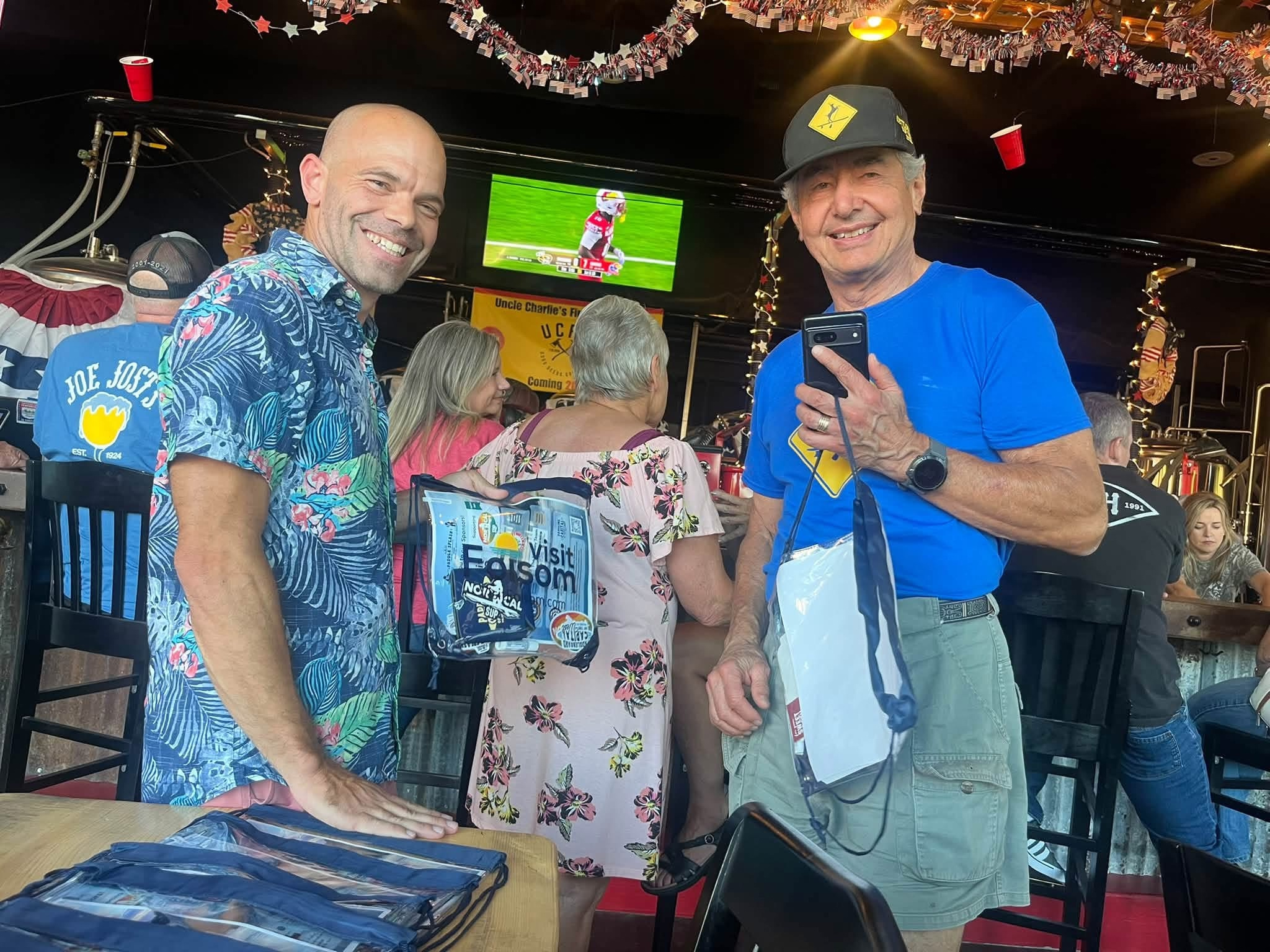
PaddleSplash 2026 in Photographs
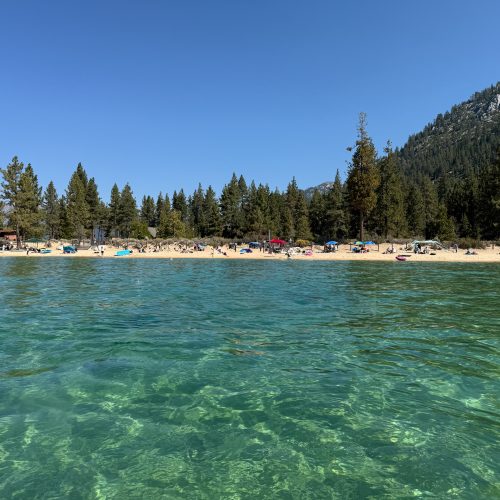
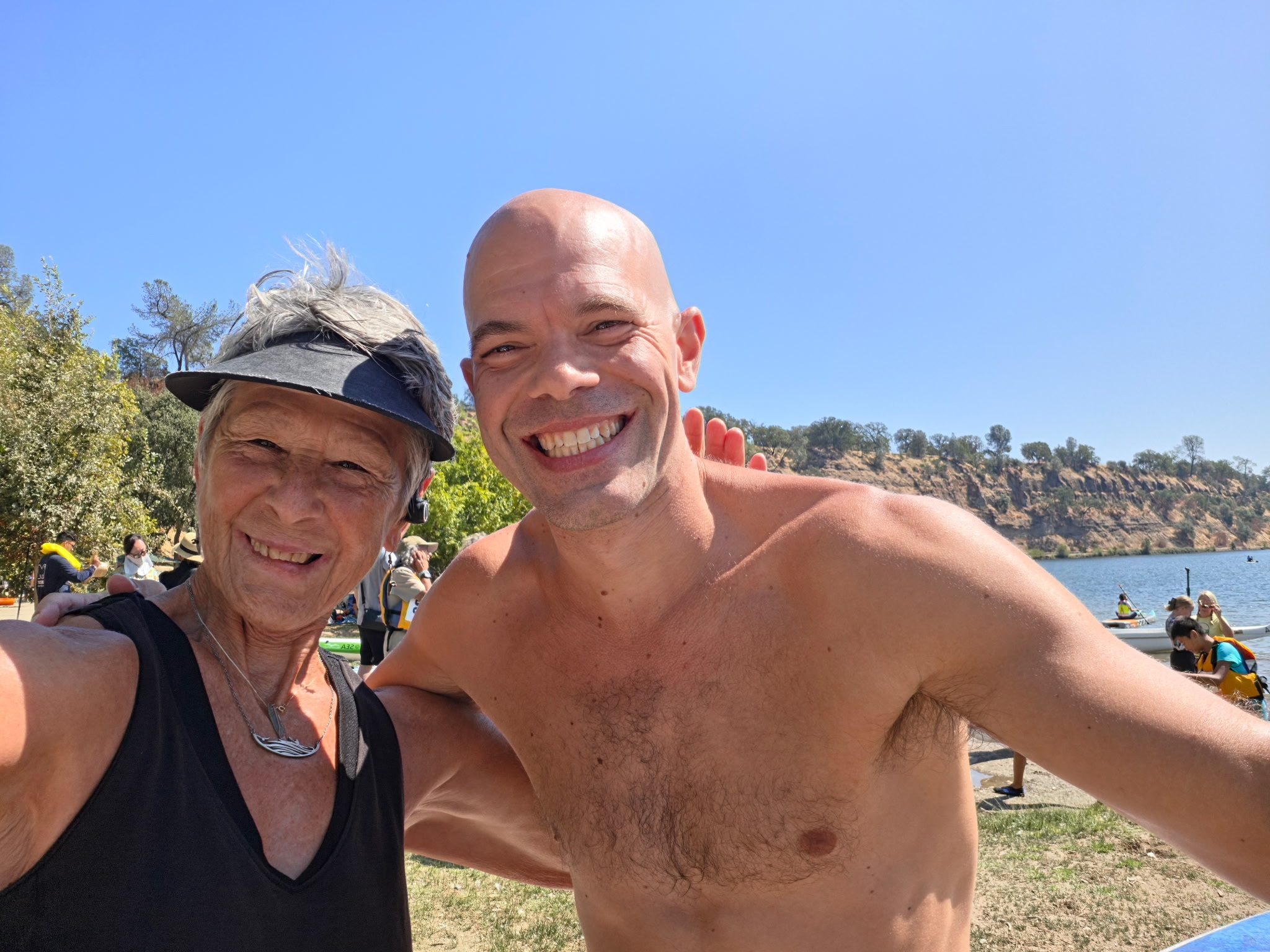
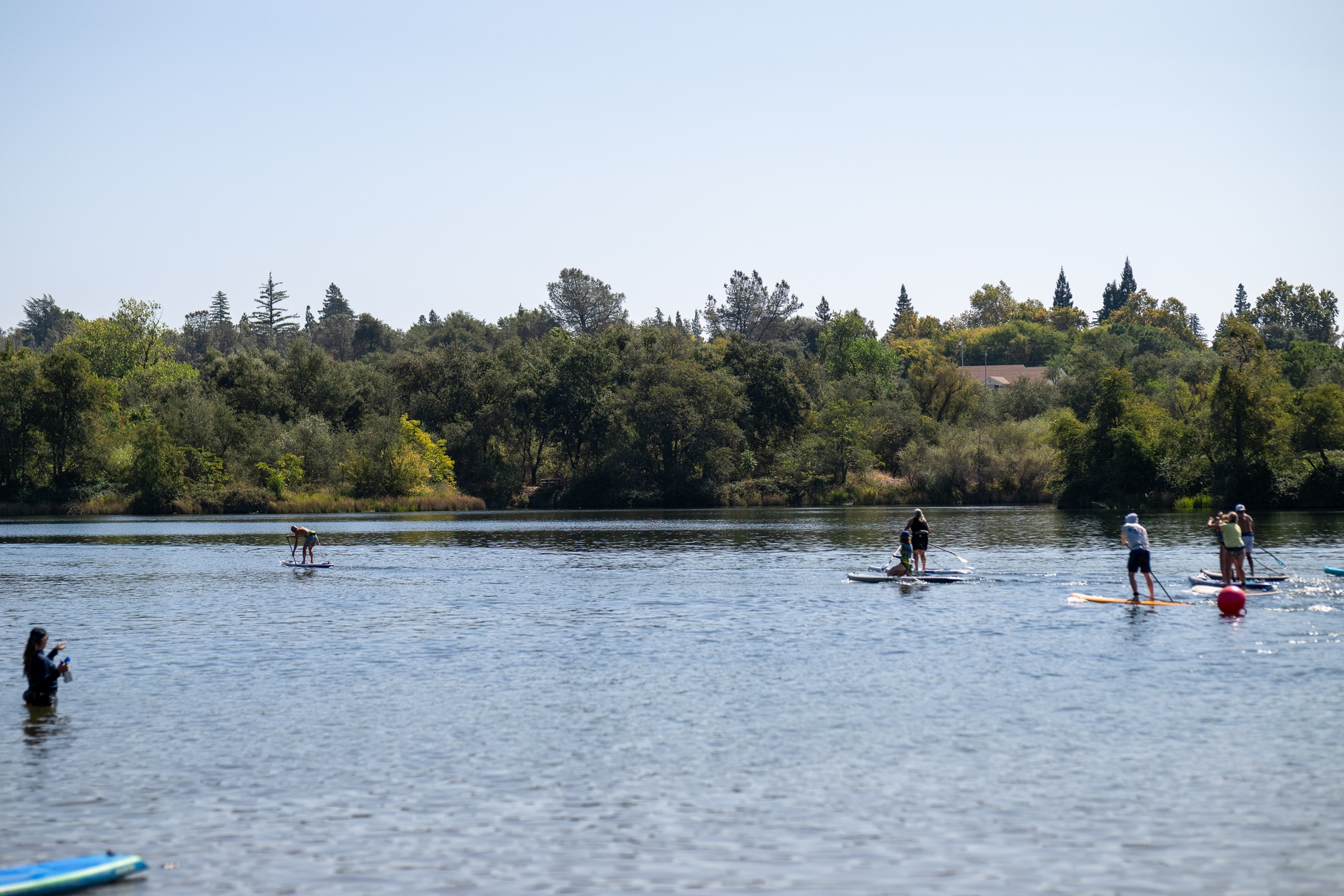
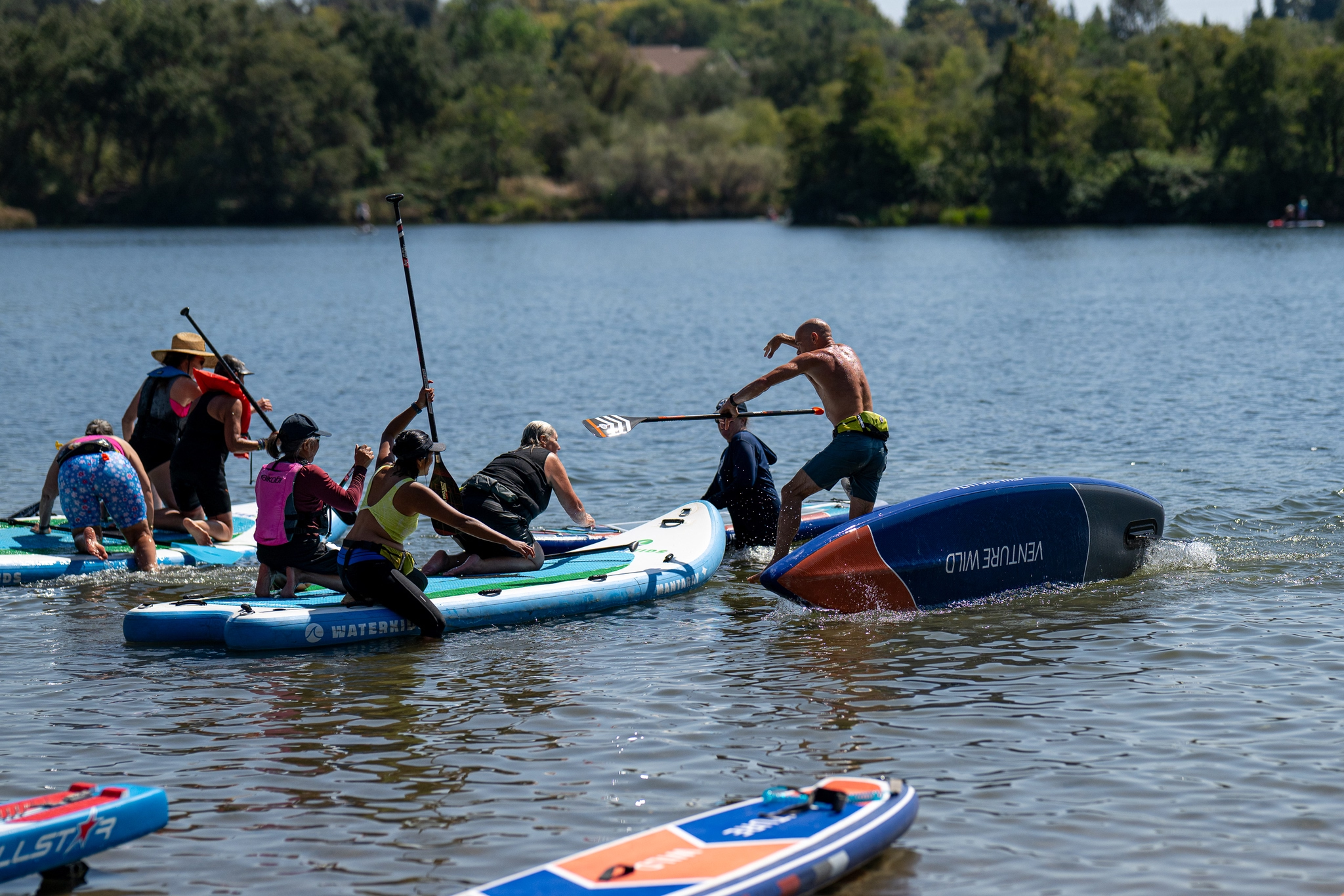
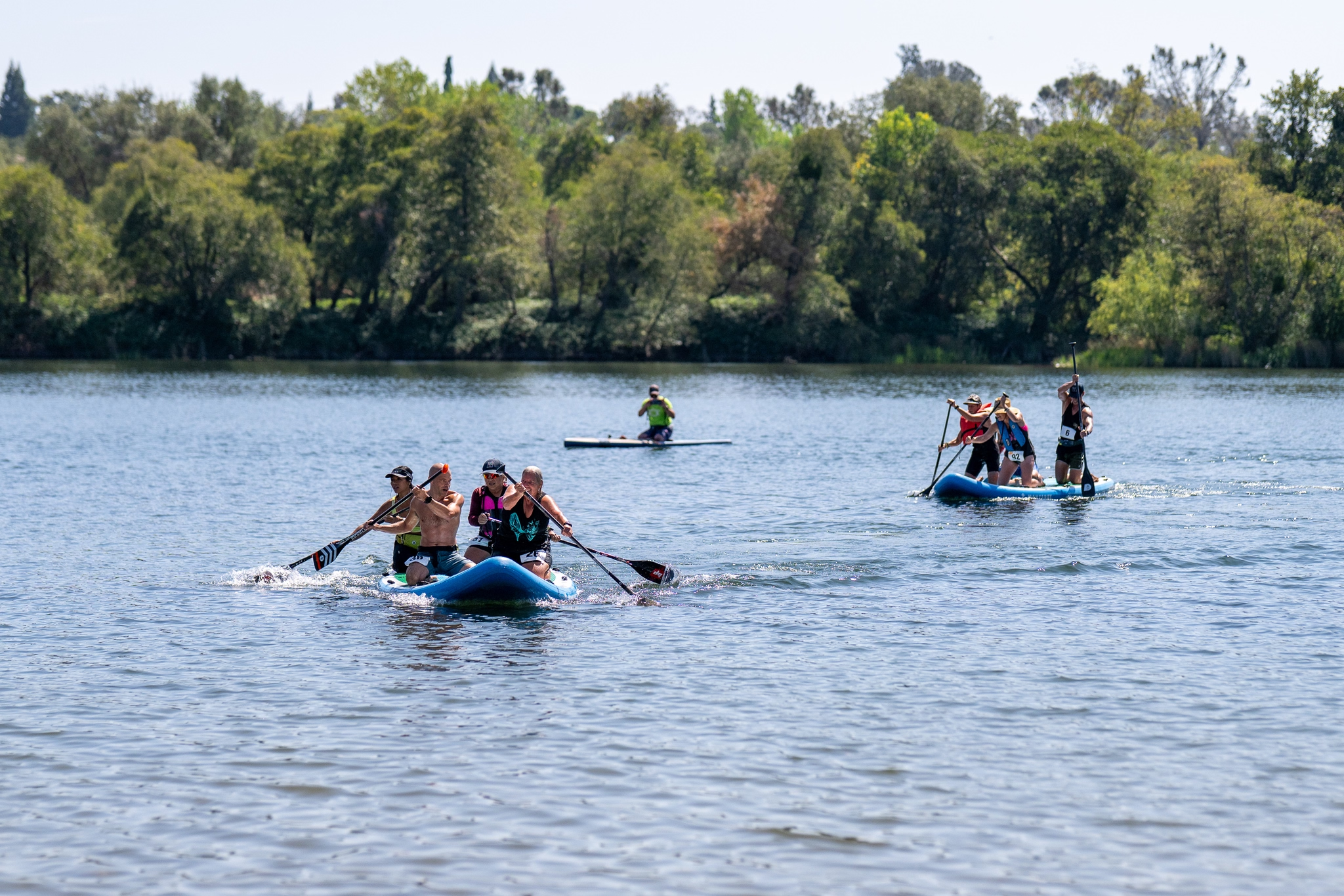
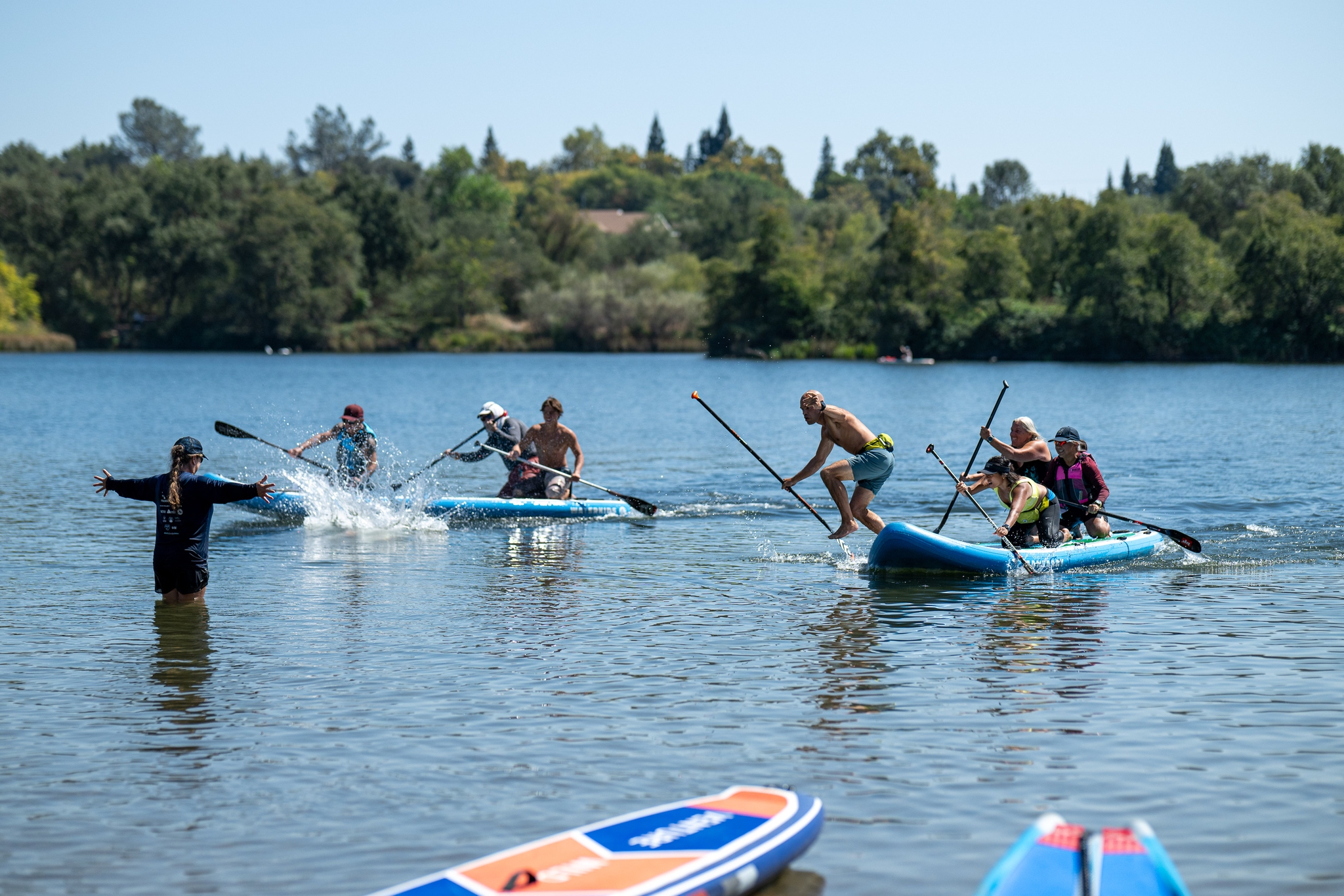
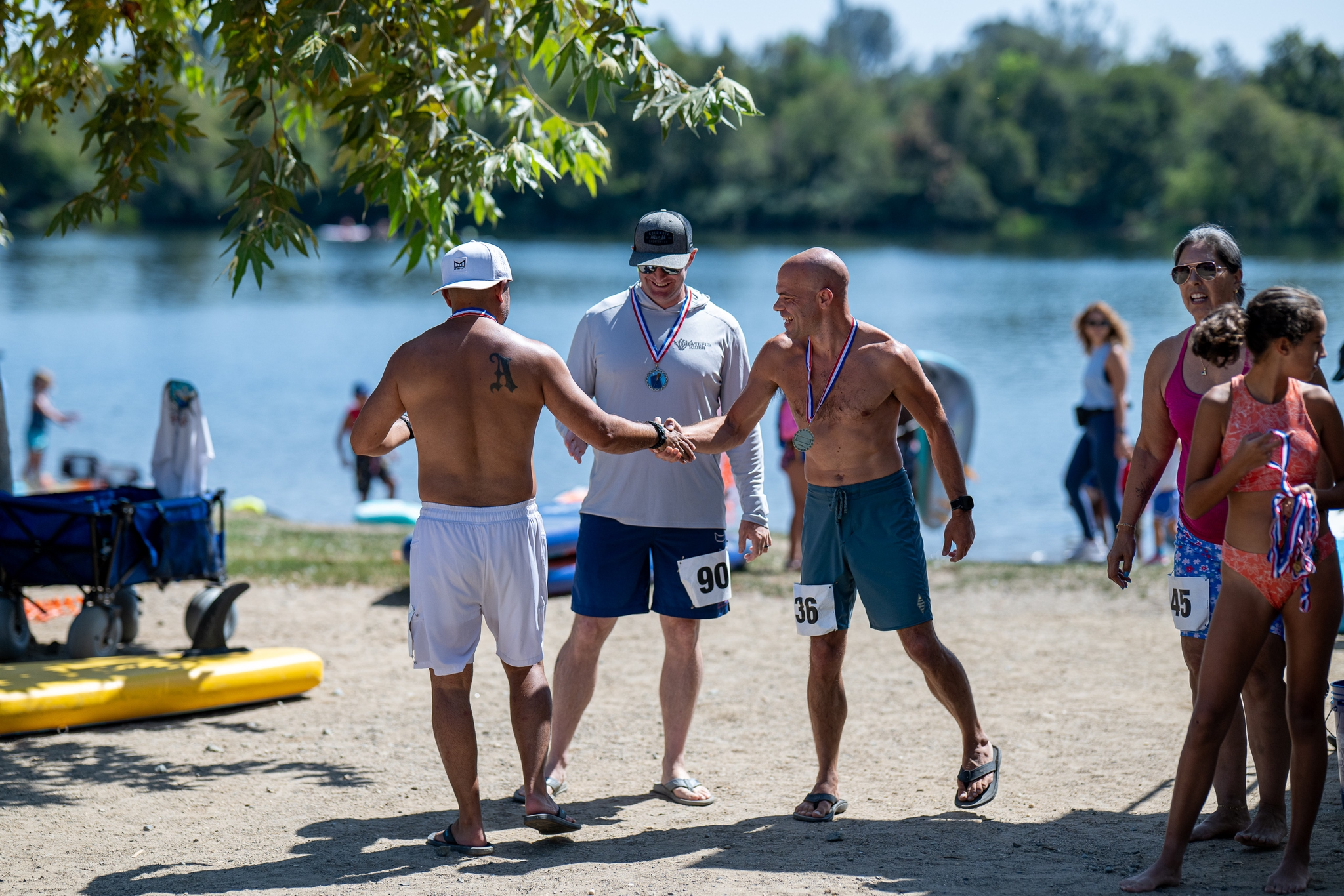
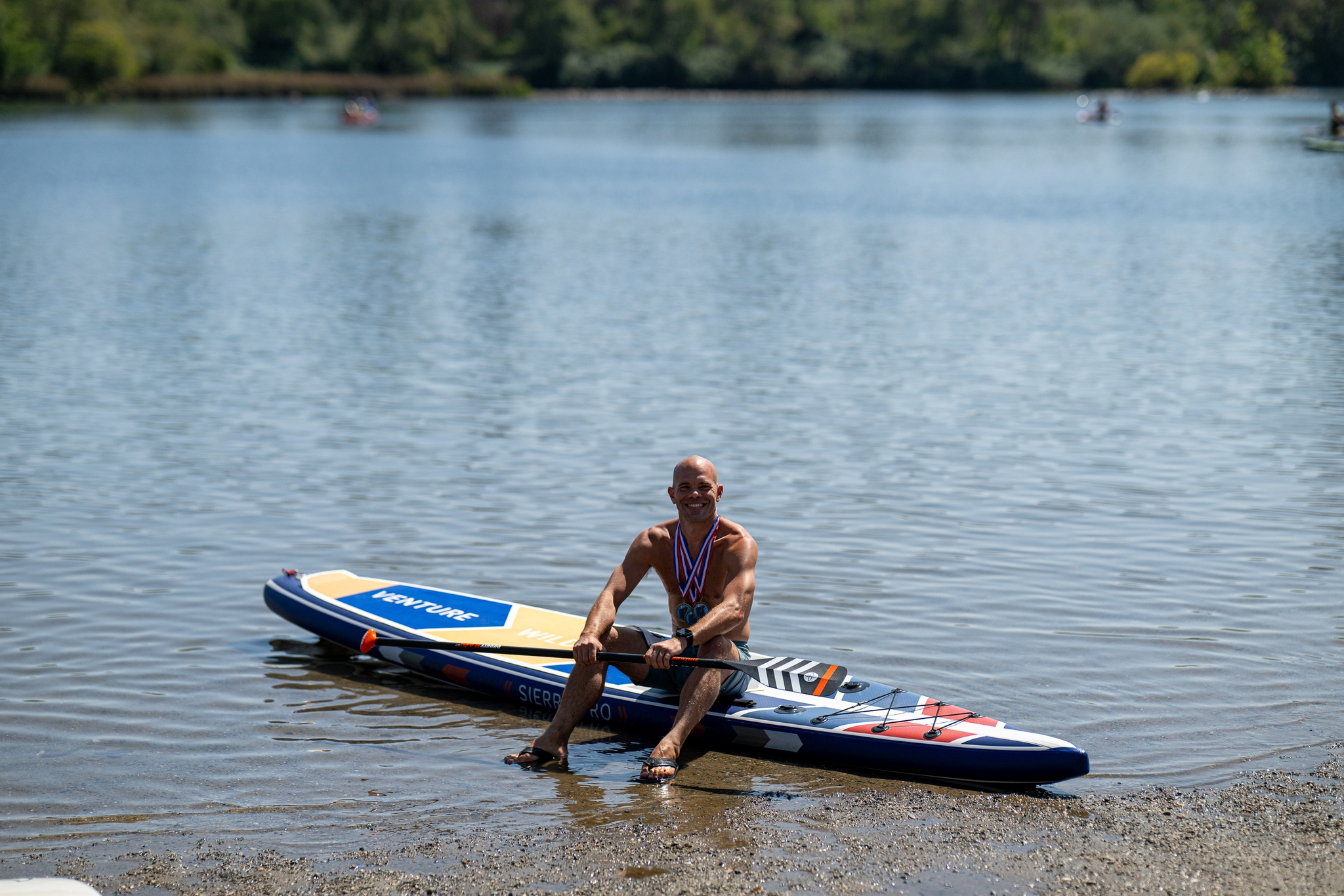
The rest of the weekend, from the Friday meetup through Sunday afternoon on the beach at Black Miner’s Bar.
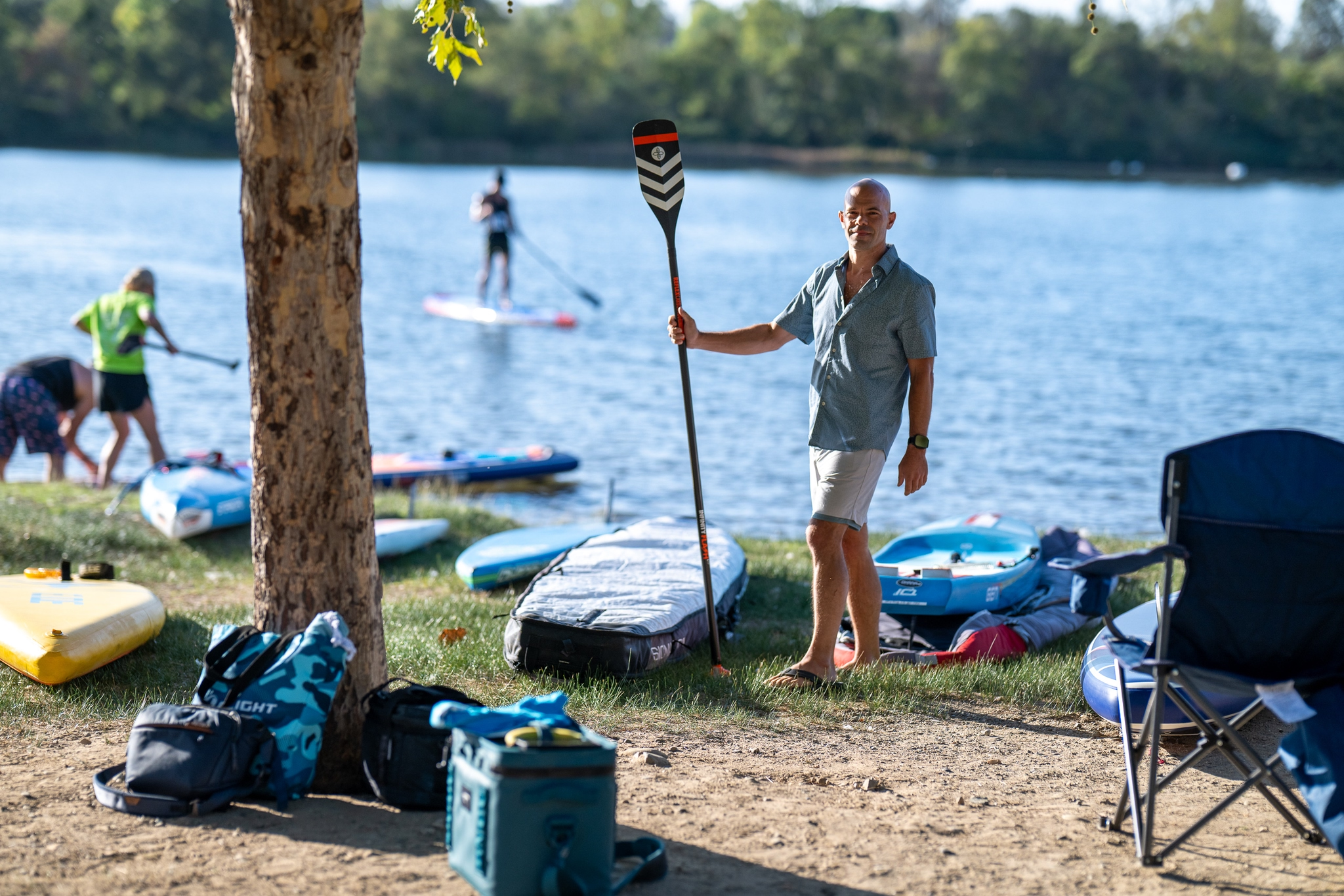
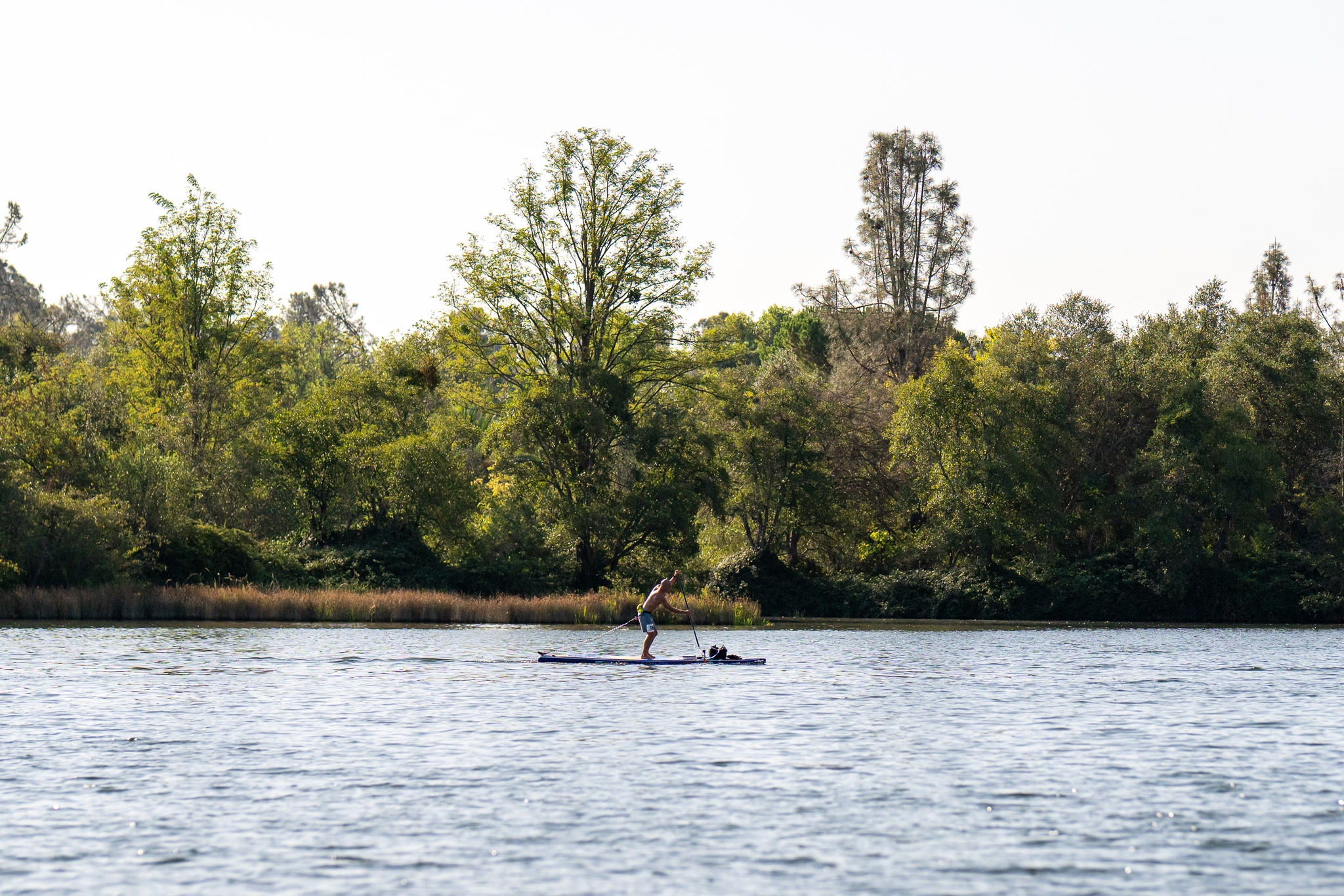
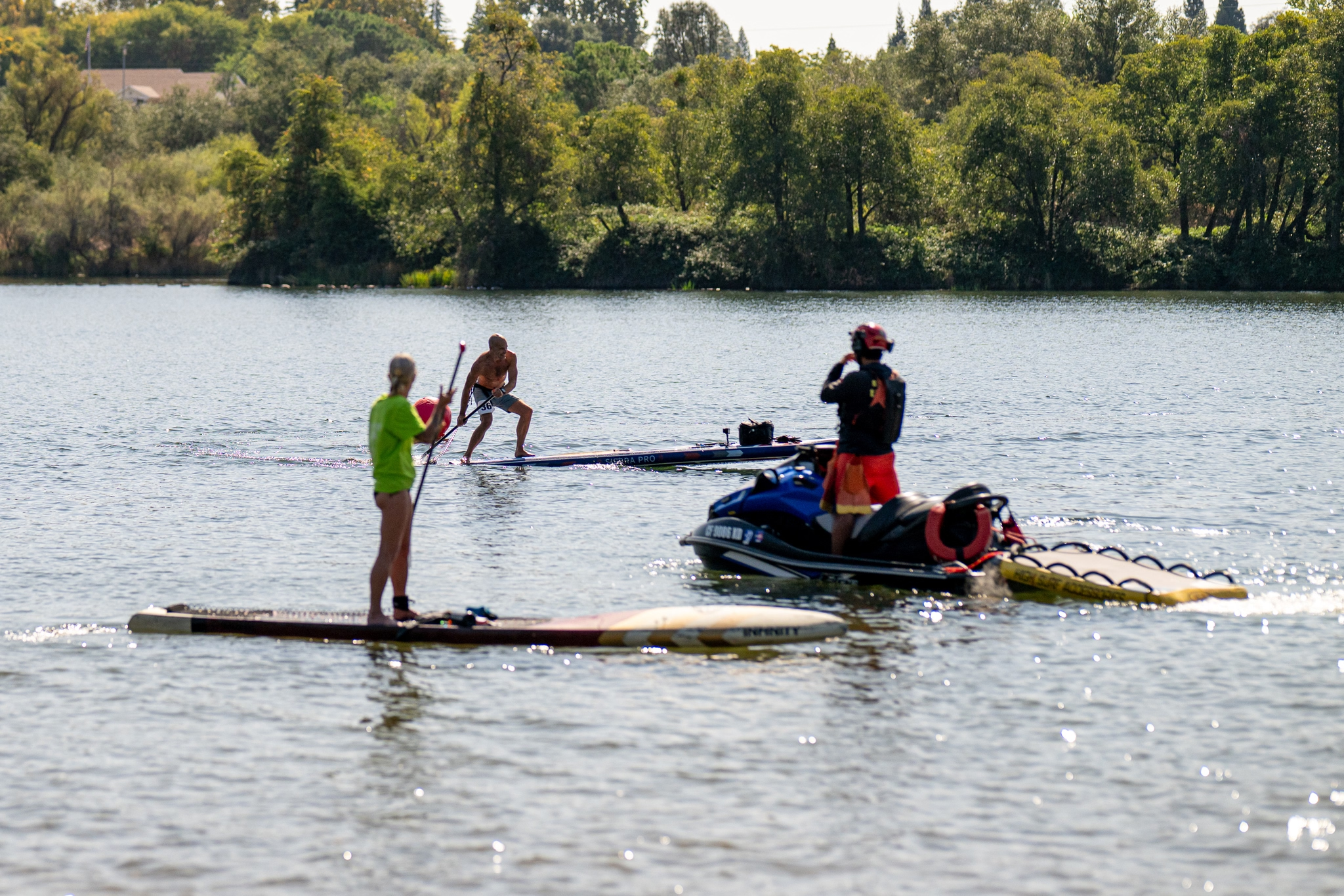
Frequently Asked Questions
What is PaddleSplash?
PaddleSplash is a three day paddling and wellness festival on Lake Natoma in Folsom, California, organized by Nor Cal SUP and presented by Visit Folsom. The 2026 edition ran September 11 through 13 out of Black Miner’s Bar. It combines racing at 2, 5 and 8 miles with SUP yoga, clinics, a dog paddle, a poker paddle and kids’ sprint races.
What charity does PaddleSplash support?
Nor Cal SUP, a 501(c)(3) organization. Proceeds fund its Groms programs and community outreach serving foster and at-risk youth, covering water safety education, scholarships and access to paddling.
Where is PaddleSplash held?
Black Miner’s Bar on Lake Natoma, in Folsom, California, inside Folsom Lake State Recreation Area. Spectators can watch the racing for free from the beach.
Can you race an inflatable SUP at PaddleSplash?
Yes. I raced the 8 Mile on a 14 by 28 inch inflatable at 20 PSI and finished first in SUP Open 18-49 with a time of 1:49:01. The races are open to SUP, outrigger, kayak and surfski, and inflatables line up with everyone else.
How long does an 8 mile SUP race take?
Mine took 1 hour 49 minutes on an inflatable, an average of 4.40 mph. The 2026 field finished between 1:13 and 2:17, with the quickest times going to surfskis rather than stand-up boards. For a stand-up paddler on a 14 foot board, somewhere between 1:45 and 2:15 is a realistic window.
Is the First Timer’s Race good for beginners?
That is what it exists for. It runs separately from the timed distance races, at 11:30 on Sunday, after the longer events have cleared the water.
What should you eat before a SUP race?
What worked for me before an eight mile race was a cup of rice two hours before the start and a banana thirty minutes before. The rice clears the stomach while the carbohydrate stays available, and the banana tops off close enough to the gun to still be working. During the race I took three chia energy gels, half a turkey wrap at the halfway point and the other half later, plus electrolyte drink and 800 ml of water with an electrolyte packet.
How do you recover between races on the same day?
Eat a real meal. Between my eight mile finish and the next start about forty minutes later, I had six potstickers, a pack of dried sweet potato and an electrolyte drink, then a turkey and cheese sandwich on whole grain after the second race. The watch estimated roughly 1,470 active calories across the two recorded races. Replacing some of that between efforts is what keeps the third race from falling apart.
How does the PaddleSplash four person relay work?
Two teams of four race head to head. Each paddler goes out to a buoy on a single board, turns right around it, comes back to the beach and tags the next one, until all four have run a leg. Then the whole team gets onto one large four person inflatable and paddles it out to the red buoy and back. The heat is won by slapping the hand of the race director at the finish line. Teams race in pairs until the final two are left.
Can you paddle Lake Natoma outside of race weekend?
Yes. Lake Natoma has been hand-launch recreation only since April 2025, which keeps it calm and makes it one of the better flatwater training venues in the Sacramento region. Launches, fees, hours and rentals are covered in my Lake Natoma guide.
Affiliate disclosure: Some gear links in this article are Amazon affiliate links. MK Library earns a small commission on qualifying purchases at no additional cost to you. The gels linked here are the ones I actually raced on.
Article Updates
- September 14, 2026 (later): Added full surnames for the relay team-mates, Lourdes Ibarra and Marlene Gideon, both confirmed in the posted 2 Mile results. Added links to the SUP strength program and the paddle grip guide, completing the internal linking plan for this article.
- September 14, 2026: Original publication, written the day after the September 13 race day. Event details, schedule and charity verified against Nor Cal SUP, Visit Folsom and Folsom Times. The 8 Mile finishing time and division placing come from the official timing at results.changeofpace.com.
Sources
- PaddleSplash 2026 official results, Change of Pace timing, September 13, 2026.
- Nor Cal SUP, event organizer and 501(c)(3).
- Folsom Times, PaddleSplash festival coverage, 2026.
- PaddleSignup, PaddleSplash 2026 race listings and start times.
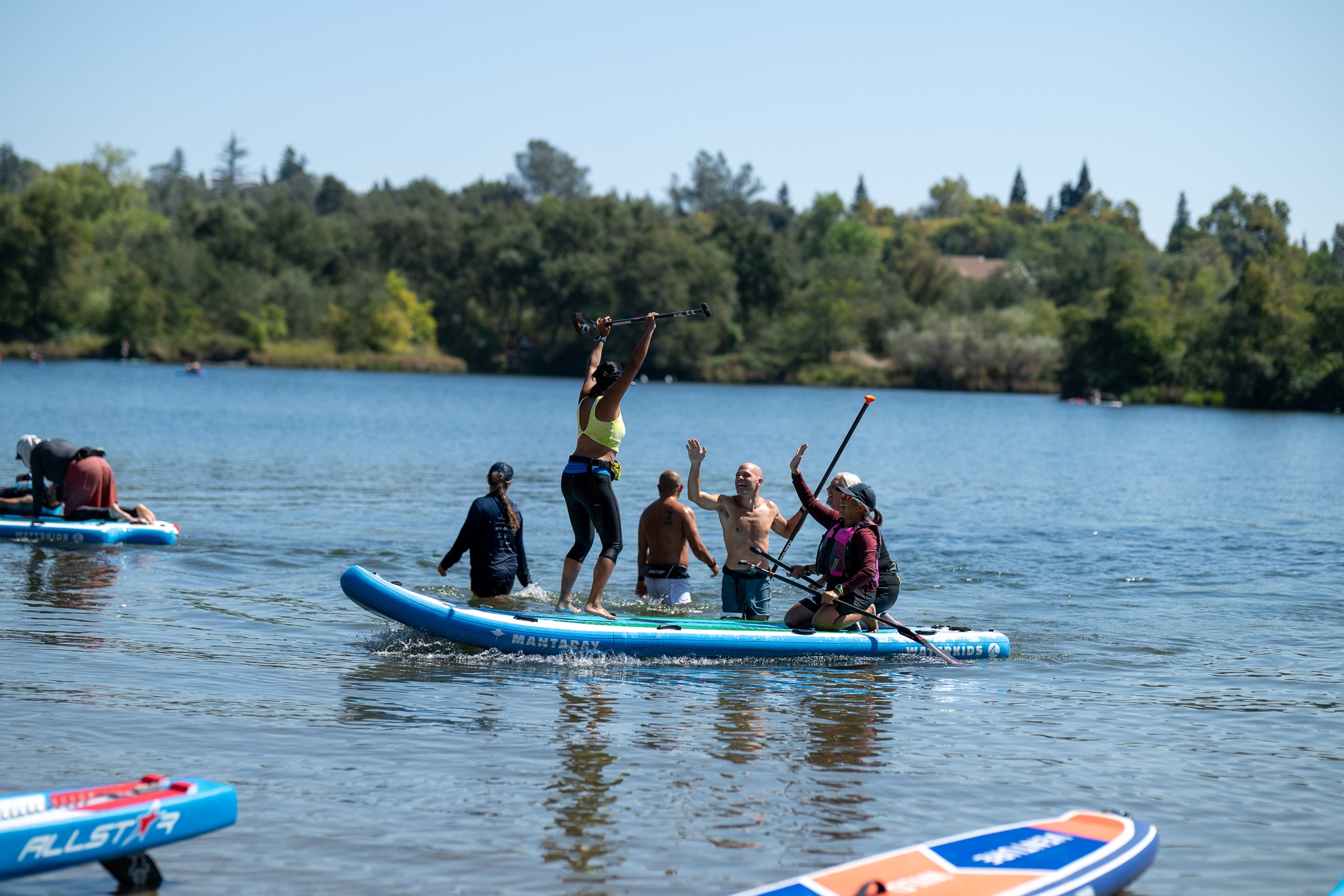
I got pulled into the noon relay, which was not on my plan for the day.
Two teams race head to head. Each team is four paddlers, and the first half runs one at a time on a single board: out to a buoy, right hand turn around it, back to the beach, tag the next paddler. Once all four have run their leg, the entire team climbs onto one large inflatable, a four person manta ray, and paddles it out to the red buoy together.
Four adults on one board, two teams alongside each other, a certain amount of bumping and a great deal of splashing. Whoever gets the manta ray back to shore has one thing left to do: slap the hand of Shelly, the director of PaddleSplash, waiting at the finish line. Hand slapped, heat won. Then the next two teams go, and the next, until it comes down to the final pair.
I raced it with Jaime Johnson, who owns SUP California in Folsom, and two paddling friends, Lourdes Ibarra and Marlene Gideon. We won it.
Relay legs are short and hard and there is nowhere to hide, which is a strange thing to ask of legs that have already gone eight miles and a sprint.
The Fueling Plan That Made the Difference
I have written before about bonking on a long paddle, and that article exists because I got it badly wrong once and spent the back half of a session learning what glycogen depletion feels like. Since then I have treated food as equipment.
In the weeks before PaddleSplash I used my training paddles to test it. Different foods, different timing, same water, and a note afterward about how the session went. The pattern was not subtle. On the paddles where I was deliberate about what went in and when, I paddled better and I felt better afterward. On the paddles where I ate whatever was in the house and left at whatever time suited me, I was slower and flatter.
What I Tested in Training
The testing was not sophisticated. I changed one thing at a time on training paddles, wrote down what I ate and when I ate it, and noted afterward whether the session felt strong or flat. Gels at different points. Real food on the board or no food on the board. Electrolytes in the water or plain water. Breakfast at two hours before or closer to the start.
What came out the other side is the plan below, and I ran it at PaddleSplash without improvising.
The Day Before
Saturday was a carbohydrate day with a large pile of raw fish in the middle of it.
Through the day: a honey ham sandwich on multigrain, a banana, a serving of Japanese soba noodles, and six potstickers. In the evening, about 250 grams of sashimi grade fish split between yellowfin tuna and Ora King salmon, dressed with sesame oil and ponzu. The fish alone is somewhere around 50 grams of protein.
Around it: a second banana, three dried apricots, four small slices of dried apple, two fresh jujubes, a pluot, three teaspoons of brown sugar, and a 260 ml coconut water carrying 11 grams of carbohydrate, 70 mg of sodium and 490 mg of potassium. Then roughly half of a shared meal, which came to part of a sandwich, some potato chips, a bowl of white rice and four pieces of vegetable sushi.
Call it 165 to 230 grams of carbohydrate in the evening, and somewhere near 2,700 calories across the day. Those are portion estimates. Nothing was weighed.
Carbohydrate went in across the whole day instead of stacking into one enormous dinner, the protein landed in the evening, and the electrolytes started before I was anywhere near a start line.
Race Morning
A cup of rice, two hours before the start. A banana, thirty minutes before.
That is the whole breakfast.
Rice two hours out is enough time to clear the stomach and still have the carbohydrate available. The banana is the top-off, close enough to the gun that it is still working when the race begins and small enough that it does not sit there while you paddle.
On the Board During the Eight Mile
Two Huma chia energy gels went down in the first half. They are made from fruit puree and powdered chia rather than maltodextrin, and the Plus version carries 240 mg of sodium alongside the carbohydrate.
The outbound leg, out toward the dam, was all upwind. It was a battle, and it was also the entire plan.
Here is the arithmetic I was doing out there. Stop on the way out and the wind pushes you backwards, so every second of rest costs you twice. Stop on the way home and the wind keeps working while you sit there. So I ground the outbound harder than felt sensible, banking time against a downwind return I intended to spend eating.
What I was thinking about for most of that upwind leg was a sandwich.
Then I stopped.
Just past halfway, at the Aquatic Center turnaround, I parked the board, ate half a turkey, cheese and lettuce wrap, and took a selfie of myself picnicking in the middle of a race.
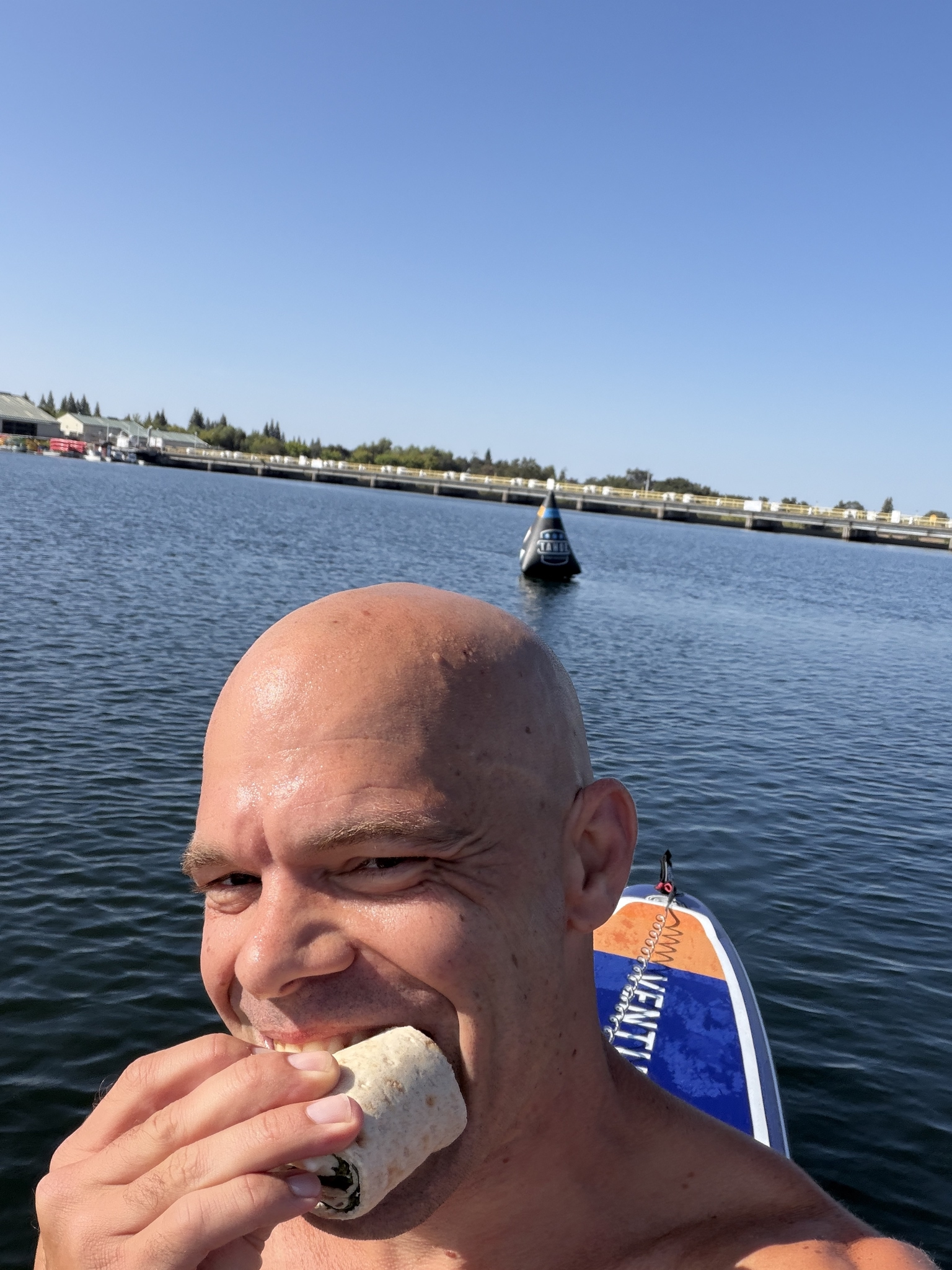
A third gel went down on the way back. At the island I stopped a second time, ate the other half of the wrap, texted a couple of friends that I was about fifteen minutes out, and got back to paddling.
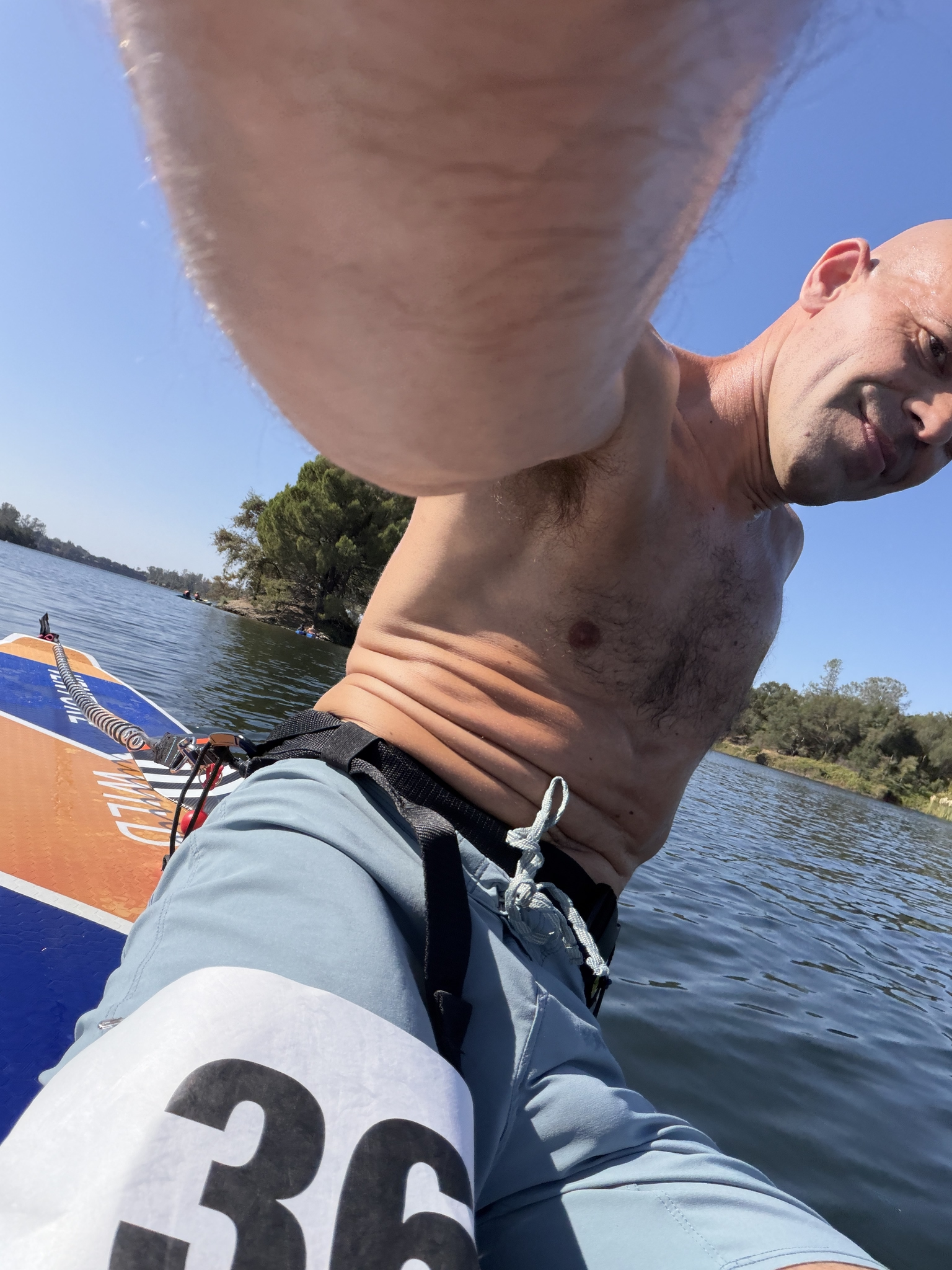
At both stops I drank a bottle of BODYARMOR Flash IV and worked through 800 ml of water with a Liquid IV packet in it.
Two full stops to eat a sandwich. The race still went 1:49:01 and first in division.
Solid food at the halfway point of a two hour effort does something a gel does not, and the minute it costs comes back.
Between Races
Off the water from the eight mile, I ate six potstickers, a pack of dried sweet potato from Costco, and drank another BODYARMOR. That is a real meal, eaten roughly forty minutes before lining up again, and it is the decision I would defend hardest out of the whole day.
After the First Timer’s Race came another 800 ml of water with Liquid IV and a whole grain sandwich with turkey and cheese. Through the relay and the awards after it, another two hours, I kept picking at the same things in small bites and kept drinking.
The watch put the two recorded races at about 1,470 active calories. Six potstickers against that number is arithmetic.
How Long the Energy Held
I stayed up and functional through the afternoon and into the evening, and went down hard around nine at night. For a day with three races in it, crashing at nine is a result rather than a failure. The measure of a fueling plan is not how you feel crossing the line. It is whether you are still standing six hours later.
What I Am Taking to Nationals
The USA SUP National Championships run September 18 through 20 in Gig Harbor, Washington, and I am racing the 100 meter sprint, the technical course and the 10K in the first inflatable division the event has run. Gig Harbor is five days after PaddleSplash.
Three things carry over.
The schedule travels. The single most useful thing I did at PaddleSplash was settle in advance what went in and when, rather than deciding it on the day. Nationals spreads the Big Three across three days rather than three hours, which makes the planning easier and the discipline harder.
Race pace matched training pace, so training pace is the plan. Holding 4.40 mph on race day when the dataset says 4.47 means the number is real. For the 10K I will pace to what the data says I can hold rather than to whoever goes out hard off the line.
Back-to-back racing is a skill of its own. Three starts in three hours taught me more about recovery between efforts than any single long paddle has. The sprint and the technical course at Nationals are heats, which is the same problem in a shorter frame.
One thing does not carry over. Lake Natoma is flat, fresh and familiar. Gig Harbor is salt water with tide and current, and the Narrows does not care what my times on Natoma look like.
Racing PaddleSplash Yourself
The event runs annually out of Black Miner’s Bar. The distances span 2, 5 and 8 miles, with a First Timer’s Race and Grom Sprints for kids aged eight to seventeen, and every race is open to SUP, outrigger, kayak and surfski. There was a virtual division at $35, or $69 with a board rental, for anyone who could not get to Folsom.
If you have never raced, the First Timer’s Race is the entry point, and I have written a full guide to preparing for a first SUP race. If you want to know the launch itself before you show up, Black Miner’s Bar is covered in my Lake Natoma guide, including parking and the boat ramp.
Eight miles asks more of the shoulders and hands than a recreational paddle does. The strength work behind it is in my SUP strength program, and dorsal hand pain on long efforts usually traces back to grip pressure, which I worked through in paddle grip and hand position.
PaddleSplash 2026 in Photographs
The rest of the weekend, from the Friday meetup through Sunday afternoon on the beach at Black Miner’s Bar.
Frequently Asked Questions
What is PaddleSplash?
PaddleSplash is a three day paddling and wellness festival on Lake Natoma in Folsom, California, organized by Nor Cal SUP and presented by Visit Folsom. The 2026 edition ran September 11 through 13 out of Black Miner’s Bar. It combines racing at 2, 5 and 8 miles with SUP yoga, clinics, a dog paddle, a poker paddle and kids’ sprint races.
What charity does PaddleSplash support?
Nor Cal SUP, a 501(c)(3) organization. Proceeds fund its Groms programs and community outreach serving foster and at-risk youth, covering water safety education, scholarships and access to paddling.
Where is PaddleSplash held?
Black Miner’s Bar on Lake Natoma, in Folsom, California, inside Folsom Lake State Recreation Area. Spectators can watch the racing for free from the beach.
Can you race an inflatable SUP at PaddleSplash?
Yes. I raced the 8 Mile on a 14 by 28 inch inflatable at 20 PSI and finished first in SUP Open 18-49 with a time of 1:49:01. The races are open to SUP, outrigger, kayak and surfski, and inflatables line up with everyone else.
How long does an 8 mile SUP race take?
Mine took 1 hour 49 minutes on an inflatable, an average of 4.40 mph. The 2026 field finished between 1:13 and 2:17, with the quickest times going to surfskis rather than stand-up boards. For a stand-up paddler on a 14 foot board, somewhere between 1:45 and 2:15 is a realistic window.
Is the First Timer’s Race good for beginners?
That is what it exists for. It runs separately from the timed distance races, at 11:30 on Sunday, after the longer events have cleared the water.
What should you eat before a SUP race?
What worked for me before an eight mile race was a cup of rice two hours before the start and a banana thirty minutes before. The rice clears the stomach while the carbohydrate stays available, and the banana tops off close enough to the gun to still be working. During the race I took three chia energy gels, half a turkey wrap at the halfway point and the other half later, plus electrolyte drink and 800 ml of water with an electrolyte packet.
How do you recover between races on the same day?
Eat a real meal. Between my eight mile finish and the next start about forty minutes later, I had six potstickers, a pack of dried sweet potato and an electrolyte drink, then a turkey and cheese sandwich on whole grain after the second race. The watch estimated roughly 1,470 active calories across the two recorded races. Replacing some of that between efforts is what keeps the third race from falling apart.
How does the PaddleSplash four person relay work?
Two teams of four race head to head. Each paddler goes out to a buoy on a single board, turns right around it, comes back to the beach and tags the next one, until all four have run a leg. Then the whole team gets onto one large four person inflatable and paddles it out to the red buoy and back. The heat is won by slapping the hand of the race director at the finish line. Teams race in pairs until the final two are left.
Can you paddle Lake Natoma outside of race weekend?
Yes. Lake Natoma has been hand-launch recreation only since April 2025, which keeps it calm and makes it one of the better flatwater training venues in the Sacramento region. Launches, fees, hours and rentals are covered in my Lake Natoma guide.
Affiliate disclosure: Some gear links in this article are Amazon affiliate links. MK Library earns a small commission on qualifying purchases at no additional cost to you. The gels linked here are the ones I actually raced on.
Article Updates
- September 14, 2026 (later): Added full surnames for the relay team-mates, Lourdes Ibarra and Marlene Gideon, both confirmed in the posted 2 Mile results. Added links to the SUP strength program and the paddle grip guide, completing the internal linking plan for this article.
- September 14, 2026: Original publication, written the day after the September 13 race day. Event details, schedule and charity verified against Nor Cal SUP, Visit Folsom and Folsom Times. The 8 Mile finishing time and division placing come from the official timing at results.changeofpace.com.
Sources
- PaddleSplash 2026 official results, Change of Pace timing, September 13, 2026.
- Nor Cal SUP, event organizer and 501(c)(3).
- Folsom Times, PaddleSplash festival coverage, 2026.
- PaddleSignup, PaddleSplash 2026 race listings and start times.
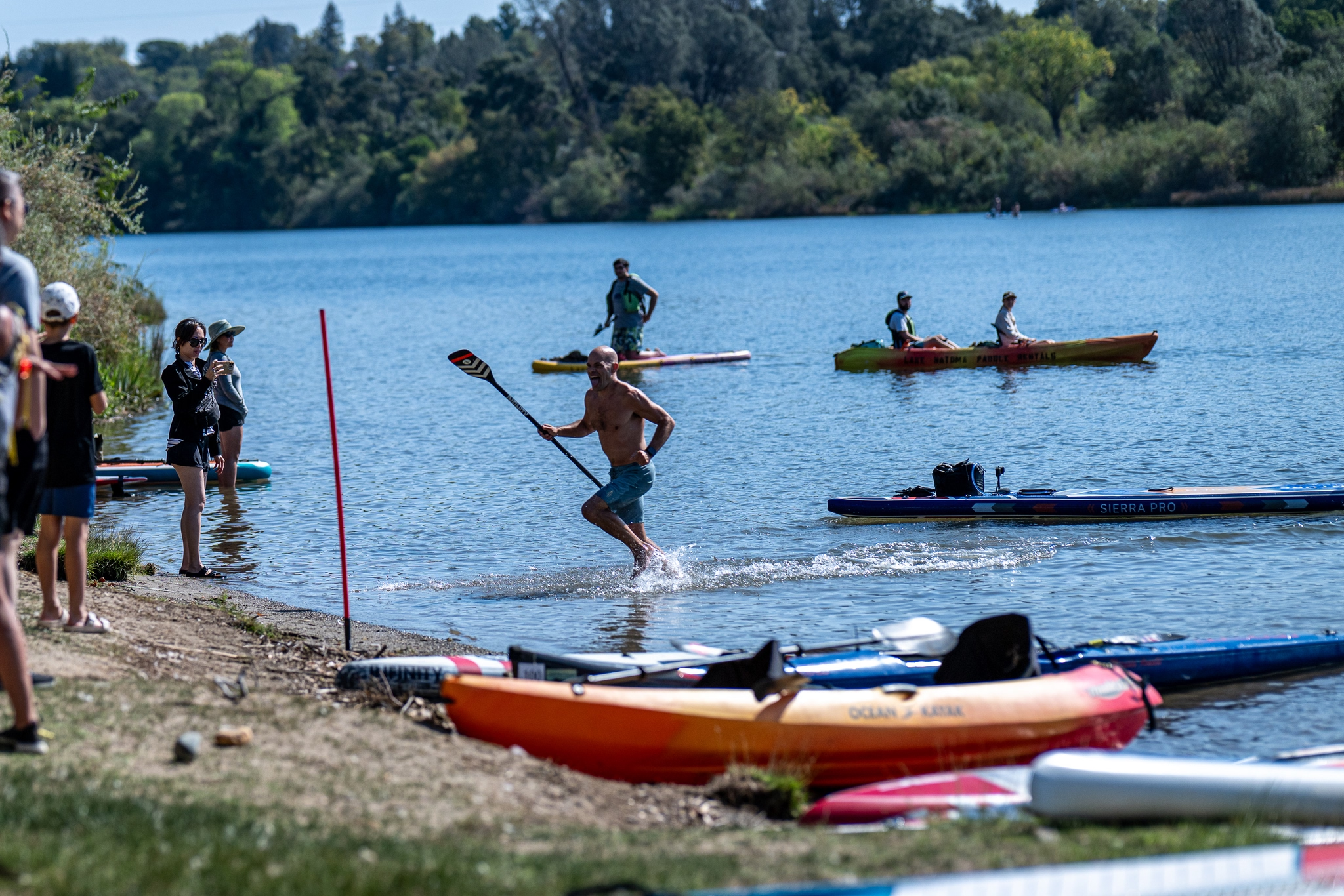
Forty minutes after finishing the eight mile I was back on the line for the First Timer’s Race at 11:30, and won it. The recovery window between those two is the whole story of the day, and it is covered further down.
The Four Person Relay
I got pulled into the noon relay, which was not on my plan for the day.
Two teams race head to head. Each team is four paddlers, and the first half runs one at a time on a single board: out to a buoy, right hand turn around it, back to the beach, tag the next paddler. Once all four have run their leg, the entire team climbs onto one large inflatable, a four person manta ray, and paddles it out to the red buoy together.
Four adults on one board, two teams alongside each other, a certain amount of bumping and a great deal of splashing. Whoever gets the manta ray back to shore has one thing left to do: slap the hand of Shelly, the director of PaddleSplash, waiting at the finish line. Hand slapped, heat won. Then the next two teams go, and the next, until it comes down to the final pair.
I raced it with Jaime Johnson, who owns SUP California in Folsom, and two paddling friends, Lourdes Ibarra and Marlene Gideon. We won it.
Relay legs are short and hard and there is nowhere to hide, which is a strange thing to ask of legs that have already gone eight miles and a sprint.
The Fueling Plan That Made the Difference
I have written before about bonking on a long paddle, and that article exists because I got it badly wrong once and spent the back half of a session learning what glycogen depletion feels like. Since then I have treated food as equipment.
In the weeks before PaddleSplash I used my training paddles to test it. Different foods, different timing, same water, and a note afterward about how the session went. The pattern was not subtle. On the paddles where I was deliberate about what went in and when, I paddled better and I felt better afterward. On the paddles where I ate whatever was in the house and left at whatever time suited me, I was slower and flatter.
What I Tested in Training
The testing was not sophisticated. I changed one thing at a time on training paddles, wrote down what I ate and when I ate it, and noted afterward whether the session felt strong or flat. Gels at different points. Real food on the board or no food on the board. Electrolytes in the water or plain water. Breakfast at two hours before or closer to the start.
What came out the other side is the plan below, and I ran it at PaddleSplash without improvising.
The Day Before
Saturday was a carbohydrate day with a large pile of raw fish in the middle of it.
Through the day: a honey ham sandwich on multigrain, a banana, a serving of Japanese soba noodles, and six potstickers. In the evening, about 250 grams of sashimi grade fish split between yellowfin tuna and Ora King salmon, dressed with sesame oil and ponzu. The fish alone is somewhere around 50 grams of protein.
Around it: a second banana, three dried apricots, four small slices of dried apple, two fresh jujubes, a pluot, three teaspoons of brown sugar, and a 260 ml coconut water carrying 11 grams of carbohydrate, 70 mg of sodium and 490 mg of potassium. Then roughly half of a shared meal, which came to part of a sandwich, some potato chips, a bowl of white rice and four pieces of vegetable sushi.
Call it 165 to 230 grams of carbohydrate in the evening, and somewhere near 2,700 calories across the day. Those are portion estimates. Nothing was weighed.
Carbohydrate went in across the whole day instead of stacking into one enormous dinner, the protein landed in the evening, and the electrolytes started before I was anywhere near a start line.
Race Morning
A cup of rice, two hours before the start. A banana, thirty minutes before.
That is the whole breakfast.
Rice two hours out is enough time to clear the stomach and still have the carbohydrate available. The banana is the top-off, close enough to the gun that it is still working when the race begins and small enough that it does not sit there while you paddle.
On the Board During the Eight Mile
Two Huma chia energy gels went down in the first half. They are made from fruit puree and powdered chia rather than maltodextrin, and the Plus version carries 240 mg of sodium alongside the carbohydrate.
The outbound leg, out toward the dam, was all upwind. It was a battle, and it was also the entire plan.
Here is the arithmetic I was doing out there. Stop on the way out and the wind pushes you backwards, so every second of rest costs you twice. Stop on the way home and the wind keeps working while you sit there. So I ground the outbound harder than felt sensible, banking time against a downwind return I intended to spend eating.
What I was thinking about for most of that upwind leg was a sandwich.
Then I stopped.
Just past halfway, at the Aquatic Center turnaround, I parked the board, ate half a turkey, cheese and lettuce wrap, and took a selfie of myself picnicking in the middle of a race.
A third gel went down on the way back. At the island I stopped a second time, ate the other half of the wrap, texted a couple of friends that I was about fifteen minutes out, and got back to paddling.
At both stops I drank a bottle of BODYARMOR Flash IV and worked through 800 ml of water with a Liquid IV packet in it.
Two full stops to eat a sandwich. The race still went 1:49:01 and first in division.
Solid food at the halfway point of a two hour effort does something a gel does not, and the minute it costs comes back.
Between Races
Off the water from the eight mile, I ate six potstickers, a pack of dried sweet potato from Costco, and drank another BODYARMOR. That is a real meal, eaten roughly forty minutes before lining up again, and it is the decision I would defend hardest out of the whole day.
After the First Timer’s Race came another 800 ml of water with Liquid IV and a whole grain sandwich with turkey and cheese. Through the relay and the awards after it, another two hours, I kept picking at the same things in small bites and kept drinking.
The watch put the two recorded races at about 1,470 active calories. Six potstickers against that number is arithmetic.
How Long the Energy Held
I stayed up and functional through the afternoon and into the evening, and went down hard around nine at night. For a day with three races in it, crashing at nine is a result rather than a failure. The measure of a fueling plan is not how you feel crossing the line. It is whether you are still standing six hours later.
What I Am Taking to Nationals
The USA SUP National Championships run September 18 through 20 in Gig Harbor, Washington, and I am racing the 100 meter sprint, the technical course and the 10K in the first inflatable division the event has run. Gig Harbor is five days after PaddleSplash.
Three things carry over.
The schedule travels. The single most useful thing I did at PaddleSplash was settle in advance what went in and when, rather than deciding it on the day. Nationals spreads the Big Three across three days rather than three hours, which makes the planning easier and the discipline harder.
Race pace matched training pace, so training pace is the plan. Holding 4.40 mph on race day when the dataset says 4.47 means the number is real. For the 10K I will pace to what the data says I can hold rather than to whoever goes out hard off the line.
Back-to-back racing is a skill of its own. Three starts in three hours taught me more about recovery between efforts than any single long paddle has. The sprint and the technical course at Nationals are heats, which is the same problem in a shorter frame.
One thing does not carry over. Lake Natoma is flat, fresh and familiar. Gig Harbor is salt water with tide and current, and the Narrows does not care what my times on Natoma look like.
Racing PaddleSplash Yourself
The event runs annually out of Black Miner’s Bar. The distances span 2, 5 and 8 miles, with a First Timer’s Race and Grom Sprints for kids aged eight to seventeen, and every race is open to SUP, outrigger, kayak and surfski. There was a virtual division at $35, or $69 with a board rental, for anyone who could not get to Folsom.
If you have never raced, the First Timer’s Race is the entry point, and I have written a full guide to preparing for a first SUP race. If you want to know the launch itself before you show up, Black Miner’s Bar is covered in my Lake Natoma guide, including parking and the boat ramp.
Eight miles asks more of the shoulders and hands than a recreational paddle does. The strength work behind it is in my SUP strength program, and dorsal hand pain on long efforts usually traces back to grip pressure, which I worked through in paddle grip and hand position.
PaddleSplash 2026 in Photographs
The rest of the weekend, from the Friday meetup through Sunday afternoon on the beach at Black Miner’s Bar.
Frequently Asked Questions
What is PaddleSplash?
PaddleSplash is a three day paddling and wellness festival on Lake Natoma in Folsom, California, organized by Nor Cal SUP and presented by Visit Folsom. The 2026 edition ran September 11 through 13 out of Black Miner’s Bar. It combines racing at 2, 5 and 8 miles with SUP yoga, clinics, a dog paddle, a poker paddle and kids’ sprint races.
What charity does PaddleSplash support?
Nor Cal SUP, a 501(c)(3) organization. Proceeds fund its Groms programs and community outreach serving foster and at-risk youth, covering water safety education, scholarships and access to paddling.
Where is PaddleSplash held?
Black Miner’s Bar on Lake Natoma, in Folsom, California, inside Folsom Lake State Recreation Area. Spectators can watch the racing for free from the beach.
Can you race an inflatable SUP at PaddleSplash?
Yes. I raced the 8 Mile on a 14 by 28 inch inflatable at 20 PSI and finished first in SUP Open 18-49 with a time of 1:49:01. The races are open to SUP, outrigger, kayak and surfski, and inflatables line up with everyone else.
How long does an 8 mile SUP race take?
Mine took 1 hour 49 minutes on an inflatable, an average of 4.40 mph. The 2026 field finished between 1:13 and 2:17, with the quickest times going to surfskis rather than stand-up boards. For a stand-up paddler on a 14 foot board, somewhere between 1:45 and 2:15 is a realistic window.
Is the First Timer’s Race good for beginners?
That is what it exists for. It runs separately from the timed distance races, at 11:30 on Sunday, after the longer events have cleared the water.
What should you eat before a SUP race?
What worked for me before an eight mile race was a cup of rice two hours before the start and a banana thirty minutes before. The rice clears the stomach while the carbohydrate stays available, and the banana tops off close enough to the gun to still be working. During the race I took three chia energy gels, half a turkey wrap at the halfway point and the other half later, plus electrolyte drink and 800 ml of water with an electrolyte packet.
How do you recover between races on the same day?
Eat a real meal. Between my eight mile finish and the next start about forty minutes later, I had six potstickers, a pack of dried sweet potato and an electrolyte drink, then a turkey and cheese sandwich on whole grain after the second race. The watch estimated roughly 1,470 active calories across the two recorded races. Replacing some of that between efforts is what keeps the third race from falling apart.
How does the PaddleSplash four person relay work?
Two teams of four race head to head. Each paddler goes out to a buoy on a single board, turns right around it, comes back to the beach and tags the next one, until all four have run a leg. Then the whole team gets onto one large four person inflatable and paddles it out to the red buoy and back. The heat is won by slapping the hand of the race director at the finish line. Teams race in pairs until the final two are left.
Can you paddle Lake Natoma outside of race weekend?
Yes. Lake Natoma has been hand-launch recreation only since April 2025, which keeps it calm and makes it one of the better flatwater training venues in the Sacramento region. Launches, fees, hours and rentals are covered in my Lake Natoma guide.
Affiliate disclosure: Some gear links in this article are Amazon affiliate links. MK Library earns a small commission on qualifying purchases at no additional cost to you. The gels linked here are the ones I actually raced on.
Article Updates
- September 14, 2026 (later): Added full surnames for the relay team-mates, Lourdes Ibarra and Marlene Gideon, both confirmed in the posted 2 Mile results. Added links to the SUP strength program and the paddle grip guide, completing the internal linking plan for this article.
- September 14, 2026: Original publication, written the day after the September 13 race day. Event details, schedule and charity verified against Nor Cal SUP, Visit Folsom and Folsom Times. The 8 Mile finishing time and division placing come from the official timing at results.changeofpace.com.
Sources
- PaddleSplash 2026 official results, Change of Pace timing, September 13, 2026.
- Nor Cal SUP, event organizer and 501(c)(3).
- Folsom Times, PaddleSplash festival coverage, 2026.
- PaddleSignup, PaddleSplash 2026 race listings and start times.
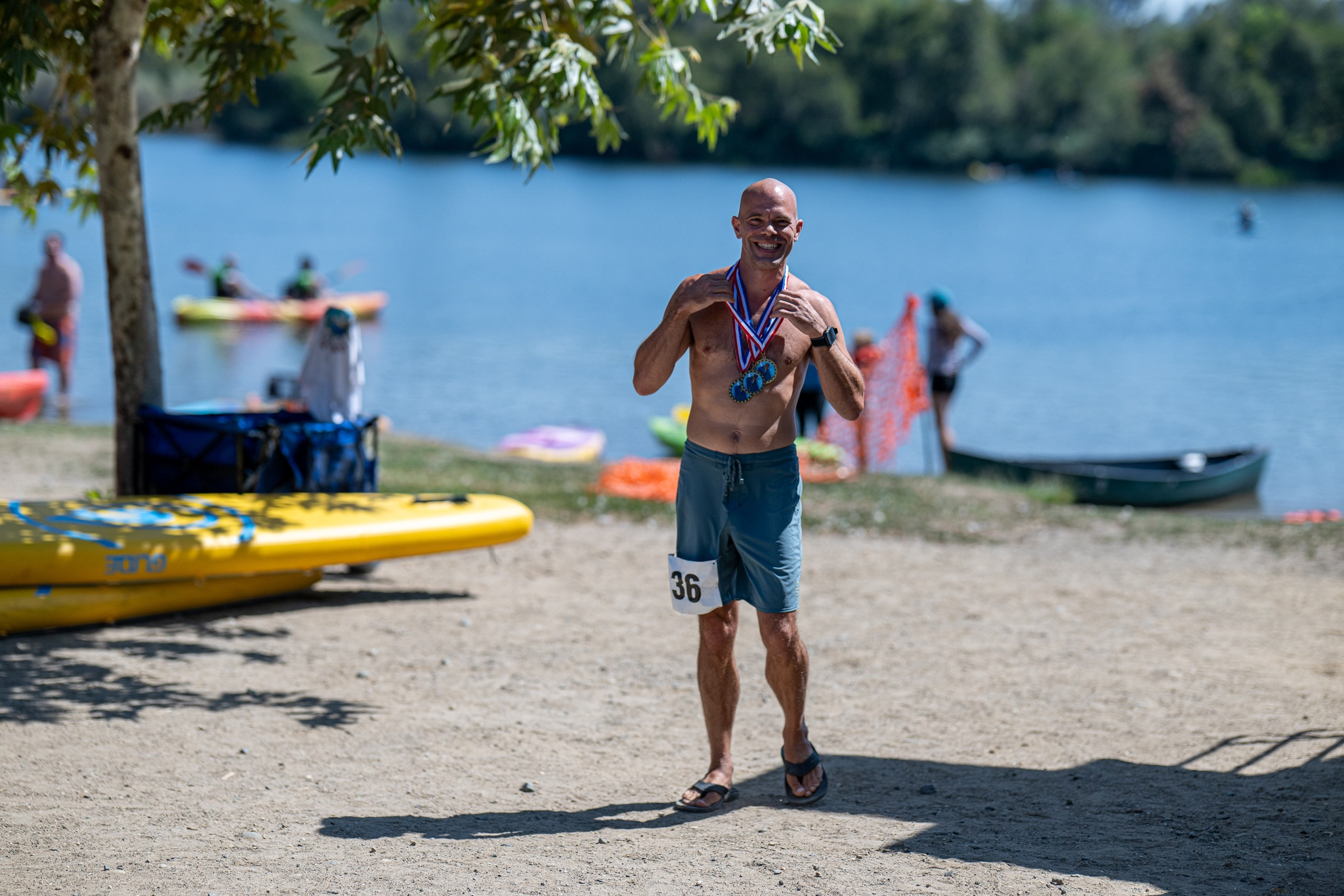
My eight mile started at nine in the morning on a Sunday and I crossed the line at 10:49. That gave me about forty minutes on the beach before the First Timer’s Race went off at 11:30, and half an hour after that I was back on the water for a four person relay at noon. Three races. Three first places. One more medal for the overall, which makes three golds in a bag that was not built to carry three golds.
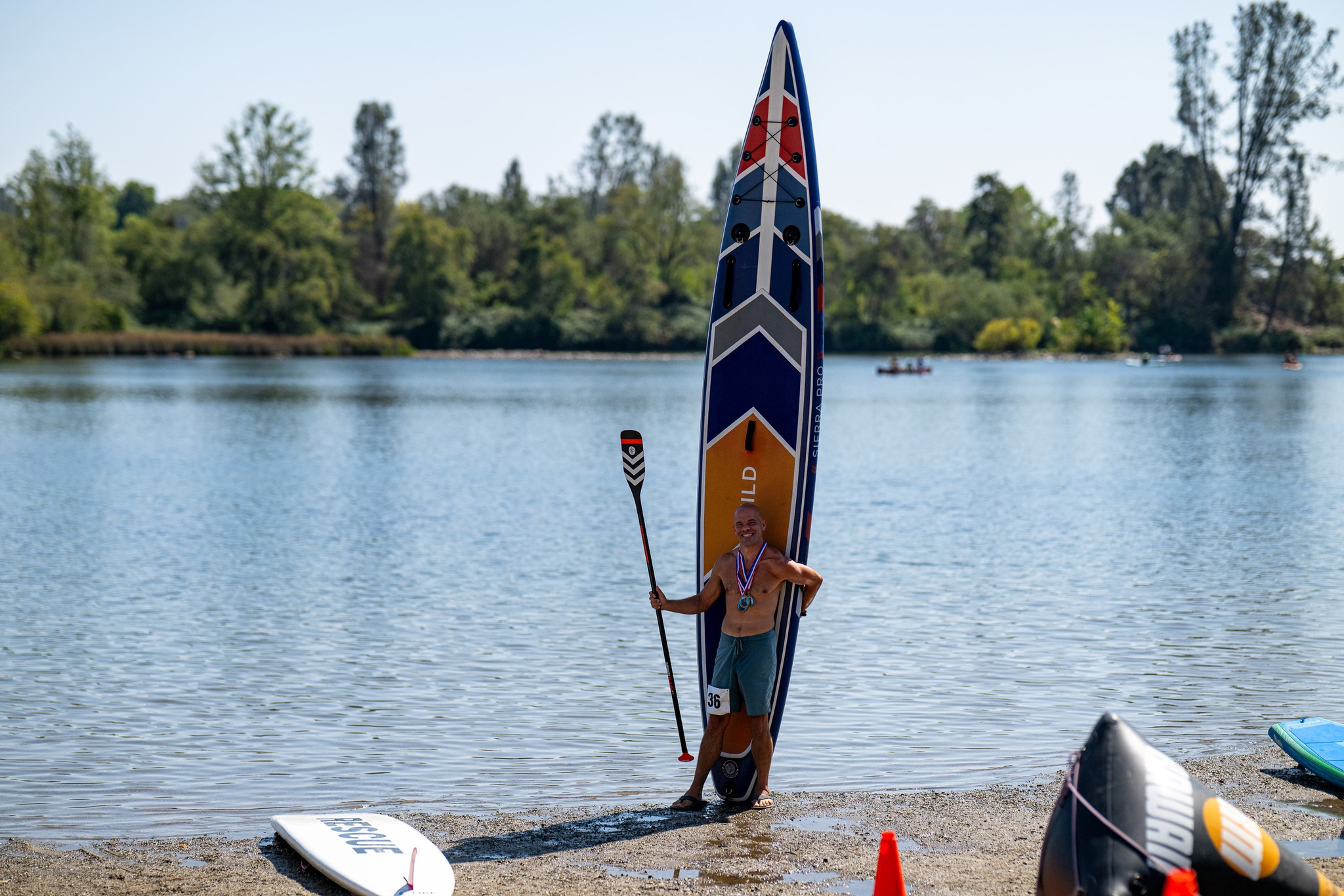
The racing is the easy part to write about. What decided how the day went started well before race morning, in the weeks of training paddles where I worked out what to eat and when.
Key Takeaways
- PaddleSplash is a three day water festival on Lake Natoma, run September 11 through 13, 2026 out of Black Miner’s Bar in Folsom, California.
- It is a fundraiser, not a promoter’s race. Nor Cal SUP is a 501(c)(3), and proceeds go to its Groms programs and outreach for foster and at-risk youth through water safety education, scholarships and access.
- The 8 Mile took me 1:49:01 on a 14 by 28 inch inflatable, good for first in SUP Open 18-49 and first overall among inflatables, in a field where surfskis took the top four places.
- That works out to 4.40 mph, which is within a rounding error of the moving pace I have logged across a year of training on the same board.
- Racing three times in three hours is a fueling problem before it is a fitness problem. The gap between races is where a day like this falls apart.
- The schedule was written down in advance. Deciding what to eat while standing on a beach after an eight mile race is a decision made by someone whose blood sugar is already falling.
What PaddleSplash Is
PaddleSplash ran September 11 through 13, 2026 at Black Miner’s Bar on Lake Natoma, organized by Nor Cal SUP and presented by Visit Folsom. Calling it a race weekend undersells it. There were races, and there was also SUP yoga, a dog paddle, a poker paddle, beginner clinics, a kayaking seminar, and sessions on outrigger and sea kayak rescue technique.
The Big Splash put a hundred people on boards doing yoga underneath Rainbow Bridge. Spectating costs nothing. You walk down to the sandy beach at Black Miner’s Bar and watch, which is worth knowing if you have a family that wants to come and a family that does not want to race.
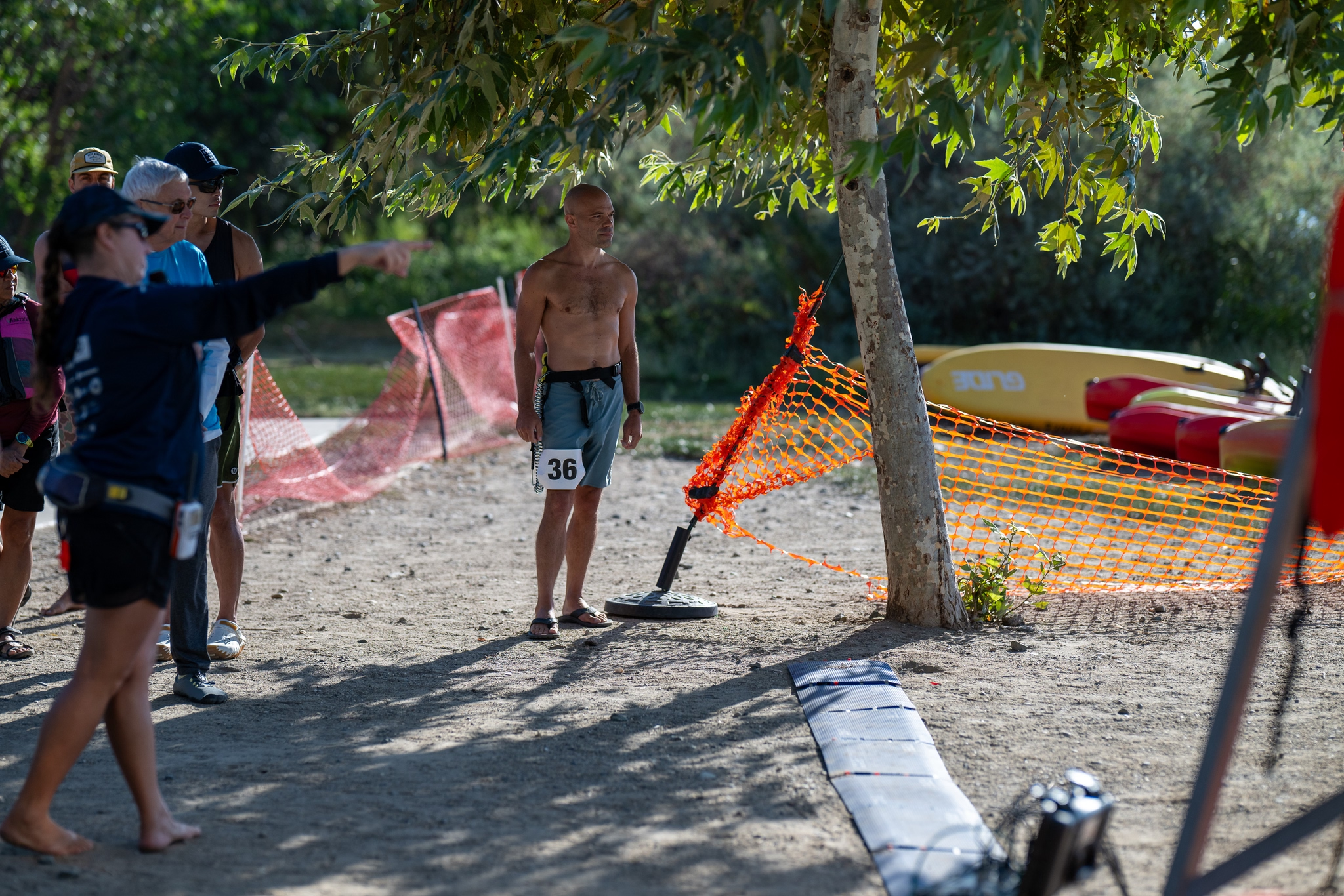
Shelly Alves of Nor Cal SUP put the intent plainly: “This year, we’ve expanded the festival experience so paddlers of all abilities can find a way to participate.”
Where the Money Goes
Nor Cal SUP is a 501(c)(3), and PaddleSplash is its fundraiser of the year. The proceeds fund the Groms programs and community outreach that serve foster and at-risk youth: water safety education, scholarships, and getting kids onto boards who would otherwise never stand on one.
That changes the character of the event on the water. The Grom Sprint on Sunday morning had nine to twelve year olds finishing in twenty two and twenty five minutes, on the same course, off the same beach, an hour before the adults lined up for the First Timer’s Race.
The Three Races
Sunday stacks its schedule tight. The 8 Mile goes off at 9:00, the 2 Mile at 9:15, the Grom Sprint at 11:00, the First Timer’s Race at 11:30, and the four person relay at noon. I entered the 8 Mile, the First Timer’s Race and the relay, which is how a person ends up racing three times before lunch.
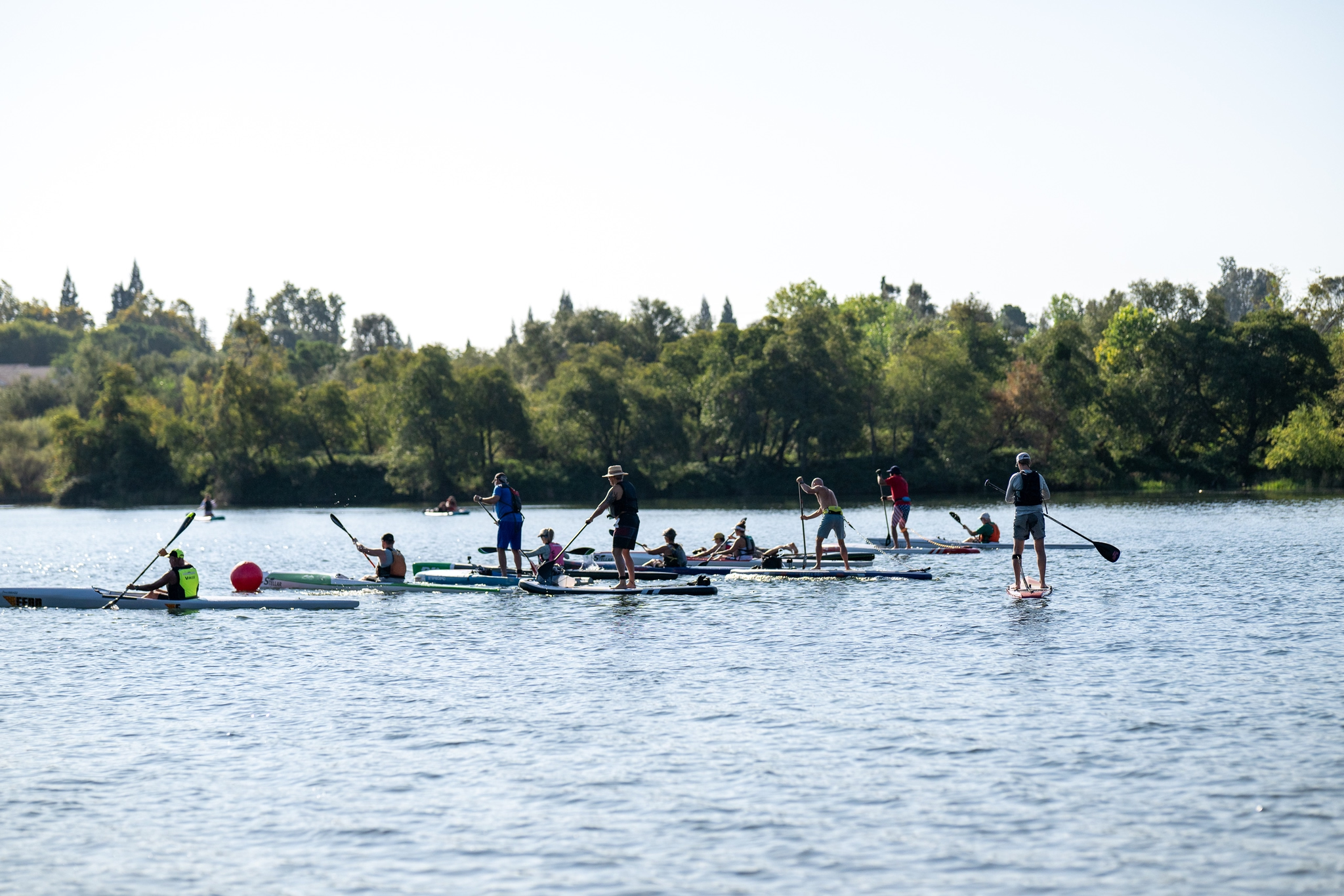
The 8 Mile: 1:49:01 on an Inflatable
Official time 1:49:01.53. First in SUP Open 18-49, and first overall among the inflatables. Seventh across the line in a thirteen boat field, which sounds worse than it is until you look at what was ahead of me. The top four were surfskis. A surfski is a twenty one foot sit-down hull built to do exactly one thing, and it does that thing about thirty minutes faster than a stand-up board over eight miles.
The board was my Venture Wild Sierra Pro-Touring 14 by 28 at 20 PSI. Nothing exotic, nothing borrowed, the same board I have logged a year of training on.
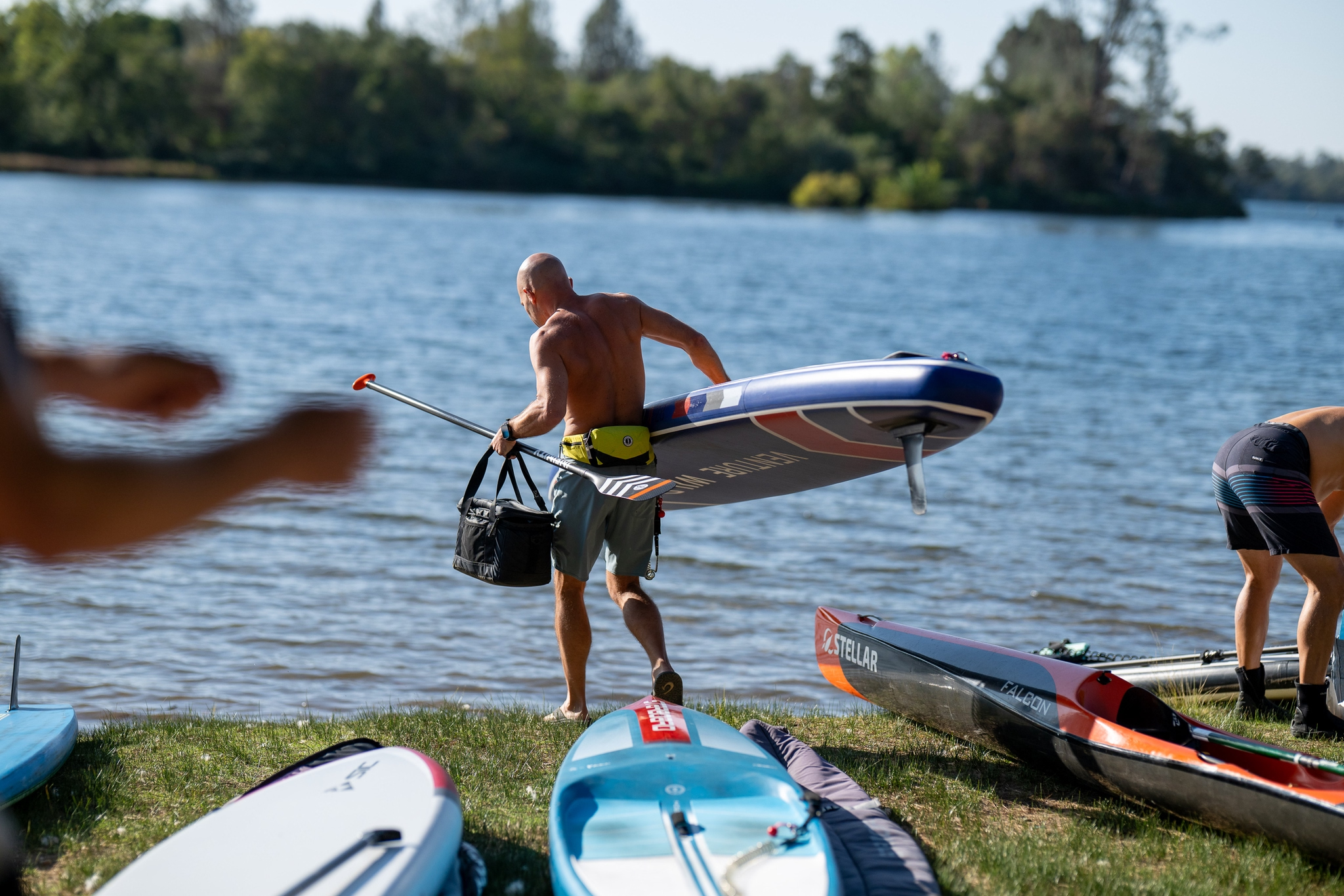
What the Watch Recorded
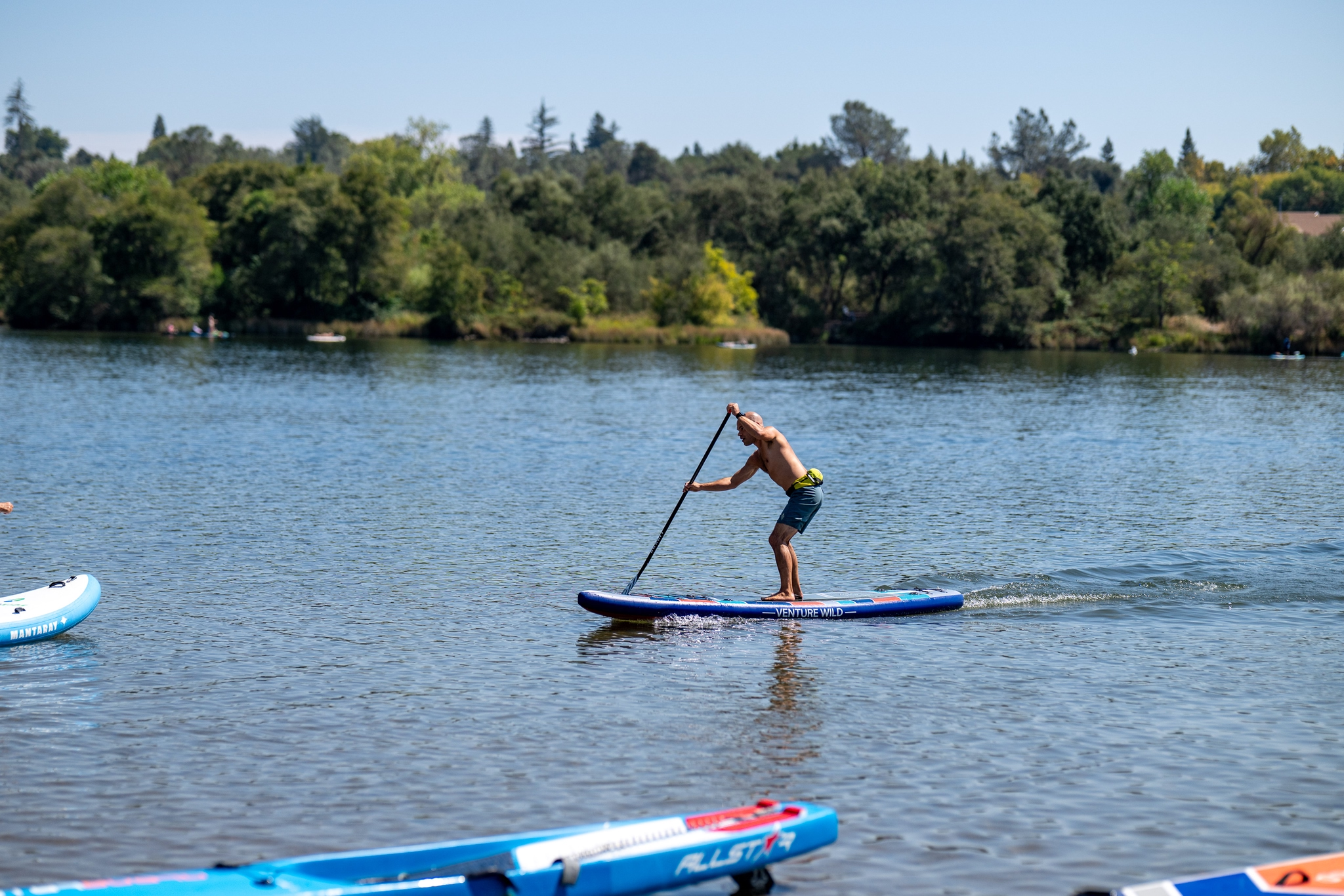
The official result is the one that counts. Below it, for anyone who tracks their own paddling, is what my Apple Watch made of the same race.
| Measure | Official result | Apple Watch |
|---|---|---|
| Distance | 8 miles | 8.58 miles |
| Time | 1:49:01.53 | 1:53:20 |
| Average speed | 4.40 mph | 4.54 mph |
| Active energy | not measured | 1,278 kcal |
The watch reads long on both counts. I left it running after crossing the line and kept paddling in toward the beach, and GPS adds distance on a course with turns in it. Use the official number when you have one. Use the watch number when you are comparing a race against your own training, as long as you know which is which.
What My Heart Rate Did
Across 1,221 readings during the eight mile, my mean heart rate was 165 bpm and the median was 167. The highest reading was 186. Nearly 92 percent of the samples sat at or above 150 bpm, which is what a race effort looks like on a wrist sensor over the better part of two hours.
The first half of that recording averaged 171 bpm. The second half averaged 160. Both halves have an explanation. The first was upwind, out toward the dam. The second was downwind, and it contained two full stops to eat. Grinding into a headwind costs more than being pushed home by the same wind, and a stopped paddler’s heart rate falls.
Eight miles in 1:49:01 is 4.40 mph. The number I care about is how close that is to training pace. Across sixty six logged sessions my moving pace on longer efforts sits at 4.47 mph, and I wrote up that whole dataset earlier this year. Racing pace and training pace landing within 0.07 mph of each other says the taper worked and the fueling held. A year ago the race number would have been well under the training number, because I would have gone out too hard and paid for it somewhere around mile five.
The First Timer’s Race
Forty minutes after finishing the eight mile I was back on the line for the First Timer’s Race at 11:30, and won it. The recovery window between those two is the whole story of the day, and it is covered further down.
The Four Person Relay
I got pulled into the noon relay, which was not on my plan for the day.
Two teams race head to head. Each team is four paddlers, and the first half runs one at a time on a single board: out to a buoy, right hand turn around it, back to the beach, tag the next paddler. Once all four have run their leg, the entire team climbs onto one large inflatable, a four person manta ray, and paddles it out to the red buoy together.
Four adults on one board, two teams alongside each other, a certain amount of bumping and a great deal of splashing. Whoever gets the manta ray back to shore has one thing left to do: slap the hand of Shelly, the director of PaddleSplash, waiting at the finish line. Hand slapped, heat won. Then the next two teams go, and the next, until it comes down to the final pair.
I raced it with Jaime Johnson, who owns SUP California in Folsom, and two paddling friends, Lourdes Ibarra and Marlene Gideon. We won it.
Relay legs are short and hard and there is nowhere to hide, which is a strange thing to ask of legs that have already gone eight miles and a sprint.
The Fueling Plan That Made the Difference
I have written before about bonking on a long paddle, and that article exists because I got it badly wrong once and spent the back half of a session learning what glycogen depletion feels like. Since then I have treated food as equipment.
In the weeks before PaddleSplash I used my training paddles to test it. Different foods, different timing, same water, and a note afterward about how the session went. The pattern was not subtle. On the paddles where I was deliberate about what went in and when, I paddled better and I felt better afterward. On the paddles where I ate whatever was in the house and left at whatever time suited me, I was slower and flatter.
What I Tested in Training
The testing was not sophisticated. I changed one thing at a time on training paddles, wrote down what I ate and when I ate it, and noted afterward whether the session felt strong or flat. Gels at different points. Real food on the board or no food on the board. Electrolytes in the water or plain water. Breakfast at two hours before or closer to the start.
What came out the other side is the plan below, and I ran it at PaddleSplash without improvising.
The Day Before
Saturday was a carbohydrate day with a large pile of raw fish in the middle of it.
Through the day: a honey ham sandwich on multigrain, a banana, a serving of Japanese soba noodles, and six potstickers. In the evening, about 250 grams of sashimi grade fish split between yellowfin tuna and Ora King salmon, dressed with sesame oil and ponzu. The fish alone is somewhere around 50 grams of protein.
Around it: a second banana, three dried apricots, four small slices of dried apple, two fresh jujubes, a pluot, three teaspoons of brown sugar, and a 260 ml coconut water carrying 11 grams of carbohydrate, 70 mg of sodium and 490 mg of potassium. Then roughly half of a shared meal, which came to part of a sandwich, some potato chips, a bowl of white rice and four pieces of vegetable sushi.
Call it 165 to 230 grams of carbohydrate in the evening, and somewhere near 2,700 calories across the day. Those are portion estimates. Nothing was weighed.
Carbohydrate went in across the whole day instead of stacking into one enormous dinner, the protein landed in the evening, and the electrolytes started before I was anywhere near a start line.
Race Morning
A cup of rice, two hours before the start. A banana, thirty minutes before.
That is the whole breakfast.
Rice two hours out is enough time to clear the stomach and still have the carbohydrate available. The banana is the top-off, close enough to the gun that it is still working when the race begins and small enough that it does not sit there while you paddle.
On the Board During the Eight Mile
Two Huma chia energy gels went down in the first half. They are made from fruit puree and powdered chia rather than maltodextrin, and the Plus version carries 240 mg of sodium alongside the carbohydrate.
The outbound leg, out toward the dam, was all upwind. It was a battle, and it was also the entire plan.
Here is the arithmetic I was doing out there. Stop on the way out and the wind pushes you backwards, so every second of rest costs you twice. Stop on the way home and the wind keeps working while you sit there. So I ground the outbound harder than felt sensible, banking time against a downwind return I intended to spend eating.
What I was thinking about for most of that upwind leg was a sandwich.
Then I stopped.
Just past halfway, at the Aquatic Center turnaround, I parked the board, ate half a turkey, cheese and lettuce wrap, and took a selfie of myself picnicking in the middle of a race.
A third gel went down on the way back. At the island I stopped a second time, ate the other half of the wrap, texted a couple of friends that I was about fifteen minutes out, and got back to paddling.
At both stops I drank a bottle of BODYARMOR Flash IV and worked through 800 ml of water with a Liquid IV packet in it.
Two full stops to eat a sandwich. The race still went 1:49:01 and first in division.
Solid food at the halfway point of a two hour effort does something a gel does not, and the minute it costs comes back.
Between Races
Off the water from the eight mile, I ate six potstickers, a pack of dried sweet potato from Costco, and drank another BODYARMOR. That is a real meal, eaten roughly forty minutes before lining up again, and it is the decision I would defend hardest out of the whole day.
After the First Timer’s Race came another 800 ml of water with Liquid IV and a whole grain sandwich with turkey and cheese. Through the relay and the awards after it, another two hours, I kept picking at the same things in small bites and kept drinking.
The watch put the two recorded races at about 1,470 active calories. Six potstickers against that number is arithmetic.
How Long the Energy Held
I stayed up and functional through the afternoon and into the evening, and went down hard around nine at night. For a day with three races in it, crashing at nine is a result rather than a failure. The measure of a fueling plan is not how you feel crossing the line. It is whether you are still standing six hours later.
What I Am Taking to Nationals
The USA SUP National Championships run September 18 through 20 in Gig Harbor, Washington, and I am racing the 100 meter sprint, the technical course and the 10K in the first inflatable division the event has run. Gig Harbor is five days after PaddleSplash.
Three things carry over.
The schedule travels. The single most useful thing I did at PaddleSplash was settle in advance what went in and when, rather than deciding it on the day. Nationals spreads the Big Three across three days rather than three hours, which makes the planning easier and the discipline harder.
Race pace matched training pace, so training pace is the plan. Holding 4.40 mph on race day when the dataset says 4.47 means the number is real. For the 10K I will pace to what the data says I can hold rather than to whoever goes out hard off the line.
Back-to-back racing is a skill of its own. Three starts in three hours taught me more about recovery between efforts than any single long paddle has. The sprint and the technical course at Nationals are heats, which is the same problem in a shorter frame.
One thing does not carry over. Lake Natoma is flat, fresh and familiar. Gig Harbor is salt water with tide and current, and the Narrows does not care what my times on Natoma look like.
Racing PaddleSplash Yourself
The event runs annually out of Black Miner’s Bar. The distances span 2, 5 and 8 miles, with a First Timer’s Race and Grom Sprints for kids aged eight to seventeen, and every race is open to SUP, outrigger, kayak and surfski. There was a virtual division at $35, or $69 with a board rental, for anyone who could not get to Folsom.
If you have never raced, the First Timer’s Race is the entry point, and I have written a full guide to preparing for a first SUP race. If you want to know the launch itself before you show up, Black Miner’s Bar is covered in my Lake Natoma guide, including parking and the boat ramp.
Eight miles asks more of the shoulders and hands than a recreational paddle does. The strength work behind it is in my SUP strength program, and dorsal hand pain on long efforts usually traces back to grip pressure, which I worked through in paddle grip and hand position.
PaddleSplash 2026 in Photographs
The rest of the weekend, from the Friday meetup through Sunday afternoon on the beach at Black Miner’s Bar.
Frequently Asked Questions
What is PaddleSplash?
PaddleSplash is a three day paddling and wellness festival on Lake Natoma in Folsom, California, organized by Nor Cal SUP and presented by Visit Folsom. The 2026 edition ran September 11 through 13 out of Black Miner’s Bar. It combines racing at 2, 5 and 8 miles with SUP yoga, clinics, a dog paddle, a poker paddle and kids’ sprint races.
What charity does PaddleSplash support?
Nor Cal SUP, a 501(c)(3) organization. Proceeds fund its Groms programs and community outreach serving foster and at-risk youth, covering water safety education, scholarships and access to paddling.
Where is PaddleSplash held?
Black Miner’s Bar on Lake Natoma, in Folsom, California, inside Folsom Lake State Recreation Area. Spectators can watch the racing for free from the beach.
Can you race an inflatable SUP at PaddleSplash?
Yes. I raced the 8 Mile on a 14 by 28 inch inflatable at 20 PSI and finished first in SUP Open 18-49 with a time of 1:49:01. The races are open to SUP, outrigger, kayak and surfski, and inflatables line up with everyone else.
How long does an 8 mile SUP race take?
Mine took 1 hour 49 minutes on an inflatable, an average of 4.40 mph. The 2026 field finished between 1:13 and 2:17, with the quickest times going to surfskis rather than stand-up boards. For a stand-up paddler on a 14 foot board, somewhere between 1:45 and 2:15 is a realistic window.
Is the First Timer’s Race good for beginners?
That is what it exists for. It runs separately from the timed distance races, at 11:30 on Sunday, after the longer events have cleared the water.
What should you eat before a SUP race?
What worked for me before an eight mile race was a cup of rice two hours before the start and a banana thirty minutes before. The rice clears the stomach while the carbohydrate stays available, and the banana tops off close enough to the gun to still be working. During the race I took three chia energy gels, half a turkey wrap at the halfway point and the other half later, plus electrolyte drink and 800 ml of water with an electrolyte packet.
How do you recover between races on the same day?
Eat a real meal. Between my eight mile finish and the next start about forty minutes later, I had six potstickers, a pack of dried sweet potato and an electrolyte drink, then a turkey and cheese sandwich on whole grain after the second race. The watch estimated roughly 1,470 active calories across the two recorded races. Replacing some of that between efforts is what keeps the third race from falling apart.
How does the PaddleSplash four person relay work?
Two teams of four race head to head. Each paddler goes out to a buoy on a single board, turns right around it, comes back to the beach and tags the next one, until all four have run a leg. Then the whole team gets onto one large four person inflatable and paddles it out to the red buoy and back. The heat is won by slapping the hand of the race director at the finish line. Teams race in pairs until the final two are left.
Can you paddle Lake Natoma outside of race weekend?
Yes. Lake Natoma has been hand-launch recreation only since April 2025, which keeps it calm and makes it one of the better flatwater training venues in the Sacramento region. Launches, fees, hours and rentals are covered in my Lake Natoma guide.
Affiliate disclosure: Some gear links in this article are Amazon affiliate links. MK Library earns a small commission on qualifying purchases at no additional cost to you. The gels linked here are the ones I actually raced on.
Article Updates
- September 14, 2026 (later): Added full surnames for the relay team-mates, Lourdes Ibarra and Marlene Gideon, both confirmed in the posted 2 Mile results. Added links to the SUP strength program and the paddle grip guide, completing the internal linking plan for this article.
- September 14, 2026: Original publication, written the day after the September 13 race day. Event details, schedule and charity verified against Nor Cal SUP, Visit Folsom and Folsom Times. The 8 Mile finishing time and division placing come from the official timing at results.changeofpace.com.
Sources
- PaddleSplash 2026 official results, Change of Pace timing, September 13, 2026.
- Nor Cal SUP, event organizer and 501(c)(3).
- Folsom Times, PaddleSplash festival coverage, 2026.
- PaddleSignup, PaddleSplash 2026 race listings and start times.
I got pulled into the noon relay, which was not on my plan for the day.
Two teams race head to head. Each team is four paddlers, and the first half runs one at a time on a single board: out to a buoy, right hand turn around it, back to the beach, tag the next paddler. Once all four have run their leg, the entire team climbs onto one large inflatable, a four person manta ray, and paddles it out to the red buoy together.
Four adults on one board, two teams alongside each other, a certain amount of bumping and a great deal of splashing. Whoever gets the manta ray back to shore has one thing left to do: slap the hand of Shelly, the director of PaddleSplash, waiting at the finish line. Hand slapped, heat won. Then the next two teams go, and the next, until it comes down to the final pair.
I raced it with Jaime Johnson, who owns SUP California in Folsom, and two paddling friends, Lourdes Ibarra and Marlene Gideon. We won it.
Relay legs are short and hard and there is nowhere to hide, which is a strange thing to ask of legs that have already gone eight miles and a sprint.
The Fueling Plan That Made the Difference
I have written before about bonking on a long paddle, and that article exists because I got it badly wrong once and spent the back half of a session learning what glycogen depletion feels like. Since then I have treated food as equipment.
In the weeks before PaddleSplash I used my training paddles to test it. Different foods, different timing, same water, and a note afterward about how the session went. The pattern was not subtle. On the paddles where I was deliberate about what went in and when, I paddled better and I felt better afterward. On the paddles where I ate whatever was in the house and left at whatever time suited me, I was slower and flatter.
What I Tested in Training
The testing was not sophisticated. I changed one thing at a time on training paddles, wrote down what I ate and when I ate it, and noted afterward whether the session felt strong or flat. Gels at different points. Real food on the board or no food on the board. Electrolytes in the water or plain water. Breakfast at two hours before or closer to the start.
What came out the other side is the plan below, and I ran it at PaddleSplash without improvising.
The Day Before
Saturday was a carbohydrate day with a large pile of raw fish in the middle of it.
Through the day: a honey ham sandwich on multigrain, a banana, a serving of Japanese soba noodles, and six potstickers. In the evening, about 250 grams of sashimi grade fish split between yellowfin tuna and Ora King salmon, dressed with sesame oil and ponzu. The fish alone is somewhere around 50 grams of protein.
Around it: a second banana, three dried apricots, four small slices of dried apple, two fresh jujubes, a pluot, three teaspoons of brown sugar, and a 260 ml coconut water carrying 11 grams of carbohydrate, 70 mg of sodium and 490 mg of potassium. Then roughly half of a shared meal, which came to part of a sandwich, some potato chips, a bowl of white rice and four pieces of vegetable sushi.
Call it 165 to 230 grams of carbohydrate in the evening, and somewhere near 2,700 calories across the day. Those are portion estimates. Nothing was weighed.
Carbohydrate went in across the whole day instead of stacking into one enormous dinner, the protein landed in the evening, and the electrolytes started before I was anywhere near a start line.
Race Morning
A cup of rice, two hours before the start. A banana, thirty minutes before.
That is the whole breakfast.
Rice two hours out is enough time to clear the stomach and still have the carbohydrate available. The banana is the top-off, close enough to the gun that it is still working when the race begins and small enough that it does not sit there while you paddle.
On the Board During the Eight Mile
Two Huma chia energy gels went down in the first half. They are made from fruit puree and powdered chia rather than maltodextrin, and the Plus version carries 240 mg of sodium alongside the carbohydrate.
The outbound leg, out toward the dam, was all upwind. It was a battle, and it was also the entire plan.
Here is the arithmetic I was doing out there. Stop on the way out and the wind pushes you backwards, so every second of rest costs you twice. Stop on the way home and the wind keeps working while you sit there. So I ground the outbound harder than felt sensible, banking time against a downwind return I intended to spend eating.
What I was thinking about for most of that upwind leg was a sandwich.
Then I stopped.
Just past halfway, at the Aquatic Center turnaround, I parked the board, ate half a turkey, cheese and lettuce wrap, and took a selfie of myself picnicking in the middle of a race.
A third gel went down on the way back. At the island I stopped a second time, ate the other half of the wrap, texted a couple of friends that I was about fifteen minutes out, and got back to paddling.
At both stops I drank a bottle of BODYARMOR Flash IV and worked through 800 ml of water with a Liquid IV packet in it.
Two full stops to eat a sandwich. The race still went 1:49:01 and first in division.
Solid food at the halfway point of a two hour effort does something a gel does not, and the minute it costs comes back.
Between Races
Off the water from the eight mile, I ate six potstickers, a pack of dried sweet potato from Costco, and drank another BODYARMOR. That is a real meal, eaten roughly forty minutes before lining up again, and it is the decision I would defend hardest out of the whole day.
After the First Timer’s Race came another 800 ml of water with Liquid IV and a whole grain sandwich with turkey and cheese. Through the relay and the awards after it, another two hours, I kept picking at the same things in small bites and kept drinking.
The watch put the two recorded races at about 1,470 active calories. Six potstickers against that number is arithmetic.
How Long the Energy Held
I stayed up and functional through the afternoon and into the evening, and went down hard around nine at night. For a day with three races in it, crashing at nine is a result rather than a failure. The measure of a fueling plan is not how you feel crossing the line. It is whether you are still standing six hours later.
What I Am Taking to Nationals
The USA SUP National Championships run September 18 through 20 in Gig Harbor, Washington, and I am racing the 100 meter sprint, the technical course and the 10K in the first inflatable division the event has run. Gig Harbor is five days after PaddleSplash.
Three things carry over.
The schedule travels. The single most useful thing I did at PaddleSplash was settle in advance what went in and when, rather than deciding it on the day. Nationals spreads the Big Three across three days rather than three hours, which makes the planning easier and the discipline harder.
Race pace matched training pace, so training pace is the plan. Holding 4.40 mph on race day when the dataset says 4.47 means the number is real. For the 10K I will pace to what the data says I can hold rather than to whoever goes out hard off the line.
Back-to-back racing is a skill of its own. Three starts in three hours taught me more about recovery between efforts than any single long paddle has. The sprint and the technical course at Nationals are heats, which is the same problem in a shorter frame.
One thing does not carry over. Lake Natoma is flat, fresh and familiar. Gig Harbor is salt water with tide and current, and the Narrows does not care what my times on Natoma look like.
Racing PaddleSplash Yourself
The event runs annually out of Black Miner’s Bar. The distances span 2, 5 and 8 miles, with a First Timer’s Race and Grom Sprints for kids aged eight to seventeen, and every race is open to SUP, outrigger, kayak and surfski. There was a virtual division at $35, or $69 with a board rental, for anyone who could not get to Folsom.
If you have never raced, the First Timer’s Race is the entry point, and I have written a full guide to preparing for a first SUP race. If you want to know the launch itself before you show up, Black Miner’s Bar is covered in my Lake Natoma guide, including parking and the boat ramp.
Eight miles asks more of the shoulders and hands than a recreational paddle does. The strength work behind it is in my SUP strength program, and dorsal hand pain on long efforts usually traces back to grip pressure, which I worked through in paddle grip and hand position.
PaddleSplash 2026 in Photographs
The rest of the weekend, from the Friday meetup through Sunday afternoon on the beach at Black Miner’s Bar.
Frequently Asked Questions
What is PaddleSplash?
PaddleSplash is a three day paddling and wellness festival on Lake Natoma in Folsom, California, organized by Nor Cal SUP and presented by Visit Folsom. The 2026 edition ran September 11 through 13 out of Black Miner’s Bar. It combines racing at 2, 5 and 8 miles with SUP yoga, clinics, a dog paddle, a poker paddle and kids’ sprint races.
What charity does PaddleSplash support?
Nor Cal SUP, a 501(c)(3) organization. Proceeds fund its Groms programs and community outreach serving foster and at-risk youth, covering water safety education, scholarships and access to paddling.
Where is PaddleSplash held?
Black Miner’s Bar on Lake Natoma, in Folsom, California, inside Folsom Lake State Recreation Area. Spectators can watch the racing for free from the beach.
Can you race an inflatable SUP at PaddleSplash?
Yes. I raced the 8 Mile on a 14 by 28 inch inflatable at 20 PSI and finished first in SUP Open 18-49 with a time of 1:49:01. The races are open to SUP, outrigger, kayak and surfski, and inflatables line up with everyone else.
How long does an 8 mile SUP race take?
Mine took 1 hour 49 minutes on an inflatable, an average of 4.40 mph. The 2026 field finished between 1:13 and 2:17, with the quickest times going to surfskis rather than stand-up boards. For a stand-up paddler on a 14 foot board, somewhere between 1:45 and 2:15 is a realistic window.
Is the First Timer’s Race good for beginners?
That is what it exists for. It runs separately from the timed distance races, at 11:30 on Sunday, after the longer events have cleared the water.
What should you eat before a SUP race?
What worked for me before an eight mile race was a cup of rice two hours before the start and a banana thirty minutes before. The rice clears the stomach while the carbohydrate stays available, and the banana tops off close enough to the gun to still be working. During the race I took three chia energy gels, half a turkey wrap at the halfway point and the other half later, plus electrolyte drink and 800 ml of water with an electrolyte packet.
How do you recover between races on the same day?
Eat a real meal. Between my eight mile finish and the next start about forty minutes later, I had six potstickers, a pack of dried sweet potato and an electrolyte drink, then a turkey and cheese sandwich on whole grain after the second race. The watch estimated roughly 1,470 active calories across the two recorded races. Replacing some of that between efforts is what keeps the third race from falling apart.
How does the PaddleSplash four person relay work?
Two teams of four race head to head. Each paddler goes out to a buoy on a single board, turns right around it, comes back to the beach and tags the next one, until all four have run a leg. Then the whole team gets onto one large four person inflatable and paddles it out to the red buoy and back. The heat is won by slapping the hand of the race director at the finish line. Teams race in pairs until the final two are left.
Can you paddle Lake Natoma outside of race weekend?
Yes. Lake Natoma has been hand-launch recreation only since April 2025, which keeps it calm and makes it one of the better flatwater training venues in the Sacramento region. Launches, fees, hours and rentals are covered in my Lake Natoma guide.
Affiliate disclosure: Some gear links in this article are Amazon affiliate links. MK Library earns a small commission on qualifying purchases at no additional cost to you. The gels linked here are the ones I actually raced on.
Article Updates
- September 14, 2026 (later): Added full surnames for the relay team-mates, Lourdes Ibarra and Marlene Gideon, both confirmed in the posted 2 Mile results. Added links to the SUP strength program and the paddle grip guide, completing the internal linking plan for this article.
- September 14, 2026: Original publication, written the day after the September 13 race day. Event details, schedule and charity verified against Nor Cal SUP, Visit Folsom and Folsom Times. The 8 Mile finishing time and division placing come from the official timing at results.changeofpace.com.
Sources
- PaddleSplash 2026 official results, Change of Pace timing, September 13, 2026.
- Nor Cal SUP, event organizer and 501(c)(3).
- Folsom Times, PaddleSplash festival coverage, 2026.
- PaddleSignup, PaddleSplash 2026 race listings and start times.
My eight mile started at nine in the morning on a Sunday and I crossed the line at 10:49. That gave me about forty minutes on the beach before the First Timer’s Race went off at 11:30, and half an hour after that I was back on the water for a four person relay at noon. Three races. Three first places. One more medal for the overall, which makes three golds in a bag that was not built to carry three golds.
The racing is the easy part to write about. What decided how the day went started well before race morning, in the weeks of training paddles where I worked out what to eat and when.
Key Takeaways
- PaddleSplash is a three day water festival on Lake Natoma, run September 11 through 13, 2026 out of Black Miner’s Bar in Folsom, California.
- It is a fundraiser, not a promoter’s race. Nor Cal SUP is a 501(c)(3), and proceeds go to its Groms programs and outreach for foster and at-risk youth through water safety education, scholarships and access.
- The 8 Mile took me 1:49:01 on a 14 by 28 inch inflatable, good for first in SUP Open 18-49 and first overall among inflatables, in a field where surfskis took the top four places.
- That works out to 4.40 mph, which is within a rounding error of the moving pace I have logged across a year of training on the same board.
- Racing three times in three hours is a fueling problem before it is a fitness problem. The gap between races is where a day like this falls apart.
- The schedule was written down in advance. Deciding what to eat while standing on a beach after an eight mile race is a decision made by someone whose blood sugar is already falling.
What PaddleSplash Is
PaddleSplash ran September 11 through 13, 2026 at Black Miner’s Bar on Lake Natoma, organized by Nor Cal SUP and presented by Visit Folsom. Calling it a race weekend undersells it. There were races, and there was also SUP yoga, a dog paddle, a poker paddle, beginner clinics, a kayaking seminar, and sessions on outrigger and sea kayak rescue technique.
The Big Splash put a hundred people on boards doing yoga underneath Rainbow Bridge. Spectating costs nothing. You walk down to the sandy beach at Black Miner’s Bar and watch, which is worth knowing if you have a family that wants to come and a family that does not want to race.
Shelly Alves of Nor Cal SUP put the intent plainly: “This year, we’ve expanded the festival experience so paddlers of all abilities can find a way to participate.”
Where the Money Goes
Nor Cal SUP is a 501(c)(3), and PaddleSplash is its fundraiser of the year. The proceeds fund the Groms programs and community outreach that serve foster and at-risk youth: water safety education, scholarships, and getting kids onto boards who would otherwise never stand on one.
That changes the character of the event on the water. The Grom Sprint on Sunday morning had nine to twelve year olds finishing in twenty two and twenty five minutes, on the same course, off the same beach, an hour before the adults lined up for the First Timer’s Race.
The Three Races
Sunday stacks its schedule tight. The 8 Mile goes off at 9:00, the 2 Mile at 9:15, the Grom Sprint at 11:00, the First Timer’s Race at 11:30, and the four person relay at noon. I entered the 8 Mile, the First Timer’s Race and the relay, which is how a person ends up racing three times before lunch.
The 8 Mile: 1:49:01 on an Inflatable
Official time 1:49:01.53. First in SUP Open 18-49, and first overall among the inflatables. Seventh across the line in a thirteen boat field, which sounds worse than it is until you look at what was ahead of me. The top four were surfskis. A surfski is a twenty one foot sit-down hull built to do exactly one thing, and it does that thing about thirty minutes faster than a stand-up board over eight miles.
The board was my Venture Wild Sierra Pro-Touring 14 by 28 at 20 PSI. Nothing exotic, nothing borrowed, the same board I have logged a year of training on.
What the Watch Recorded
The official result is the one that counts. Below it, for anyone who tracks their own paddling, is what my Apple Watch made of the same race.
| Measure | Official result | Apple Watch |
|---|---|---|
| Distance | 8 miles | 8.58 miles |
| Time | 1:49:01.53 | 1:53:20 |
| Average speed | 4.40 mph | 4.54 mph |
| Active energy | not measured | 1,278 kcal |
The watch reads long on both counts. I left it running after crossing the line and kept paddling in toward the beach, and GPS adds distance on a course with turns in it. Use the official number when you have one. Use the watch number when you are comparing a race against your own training, as long as you know which is which.
What My Heart Rate Did
Across 1,221 readings during the eight mile, my mean heart rate was 165 bpm and the median was 167. The highest reading was 186. Nearly 92 percent of the samples sat at or above 150 bpm, which is what a race effort looks like on a wrist sensor over the better part of two hours.
The first half of that recording averaged 171 bpm. The second half averaged 160. Both halves have an explanation. The first was upwind, out toward the dam. The second was downwind, and it contained two full stops to eat. Grinding into a headwind costs more than being pushed home by the same wind, and a stopped paddler’s heart rate falls.
Eight miles in 1:49:01 is 4.40 mph. The number I care about is how close that is to training pace. Across sixty six logged sessions my moving pace on longer efforts sits at 4.47 mph, and I wrote up that whole dataset earlier this year. Racing pace and training pace landing within 0.07 mph of each other says the taper worked and the fueling held. A year ago the race number would have been well under the training number, because I would have gone out too hard and paid for it somewhere around mile five.
The First Timer’s Race
Forty minutes after finishing the eight mile I was back on the line for the First Timer’s Race at 11:30, and won it. The recovery window between those two is the whole story of the day, and it is covered further down.
The Four Person Relay
I got pulled into the noon relay, which was not on my plan for the day.
Two teams race head to head. Each team is four paddlers, and the first half runs one at a time on a single board: out to a buoy, right hand turn around it, back to the beach, tag the next paddler. Once all four have run their leg, the entire team climbs onto one large inflatable, a four person manta ray, and paddles it out to the red buoy together.
Four adults on one board, two teams alongside each other, a certain amount of bumping and a great deal of splashing. Whoever gets the manta ray back to shore has one thing left to do: slap the hand of Shelly, the director of PaddleSplash, waiting at the finish line. Hand slapped, heat won. Then the next two teams go, and the next, until it comes down to the final pair.
I raced it with Jaime Johnson, who owns SUP California in Folsom, and two paddling friends, Lourdes Ibarra and Marlene Gideon. We won it.
Relay legs are short and hard and there is nowhere to hide, which is a strange thing to ask of legs that have already gone eight miles and a sprint.
The Fueling Plan That Made the Difference
I have written before about bonking on a long paddle, and that article exists because I got it badly wrong once and spent the back half of a session learning what glycogen depletion feels like. Since then I have treated food as equipment.
In the weeks before PaddleSplash I used my training paddles to test it. Different foods, different timing, same water, and a note afterward about how the session went. The pattern was not subtle. On the paddles where I was deliberate about what went in and when, I paddled better and I felt better afterward. On the paddles where I ate whatever was in the house and left at whatever time suited me, I was slower and flatter.
What I Tested in Training
The testing was not sophisticated. I changed one thing at a time on training paddles, wrote down what I ate and when I ate it, and noted afterward whether the session felt strong or flat. Gels at different points. Real food on the board or no food on the board. Electrolytes in the water or plain water. Breakfast at two hours before or closer to the start.
What came out the other side is the plan below, and I ran it at PaddleSplash without improvising.
The Day Before
Saturday was a carbohydrate day with a large pile of raw fish in the middle of it.
Through the day: a honey ham sandwich on multigrain, a banana, a serving of Japanese soba noodles, and six potstickers. In the evening, about 250 grams of sashimi grade fish split between yellowfin tuna and Ora King salmon, dressed with sesame oil and ponzu. The fish alone is somewhere around 50 grams of protein.
Around it: a second banana, three dried apricots, four small slices of dried apple, two fresh jujubes, a pluot, three teaspoons of brown sugar, and a 260 ml coconut water carrying 11 grams of carbohydrate, 70 mg of sodium and 490 mg of potassium. Then roughly half of a shared meal, which came to part of a sandwich, some potato chips, a bowl of white rice and four pieces of vegetable sushi.
Call it 165 to 230 grams of carbohydrate in the evening, and somewhere near 2,700 calories across the day. Those are portion estimates. Nothing was weighed.
Carbohydrate went in across the whole day instead of stacking into one enormous dinner, the protein landed in the evening, and the electrolytes started before I was anywhere near a start line.
Race Morning
A cup of rice, two hours before the start. A banana, thirty minutes before.
That is the whole breakfast.
Rice two hours out is enough time to clear the stomach and still have the carbohydrate available. The banana is the top-off, close enough to the gun that it is still working when the race begins and small enough that it does not sit there while you paddle.
On the Board During the Eight Mile
Two Huma chia energy gels went down in the first half. They are made from fruit puree and powdered chia rather than maltodextrin, and the Plus version carries 240 mg of sodium alongside the carbohydrate.
The outbound leg, out toward the dam, was all upwind. It was a battle, and it was also the entire plan.
Here is the arithmetic I was doing out there. Stop on the way out and the wind pushes you backwards, so every second of rest costs you twice. Stop on the way home and the wind keeps working while you sit there. So I ground the outbound harder than felt sensible, banking time against a downwind return I intended to spend eating.
What I was thinking about for most of that upwind leg was a sandwich.
Then I stopped.
Just past halfway, at the Aquatic Center turnaround, I parked the board, ate half a turkey, cheese and lettuce wrap, and took a selfie of myself picnicking in the middle of a race.
A third gel went down on the way back. At the island I stopped a second time, ate the other half of the wrap, texted a couple of friends that I was about fifteen minutes out, and got back to paddling.
At both stops I drank a bottle of BODYARMOR Flash IV and worked through 800 ml of water with a Liquid IV packet in it.
Two full stops to eat a sandwich. The race still went 1:49:01 and first in division.
Solid food at the halfway point of a two hour effort does something a gel does not, and the minute it costs comes back.
Between Races
Off the water from the eight mile, I ate six potstickers, a pack of dried sweet potato from Costco, and drank another BODYARMOR. That is a real meal, eaten roughly forty minutes before lining up again, and it is the decision I would defend hardest out of the whole day.
After the First Timer’s Race came another 800 ml of water with Liquid IV and a whole grain sandwich with turkey and cheese. Through the relay and the awards after it, another two hours, I kept picking at the same things in small bites and kept drinking.
The watch put the two recorded races at about 1,470 active calories. Six potstickers against that number is arithmetic.
How Long the Energy Held
I stayed up and functional through the afternoon and into the evening, and went down hard around nine at night. For a day with three races in it, crashing at nine is a result rather than a failure. The measure of a fueling plan is not how you feel crossing the line. It is whether you are still standing six hours later.
What I Am Taking to Nationals
The USA SUP National Championships run September 18 through 20 in Gig Harbor, Washington, and I am racing the 100 meter sprint, the technical course and the 10K in the first inflatable division the event has run. Gig Harbor is five days after PaddleSplash.
Three things carry over.
The schedule travels. The single most useful thing I did at PaddleSplash was settle in advance what went in and when, rather than deciding it on the day. Nationals spreads the Big Three across three days rather than three hours, which makes the planning easier and the discipline harder.
Race pace matched training pace, so training pace is the plan. Holding 4.40 mph on race day when the dataset says 4.47 means the number is real. For the 10K I will pace to what the data says I can hold rather than to whoever goes out hard off the line.
Back-to-back racing is a skill of its own. Three starts in three hours taught me more about recovery between efforts than any single long paddle has. The sprint and the technical course at Nationals are heats, which is the same problem in a shorter frame.
One thing does not carry over. Lake Natoma is flat, fresh and familiar. Gig Harbor is salt water with tide and current, and the Narrows does not care what my times on Natoma look like.
Racing PaddleSplash Yourself
The event runs annually out of Black Miner’s Bar. The distances span 2, 5 and 8 miles, with a First Timer’s Race and Grom Sprints for kids aged eight to seventeen, and every race is open to SUP, outrigger, kayak and surfski. There was a virtual division at $35, or $69 with a board rental, for anyone who could not get to Folsom.
If you have never raced, the First Timer’s Race is the entry point, and I have written a full guide to preparing for a first SUP race. If you want to know the launch itself before you show up, Black Miner’s Bar is covered in my Lake Natoma guide, including parking and the boat ramp.
Eight miles asks more of the shoulders and hands than a recreational paddle does. The strength work behind it is in my SUP strength program, and dorsal hand pain on long efforts usually traces back to grip pressure, which I worked through in paddle grip and hand position.
PaddleSplash 2026 in Photographs
The rest of the weekend, from the Friday meetup through Sunday afternoon on the beach at Black Miner’s Bar.
Frequently Asked Questions
What is PaddleSplash?
PaddleSplash is a three day paddling and wellness festival on Lake Natoma in Folsom, California, organized by Nor Cal SUP and presented by Visit Folsom. The 2026 edition ran September 11 through 13 out of Black Miner’s Bar. It combines racing at 2, 5 and 8 miles with SUP yoga, clinics, a dog paddle, a poker paddle and kids’ sprint races.
What charity does PaddleSplash support?
Nor Cal SUP, a 501(c)(3) organization. Proceeds fund its Groms programs and community outreach serving foster and at-risk youth, covering water safety education, scholarships and access to paddling.
Where is PaddleSplash held?
Black Miner’s Bar on Lake Natoma, in Folsom, California, inside Folsom Lake State Recreation Area. Spectators can watch the racing for free from the beach.
Can you race an inflatable SUP at PaddleSplash?
Yes. I raced the 8 Mile on a 14 by 28 inch inflatable at 20 PSI and finished first in SUP Open 18-49 with a time of 1:49:01. The races are open to SUP, outrigger, kayak and surfski, and inflatables line up with everyone else.
How long does an 8 mile SUP race take?
Mine took 1 hour 49 minutes on an inflatable, an average of 4.40 mph. The 2026 field finished between 1:13 and 2:17, with the quickest times going to surfskis rather than stand-up boards. For a stand-up paddler on a 14 foot board, somewhere between 1:45 and 2:15 is a realistic window.
Is the First Timer’s Race good for beginners?
That is what it exists for. It runs separately from the timed distance races, at 11:30 on Sunday, after the longer events have cleared the water.
What should you eat before a SUP race?
What worked for me before an eight mile race was a cup of rice two hours before the start and a banana thirty minutes before. The rice clears the stomach while the carbohydrate stays available, and the banana tops off close enough to the gun to still be working. During the race I took three chia energy gels, half a turkey wrap at the halfway point and the other half later, plus electrolyte drink and 800 ml of water with an electrolyte packet.
How do you recover between races on the same day?
Eat a real meal. Between my eight mile finish and the next start about forty minutes later, I had six potstickers, a pack of dried sweet potato and an electrolyte drink, then a turkey and cheese sandwich on whole grain after the second race. The watch estimated roughly 1,470 active calories across the two recorded races. Replacing some of that between efforts is what keeps the third race from falling apart.
How does the PaddleSplash four person relay work?
Two teams of four race head to head. Each paddler goes out to a buoy on a single board, turns right around it, comes back to the beach and tags the next one, until all four have run a leg. Then the whole team gets onto one large four person inflatable and paddles it out to the red buoy and back. The heat is won by slapping the hand of the race director at the finish line. Teams race in pairs until the final two are left.
Can you paddle Lake Natoma outside of race weekend?
Yes. Lake Natoma has been hand-launch recreation only since April 2025, which keeps it calm and makes it one of the better flatwater training venues in the Sacramento region. Launches, fees, hours and rentals are covered in my Lake Natoma guide.
Affiliate disclosure: Some gear links in this article are Amazon affiliate links. MK Library earns a small commission on qualifying purchases at no additional cost to you. The gels linked here are the ones I actually raced on.
Article Updates
- September 14, 2026 (later): Added full surnames for the relay team-mates, Lourdes Ibarra and Marlene Gideon, both confirmed in the posted 2 Mile results. Added links to the SUP strength program and the paddle grip guide, completing the internal linking plan for this article.
- September 14, 2026: Original publication, written the day after the September 13 race day. Event details, schedule and charity verified against Nor Cal SUP, Visit Folsom and Folsom Times. The 8 Mile finishing time and division placing come from the official timing at results.changeofpace.com.
Sources
- PaddleSplash 2026 official results, Change of Pace timing, September 13, 2026.
- Nor Cal SUP, event organizer and 501(c)(3).
- Folsom Times, PaddleSplash festival coverage, 2026.
- PaddleSignup, PaddleSplash 2026 race listings and start times.
Forty minutes after finishing the eight mile I was back on the line for the First Timer’s Race at 11:30, and won it. The recovery window between those two is the whole story of the day, and it is covered further down.
The Four Person Relay
I got pulled into the noon relay, which was not on my plan for the day.
Two teams race head to head. Each team is four paddlers, and the first half runs one at a time on a single board: out to a buoy, right hand turn around it, back to the beach, tag the next paddler. Once all four have run their leg, the entire team climbs onto one large inflatable, a four person manta ray, and paddles it out to the red buoy together.
Four adults on one board, two teams alongside each other, a certain amount of bumping and a great deal of splashing. Whoever gets the manta ray back to shore has one thing left to do: slap the hand of Shelly, the director of PaddleSplash, waiting at the finish line. Hand slapped, heat won. Then the next two teams go, and the next, until it comes down to the final pair.
I raced it with Jaime Johnson, who owns SUP California in Folsom, and two paddling friends, Lourdes Ibarra and Marlene Gideon. We won it.
Relay legs are short and hard and there is nowhere to hide, which is a strange thing to ask of legs that have already gone eight miles and a sprint.
The Fueling Plan That Made the Difference
I have written before about bonking on a long paddle, and that article exists because I got it badly wrong once and spent the back half of a session learning what glycogen depletion feels like. Since then I have treated food as equipment.
In the weeks before PaddleSplash I used my training paddles to test it. Different foods, different timing, same water, and a note afterward about how the session went. The pattern was not subtle. On the paddles where I was deliberate about what went in and when, I paddled better and I felt better afterward. On the paddles where I ate whatever was in the house and left at whatever time suited me, I was slower and flatter.
What I Tested in Training
The testing was not sophisticated. I changed one thing at a time on training paddles, wrote down what I ate and when I ate it, and noted afterward whether the session felt strong or flat. Gels at different points. Real food on the board or no food on the board. Electrolytes in the water or plain water. Breakfast at two hours before or closer to the start.
What came out the other side is the plan below, and I ran it at PaddleSplash without improvising.
The Day Before
Saturday was a carbohydrate day with a large pile of raw fish in the middle of it.
Through the day: a honey ham sandwich on multigrain, a banana, a serving of Japanese soba noodles, and six potstickers. In the evening, about 250 grams of sashimi grade fish split between yellowfin tuna and Ora King salmon, dressed with sesame oil and ponzu. The fish alone is somewhere around 50 grams of protein.
Around it: a second banana, three dried apricots, four small slices of dried apple, two fresh jujubes, a pluot, three teaspoons of brown sugar, and a 260 ml coconut water carrying 11 grams of carbohydrate, 70 mg of sodium and 490 mg of potassium. Then roughly half of a shared meal, which came to part of a sandwich, some potato chips, a bowl of white rice and four pieces of vegetable sushi.
Call it 165 to 230 grams of carbohydrate in the evening, and somewhere near 2,700 calories across the day. Those are portion estimates. Nothing was weighed.
Carbohydrate went in across the whole day instead of stacking into one enormous dinner, the protein landed in the evening, and the electrolytes started before I was anywhere near a start line.
Race Morning
A cup of rice, two hours before the start. A banana, thirty minutes before.
That is the whole breakfast.
Rice two hours out is enough time to clear the stomach and still have the carbohydrate available. The banana is the top-off, close enough to the gun that it is still working when the race begins and small enough that it does not sit there while you paddle.
On the Board During the Eight Mile
Two Huma chia energy gels went down in the first half. They are made from fruit puree and powdered chia rather than maltodextrin, and the Plus version carries 240 mg of sodium alongside the carbohydrate.
The outbound leg, out toward the dam, was all upwind. It was a battle, and it was also the entire plan.
Here is the arithmetic I was doing out there. Stop on the way out and the wind pushes you backwards, so every second of rest costs you twice. Stop on the way home and the wind keeps working while you sit there. So I ground the outbound harder than felt sensible, banking time against a downwind return I intended to spend eating.
What I was thinking about for most of that upwind leg was a sandwich.
Then I stopped.
Just past halfway, at the Aquatic Center turnaround, I parked the board, ate half a turkey, cheese and lettuce wrap, and took a selfie of myself picnicking in the middle of a race.
A third gel went down on the way back. At the island I stopped a second time, ate the other half of the wrap, texted a couple of friends that I was about fifteen minutes out, and got back to paddling.
At both stops I drank a bottle of BODYARMOR Flash IV and worked through 800 ml of water with a Liquid IV packet in it.
Two full stops to eat a sandwich. The race still went 1:49:01 and first in division.
Solid food at the halfway point of a two hour effort does something a gel does not, and the minute it costs comes back.
Between Races
Off the water from the eight mile, I ate six potstickers, a pack of dried sweet potato from Costco, and drank another BODYARMOR. That is a real meal, eaten roughly forty minutes before lining up again, and it is the decision I would defend hardest out of the whole day.
After the First Timer’s Race came another 800 ml of water with Liquid IV and a whole grain sandwich with turkey and cheese. Through the relay and the awards after it, another two hours, I kept picking at the same things in small bites and kept drinking.
The watch put the two recorded races at about 1,470 active calories. Six potstickers against that number is arithmetic.
How Long the Energy Held
I stayed up and functional through the afternoon and into the evening, and went down hard around nine at night. For a day with three races in it, crashing at nine is a result rather than a failure. The measure of a fueling plan is not how you feel crossing the line. It is whether you are still standing six hours later.
What I Am Taking to Nationals
The USA SUP National Championships run September 18 through 20 in Gig Harbor, Washington, and I am racing the 100 meter sprint, the technical course and the 10K in the first inflatable division the event has run. Gig Harbor is five days after PaddleSplash.
Three things carry over.
The schedule travels. The single most useful thing I did at PaddleSplash was settle in advance what went in and when, rather than deciding it on the day. Nationals spreads the Big Three across three days rather than three hours, which makes the planning easier and the discipline harder.
Race pace matched training pace, so training pace is the plan. Holding 4.40 mph on race day when the dataset says 4.47 means the number is real. For the 10K I will pace to what the data says I can hold rather than to whoever goes out hard off the line.
Back-to-back racing is a skill of its own. Three starts in three hours taught me more about recovery between efforts than any single long paddle has. The sprint and the technical course at Nationals are heats, which is the same problem in a shorter frame.
One thing does not carry over. Lake Natoma is flat, fresh and familiar. Gig Harbor is salt water with tide and current, and the Narrows does not care what my times on Natoma look like.
Racing PaddleSplash Yourself
The event runs annually out of Black Miner’s Bar. The distances span 2, 5 and 8 miles, with a First Timer’s Race and Grom Sprints for kids aged eight to seventeen, and every race is open to SUP, outrigger, kayak and surfski. There was a virtual division at $35, or $69 with a board rental, for anyone who could not get to Folsom.
If you have never raced, the First Timer’s Race is the entry point, and I have written a full guide to preparing for a first SUP race. If you want to know the launch itself before you show up, Black Miner’s Bar is covered in my Lake Natoma guide, including parking and the boat ramp.
Eight miles asks more of the shoulders and hands than a recreational paddle does. The strength work behind it is in my SUP strength program, and dorsal hand pain on long efforts usually traces back to grip pressure, which I worked through in paddle grip and hand position.
PaddleSplash 2026 in Photographs
The rest of the weekend, from the Friday meetup through Sunday afternoon on the beach at Black Miner’s Bar.
Frequently Asked Questions
What is PaddleSplash?
PaddleSplash is a three day paddling and wellness festival on Lake Natoma in Folsom, California, organized by Nor Cal SUP and presented by Visit Folsom. The 2026 edition ran September 11 through 13 out of Black Miner’s Bar. It combines racing at 2, 5 and 8 miles with SUP yoga, clinics, a dog paddle, a poker paddle and kids’ sprint races.
What charity does PaddleSplash support?
Nor Cal SUP, a 501(c)(3) organization. Proceeds fund its Groms programs and community outreach serving foster and at-risk youth, covering water safety education, scholarships and access to paddling.
Where is PaddleSplash held?
Black Miner’s Bar on Lake Natoma, in Folsom, California, inside Folsom Lake State Recreation Area. Spectators can watch the racing for free from the beach.
Can you race an inflatable SUP at PaddleSplash?
Yes. I raced the 8 Mile on a 14 by 28 inch inflatable at 20 PSI and finished first in SUP Open 18-49 with a time of 1:49:01. The races are open to SUP, outrigger, kayak and surfski, and inflatables line up with everyone else.
How long does an 8 mile SUP race take?
Mine took 1 hour 49 minutes on an inflatable, an average of 4.40 mph. The 2026 field finished between 1:13 and 2:17, with the quickest times going to surfskis rather than stand-up boards. For a stand-up paddler on a 14 foot board, somewhere between 1:45 and 2:15 is a realistic window.
Is the First Timer’s Race good for beginners?
That is what it exists for. It runs separately from the timed distance races, at 11:30 on Sunday, after the longer events have cleared the water.
What should you eat before a SUP race?
What worked for me before an eight mile race was a cup of rice two hours before the start and a banana thirty minutes before. The rice clears the stomach while the carbohydrate stays available, and the banana tops off close enough to the gun to still be working. During the race I took three chia energy gels, half a turkey wrap at the halfway point and the other half later, plus electrolyte drink and 800 ml of water with an electrolyte packet.
How do you recover between races on the same day?
Eat a real meal. Between my eight mile finish and the next start about forty minutes later, I had six potstickers, a pack of dried sweet potato and an electrolyte drink, then a turkey and cheese sandwich on whole grain after the second race. The watch estimated roughly 1,470 active calories across the two recorded races. Replacing some of that between efforts is what keeps the third race from falling apart.
How does the PaddleSplash four person relay work?
Two teams of four race head to head. Each paddler goes out to a buoy on a single board, turns right around it, comes back to the beach and tags the next one, until all four have run a leg. Then the whole team gets onto one large four person inflatable and paddles it out to the red buoy and back. The heat is won by slapping the hand of the race director at the finish line. Teams race in pairs until the final two are left.
Can you paddle Lake Natoma outside of race weekend?
Yes. Lake Natoma has been hand-launch recreation only since April 2025, which keeps it calm and makes it one of the better flatwater training venues in the Sacramento region. Launches, fees, hours and rentals are covered in my Lake Natoma guide.
Affiliate disclosure: Some gear links in this article are Amazon affiliate links. MK Library earns a small commission on qualifying purchases at no additional cost to you. The gels linked here are the ones I actually raced on.
Article Updates
- September 14, 2026 (later): Added full surnames for the relay team-mates, Lourdes Ibarra and Marlene Gideon, both confirmed in the posted 2 Mile results. Added links to the SUP strength program and the paddle grip guide, completing the internal linking plan for this article.
- September 14, 2026: Original publication, written the day after the September 13 race day. Event details, schedule and charity verified against Nor Cal SUP, Visit Folsom and Folsom Times. The 8 Mile finishing time and division placing come from the official timing at results.changeofpace.com.
Sources
- PaddleSplash 2026 official results, Change of Pace timing, September 13, 2026.
- Nor Cal SUP, event organizer and 501(c)(3).
- Folsom Times, PaddleSplash festival coverage, 2026.
- PaddleSignup, PaddleSplash 2026 race listings and start times.
My eight mile started at nine in the morning on a Sunday and I crossed the line at 10:49. That gave me about forty minutes on the beach before the First Timer’s Race went off at 11:30, and half an hour after that I was back on the water for a four person relay at noon. Three races. Three first places. One more medal for the overall, which makes three golds in a bag that was not built to carry three golds.
The racing is the easy part to write about. What decided how the day went started well before race morning, in the weeks of training paddles where I worked out what to eat and when.
Key Takeaways
- PaddleSplash is a three day water festival on Lake Natoma, run September 11 through 13, 2026 out of Black Miner’s Bar in Folsom, California.
- It is a fundraiser, not a promoter’s race. Nor Cal SUP is a 501(c)(3), and proceeds go to its Groms programs and outreach for foster and at-risk youth through water safety education, scholarships and access.
- The 8 Mile took me 1:49:01 on a 14 by 28 inch inflatable, good for first in SUP Open 18-49 and first overall among inflatables, in a field where surfskis took the top four places.
- That works out to 4.40 mph, which is within a rounding error of the moving pace I have logged across a year of training on the same board.
- Racing three times in three hours is a fueling problem before it is a fitness problem. The gap between races is where a day like this falls apart.
- The schedule was written down in advance. Deciding what to eat while standing on a beach after an eight mile race is a decision made by someone whose blood sugar is already falling.
What PaddleSplash Is
PaddleSplash ran September 11 through 13, 2026 at Black Miner’s Bar on Lake Natoma, organized by Nor Cal SUP and presented by Visit Folsom. Calling it a race weekend undersells it. There were races, and there was also SUP yoga, a dog paddle, a poker paddle, beginner clinics, a kayaking seminar, and sessions on outrigger and sea kayak rescue technique.
The Big Splash put a hundred people on boards doing yoga underneath Rainbow Bridge. Spectating costs nothing. You walk down to the sandy beach at Black Miner’s Bar and watch, which is worth knowing if you have a family that wants to come and a family that does not want to race.
Shelly Alves of Nor Cal SUP put the intent plainly: “This year, we’ve expanded the festival experience so paddlers of all abilities can find a way to participate.”
Where the Money Goes
Nor Cal SUP is a 501(c)(3), and PaddleSplash is its fundraiser of the year. The proceeds fund the Groms programs and community outreach that serve foster and at-risk youth: water safety education, scholarships, and getting kids onto boards who would otherwise never stand on one.
That changes the character of the event on the water. The Grom Sprint on Sunday morning had nine to twelve year olds finishing in twenty two and twenty five minutes, on the same course, off the same beach, an hour before the adults lined up for the First Timer’s Race.
The Three Races
Sunday stacks its schedule tight. The 8 Mile goes off at 9:00, the 2 Mile at 9:15, the Grom Sprint at 11:00, the First Timer’s Race at 11:30, and the four person relay at noon. I entered the 8 Mile, the First Timer’s Race and the relay, which is how a person ends up racing three times before lunch.
The 8 Mile: 1:49:01 on an Inflatable
Official time 1:49:01.53. First in SUP Open 18-49, and first overall among the inflatables. Seventh across the line in a thirteen boat field, which sounds worse than it is until you look at what was ahead of me. The top four were surfskis. A surfski is a twenty one foot sit-down hull built to do exactly one thing, and it does that thing about thirty minutes faster than a stand-up board over eight miles.
The board was my Venture Wild Sierra Pro-Touring 14 by 28 at 20 PSI. Nothing exotic, nothing borrowed, the same board I have logged a year of training on.
What the Watch Recorded
The official result is the one that counts. Below it, for anyone who tracks their own paddling, is what my Apple Watch made of the same race.
| Measure | Official result | Apple Watch |
|---|---|---|
| Distance | 8 miles | 8.58 miles |
| Time | 1:49:01.53 | 1:53:20 |
| Average speed | 4.40 mph | 4.54 mph |
| Active energy | not measured | 1,278 kcal |
The watch reads long on both counts. I left it running after crossing the line and kept paddling in toward the beach, and GPS adds distance on a course with turns in it. Use the official number when you have one. Use the watch number when you are comparing a race against your own training, as long as you know which is which.
What My Heart Rate Did
Across 1,221 readings during the eight mile, my mean heart rate was 165 bpm and the median was 167. The highest reading was 186. Nearly 92 percent of the samples sat at or above 150 bpm, which is what a race effort looks like on a wrist sensor over the better part of two hours.
The first half of that recording averaged 171 bpm. The second half averaged 160. Both halves have an explanation. The first was upwind, out toward the dam. The second was downwind, and it contained two full stops to eat. Grinding into a headwind costs more than being pushed home by the same wind, and a stopped paddler’s heart rate falls.
Eight miles in 1:49:01 is 4.40 mph. The number I care about is how close that is to training pace. Across sixty six logged sessions my moving pace on longer efforts sits at 4.47 mph, and I wrote up that whole dataset earlier this year. Racing pace and training pace landing within 0.07 mph of each other says the taper worked and the fueling held. A year ago the race number would have been well under the training number, because I would have gone out too hard and paid for it somewhere around mile five.
The First Timer’s Race
Forty minutes after finishing the eight mile I was back on the line for the First Timer’s Race at 11:30, and won it. The recovery window between those two is the whole story of the day, and it is covered further down.
The Four Person Relay
I got pulled into the noon relay, which was not on my plan for the day.
Two teams race head to head. Each team is four paddlers, and the first half runs one at a time on a single board: out to a buoy, right hand turn around it, back to the beach, tag the next paddler. Once all four have run their leg, the entire team climbs onto one large inflatable, a four person manta ray, and paddles it out to the red buoy together.
Four adults on one board, two teams alongside each other, a certain amount of bumping and a great deal of splashing. Whoever gets the manta ray back to shore has one thing left to do: slap the hand of Shelly, the director of PaddleSplash, waiting at the finish line. Hand slapped, heat won. Then the next two teams go, and the next, until it comes down to the final pair.
I raced it with Jaime Johnson, who owns SUP California in Folsom, and two paddling friends, Lourdes Ibarra and Marlene Gideon. We won it.
Relay legs are short and hard and there is nowhere to hide, which is a strange thing to ask of legs that have already gone eight miles and a sprint.
The Fueling Plan That Made the Difference
I have written before about bonking on a long paddle, and that article exists because I got it badly wrong once and spent the back half of a session learning what glycogen depletion feels like. Since then I have treated food as equipment.
In the weeks before PaddleSplash I used my training paddles to test it. Different foods, different timing, same water, and a note afterward about how the session went. The pattern was not subtle. On the paddles where I was deliberate about what went in and when, I paddled better and I felt better afterward. On the paddles where I ate whatever was in the house and left at whatever time suited me, I was slower and flatter.
What I Tested in Training
The testing was not sophisticated. I changed one thing at a time on training paddles, wrote down what I ate and when I ate it, and noted afterward whether the session felt strong or flat. Gels at different points. Real food on the board or no food on the board. Electrolytes in the water or plain water. Breakfast at two hours before or closer to the start.
What came out the other side is the plan below, and I ran it at PaddleSplash without improvising.
The Day Before
Saturday was a carbohydrate day with a large pile of raw fish in the middle of it.
Through the day: a honey ham sandwich on multigrain, a banana, a serving of Japanese soba noodles, and six potstickers. In the evening, about 250 grams of sashimi grade fish split between yellowfin tuna and Ora King salmon, dressed with sesame oil and ponzu. The fish alone is somewhere around 50 grams of protein.
Around it: a second banana, three dried apricots, four small slices of dried apple, two fresh jujubes, a pluot, three teaspoons of brown sugar, and a 260 ml coconut water carrying 11 grams of carbohydrate, 70 mg of sodium and 490 mg of potassium. Then roughly half of a shared meal, which came to part of a sandwich, some potato chips, a bowl of white rice and four pieces of vegetable sushi.
Call it 165 to 230 grams of carbohydrate in the evening, and somewhere near 2,700 calories across the day. Those are portion estimates. Nothing was weighed.
Carbohydrate went in across the whole day instead of stacking into one enormous dinner, the protein landed in the evening, and the electrolytes started before I was anywhere near a start line.
Race Morning
A cup of rice, two hours before the start. A banana, thirty minutes before.
That is the whole breakfast.
Rice two hours out is enough time to clear the stomach and still have the carbohydrate available. The banana is the top-off, close enough to the gun that it is still working when the race begins and small enough that it does not sit there while you paddle.
On the Board During the Eight Mile
Two Huma chia energy gels went down in the first half. They are made from fruit puree and powdered chia rather than maltodextrin, and the Plus version carries 240 mg of sodium alongside the carbohydrate.
The outbound leg, out toward the dam, was all upwind. It was a battle, and it was also the entire plan.
Here is the arithmetic I was doing out there. Stop on the way out and the wind pushes you backwards, so every second of rest costs you twice. Stop on the way home and the wind keeps working while you sit there. So I ground the outbound harder than felt sensible, banking time against a downwind return I intended to spend eating.
What I was thinking about for most of that upwind leg was a sandwich.
Then I stopped.
Just past halfway, at the Aquatic Center turnaround, I parked the board, ate half a turkey, cheese and lettuce wrap, and took a selfie of myself picnicking in the middle of a race.
A third gel went down on the way back. At the island I stopped a second time, ate the other half of the wrap, texted a couple of friends that I was about fifteen minutes out, and got back to paddling.
At both stops I drank a bottle of BODYARMOR Flash IV and worked through 800 ml of water with a Liquid IV packet in it.
Two full stops to eat a sandwich. The race still went 1:49:01 and first in division.
Solid food at the halfway point of a two hour effort does something a gel does not, and the minute it costs comes back.
Between Races
Off the water from the eight mile, I ate six potstickers, a pack of dried sweet potato from Costco, and drank another BODYARMOR. That is a real meal, eaten roughly forty minutes before lining up again, and it is the decision I would defend hardest out of the whole day.
After the First Timer’s Race came another 800 ml of water with Liquid IV and a whole grain sandwich with turkey and cheese. Through the relay and the awards after it, another two hours, I kept picking at the same things in small bites and kept drinking.
The watch put the two recorded races at about 1,470 active calories. Six potstickers against that number is arithmetic.
How Long the Energy Held
I stayed up and functional through the afternoon and into the evening, and went down hard around nine at night. For a day with three races in it, crashing at nine is a result rather than a failure. The measure of a fueling plan is not how you feel crossing the line. It is whether you are still standing six hours later.
What I Am Taking to Nationals
The USA SUP National Championships run September 18 through 20 in Gig Harbor, Washington, and I am racing the 100 meter sprint, the technical course and the 10K in the first inflatable division the event has run. Gig Harbor is five days after PaddleSplash.
Three things carry over.
The schedule travels. The single most useful thing I did at PaddleSplash was settle in advance what went in and when, rather than deciding it on the day. Nationals spreads the Big Three across three days rather than three hours, which makes the planning easier and the discipline harder.
Race pace matched training pace, so training pace is the plan. Holding 4.40 mph on race day when the dataset says 4.47 means the number is real. For the 10K I will pace to what the data says I can hold rather than to whoever goes out hard off the line.
Back-to-back racing is a skill of its own. Three starts in three hours taught me more about recovery between efforts than any single long paddle has. The sprint and the technical course at Nationals are heats, which is the same problem in a shorter frame.
One thing does not carry over. Lake Natoma is flat, fresh and familiar. Gig Harbor is salt water with tide and current, and the Narrows does not care what my times on Natoma look like.
Racing PaddleSplash Yourself
The event runs annually out of Black Miner’s Bar. The distances span 2, 5 and 8 miles, with a First Timer’s Race and Grom Sprints for kids aged eight to seventeen, and every race is open to SUP, outrigger, kayak and surfski. There was a virtual division at $35, or $69 with a board rental, for anyone who could not get to Folsom.
If you have never raced, the First Timer’s Race is the entry point, and I have written a full guide to preparing for a first SUP race. If you want to know the launch itself before you show up, Black Miner’s Bar is covered in my Lake Natoma guide, including parking and the boat ramp.
Eight miles asks more of the shoulders and hands than a recreational paddle does. The strength work behind it is in my SUP strength program, and dorsal hand pain on long efforts usually traces back to grip pressure, which I worked through in paddle grip and hand position.
PaddleSplash 2026 in Photographs
The rest of the weekend, from the Friday meetup through Sunday afternoon on the beach at Black Miner’s Bar.
Frequently Asked Questions
What is PaddleSplash?
PaddleSplash is a three day paddling and wellness festival on Lake Natoma in Folsom, California, organized by Nor Cal SUP and presented by Visit Folsom. The 2026 edition ran September 11 through 13 out of Black Miner’s Bar. It combines racing at 2, 5 and 8 miles with SUP yoga, clinics, a dog paddle, a poker paddle and kids’ sprint races.
What charity does PaddleSplash support?
Nor Cal SUP, a 501(c)(3) organization. Proceeds fund its Groms programs and community outreach serving foster and at-risk youth, covering water safety education, scholarships and access to paddling.
Where is PaddleSplash held?
Black Miner’s Bar on Lake Natoma, in Folsom, California, inside Folsom Lake State Recreation Area. Spectators can watch the racing for free from the beach.
Can you race an inflatable SUP at PaddleSplash?
Yes. I raced the 8 Mile on a 14 by 28 inch inflatable at 20 PSI and finished first in SUP Open 18-49 with a time of 1:49:01. The races are open to SUP, outrigger, kayak and surfski, and inflatables line up with everyone else.
How long does an 8 mile SUP race take?
Mine took 1 hour 49 minutes on an inflatable, an average of 4.40 mph. The 2026 field finished between 1:13 and 2:17, with the quickest times going to surfskis rather than stand-up boards. For a stand-up paddler on a 14 foot board, somewhere between 1:45 and 2:15 is a realistic window.
Is the First Timer’s Race good for beginners?
That is what it exists for. It runs separately from the timed distance races, at 11:30 on Sunday, after the longer events have cleared the water.
What should you eat before a SUP race?
What worked for me before an eight mile race was a cup of rice two hours before the start and a banana thirty minutes before. The rice clears the stomach while the carbohydrate stays available, and the banana tops off close enough to the gun to still be working. During the race I took three chia energy gels, half a turkey wrap at the halfway point and the other half later, plus electrolyte drink and 800 ml of water with an electrolyte packet.
How do you recover between races on the same day?
Eat a real meal. Between my eight mile finish and the next start about forty minutes later, I had six potstickers, a pack of dried sweet potato and an electrolyte drink, then a turkey and cheese sandwich on whole grain after the second race. The watch estimated roughly 1,470 active calories across the two recorded races. Replacing some of that between efforts is what keeps the third race from falling apart.
How does the PaddleSplash four person relay work?
Two teams of four race head to head. Each paddler goes out to a buoy on a single board, turns right around it, comes back to the beach and tags the next one, until all four have run a leg. Then the whole team gets onto one large four person inflatable and paddles it out to the red buoy and back. The heat is won by slapping the hand of the race director at the finish line. Teams race in pairs until the final two are left.
Can you paddle Lake Natoma outside of race weekend?
Yes. Lake Natoma has been hand-launch recreation only since April 2025, which keeps it calm and makes it one of the better flatwater training venues in the Sacramento region. Launches, fees, hours and rentals are covered in my Lake Natoma guide.
Affiliate disclosure: Some gear links in this article are Amazon affiliate links. MK Library earns a small commission on qualifying purchases at no additional cost to you. The gels linked here are the ones I actually raced on.
Article Updates
- September 14, 2026 (later): Added full surnames for the relay team-mates, Lourdes Ibarra and Marlene Gideon, both confirmed in the posted 2 Mile results. Added links to the SUP strength program and the paddle grip guide, completing the internal linking plan for this article.
- September 14, 2026: Original publication, written the day after the September 13 race day. Event details, schedule and charity verified against Nor Cal SUP, Visit Folsom and Folsom Times. The 8 Mile finishing time and division placing come from the official timing at results.changeofpace.com.
Sources
- PaddleSplash 2026 official results, Change of Pace timing, September 13, 2026.
- Nor Cal SUP, event organizer and 501(c)(3).
- Folsom Times, PaddleSplash festival coverage, 2026.
- PaddleSignup, PaddleSplash 2026 race listings and start times.
I got pulled into the noon relay, which was not on my plan for the day.
Two teams race head to head. Each team is four paddlers, and the first half runs one at a time on a single board: out to a buoy, right hand turn around it, back to the beach, tag the next paddler. Once all four have run their leg, the entire team climbs onto one large inflatable, a four person manta ray, and paddles it out to the red buoy together.
Four adults on one board, two teams alongside each other, a certain amount of bumping and a great deal of splashing. Whoever gets the manta ray back to shore has one thing left to do: slap the hand of Shelly, the director of PaddleSplash, waiting at the finish line. Hand slapped, heat won. Then the next two teams go, and the next, until it comes down to the final pair.
I raced it with Jaime Johnson, who owns SUP California in Folsom, and two paddling friends, Lourdes Ibarra and Marlene Gideon. We won it.
Relay legs are short and hard and there is nowhere to hide, which is a strange thing to ask of legs that have already gone eight miles and a sprint.
The Fueling Plan That Made the Difference
I have written before about bonking on a long paddle, and that article exists because I got it badly wrong once and spent the back half of a session learning what glycogen depletion feels like. Since then I have treated food as equipment.
In the weeks before PaddleSplash I used my training paddles to test it. Different foods, different timing, same water, and a note afterward about how the session went. The pattern was not subtle. On the paddles where I was deliberate about what went in and when, I paddled better and I felt better afterward. On the paddles where I ate whatever was in the house and left at whatever time suited me, I was slower and flatter.
What I Tested in Training
The testing was not sophisticated. I changed one thing at a time on training paddles, wrote down what I ate and when I ate it, and noted afterward whether the session felt strong or flat. Gels at different points. Real food on the board or no food on the board. Electrolytes in the water or plain water. Breakfast at two hours before or closer to the start.
What came out the other side is the plan below, and I ran it at PaddleSplash without improvising.
The Day Before
Saturday was a carbohydrate day with a large pile of raw fish in the middle of it.
Through the day: a honey ham sandwich on multigrain, a banana, a serving of Japanese soba noodles, and six potstickers. In the evening, about 250 grams of sashimi grade fish split between yellowfin tuna and Ora King salmon, dressed with sesame oil and ponzu. The fish alone is somewhere around 50 grams of protein.
Around it: a second banana, three dried apricots, four small slices of dried apple, two fresh jujubes, a pluot, three teaspoons of brown sugar, and a 260 ml coconut water carrying 11 grams of carbohydrate, 70 mg of sodium and 490 mg of potassium. Then roughly half of a shared meal, which came to part of a sandwich, some potato chips, a bowl of white rice and four pieces of vegetable sushi.
Call it 165 to 230 grams of carbohydrate in the evening, and somewhere near 2,700 calories across the day. Those are portion estimates. Nothing was weighed.
Carbohydrate went in across the whole day instead of stacking into one enormous dinner, the protein landed in the evening, and the electrolytes started before I was anywhere near a start line.
Race Morning
A cup of rice, two hours before the start. A banana, thirty minutes before.
That is the whole breakfast.
Rice two hours out is enough time to clear the stomach and still have the carbohydrate available. The banana is the top-off, close enough to the gun that it is still working when the race begins and small enough that it does not sit there while you paddle.
On the Board During the Eight Mile
Two Huma chia energy gels went down in the first half. They are made from fruit puree and powdered chia rather than maltodextrin, and the Plus version carries 240 mg of sodium alongside the carbohydrate.
The outbound leg, out toward the dam, was all upwind. It was a battle, and it was also the entire plan.
Here is the arithmetic I was doing out there. Stop on the way out and the wind pushes you backwards, so every second of rest costs you twice. Stop on the way home and the wind keeps working while you sit there. So I ground the outbound harder than felt sensible, banking time against a downwind return I intended to spend eating.
What I was thinking about for most of that upwind leg was a sandwich.
Then I stopped.
Just past halfway, at the Aquatic Center turnaround, I parked the board, ate half a turkey, cheese and lettuce wrap, and took a selfie of myself picnicking in the middle of a race.
A third gel went down on the way back. At the island I stopped a second time, ate the other half of the wrap, texted a couple of friends that I was about fifteen minutes out, and got back to paddling.
At both stops I drank a bottle of BODYARMOR Flash IV and worked through 800 ml of water with a Liquid IV packet in it.
Two full stops to eat a sandwich. The race still went 1:49:01 and first in division.
Solid food at the halfway point of a two hour effort does something a gel does not, and the minute it costs comes back.
Between Races
Off the water from the eight mile, I ate six potstickers, a pack of dried sweet potato from Costco, and drank another BODYARMOR. That is a real meal, eaten roughly forty minutes before lining up again, and it is the decision I would defend hardest out of the whole day.
After the First Timer’s Race came another 800 ml of water with Liquid IV and a whole grain sandwich with turkey and cheese. Through the relay and the awards after it, another two hours, I kept picking at the same things in small bites and kept drinking.
The watch put the two recorded races at about 1,470 active calories. Six potstickers against that number is arithmetic.
How Long the Energy Held
I stayed up and functional through the afternoon and into the evening, and went down hard around nine at night. For a day with three races in it, crashing at nine is a result rather than a failure. The measure of a fueling plan is not how you feel crossing the line. It is whether you are still standing six hours later.
What I Am Taking to Nationals
The USA SUP National Championships run September 18 through 20 in Gig Harbor, Washington, and I am racing the 100 meter sprint, the technical course and the 10K in the first inflatable division the event has run. Gig Harbor is five days after PaddleSplash.
Three things carry over.
The schedule travels. The single most useful thing I did at PaddleSplash was settle in advance what went in and when, rather than deciding it on the day. Nationals spreads the Big Three across three days rather than three hours, which makes the planning easier and the discipline harder.
Race pace matched training pace, so training pace is the plan. Holding 4.40 mph on race day when the dataset says 4.47 means the number is real. For the 10K I will pace to what the data says I can hold rather than to whoever goes out hard off the line.
Back-to-back racing is a skill of its own. Three starts in three hours taught me more about recovery between efforts than any single long paddle has. The sprint and the technical course at Nationals are heats, which is the same problem in a shorter frame.
One thing does not carry over. Lake Natoma is flat, fresh and familiar. Gig Harbor is salt water with tide and current, and the Narrows does not care what my times on Natoma look like.
Racing PaddleSplash Yourself
The event runs annually out of Black Miner’s Bar. The distances span 2, 5 and 8 miles, with a First Timer’s Race and Grom Sprints for kids aged eight to seventeen, and every race is open to SUP, outrigger, kayak and surfski. There was a virtual division at $35, or $69 with a board rental, for anyone who could not get to Folsom.
If you have never raced, the First Timer’s Race is the entry point, and I have written a full guide to preparing for a first SUP race. If you want to know the launch itself before you show up, Black Miner’s Bar is covered in my Lake Natoma guide, including parking and the boat ramp.
Eight miles asks more of the shoulders and hands than a recreational paddle does. The strength work behind it is in my SUP strength program, and dorsal hand pain on long efforts usually traces back to grip pressure, which I worked through in paddle grip and hand position.
PaddleSplash 2026 in Photographs
The rest of the weekend, from the Friday meetup through Sunday afternoon on the beach at Black Miner’s Bar.
Frequently Asked Questions
What is PaddleSplash?
PaddleSplash is a three day paddling and wellness festival on Lake Natoma in Folsom, California, organized by Nor Cal SUP and presented by Visit Folsom. The 2026 edition ran September 11 through 13 out of Black Miner’s Bar. It combines racing at 2, 5 and 8 miles with SUP yoga, clinics, a dog paddle, a poker paddle and kids’ sprint races.
What charity does PaddleSplash support?
Nor Cal SUP, a 501(c)(3) organization. Proceeds fund its Groms programs and community outreach serving foster and at-risk youth, covering water safety education, scholarships and access to paddling.
Where is PaddleSplash held?
Black Miner’s Bar on Lake Natoma, in Folsom, California, inside Folsom Lake State Recreation Area. Spectators can watch the racing for free from the beach.
Can you race an inflatable SUP at PaddleSplash?
Yes. I raced the 8 Mile on a 14 by 28 inch inflatable at 20 PSI and finished first in SUP Open 18-49 with a time of 1:49:01. The races are open to SUP, outrigger, kayak and surfski, and inflatables line up with everyone else.
How long does an 8 mile SUP race take?
Mine took 1 hour 49 minutes on an inflatable, an average of 4.40 mph. The 2026 field finished between 1:13 and 2:17, with the quickest times going to surfskis rather than stand-up boards. For a stand-up paddler on a 14 foot board, somewhere between 1:45 and 2:15 is a realistic window.
Is the First Timer’s Race good for beginners?
That is what it exists for. It runs separately from the timed distance races, at 11:30 on Sunday, after the longer events have cleared the water.
What should you eat before a SUP race?
What worked for me before an eight mile race was a cup of rice two hours before the start and a banana thirty minutes before. The rice clears the stomach while the carbohydrate stays available, and the banana tops off close enough to the gun to still be working. During the race I took three chia energy gels, half a turkey wrap at the halfway point and the other half later, plus electrolyte drink and 800 ml of water with an electrolyte packet.
How do you recover between races on the same day?
Eat a real meal. Between my eight mile finish and the next start about forty minutes later, I had six potstickers, a pack of dried sweet potato and an electrolyte drink, then a turkey and cheese sandwich on whole grain after the second race. The watch estimated roughly 1,470 active calories across the two recorded races. Replacing some of that between efforts is what keeps the third race from falling apart.
How does the PaddleSplash four person relay work?
Two teams of four race head to head. Each paddler goes out to a buoy on a single board, turns right around it, comes back to the beach and tags the next one, until all four have run a leg. Then the whole team gets onto one large four person inflatable and paddles it out to the red buoy and back. The heat is won by slapping the hand of the race director at the finish line. Teams race in pairs until the final two are left.
Can you paddle Lake Natoma outside of race weekend?
Yes. Lake Natoma has been hand-launch recreation only since April 2025, which keeps it calm and makes it one of the better flatwater training venues in the Sacramento region. Launches, fees, hours and rentals are covered in my Lake Natoma guide.
Affiliate disclosure: Some gear links in this article are Amazon affiliate links. MK Library earns a small commission on qualifying purchases at no additional cost to you. The gels linked here are the ones I actually raced on.
Article Updates
- September 14, 2026 (later): Added full surnames for the relay team-mates, Lourdes Ibarra and Marlene Gideon, both confirmed in the posted 2 Mile results. Added links to the SUP strength program and the paddle grip guide, completing the internal linking plan for this article.
- September 14, 2026: Original publication, written the day after the September 13 race day. Event details, schedule and charity verified against Nor Cal SUP, Visit Folsom and Folsom Times. The 8 Mile finishing time and division placing come from the official timing at results.changeofpace.com.
Sources
- PaddleSplash 2026 official results, Change of Pace timing, September 13, 2026.
- Nor Cal SUP, event organizer and 501(c)(3).
- Folsom Times, PaddleSplash festival coverage, 2026.
- PaddleSignup, PaddleSplash 2026 race listings and start times.
Forty minutes after finishing the eight mile I was back on the line for the First Timer’s Race at 11:30, and won it. The recovery window between those two is the whole story of the day, and it is covered further down.
The Four Person Relay
I got pulled into the noon relay, which was not on my plan for the day.
Two teams race head to head. Each team is four paddlers, and the first half runs one at a time on a single board: out to a buoy, right hand turn around it, back to the beach, tag the next paddler. Once all four have run their leg, the entire team climbs onto one large inflatable, a four person manta ray, and paddles it out to the red buoy together.
Four adults on one board, two teams alongside each other, a certain amount of bumping and a great deal of splashing. Whoever gets the manta ray back to shore has one thing left to do: slap the hand of Shelly, the director of PaddleSplash, waiting at the finish line. Hand slapped, heat won. Then the next two teams go, and the next, until it comes down to the final pair.
I raced it with Jaime Johnson, who owns SUP California in Folsom, and two paddling friends, Lourdes Ibarra and Marlene Gideon. We won it.
Relay legs are short and hard and there is nowhere to hide, which is a strange thing to ask of legs that have already gone eight miles and a sprint.
The Fueling Plan That Made the Difference
I have written before about bonking on a long paddle, and that article exists because I got it badly wrong once and spent the back half of a session learning what glycogen depletion feels like. Since then I have treated food as equipment.
In the weeks before PaddleSplash I used my training paddles to test it. Different foods, different timing, same water, and a note afterward about how the session went. The pattern was not subtle. On the paddles where I was deliberate about what went in and when, I paddled better and I felt better afterward. On the paddles where I ate whatever was in the house and left at whatever time suited me, I was slower and flatter.
What I Tested in Training
The testing was not sophisticated. I changed one thing at a time on training paddles, wrote down what I ate and when I ate it, and noted afterward whether the session felt strong or flat. Gels at different points. Real food on the board or no food on the board. Electrolytes in the water or plain water. Breakfast at two hours before or closer to the start.
What came out the other side is the plan below, and I ran it at PaddleSplash without improvising.
The Day Before
Saturday was a carbohydrate day with a large pile of raw fish in the middle of it.
Through the day: a honey ham sandwich on multigrain, a banana, a serving of Japanese soba noodles, and six potstickers. In the evening, about 250 grams of sashimi grade fish split between yellowfin tuna and Ora King salmon, dressed with sesame oil and ponzu. The fish alone is somewhere around 50 grams of protein.
Around it: a second banana, three dried apricots, four small slices of dried apple, two fresh jujubes, a pluot, three teaspoons of brown sugar, and a 260 ml coconut water carrying 11 grams of carbohydrate, 70 mg of sodium and 490 mg of potassium. Then roughly half of a shared meal, which came to part of a sandwich, some potato chips, a bowl of white rice and four pieces of vegetable sushi.
Call it 165 to 230 grams of carbohydrate in the evening, and somewhere near 2,700 calories across the day. Those are portion estimates. Nothing was weighed.
Carbohydrate went in across the whole day instead of stacking into one enormous dinner, the protein landed in the evening, and the electrolytes started before I was anywhere near a start line.
Race Morning
A cup of rice, two hours before the start. A banana, thirty minutes before.
That is the whole breakfast.
Rice two hours out is enough time to clear the stomach and still have the carbohydrate available. The banana is the top-off, close enough to the gun that it is still working when the race begins and small enough that it does not sit there while you paddle.
On the Board During the Eight Mile
Two Huma chia energy gels went down in the first half. They are made from fruit puree and powdered chia rather than maltodextrin, and the Plus version carries 240 mg of sodium alongside the carbohydrate.
The outbound leg, out toward the dam, was all upwind. It was a battle, and it was also the entire plan.
Here is the arithmetic I was doing out there. Stop on the way out and the wind pushes you backwards, so every second of rest costs you twice. Stop on the way home and the wind keeps working while you sit there. So I ground the outbound harder than felt sensible, banking time against a downwind return I intended to spend eating.
What I was thinking about for most of that upwind leg was a sandwich.
Then I stopped.
Just past halfway, at the Aquatic Center turnaround, I parked the board, ate half a turkey, cheese and lettuce wrap, and took a selfie of myself picnicking in the middle of a race.
A third gel went down on the way back. At the island I stopped a second time, ate the other half of the wrap, texted a couple of friends that I was about fifteen minutes out, and got back to paddling.
At both stops I drank a bottle of BODYARMOR Flash IV and worked through 800 ml of water with a Liquid IV packet in it.
Two full stops to eat a sandwich. The race still went 1:49:01 and first in division.
Solid food at the halfway point of a two hour effort does something a gel does not, and the minute it costs comes back.
Between Races
Off the water from the eight mile, I ate six potstickers, a pack of dried sweet potato from Costco, and drank another BODYARMOR. That is a real meal, eaten roughly forty minutes before lining up again, and it is the decision I would defend hardest out of the whole day.
After the First Timer’s Race came another 800 ml of water with Liquid IV and a whole grain sandwich with turkey and cheese. Through the relay and the awards after it, another two hours, I kept picking at the same things in small bites and kept drinking.
The watch put the two recorded races at about 1,470 active calories. Six potstickers against that number is arithmetic.
How Long the Energy Held
I stayed up and functional through the afternoon and into the evening, and went down hard around nine at night. For a day with three races in it, crashing at nine is a result rather than a failure. The measure of a fueling plan is not how you feel crossing the line. It is whether you are still standing six hours later.
What I Am Taking to Nationals
The USA SUP National Championships run September 18 through 20 in Gig Harbor, Washington, and I am racing the 100 meter sprint, the technical course and the 10K in the first inflatable division the event has run. Gig Harbor is five days after PaddleSplash.
Three things carry over.
The schedule travels. The single most useful thing I did at PaddleSplash was settle in advance what went in and when, rather than deciding it on the day. Nationals spreads the Big Three across three days rather than three hours, which makes the planning easier and the discipline harder.
Race pace matched training pace, so training pace is the plan. Holding 4.40 mph on race day when the dataset says 4.47 means the number is real. For the 10K I will pace to what the data says I can hold rather than to whoever goes out hard off the line.
Back-to-back racing is a skill of its own. Three starts in three hours taught me more about recovery between efforts than any single long paddle has. The sprint and the technical course at Nationals are heats, which is the same problem in a shorter frame.
One thing does not carry over. Lake Natoma is flat, fresh and familiar. Gig Harbor is salt water with tide and current, and the Narrows does not care what my times on Natoma look like.
Racing PaddleSplash Yourself
The event runs annually out of Black Miner’s Bar. The distances span 2, 5 and 8 miles, with a First Timer’s Race and Grom Sprints for kids aged eight to seventeen, and every race is open to SUP, outrigger, kayak and surfski. There was a virtual division at $35, or $69 with a board rental, for anyone who could not get to Folsom.
If you have never raced, the First Timer’s Race is the entry point, and I have written a full guide to preparing for a first SUP race. If you want to know the launch itself before you show up, Black Miner’s Bar is covered in my Lake Natoma guide, including parking and the boat ramp.
Eight miles asks more of the shoulders and hands than a recreational paddle does. The strength work behind it is in my SUP strength program, and dorsal hand pain on long efforts usually traces back to grip pressure, which I worked through in paddle grip and hand position.
PaddleSplash 2026 in Photographs
The rest of the weekend, from the Friday meetup through Sunday afternoon on the beach at Black Miner’s Bar.
Frequently Asked Questions
What is PaddleSplash?
PaddleSplash is a three day paddling and wellness festival on Lake Natoma in Folsom, California, organized by Nor Cal SUP and presented by Visit Folsom. The 2026 edition ran September 11 through 13 out of Black Miner’s Bar. It combines racing at 2, 5 and 8 miles with SUP yoga, clinics, a dog paddle, a poker paddle and kids’ sprint races.
What charity does PaddleSplash support?
Nor Cal SUP, a 501(c)(3) organization. Proceeds fund its Groms programs and community outreach serving foster and at-risk youth, covering water safety education, scholarships and access to paddling.
Where is PaddleSplash held?
Black Miner’s Bar on Lake Natoma, in Folsom, California, inside Folsom Lake State Recreation Area. Spectators can watch the racing for free from the beach.
Can you race an inflatable SUP at PaddleSplash?
Yes. I raced the 8 Mile on a 14 by 28 inch inflatable at 20 PSI and finished first in SUP Open 18-49 with a time of 1:49:01. The races are open to SUP, outrigger, kayak and surfski, and inflatables line up with everyone else.
How long does an 8 mile SUP race take?
Mine took 1 hour 49 minutes on an inflatable, an average of 4.40 mph. The 2026 field finished between 1:13 and 2:17, with the quickest times going to surfskis rather than stand-up boards. For a stand-up paddler on a 14 foot board, somewhere between 1:45 and 2:15 is a realistic window.
Is the First Timer’s Race good for beginners?
That is what it exists for. It runs separately from the timed distance races, at 11:30 on Sunday, after the longer events have cleared the water.
What should you eat before a SUP race?
What worked for me before an eight mile race was a cup of rice two hours before the start and a banana thirty minutes before. The rice clears the stomach while the carbohydrate stays available, and the banana tops off close enough to the gun to still be working. During the race I took three chia energy gels, half a turkey wrap at the halfway point and the other half later, plus electrolyte drink and 800 ml of water with an electrolyte packet.
How do you recover between races on the same day?
Eat a real meal. Between my eight mile finish and the next start about forty minutes later, I had six potstickers, a pack of dried sweet potato and an electrolyte drink, then a turkey and cheese sandwich on whole grain after the second race. The watch estimated roughly 1,470 active calories across the two recorded races. Replacing some of that between efforts is what keeps the third race from falling apart.
How does the PaddleSplash four person relay work?
Two teams of four race head to head. Each paddler goes out to a buoy on a single board, turns right around it, comes back to the beach and tags the next one, until all four have run a leg. Then the whole team gets onto one large four person inflatable and paddles it out to the red buoy and back. The heat is won by slapping the hand of the race director at the finish line. Teams race in pairs until the final two are left.
Can you paddle Lake Natoma outside of race weekend?
Yes. Lake Natoma has been hand-launch recreation only since April 2025, which keeps it calm and makes it one of the better flatwater training venues in the Sacramento region. Launches, fees, hours and rentals are covered in my Lake Natoma guide.
Affiliate disclosure: Some gear links in this article are Amazon affiliate links. MK Library earns a small commission on qualifying purchases at no additional cost to you. The gels linked here are the ones I actually raced on.
Article Updates
- September 14, 2026 (later): Added full surnames for the relay team-mates, Lourdes Ibarra and Marlene Gideon, both confirmed in the posted 2 Mile results. Added links to the SUP strength program and the paddle grip guide, completing the internal linking plan for this article.
- September 14, 2026: Original publication, written the day after the September 13 race day. Event details, schedule and charity verified against Nor Cal SUP, Visit Folsom and Folsom Times. The 8 Mile finishing time and division placing come from the official timing at results.changeofpace.com.
Sources
- PaddleSplash 2026 official results, Change of Pace timing, September 13, 2026.
- Nor Cal SUP, event organizer and 501(c)(3).
- Folsom Times, PaddleSplash festival coverage, 2026.
- PaddleSignup, PaddleSplash 2026 race listings and start times.
My eight mile started at nine in the morning on a Sunday and I crossed the line at 10:49. That gave me about forty minutes on the beach before the First Timer’s Race went off at 11:30, and half an hour after that I was back on the water for a four person relay at noon. Three races. Three first places. One more medal for the overall, which makes three golds in a bag that was not built to carry three golds.
The racing is the easy part to write about. What decided how the day went started well before race morning, in the weeks of training paddles where I worked out what to eat and when.
Key Takeaways
- PaddleSplash is a three day water festival on Lake Natoma, run September 11 through 13, 2026 out of Black Miner’s Bar in Folsom, California.
- It is a fundraiser, not a promoter’s race. Nor Cal SUP is a 501(c)(3), and proceeds go to its Groms programs and outreach for foster and at-risk youth through water safety education, scholarships and access.
- The 8 Mile took me 1:49:01 on a 14 by 28 inch inflatable, good for first in SUP Open 18-49 and first overall among inflatables, in a field where surfskis took the top four places.
- That works out to 4.40 mph, which is within a rounding error of the moving pace I have logged across a year of training on the same board.
- Racing three times in three hours is a fueling problem before it is a fitness problem. The gap between races is where a day like this falls apart.
- The schedule was written down in advance. Deciding what to eat while standing on a beach after an eight mile race is a decision made by someone whose blood sugar is already falling.
What PaddleSplash Is
PaddleSplash ran September 11 through 13, 2026 at Black Miner’s Bar on Lake Natoma, organized by Nor Cal SUP and presented by Visit Folsom. Calling it a race weekend undersells it. There were races, and there was also SUP yoga, a dog paddle, a poker paddle, beginner clinics, a kayaking seminar, and sessions on outrigger and sea kayak rescue technique.
The Big Splash put a hundred people on boards doing yoga underneath Rainbow Bridge. Spectating costs nothing. You walk down to the sandy beach at Black Miner’s Bar and watch, which is worth knowing if you have a family that wants to come and a family that does not want to race.
Shelly Alves of Nor Cal SUP put the intent plainly: “This year, we’ve expanded the festival experience so paddlers of all abilities can find a way to participate.”
Where the Money Goes
Nor Cal SUP is a 501(c)(3), and PaddleSplash is its fundraiser of the year. The proceeds fund the Groms programs and community outreach that serve foster and at-risk youth: water safety education, scholarships, and getting kids onto boards who would otherwise never stand on one.
That changes the character of the event on the water. The Grom Sprint on Sunday morning had nine to twelve year olds finishing in twenty two and twenty five minutes, on the same course, off the same beach, an hour before the adults lined up for the First Timer’s Race.
The Three Races
Sunday stacks its schedule tight. The 8 Mile goes off at 9:00, the 2 Mile at 9:15, the Grom Sprint at 11:00, the First Timer’s Race at 11:30, and the four person relay at noon. I entered the 8 Mile, the First Timer’s Race and the relay, which is how a person ends up racing three times before lunch.
The 8 Mile: 1:49:01 on an Inflatable
Official time 1:49:01.53. First in SUP Open 18-49, and first overall among the inflatables. Seventh across the line in a thirteen boat field, which sounds worse than it is until you look at what was ahead of me. The top four were surfskis. A surfski is a twenty one foot sit-down hull built to do exactly one thing, and it does that thing about thirty minutes faster than a stand-up board over eight miles.
The board was my Venture Wild Sierra Pro-Touring 14 by 28 at 20 PSI. Nothing exotic, nothing borrowed, the same board I have logged a year of training on.
What the Watch Recorded
The official result is the one that counts. Below it, for anyone who tracks their own paddling, is what my Apple Watch made of the same race.
| Measure | Official result | Apple Watch |
|---|---|---|
| Distance | 8 miles | 8.58 miles |
| Time | 1:49:01.53 | 1:53:20 |
| Average speed | 4.40 mph | 4.54 mph |
| Active energy | not measured | 1,278 kcal |
The watch reads long on both counts. I left it running after crossing the line and kept paddling in toward the beach, and GPS adds distance on a course with turns in it. Use the official number when you have one. Use the watch number when you are comparing a race against your own training, as long as you know which is which.
What My Heart Rate Did
Across 1,221 readings during the eight mile, my mean heart rate was 165 bpm and the median was 167. The highest reading was 186. Nearly 92 percent of the samples sat at or above 150 bpm, which is what a race effort looks like on a wrist sensor over the better part of two hours.
The first half of that recording averaged 171 bpm. The second half averaged 160. Both halves have an explanation. The first was upwind, out toward the dam. The second was downwind, and it contained two full stops to eat. Grinding into a headwind costs more than being pushed home by the same wind, and a stopped paddler’s heart rate falls.
Eight miles in 1:49:01 is 4.40 mph. The number I care about is how close that is to training pace. Across sixty six logged sessions my moving pace on longer efforts sits at 4.47 mph, and I wrote up that whole dataset earlier this year. Racing pace and training pace landing within 0.07 mph of each other says the taper worked and the fueling held. A year ago the race number would have been well under the training number, because I would have gone out too hard and paid for it somewhere around mile five.
The First Timer’s Race
Forty minutes after finishing the eight mile I was back on the line for the First Timer’s Race at 11:30, and won it. The recovery window between those two is the whole story of the day, and it is covered further down.
The Four Person Relay
I got pulled into the noon relay, which was not on my plan for the day.
Two teams race head to head. Each team is four paddlers, and the first half runs one at a time on a single board: out to a buoy, right hand turn around it, back to the beach, tag the next paddler. Once all four have run their leg, the entire team climbs onto one large inflatable, a four person manta ray, and paddles it out to the red buoy together.
Four adults on one board, two teams alongside each other, a certain amount of bumping and a great deal of splashing. Whoever gets the manta ray back to shore has one thing left to do: slap the hand of Shelly, the director of PaddleSplash, waiting at the finish line. Hand slapped, heat won. Then the next two teams go, and the next, until it comes down to the final pair.
I raced it with Jaime Johnson, who owns SUP California in Folsom, and two paddling friends, Lourdes Ibarra and Marlene Gideon. We won it.
Relay legs are short and hard and there is nowhere to hide, which is a strange thing to ask of legs that have already gone eight miles and a sprint.
The Fueling Plan That Made the Difference
I have written before about bonking on a long paddle, and that article exists because I got it badly wrong once and spent the back half of a session learning what glycogen depletion feels like. Since then I have treated food as equipment.
In the weeks before PaddleSplash I used my training paddles to test it. Different foods, different timing, same water, and a note afterward about how the session went. The pattern was not subtle. On the paddles where I was deliberate about what went in and when, I paddled better and I felt better afterward. On the paddles where I ate whatever was in the house and left at whatever time suited me, I was slower and flatter.
What I Tested in Training
The testing was not sophisticated. I changed one thing at a time on training paddles, wrote down what I ate and when I ate it, and noted afterward whether the session felt strong or flat. Gels at different points. Real food on the board or no food on the board. Electrolytes in the water or plain water. Breakfast at two hours before or closer to the start.
What came out the other side is the plan below, and I ran it at PaddleSplash without improvising.
The Day Before
Saturday was a carbohydrate day with a large pile of raw fish in the middle of it.
Through the day: a honey ham sandwich on multigrain, a banana, a serving of Japanese soba noodles, and six potstickers. In the evening, about 250 grams of sashimi grade fish split between yellowfin tuna and Ora King salmon, dressed with sesame oil and ponzu. The fish alone is somewhere around 50 grams of protein.
Around it: a second banana, three dried apricots, four small slices of dried apple, two fresh jujubes, a pluot, three teaspoons of brown sugar, and a 260 ml coconut water carrying 11 grams of carbohydrate, 70 mg of sodium and 490 mg of potassium. Then roughly half of a shared meal, which came to part of a sandwich, some potato chips, a bowl of white rice and four pieces of vegetable sushi.
Call it 165 to 230 grams of carbohydrate in the evening, and somewhere near 2,700 calories across the day. Those are portion estimates. Nothing was weighed.
Carbohydrate went in across the whole day instead of stacking into one enormous dinner, the protein landed in the evening, and the electrolytes started before I was anywhere near a start line.
Race Morning
A cup of rice, two hours before the start. A banana, thirty minutes before.
That is the whole breakfast.
Rice two hours out is enough time to clear the stomach and still have the carbohydrate available. The banana is the top-off, close enough to the gun that it is still working when the race begins and small enough that it does not sit there while you paddle.
On the Board During the Eight Mile
Two Huma chia energy gels went down in the first half. They are made from fruit puree and powdered chia rather than maltodextrin, and the Plus version carries 240 mg of sodium alongside the carbohydrate.
The outbound leg, out toward the dam, was all upwind. It was a battle, and it was also the entire plan.
Here is the arithmetic I was doing out there. Stop on the way out and the wind pushes you backwards, so every second of rest costs you twice. Stop on the way home and the wind keeps working while you sit there. So I ground the outbound harder than felt sensible, banking time against a downwind return I intended to spend eating.
What I was thinking about for most of that upwind leg was a sandwich.
Then I stopped.
Just past halfway, at the Aquatic Center turnaround, I parked the board, ate half a turkey, cheese and lettuce wrap, and took a selfie of myself picnicking in the middle of a race.
A third gel went down on the way back. At the island I stopped a second time, ate the other half of the wrap, texted a couple of friends that I was about fifteen minutes out, and got back to paddling.
At both stops I drank a bottle of BODYARMOR Flash IV and worked through 800 ml of water with a Liquid IV packet in it.
Two full stops to eat a sandwich. The race still went 1:49:01 and first in division.
Solid food at the halfway point of a two hour effort does something a gel does not, and the minute it costs comes back.
Between Races
Off the water from the eight mile, I ate six potstickers, a pack of dried sweet potato from Costco, and drank another BODYARMOR. That is a real meal, eaten roughly forty minutes before lining up again, and it is the decision I would defend hardest out of the whole day.
After the First Timer’s Race came another 800 ml of water with Liquid IV and a whole grain sandwich with turkey and cheese. Through the relay and the awards after it, another two hours, I kept picking at the same things in small bites and kept drinking.
The watch put the two recorded races at about 1,470 active calories. Six potstickers against that number is arithmetic.
How Long the Energy Held
I stayed up and functional through the afternoon and into the evening, and went down hard around nine at night. For a day with three races in it, crashing at nine is a result rather than a failure. The measure of a fueling plan is not how you feel crossing the line. It is whether you are still standing six hours later.
What I Am Taking to Nationals
The USA SUP National Championships run September 18 through 20 in Gig Harbor, Washington, and I am racing the 100 meter sprint, the technical course and the 10K in the first inflatable division the event has run. Gig Harbor is five days after PaddleSplash.
Three things carry over.
The schedule travels. The single most useful thing I did at PaddleSplash was settle in advance what went in and when, rather than deciding it on the day. Nationals spreads the Big Three across three days rather than three hours, which makes the planning easier and the discipline harder.
Race pace matched training pace, so training pace is the plan. Holding 4.40 mph on race day when the dataset says 4.47 means the number is real. For the 10K I will pace to what the data says I can hold rather than to whoever goes out hard off the line.
Back-to-back racing is a skill of its own. Three starts in three hours taught me more about recovery between efforts than any single long paddle has. The sprint and the technical course at Nationals are heats, which is the same problem in a shorter frame.
One thing does not carry over. Lake Natoma is flat, fresh and familiar. Gig Harbor is salt water with tide and current, and the Narrows does not care what my times on Natoma look like.
Racing PaddleSplash Yourself
The event runs annually out of Black Miner’s Bar. The distances span 2, 5 and 8 miles, with a First Timer’s Race and Grom Sprints for kids aged eight to seventeen, and every race is open to SUP, outrigger, kayak and surfski. There was a virtual division at $35, or $69 with a board rental, for anyone who could not get to Folsom.
If you have never raced, the First Timer’s Race is the entry point, and I have written a full guide to preparing for a first SUP race. If you want to know the launch itself before you show up, Black Miner’s Bar is covered in my Lake Natoma guide, including parking and the boat ramp.
Eight miles asks more of the shoulders and hands than a recreational paddle does. The strength work behind it is in my SUP strength program, and dorsal hand pain on long efforts usually traces back to grip pressure, which I worked through in paddle grip and hand position.
PaddleSplash 2026 in Photographs
The rest of the weekend, from the Friday meetup through Sunday afternoon on the beach at Black Miner’s Bar.
Frequently Asked Questions
What is PaddleSplash?
PaddleSplash is a three day paddling and wellness festival on Lake Natoma in Folsom, California, organized by Nor Cal SUP and presented by Visit Folsom. The 2026 edition ran September 11 through 13 out of Black Miner’s Bar. It combines racing at 2, 5 and 8 miles with SUP yoga, clinics, a dog paddle, a poker paddle and kids’ sprint races.
What charity does PaddleSplash support?
Nor Cal SUP, a 501(c)(3) organization. Proceeds fund its Groms programs and community outreach serving foster and at-risk youth, covering water safety education, scholarships and access to paddling.
Where is PaddleSplash held?
Black Miner’s Bar on Lake Natoma, in Folsom, California, inside Folsom Lake State Recreation Area. Spectators can watch the racing for free from the beach.
Can you race an inflatable SUP at PaddleSplash?
Yes. I raced the 8 Mile on a 14 by 28 inch inflatable at 20 PSI and finished first in SUP Open 18-49 with a time of 1:49:01. The races are open to SUP, outrigger, kayak and surfski, and inflatables line up with everyone else.
How long does an 8 mile SUP race take?
Mine took 1 hour 49 minutes on an inflatable, an average of 4.40 mph. The 2026 field finished between 1:13 and 2:17, with the quickest times going to surfskis rather than stand-up boards. For a stand-up paddler on a 14 foot board, somewhere between 1:45 and 2:15 is a realistic window.
Is the First Timer’s Race good for beginners?
That is what it exists for. It runs separately from the timed distance races, at 11:30 on Sunday, after the longer events have cleared the water.
What should you eat before a SUP race?
What worked for me before an eight mile race was a cup of rice two hours before the start and a banana thirty minutes before. The rice clears the stomach while the carbohydrate stays available, and the banana tops off close enough to the gun to still be working. During the race I took three chia energy gels, half a turkey wrap at the halfway point and the other half later, plus electrolyte drink and 800 ml of water with an electrolyte packet.
How do you recover between races on the same day?
Eat a real meal. Between my eight mile finish and the next start about forty minutes later, I had six potstickers, a pack of dried sweet potato and an electrolyte drink, then a turkey and cheese sandwich on whole grain after the second race. The watch estimated roughly 1,470 active calories across the two recorded races. Replacing some of that between efforts is what keeps the third race from falling apart.
How does the PaddleSplash four person relay work?
Two teams of four race head to head. Each paddler goes out to a buoy on a single board, turns right around it, comes back to the beach and tags the next one, until all four have run a leg. Then the whole team gets onto one large four person inflatable and paddles it out to the red buoy and back. The heat is won by slapping the hand of the race director at the finish line. Teams race in pairs until the final two are left.
Can you paddle Lake Natoma outside of race weekend?
Yes. Lake Natoma has been hand-launch recreation only since April 2025, which keeps it calm and makes it one of the better flatwater training venues in the Sacramento region. Launches, fees, hours and rentals are covered in my Lake Natoma guide.
Affiliate disclosure: Some gear links in this article are Amazon affiliate links. MK Library earns a small commission on qualifying purchases at no additional cost to you. The gels linked here are the ones I actually raced on.
Article Updates
- September 14, 2026 (later): Added full surnames for the relay team-mates, Lourdes Ibarra and Marlene Gideon, both confirmed in the posted 2 Mile results. Added links to the SUP strength program and the paddle grip guide, completing the internal linking plan for this article.
- September 14, 2026: Original publication, written the day after the September 13 race day. Event details, schedule and charity verified against Nor Cal SUP, Visit Folsom and Folsom Times. The 8 Mile finishing time and division placing come from the official timing at results.changeofpace.com.
Sources
- PaddleSplash 2026 official results, Change of Pace timing, September 13, 2026.
- Nor Cal SUP, event organizer and 501(c)(3).
- Folsom Times, PaddleSplash festival coverage, 2026.
- PaddleSignup, PaddleSplash 2026 race listings and start times.