The heat does not break at the California State Fair so much as give up.
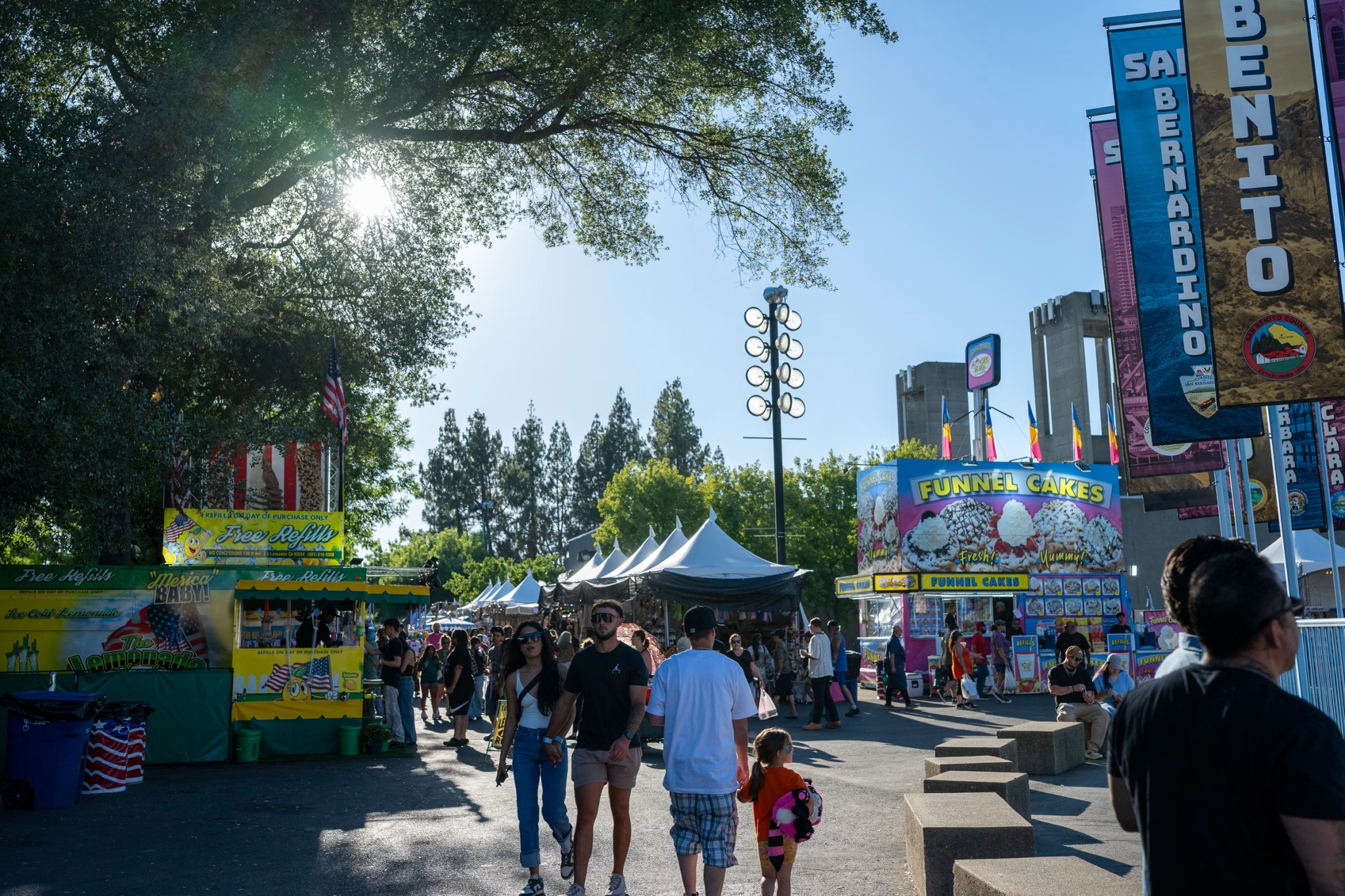
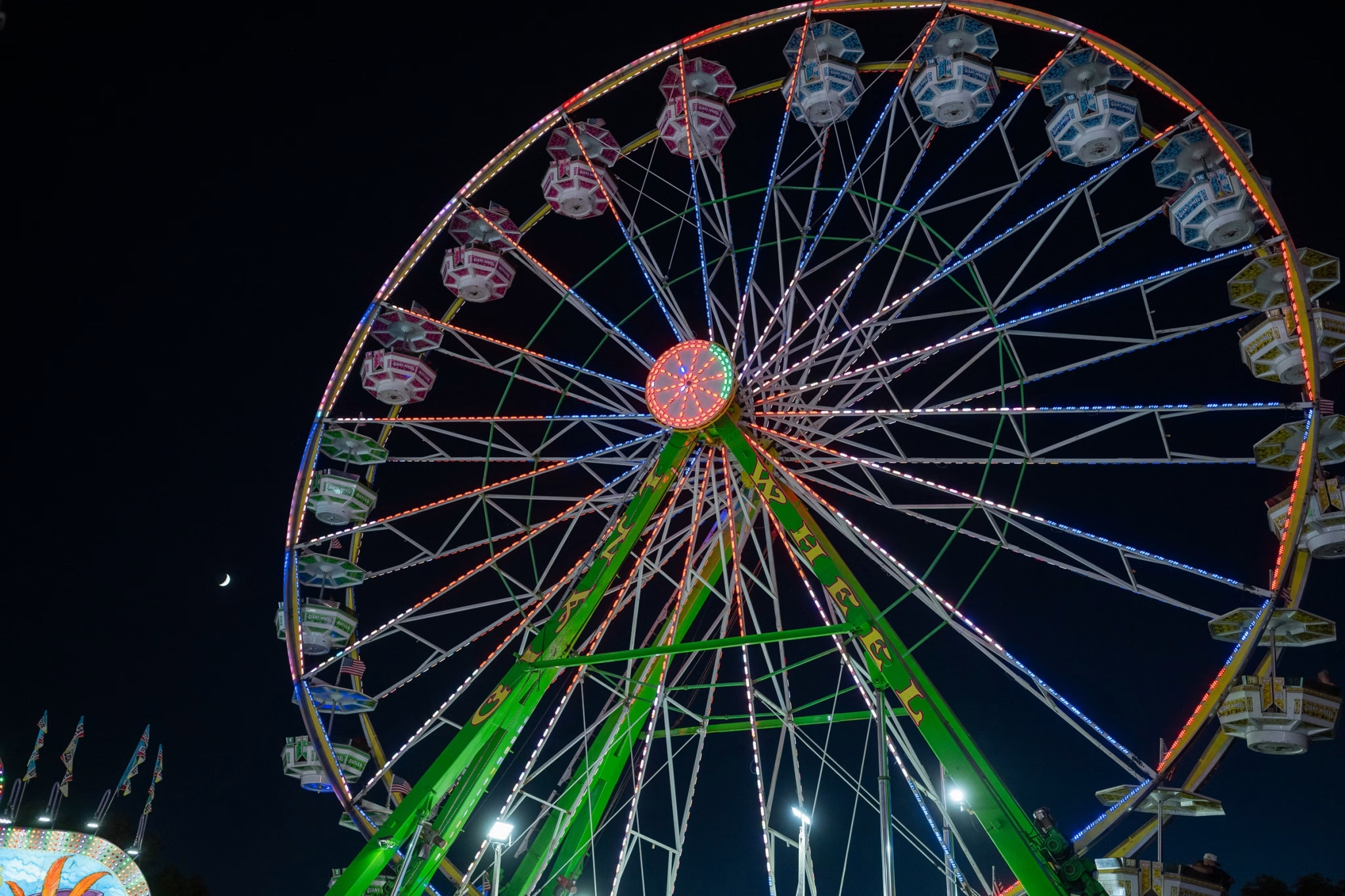
On a Saturday in mid-July I walked in off Exposition Boulevard at the ugliest hour of the day, a little after five. The asphalt at Cal Expo still threw the afternoon back at me, and the shade under the oaks was the only mercy on offer. Then the sun dropped, and three hours later the whole place had turned. The sky over the midway went a deep Sacramento blue, the Ferris wheel threw color across a thousand phone screens, and a funnel cake stand worked a line that no longer felt like a mistake.

The 2026 fair, July 17 through August 2, is the last California State Fair that will ever run in the heart of summer. Beginning in 2027 the whole thing moves to fall, September 17 through October 3.
Cal Expo weighed July highs in the mid-90s against late-September highs in the mid-80s and decided the heat was costing them.
If you carry a summer-fair memory of this place, cotton candy and a sunburn and a concert you half remember, 2026 is the year to make one more.
I live twenty minutes from Cal Expo and I have been coming to this fair my whole life.
The best part of the California State Fair is the people standing behind the booths, if you slow down long enough to talk to them.
✦ Key Takeaways
- The 2026 fair runs July 17 through August 2 at Cal Expo, 1600 Exposition Boulevard in Sacramento. Hours are 4 to 10 pm Monday through Thursday and 10 am to 10 pm Friday through Sunday.
- This is the last summer fair, ever. Beginning in 2027 the California State Fair moves to fall, September 17 through October 3, to escape the July heat.
- Advance admission is $16 adult, $12 senior, $10 child, a couple of dollars less at Save Mart, a couple more at the gate. Parking is $15 during the fair. Kids 4 and under are free.
- Go for the food and the competitions first. The California Wine Bar, the Beer Den, and the olive oil and cheese judging are where Sacramento’s identity as an agricultural capital actually shows up on a plate and in a glass.
- Weekday evenings and the discount days are the smart way in. Monday is $2 admission from 4 to 6 pm, Tuesday kids are free, and SMUD Giving Fridays waive admission with a donation.
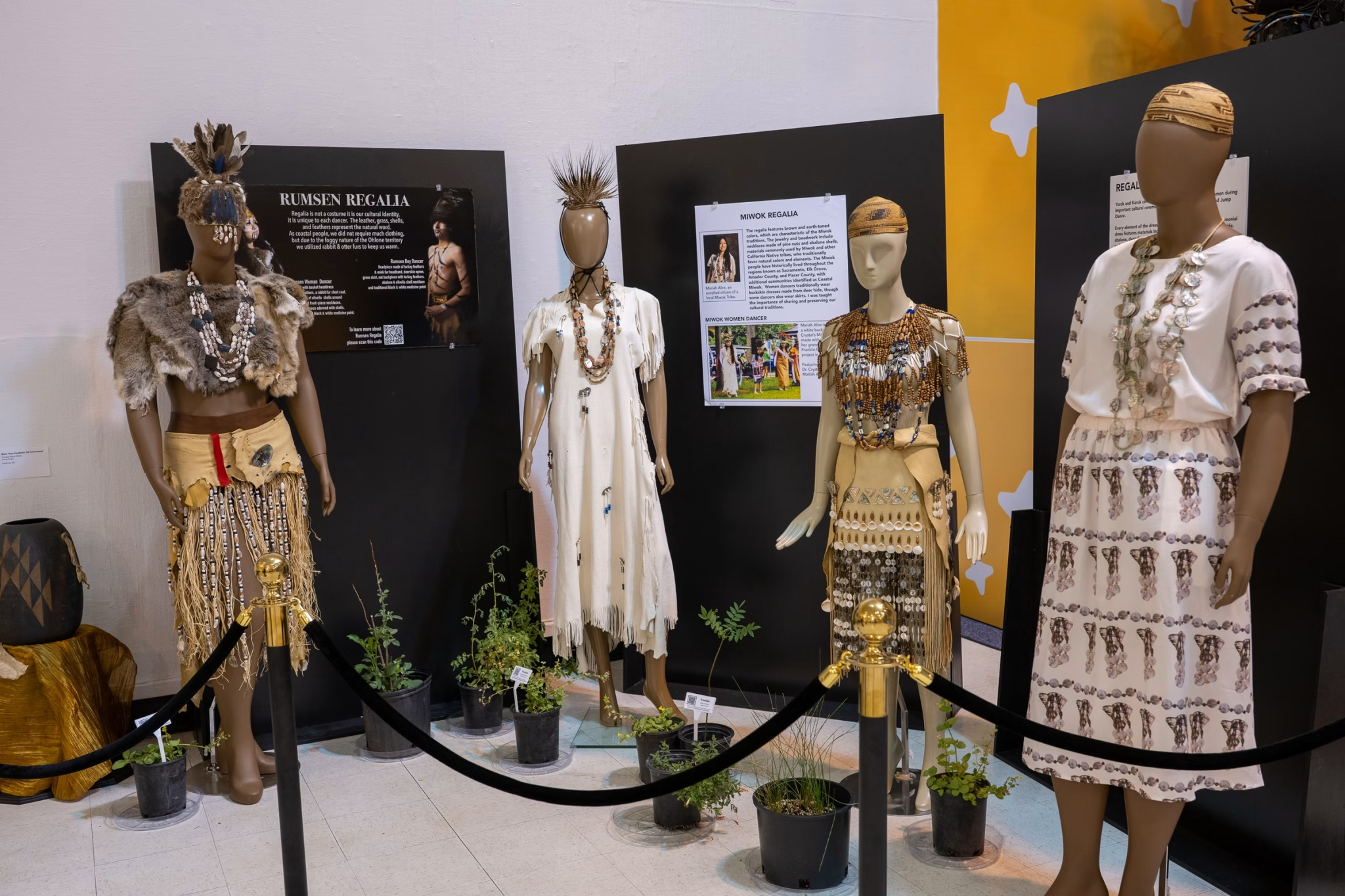
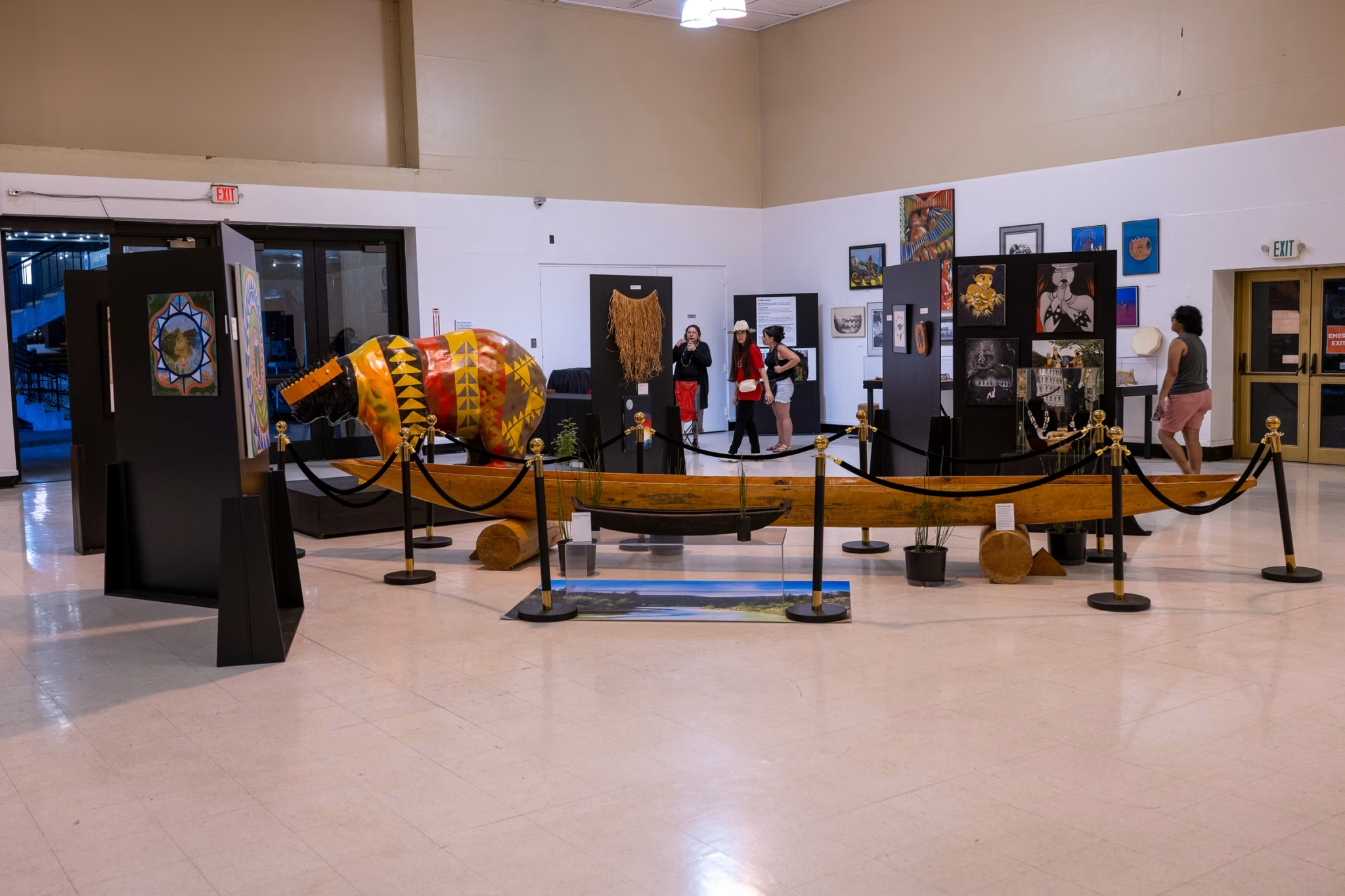
- New for 2026: a King Tut tomb replica, the CaLOWfornia Love lowrider showcase, and the California First Peoples’ Art Showcase are all worth the walk.
- The real move is to talk to the exhibitors. The growers, makers, and handlers behind the booths will tell you things no sign ever will, and it costs nothing.
The essentials, current for 2026
The fair is at Cal Expo, 1600 Exposition Boulevard, Sacramento, the same fairgrounds that host the horse races and the home shows the rest of the year. It runs seventeen days, July 17 through August 2. Opening day, July 17, is a Friday, so it keeps weekend hours.
The hours change with the day of the week. Monday through Thursday the gates open at 4 pm and close at 10. Friday through Sunday they open at 10 am and close at 10 pm. The carnival, the Skyride, and the Monorail keep the same opening times as the main gates.
On the final Sunday, August 2, the fair still closes at 10 but stops admitting anyone after 8 pm, stops stamping hands at 6, and shuts the parking gates at 7.
Admission is genuinely cheap by the standard of big summer events, and it gets cheaper if you plan even slightly ahead.
| Ticket | Save Mart (advance) | Online (advance) | At the gate |
|---|---|---|---|
| Adult (13-61) | $14 | $16 | $18 |
| Senior (62+) | $10 | $12 | $14 |
| Child (5-12) | $8 | $10 | $12 |
| Child (4 and under) | Free | Free | Free |
| Ride wristband, Mon-Thu | $42 | $45 | $45 |
| Ride wristband, Fri-Sun | $42 | $50 | $50 |
Parking is where the old numbers still float around online, so ignore them. Cal Expo charges $10 for general parking most of the year, but during the state fair and for concerts the rate is $15 a day. There is no free lot worth the walk in July, and rideshare drop-off is a reasonable alternative if you are not hauling a wagon full of kids and stuffed prizes.
What a day at the fair costs
Here is a realistic Saturday for a family of four, two adults and two kids in the 5-to-12 range, buying advance tickets at Save Mart and letting the kids ride. The fixed costs are exact, straight from the official pricing. The food line is a planning estimate, because fair food is priced to separate you from your money and the total depends entirely on your discipline.
| Line item | Cost |
|---|---|
| 2 adult tickets (Save Mart advance) | $28 |
| 2 child tickets (Save Mart advance) | $16 |
| Parking | $15 |
| 2 kids’ ride wristbands (Save Mart) | $84 |
| Food and drinks for four | $100 to $200 |
| All-in total | $243 to $343 |
For a real number, two of us went through about $200 on food and drinks in a single evening. That included alcohol and no souvenir cups. Fair-priced drinks are what move that line, so a family feeding two kids on corn dogs and lemonade lands near the bottom of the range, and two adults working through the wine garden lands at the top.
You can cut it roughly in half. Come on a weekday evening when admission and wristbands both drop, skip the wristbands entirely if your kids are happy with three or four rides and pay the $2 Tuesday ride price, and eat one real meal instead of grazing on twelve-dollar novelties. The single biggest lever is the wristband decision.
Start with the food
Sacramento calls itself America’s Farm-to-Fork Capital. The one place that claim stops being a slogan and becomes a plate is the fair.
This is an agricultural exposition first and a carnival second, easy to forget when someone hands you a funnel cake the size of a hubcap. The 70-plus food vendors are the obvious draw. The parts I would send a first-timer to are the competitions, because that is where California’s actual harvest shows up.
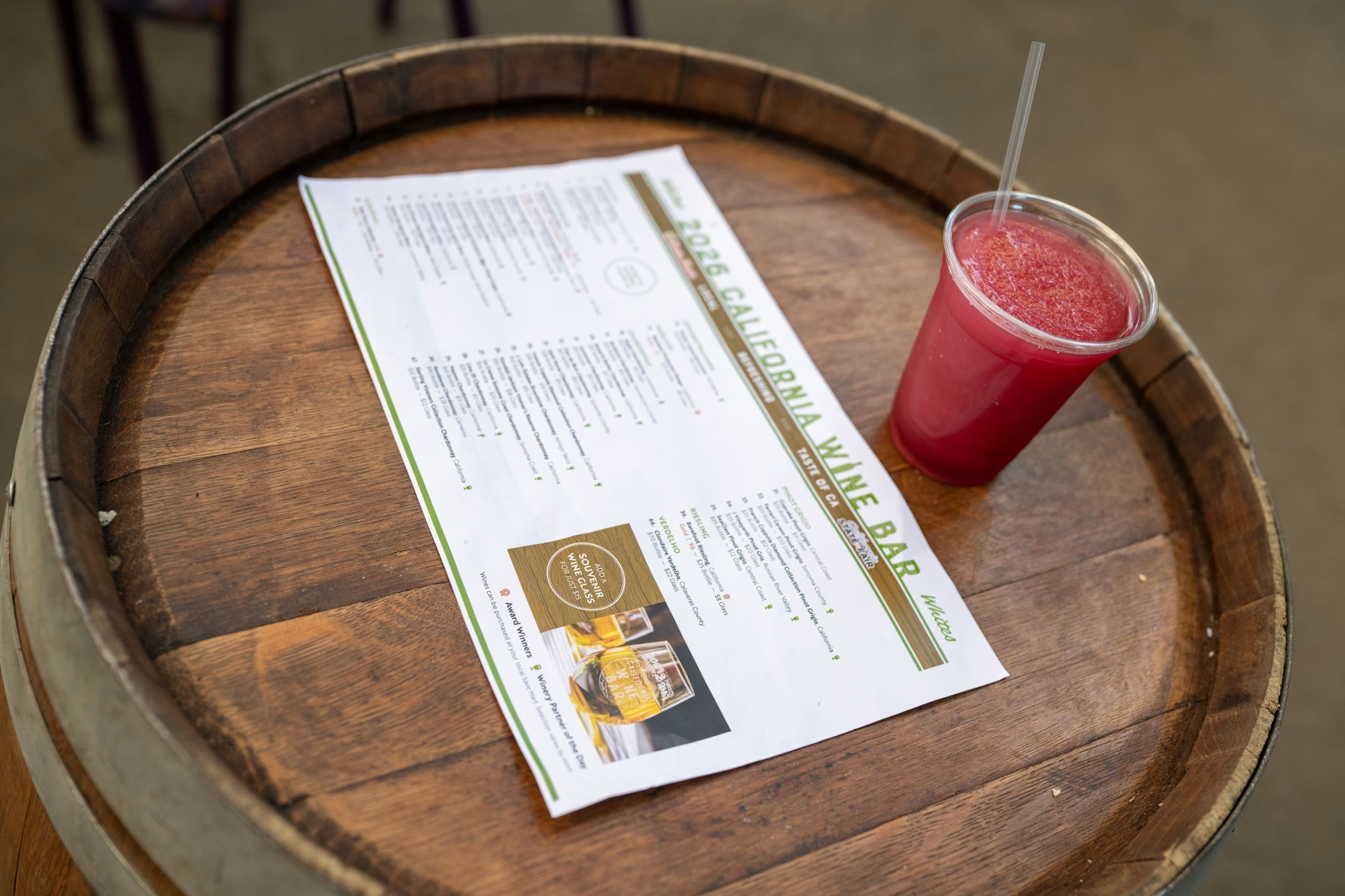
Start at the California Wine Bar in the Save Mart Wine Garden. Every wine poured there is a medal winner from the fair’s own commercial wine competition, one of the oldest and largest in North America. The list runs from Central Coast Pinot Grigio to Calaveras County Verdelho.
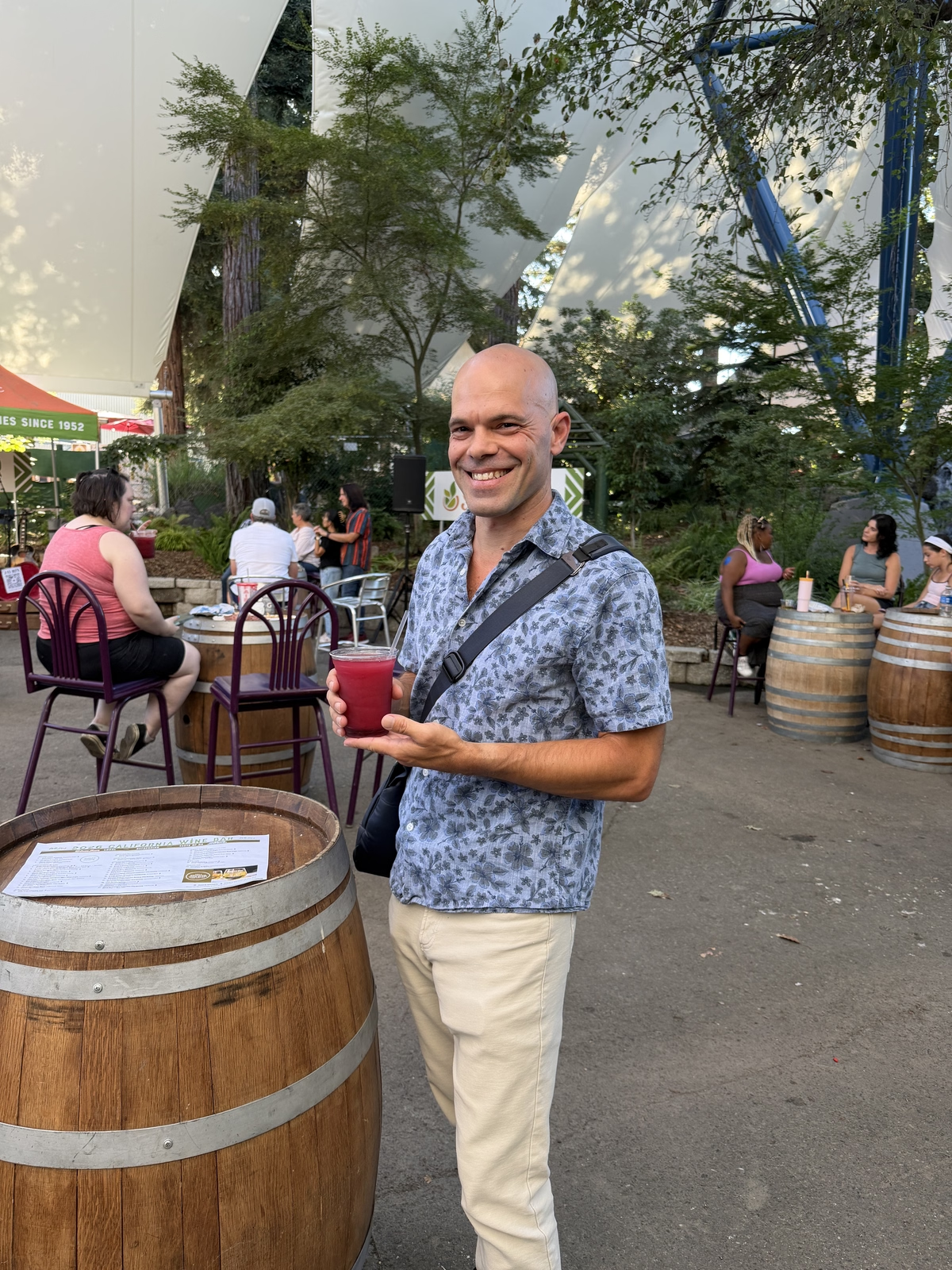
Taste seriously if you want. Or do what half the garden does in the heat and order the wine slushie, which is exactly as unserious and as correct as it sounds. A souvenir glass runs $15 if you want to take one home.
A short walk away, the Beer Den does the same job for the craft-beer competition: a wall of medal-winning California bottles you can drink through a flight at a time. Sacramento’s brewing scene gets its own celebration every spring, which I have written up in a guide to Sacramento Beer Week.
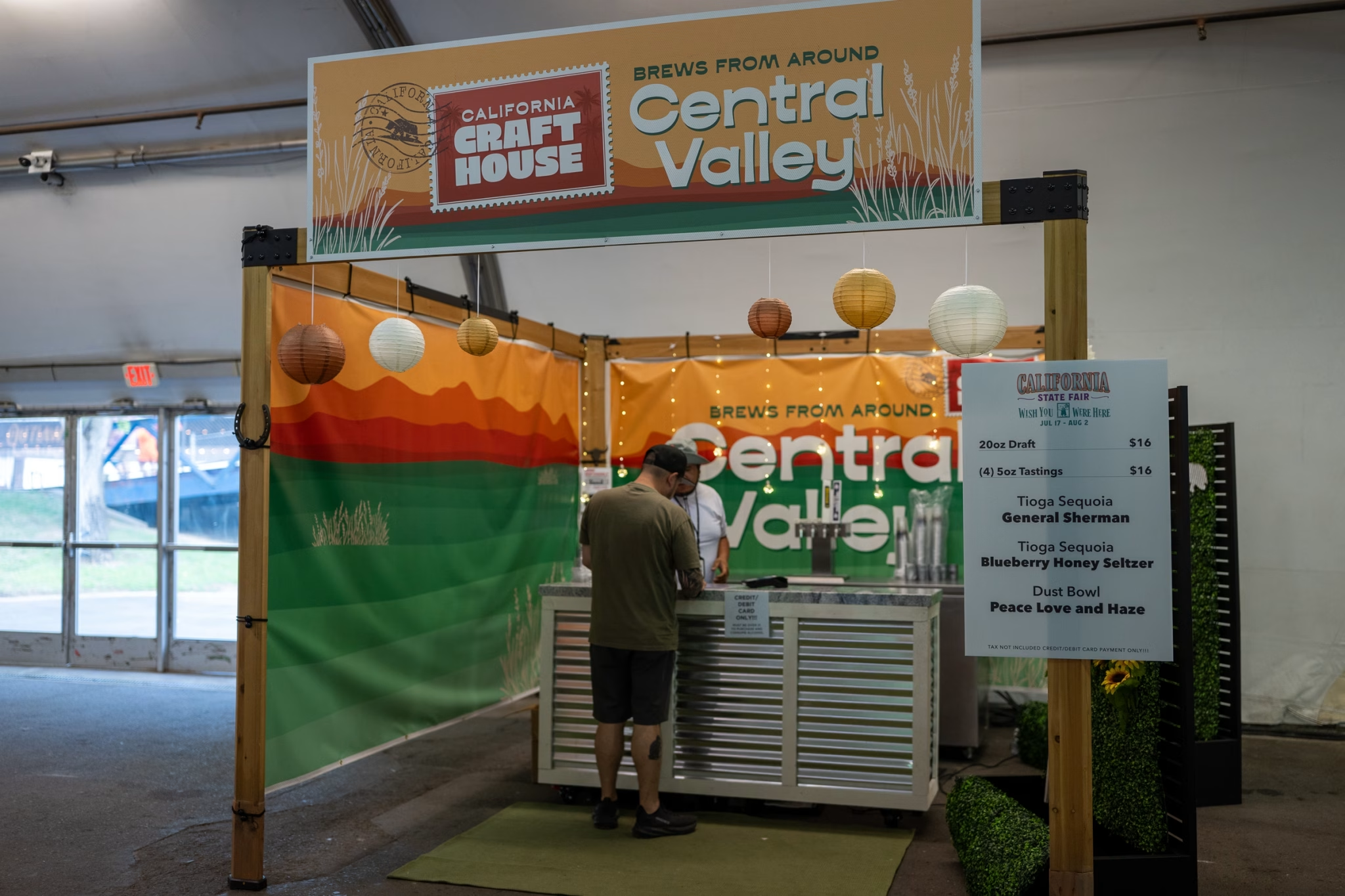
Next to the competition sits the California Craft House, a tasting bar split into six regions of the state, each with its own short list of pours. A 20-ounce draft or a flight of four 5-ounce tasters both run $16, which makes the flight the easy call.
The California Craft House, region by region
Three pours per region, a 20-ounce draft or four 5-ounce tasters, both $16.
Central Coast
- Firestone Walker Union Jack
- Russian River Citra Hop Flash
- Marinelli’s Imperial Cider
Sacramento Valley
- Urban Roots Smart Decisions
- Urban Roots Right Right
- Balance Beer Works Balancing Act
Bay Area
- Trumer Pils
- Drake’s Juicy Hoot
- 21st Amendment Blood Orange IPA
Central Valley
- Tioga-Sequoia General Sherman
- Tioga-Sequoia Blueberry Honey Seltzer
- Dust Bowl Peace Love and Haze
SoCal
- Ballast Point Sculpin IPA
- Golden Road Mango Cart
- Malibu Brewing Green Chili Lager
NorCal
- Farmers Brewing Summer Kickback
- Bear Republic Racer 5
- Russian River Pliny the Elder
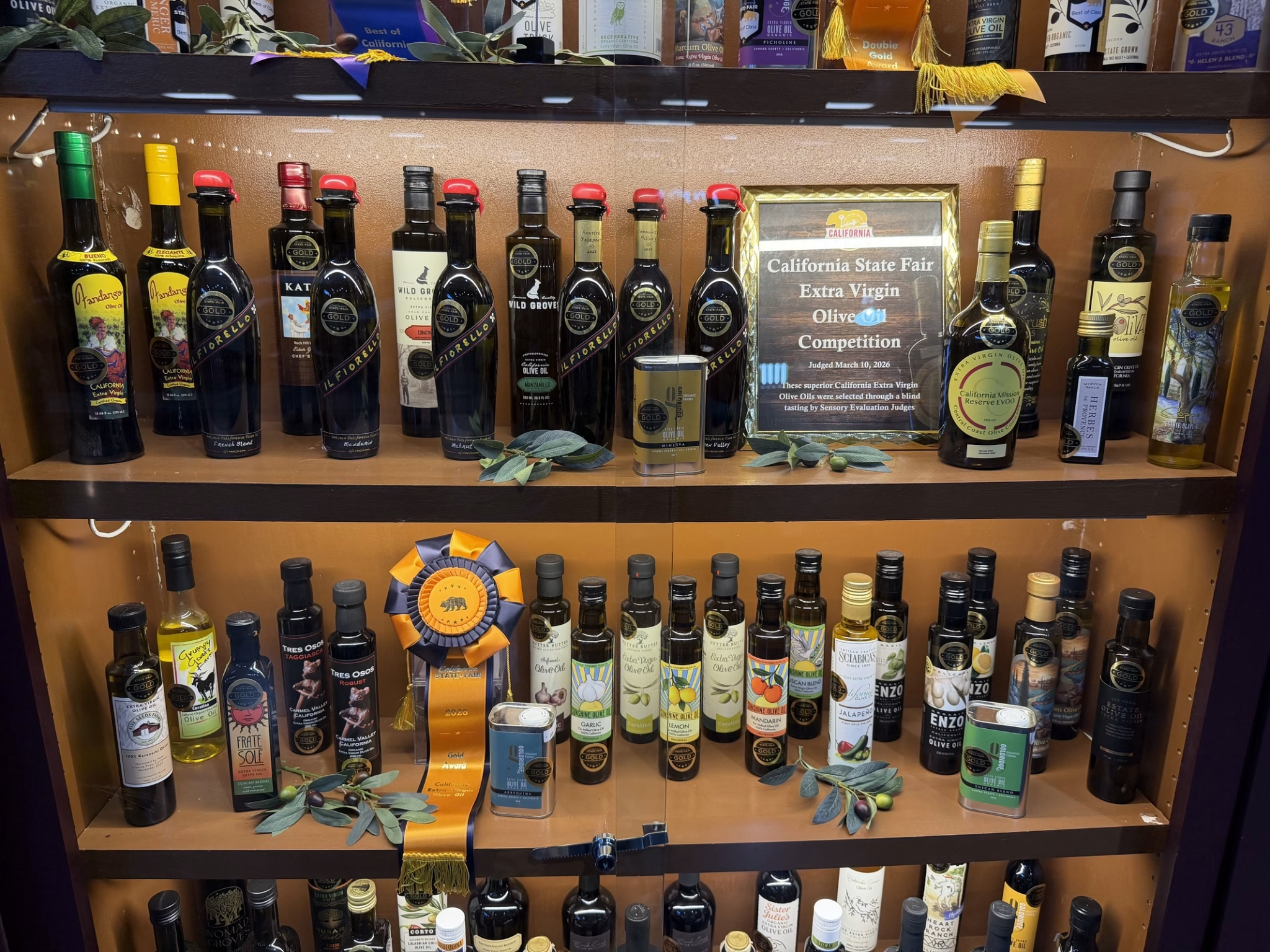
The real sleeper is the olive oil and cheese judging near the agricultural building. California produces almost all of the country’s olive oil, the tasting is often free, and the person behind the table can tell you why one bottle tastes like cut grass and the next like butter.
For actual meals, the vendor lineup leans the way fair food always does, with a strong Sacramento accent. The taco stands are the ones I trust: Alicia’s Mexican Kitchen, Benito’s Tacos, and Pepe’s among them. If the fair puts you in a taco mood, there is a whole city of them waiting, ranked in my guide to the best Mexican restaurants in Sacramento.
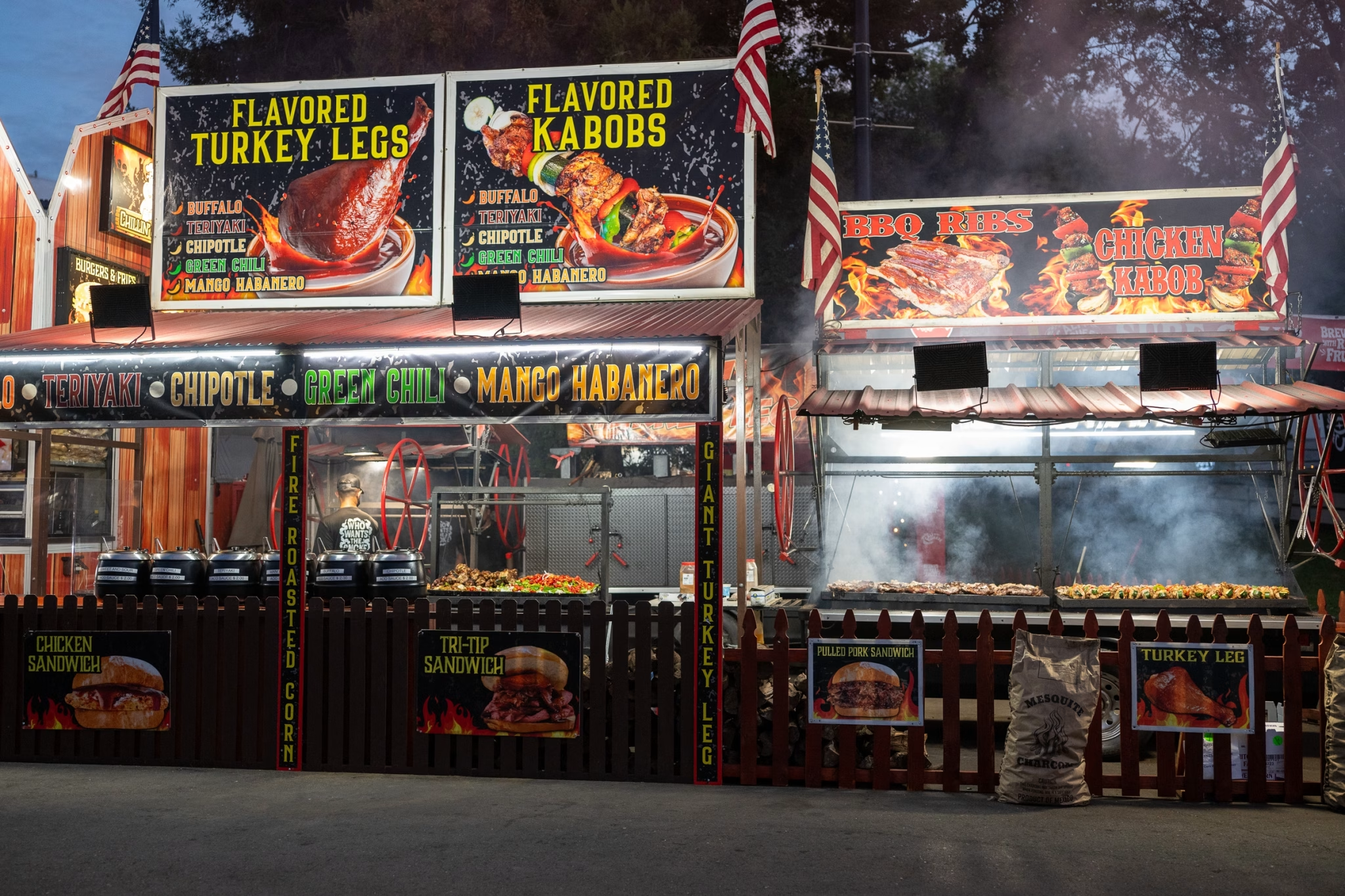
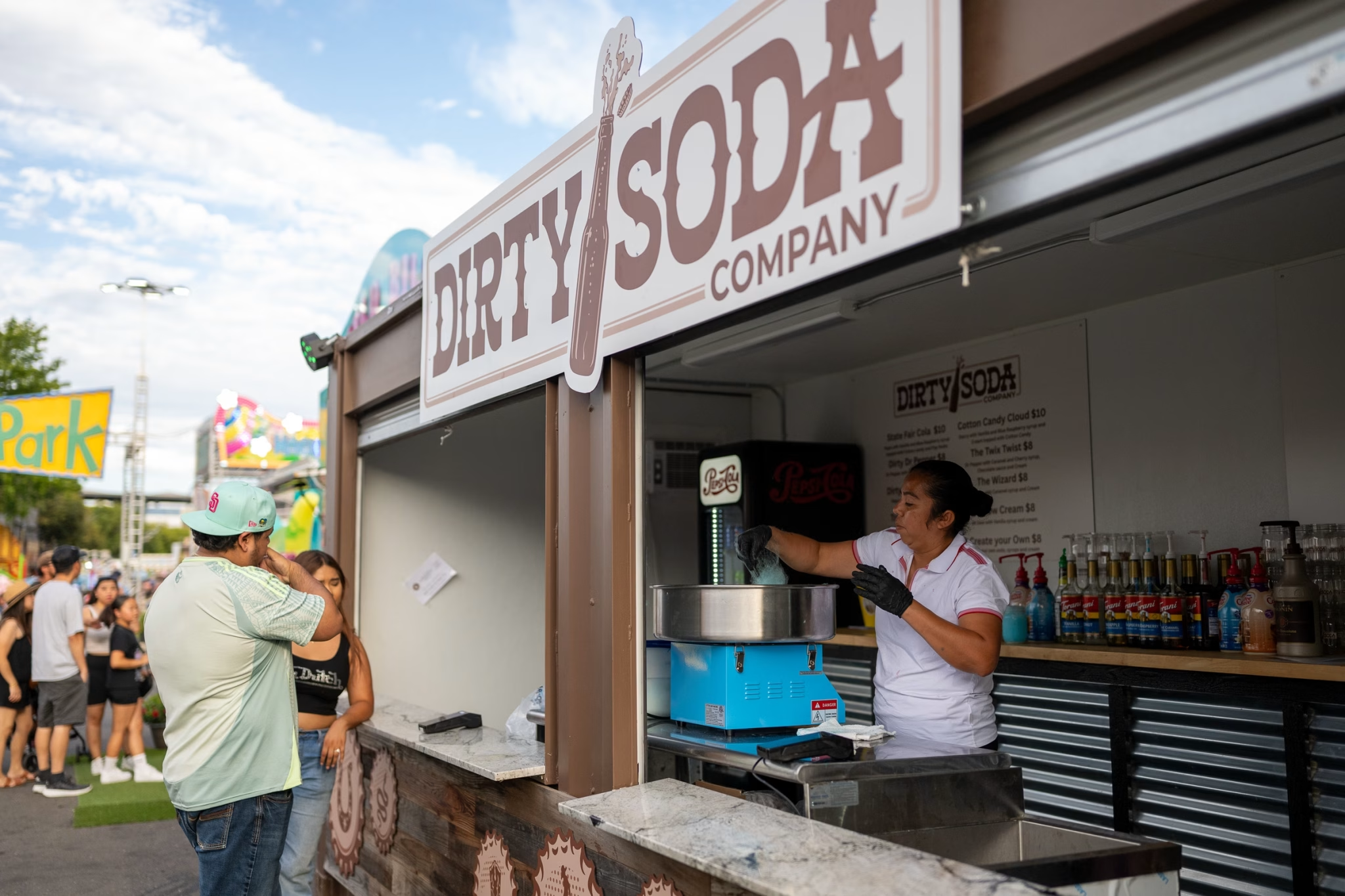
The barbecue comes from Smokin’ Rose and Chillin’ and Grillin’, both competition pits. For the sweet side there is Fabe’s churros and gelato, Handel’s ice cream, and the deep-fried midway canon in all its glory. The 2026 novelty everyone is chasing is Dubai chocolate on everything, from strawberries to soft serve.
Talk to the people behind the booths

In the nature building I watched a young handler with a California kingsnake coiled around one wrist explain to two teenagers, who had walked up expecting to be grossed out, exactly why the snake’s black-and-white banding keeps it safe and why it will happily eat a rattlesnake. Five minutes earlier those kids were going to glance and leave. Instead they were holding it.
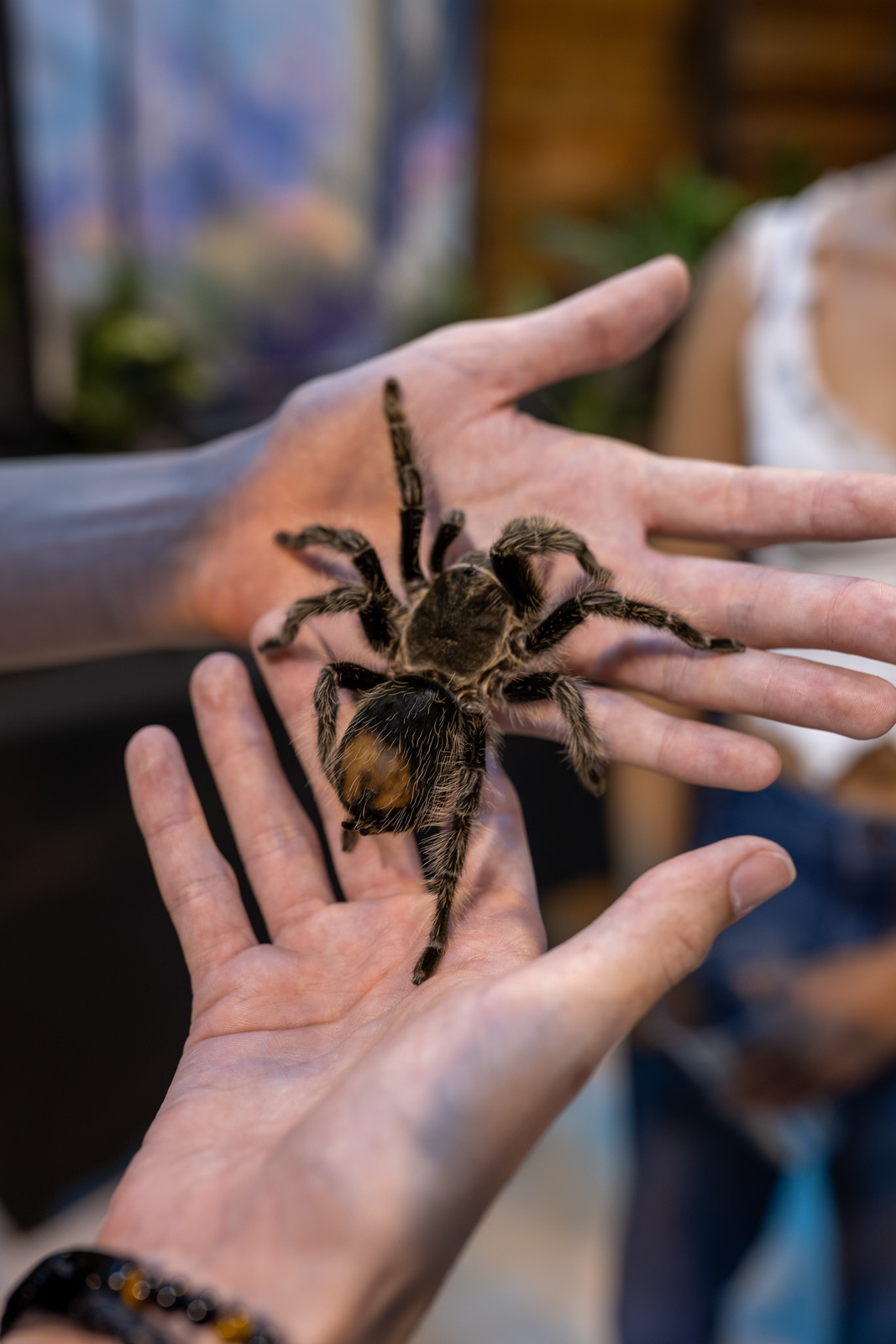
It happens everywhere if you let it. The pigeon fanciers at the Rare Breeds Club will walk you through why a bird looks the way it looks. The lowrider owners in the CaLOWfornia Love hall love nothing more than telling you how many years and how much candy paint went into a car.
In Pavilion B there is a floral exhibit, an archway built entirely of California-grown flowers over a wall of history, run by wholesalers who have spent decades in the trade. One of them, Marty Espe, gave me the ninety-second version of how California came to grow most of the country’s cut flowers. It was good enough that it became its own story about the wall of flowers at the fair.
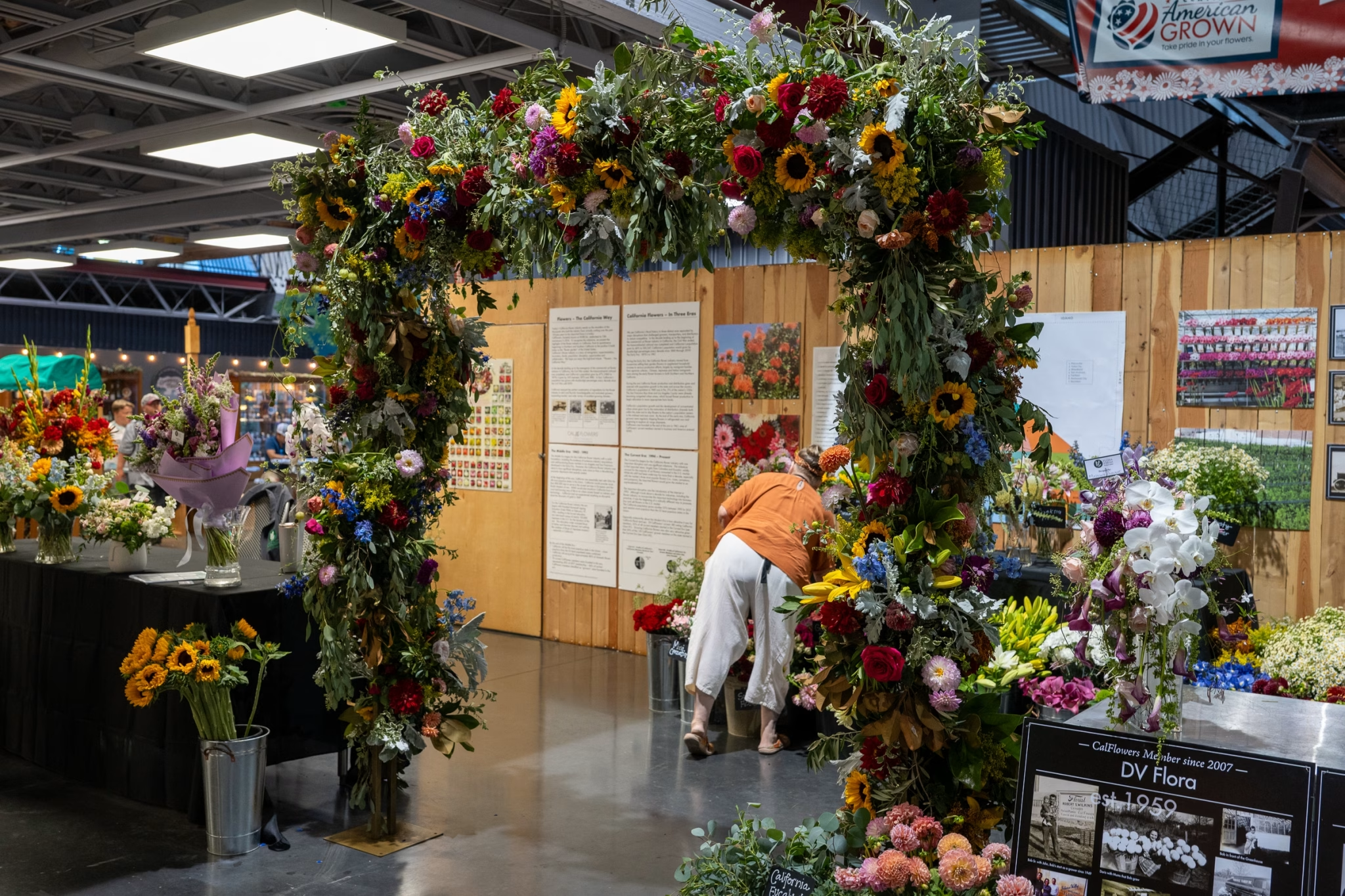
There is a companion piece too, on the real benefits of keeping flowers at home, if the exhibit sends you home wanting a bunch on the counter.
What’s new for 2026, and what’s worth your time
Every fair pads the “new this year” list. Three of these additions genuinely earned the space.
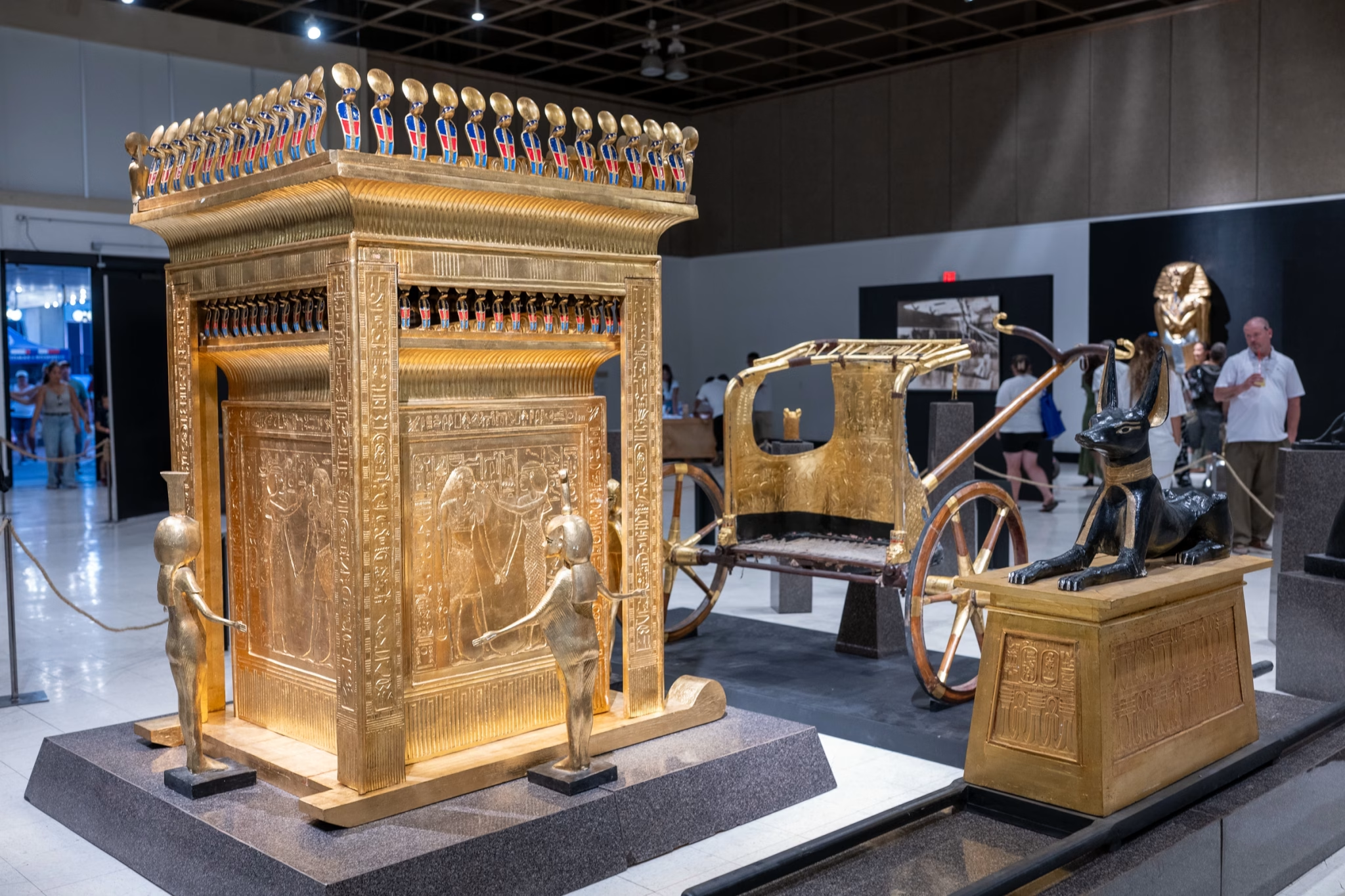
The King Tut experience is a full walk-through replica of the tomb: gilded throne, canopic shrine, mummy-wrapping artifacts. It is indoors and air-conditioned.
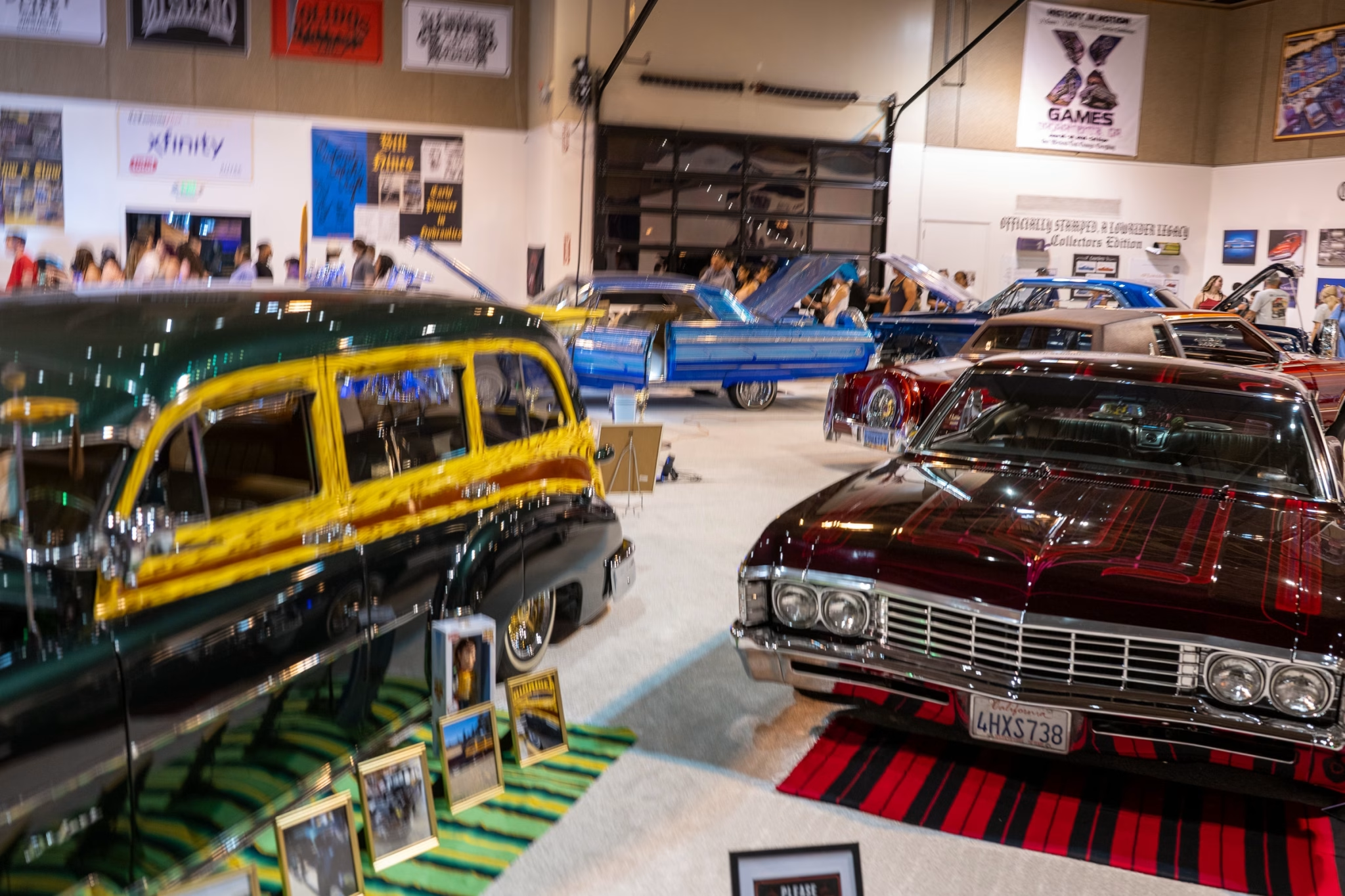
The CaLOWfornia Love showcase fills a hall with lowriders, candy-flake Impalas and gold-plated undercarriages and a woody wagon or two. If you have any affection for car culture, it is the best free car show in the region. It pairs naturally with the California Automobile Museum across town if you want to make a day of machines.
The third is the quietest, and maybe the best. The California First Peoples’ Art Showcase is a room of regalia, basketry, and a full tule reed boat that treats the state’s tribes as living artists.
Worth your time
- The competition halls: wine, beer, olive oil, cheese
- The First Peoples’ Art Showcase
- The CaLOWfornia Love lowriders
- The Toyota concert on your night, free from the lawn
- Any exhibit with a person willing to talk
- The Ferris wheel after dark, once
Skip without regret
- The midway games priced to be unwinnable
- Any food line longer than the ride lines
- The Monorail as transport (it is a $5 novelty)
- Arriving at noon in full sun
- The $15 souvenir cup you will not reuse
- Trying to see all of it in one visit
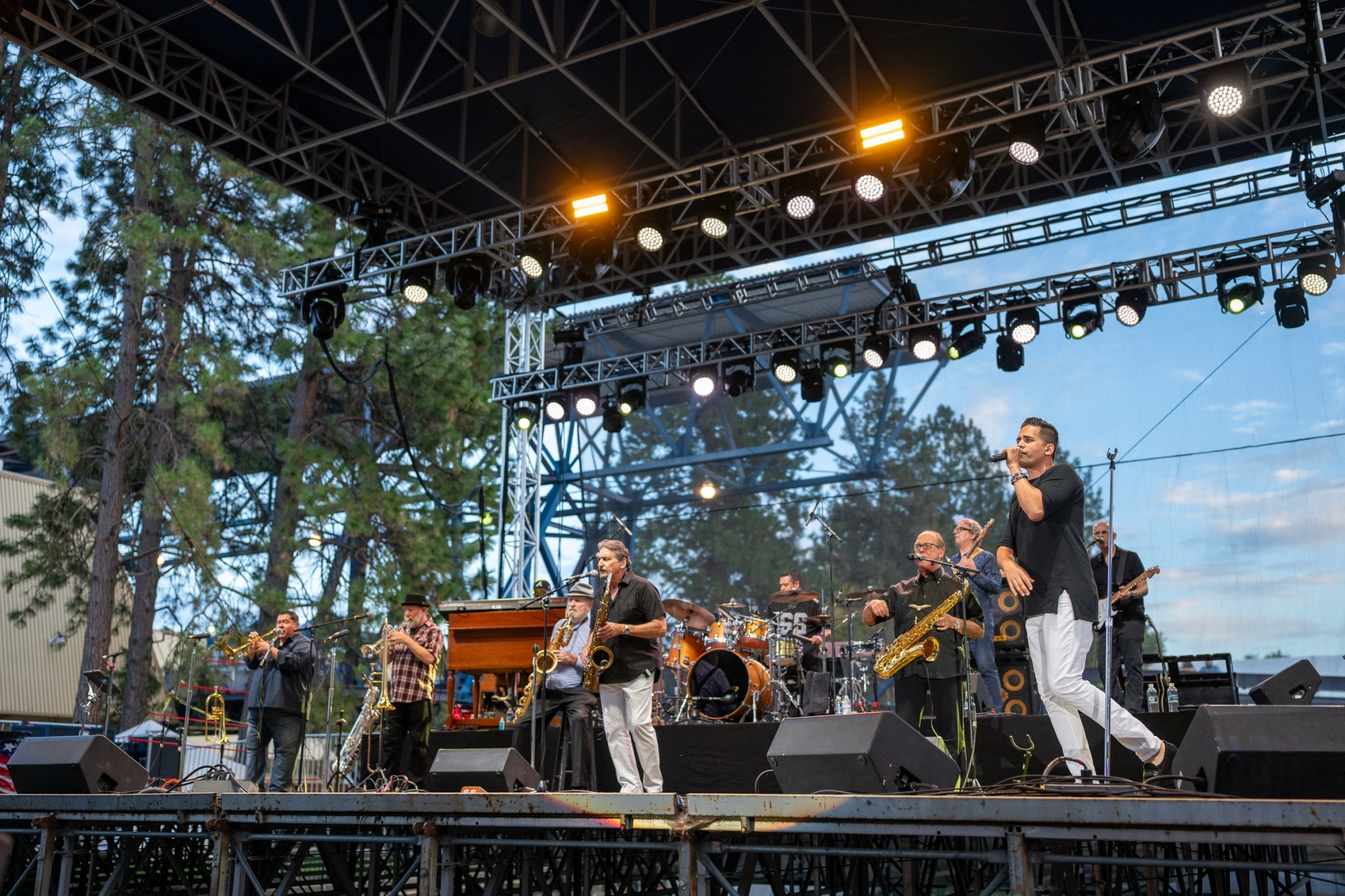
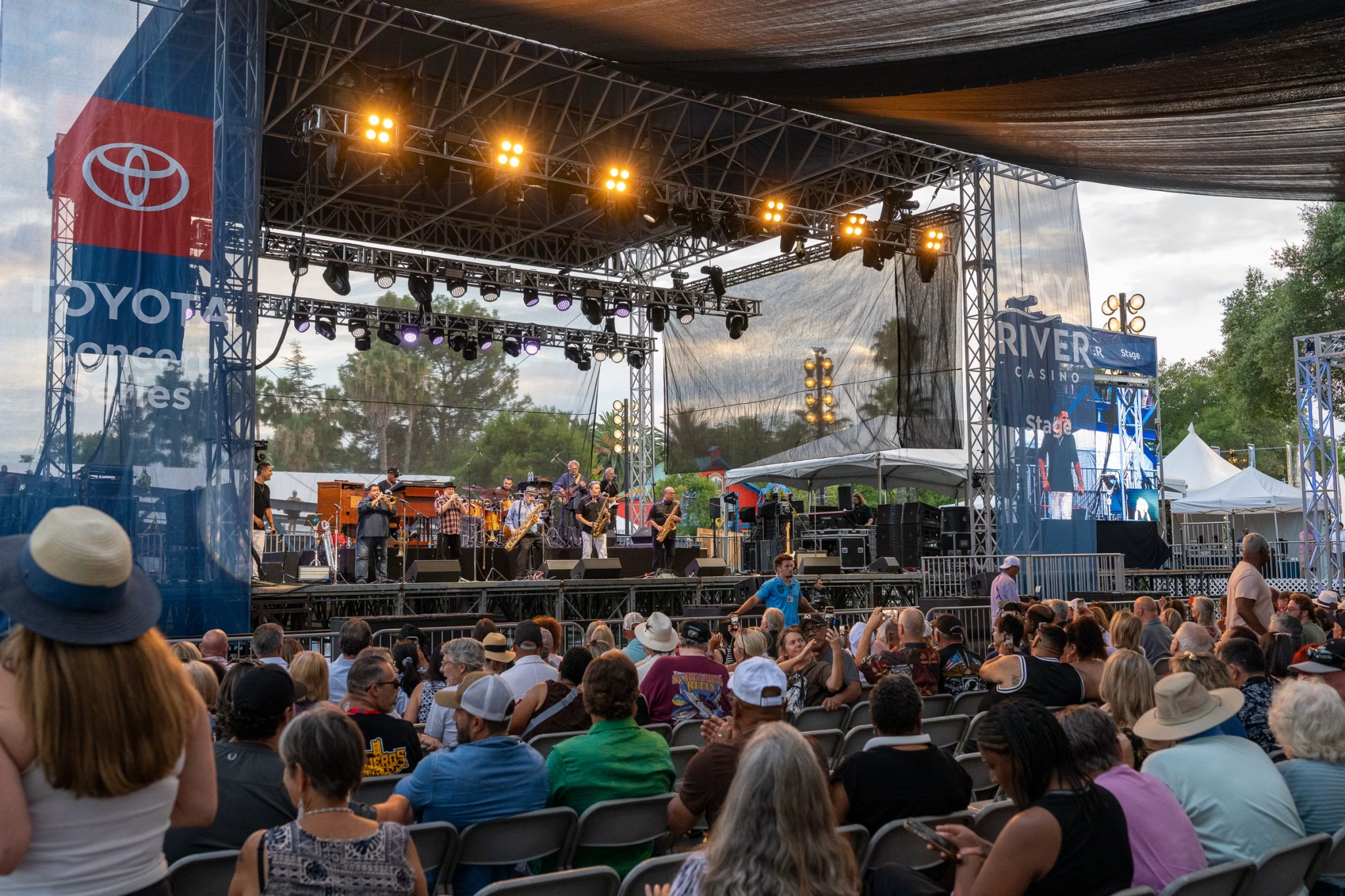
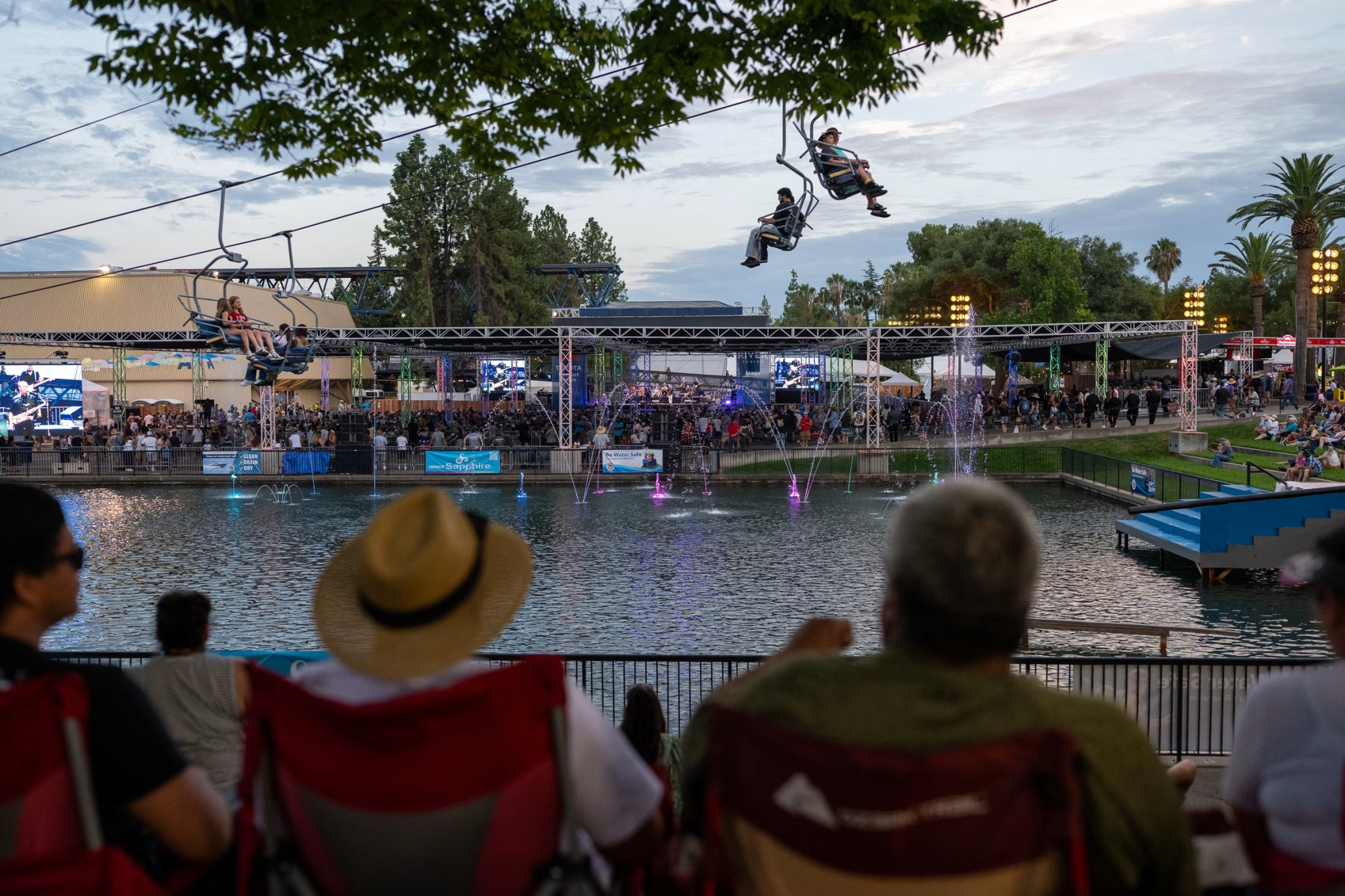
The Toyota Concert Series on the Sky River Casino stage runs one show a night at 8 pm. A seat is a paid ticket, but it bundles fair admission, so it doubles as your way through the gate. The 2026 run is a genuine grab bag: Tower of Power, Boyz II Men, Trace Adkins, WAR, Ja Rule, a Queen tribute, a yacht-rock closer on the final day. If you would rather not pay for a seat, the lawn and a few standing areas let you watch for free, and the sound carries.
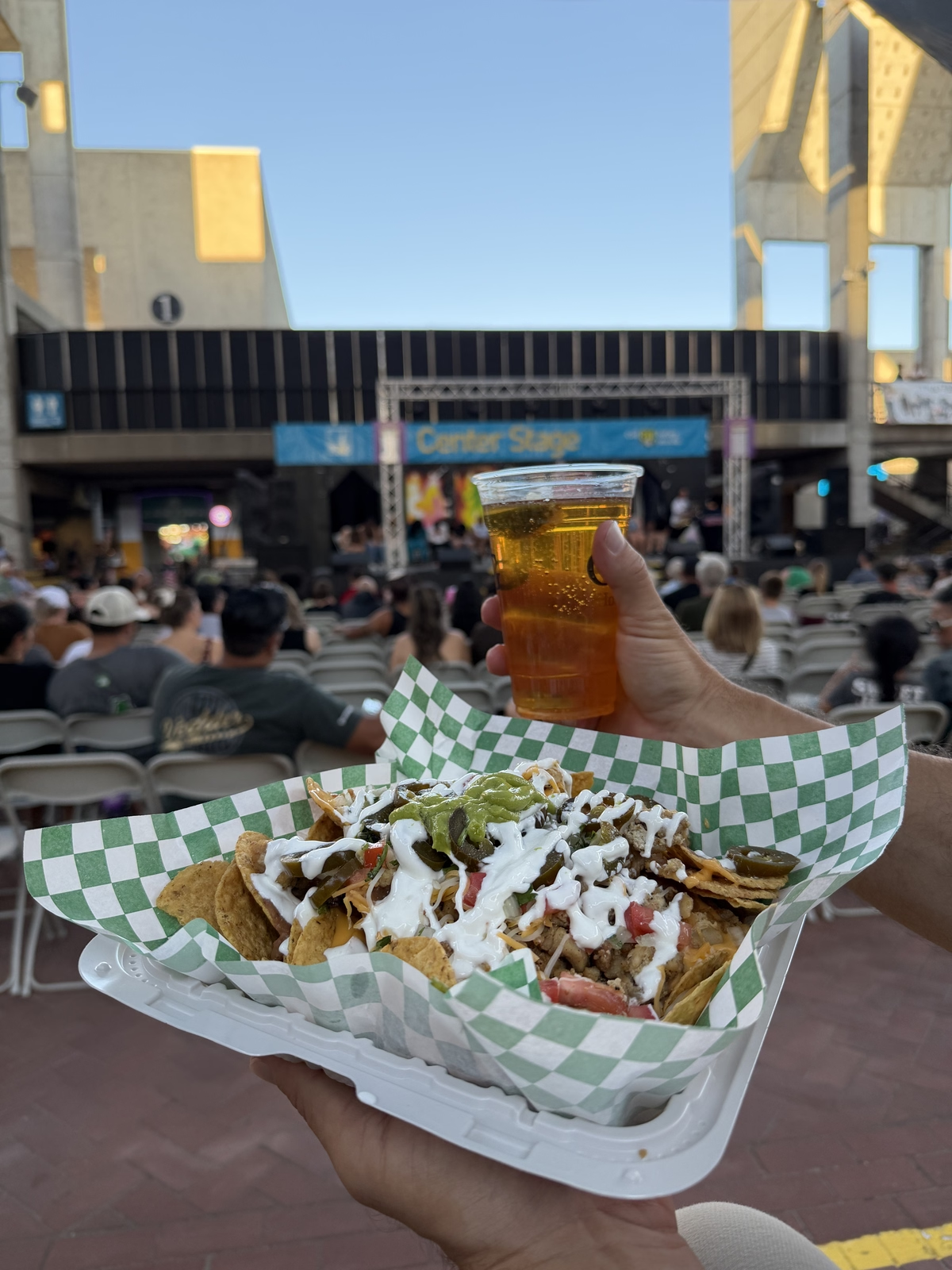
There is a second, smaller stage worth finding. The PG&E Center Stage sits right in the middle of the exhibit halls, ringed by the flower show, the competitions, and the rest of the good indoor stuff, and it runs live performances throughout the day. It is free and it is shaded, which makes it the best place on the grounds to sit down, eat, and catch a set when your feet give out.
How to do the fair without the misery
Almost every bad fair day is a heat day, a crowd day, or a parking day.
Sacramento in mid-July runs 95 to 100 degrees, and Cal Expo is a lot of open asphalt. The single best decision you make is when to arrive. A weekday, gates at 4 pm, buys a couple of survivable hours in the shade of the exhibit buildings before the sun drops and the whole fair turns pleasant. Weekend mornings right at 10 am are the other good window, cooler and uncrowded, before the afternoon bakes and the evening floods.
Know the bag rule before you pack, because it is strict and enforced at the gate. Bags have to be clear plastic, vinyl, or PVC, no larger than 12 by 12 by 2 inches.
Outside food is allowed, and sealed plastic water bottles are fine. Glass, aluminum cans, metal water bottles, and outside alcohol all get turned away at the gate.
So the heat move is to bring your own sealed water in a clear stadium bag, the flat 12-by-12-by-2 kind the gate allows, and refill from the fountains rather than paying five dollars a bottle inside. A portable charger earns its space in that bag by the third hour of photos, and a clip-on neck fan is not a gimmick when the pavement throws that heat back at your kids. Only service animals are allowed, so leave the dog and the emotional-support anything at home.
Even the busy stands move fast, so a line that looks long is usually a few minutes. If you want to skip even that, eat off the obvious peaks, roughly noon to 2 pm and 6 to 8 pm.
If you would rather cap the night with a real meal than another corn dog, the whole city is twenty minutes away, and my guide to the best restaurants in Sacramento is built for exactly that. Coming from out of town? I keep a running list of where to stay in Sacramento and day trips from the city.
The cheapest way in
The gate price is the price for people who did not plan.
Everyone else has options, and stacking them is how a family day drops from close to $290 to closer to $120.
- Buy at Save Mart. Participating stores sell admission at $14 adult, $10 senior, $8 child, and the ride wristband at $42 any day of the week. The Save Mart wristband is $42 even on a weekend, when the gate charges $50.
- Match your visit to a discount day. Mondays, admission is $2 from 4 to 6 pm. Tuesdays, kids get in free and every carnival ride is $2, which is the single best day for a family with young kids. Wednesdays take $10 off ride passes. Fridays, seniors 62 and up pay $10, and SMUD Giving Fridays waive admission entirely with a donation.
- Do the wristband math. A weekend wristband is $50 at the gate, or $42 from Save Mart. Individual ride tickets add up fast, so the wristband wins the moment a rider wants more than five or six rides. Below that, buy tickets. On a $2 Tuesday, skip the wristband entirely.
- Consider the Costco bundle if you are a member and going as a group: two general admissions, one parking, and two $5 food vouchers for $32.99. Whether it beats Save Mart depends on the day, but the bundled parking and vouchers usually tip it.
The last summer fair
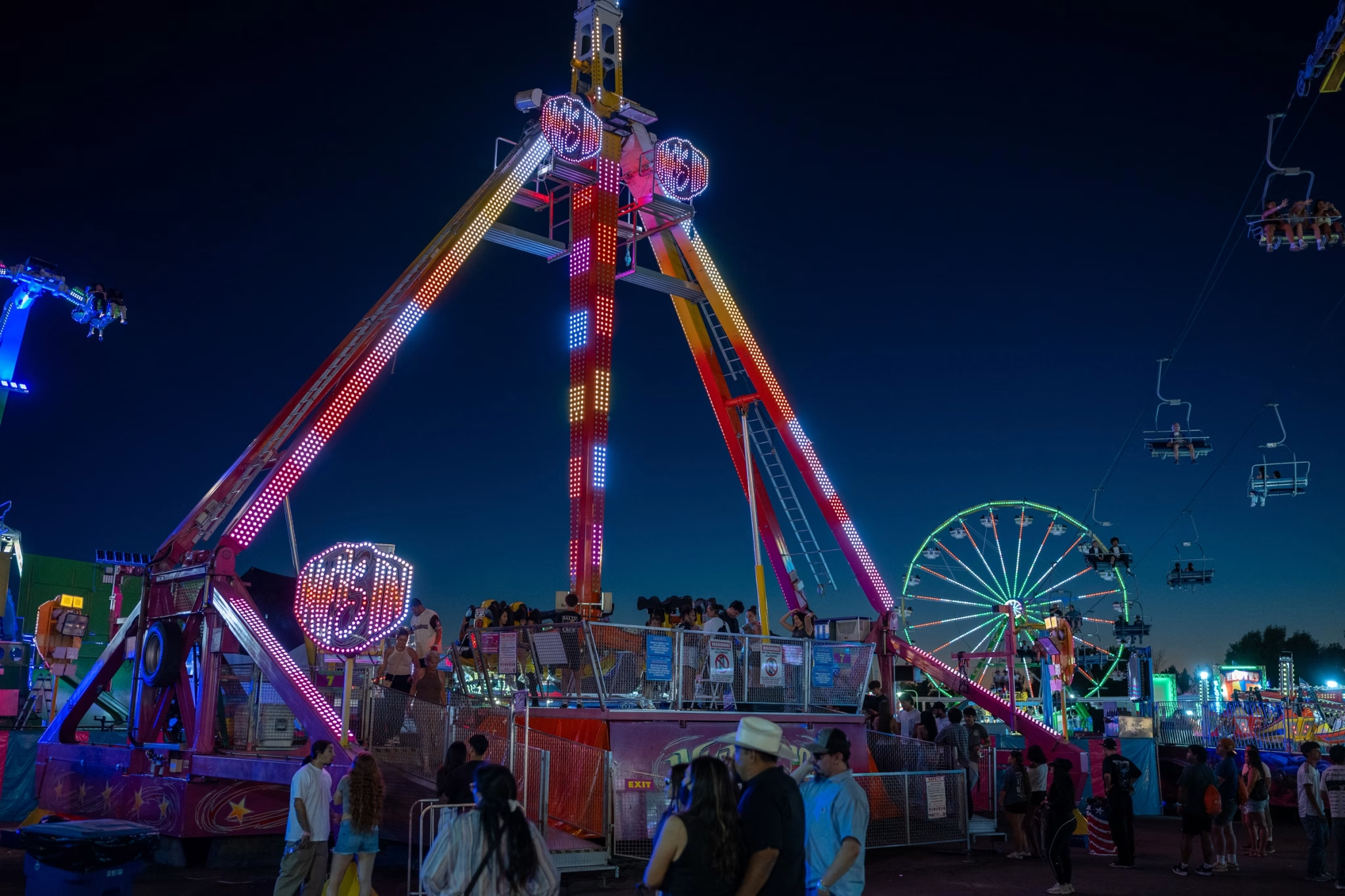
It is easy to be cynical about a state fair. The games are rigged, the food is a heart attack on a stick, and the heat in July has always been a genuinely bad idea. Moving the whole thing to the mild shoulder of fall is, on paper, the obviously correct call, and I do not think anyone will miss pushing a stroller across that lot at 100 degrees.
And yet. There is something specific about a summer fair. The way a Sacramento July evening cools just enough right as the lights come on, the sunburn you earned, the smell of it. After this year, that becomes a memory.
Frequently Asked Questions
When is the California State Fair 2026?
July 17 through August 2, 2026, seventeen days. This is the final year it runs in summer; from 2027 it moves to September 17 through October 3.
Where is the California State Fair?
At Cal Expo, 1600 Exposition Boulevard, Sacramento, California. It is the same fairgrounds that host the horse racing and various expos throughout the year, just off Business 80.
How much are California State Fair tickets?
Advance admission is $16 adult, $12 senior, $10 child (5-12). At participating Save Mart stores it drops to $14, $10, and $8. At the gate it rises to $18, $14, and $12. Children 4 and under are free.
How much is parking at the California State Fair?
Parking is $15 per day during the fair. Cal Expo’s regular $10 rate applies to non-fair events, so budget the $15. There is no meaningful free parking within a comfortable walk in July.
What are the California State Fair hours?
Monday through Thursday, 4 to 10 pm. Friday through Sunday, 10 am to 10 pm. On the final day, August 2, the fair stops admitting guests after 8 pm.
Can you bring food and water into the California State Fair?
Yes. Outside food is permitted, and sealed plastic water bottles are fine. Glass, aluminum cans, metal water bottles, and outside alcohol are not allowed. Everything has to fit the clear-bag rule: 12 by 12 by 2 inches, clear plastic or vinyl.
Are the concerts free at the California State Fair?
Partly. A concert seat is a paid ticket, but it includes fair admission, so it covers your entry too. There is one show a night at 8 pm on the Sky River Casino stage. If you do not buy a seat, you can still watch for free from the lawn and a few standing areas.
Is the California State Fair worth it?
For the price of admission, yes, especially on a discount day and if you lean into the food, the competitions, and the exhibits rather than the midway games. The rides and games are where people feel gouged. The agricultural and cultural side is genuinely good and mostly included.
How long should you spend at the California State Fair?
Plan on four to six hours to do it comfortably. Arriving late afternoon on a weekday lets you catch the cool of the evening, an 8 pm concert, and the midway after dark in one stretch without melting. Trying to see everything in one visit is the fast track to a bad time.
Is 2026 really the last summer California State Fair?
Yes. Cal Expo has confirmed the fair moves to fall starting in 2027, running September 17 through October 3, to avoid Sacramento’s July heat. The 2026 fair is the last one scheduled in the traditional summer window.
Affiliate Disclosure: Some links in this article are affiliate links, which means I may earn a small commission if you buy through them, at no extra cost to you. I only recommend gear I would actually pack for a hot day at the fair.
Article Updates
- July 19, 2026: Article published, based on a visit to the 2026 California State Fair, with pricing, hours, and the 2027 date change verified against castatefair.com and Sacramento news coverage.