
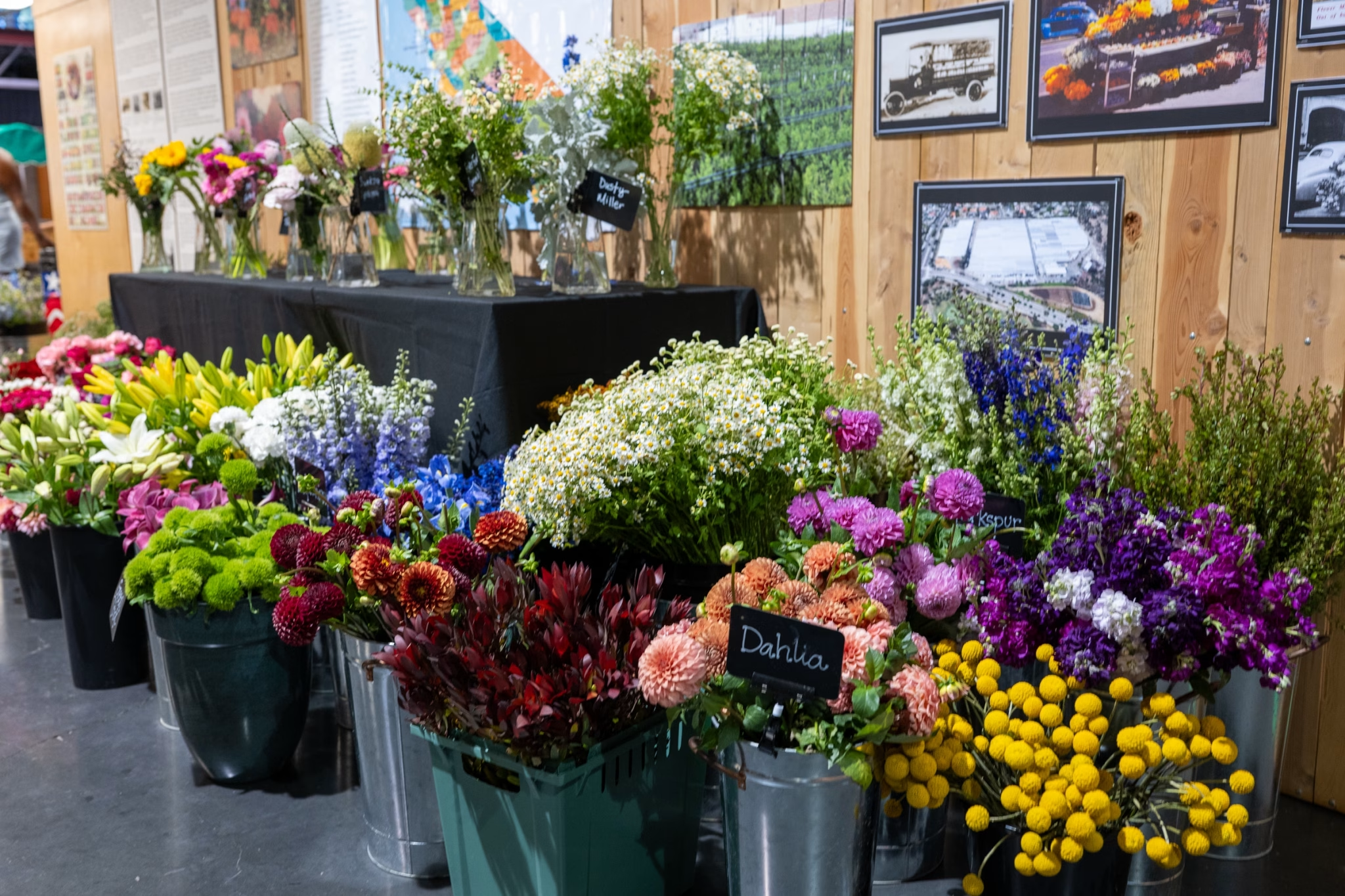
In Pavilion B at the California State Fair, tucked behind the livestock barns, there is an archway built entirely of flowers. Sunflowers and dahlias, roses and Protea, blue delphinium spilling over orange ranunculus, and every stem of it grown somewhere in California. A working flower shop sits underneath the arch. Behind it stands a wall of old photographs and hand-lettered signs.
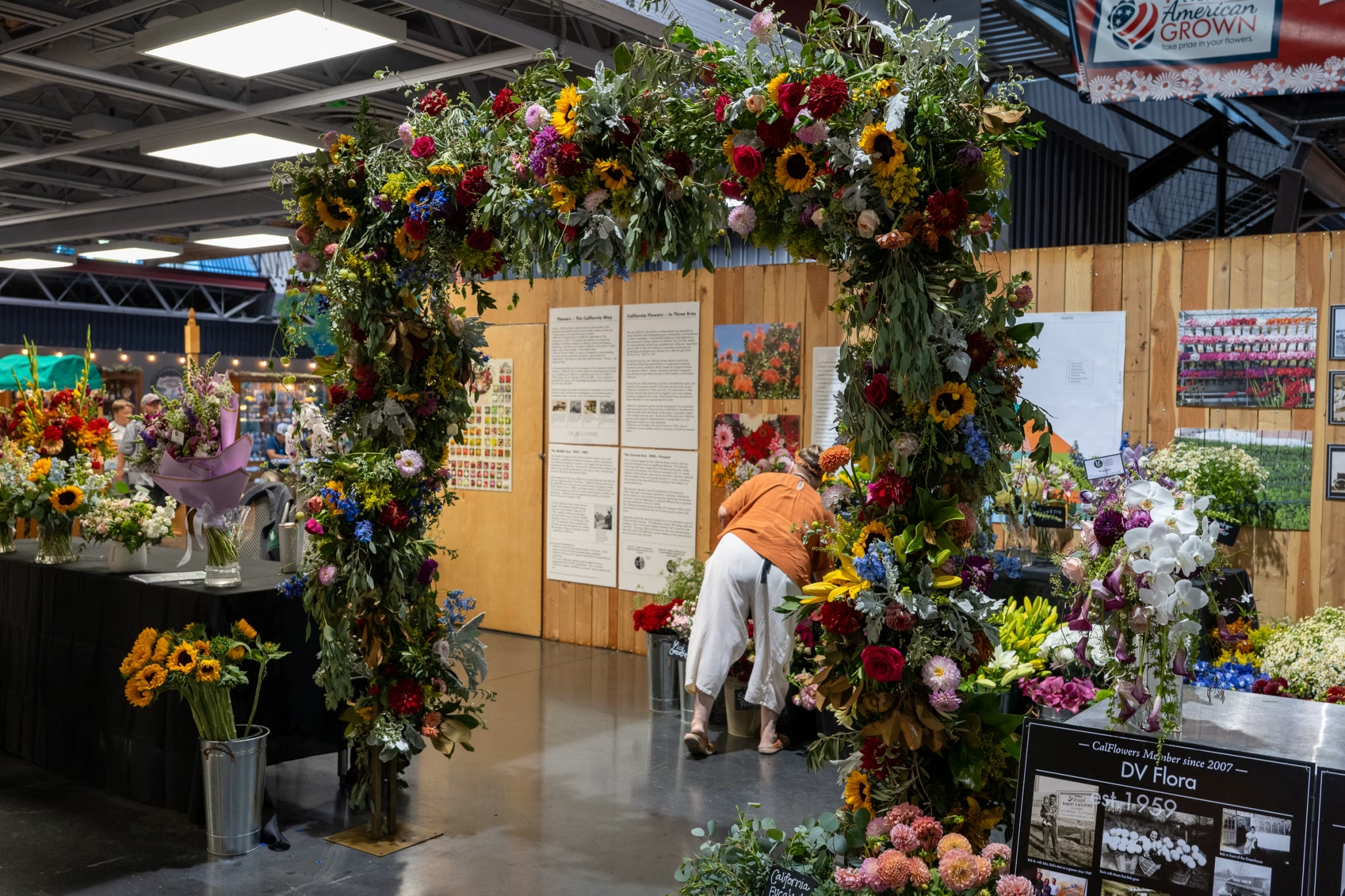
Marty Espe, a wholesaler who has spent decades in the trade, works that shop. The short version takes him about ninety seconds: why a Protea from the dry hills east of San Diego looks nothing like the tulips grown up near the Oregon line. The long version runs from a Gold Rush through an internment order to the discount blooms now flown up from South America, and it still ends every summer with a wall of flowers at Cal Expo.
Key Takeaways
- The California State Fair has shown flowers since 1854, its very first year, and today’s CA GROWN Floral Shop in Pavilion B is a working flower shop with live designers.
- Most of America’s cut flowers come from California, grown mainly along the coast, with the central coast around Santa Barbara and Oxnard the traditional heart of the trade.
- The industry was built by Chinese, Japanese, and Italian immigrant growers, and nearly destroyed for its Japanese American founders by the 1942 incarceration order.
- The Carlsbad Flower Fields are the marquee bloom you can visit: about fifty-five acres of ranunculus, roughly March through Mother’s Day.
- Lompoc is the quieter, free alternative, and super blooms are the wild, unpredictable version.
- Flowers at home have real, measured benefits, covered in the companion guide.
The flower exhibit at the fair
The California State Fair opened in San Francisco in 1854, and flowers were on the list of what it showed from that first year, alongside fruit, grain, and livestock. By the 1880s it was awarding cash premiums for floral displays.
For much of the twentieth century the fair had a dedicated Hall of Flowers, an air-conditioned, misted building at the old Sacramento fairgrounds that was often the first place fairgoers walked into.

The current version is the CA GROWN Floral Shop, a working shop with live designers that anchors the fair’s Flower Day. Marty Espe likes to tell the story of how it started, back when his wife noticed there was nothing floral at the fair and asked why the growers were not there. He took the idea to Cal Expo, and it grew into what fills Pavilion B today.
The fair tells the founding a little more cautiously than he does.
Why California grows the country’s flowers
California produces the large majority of the cut flowers grown in the United States, and the reason is climate.
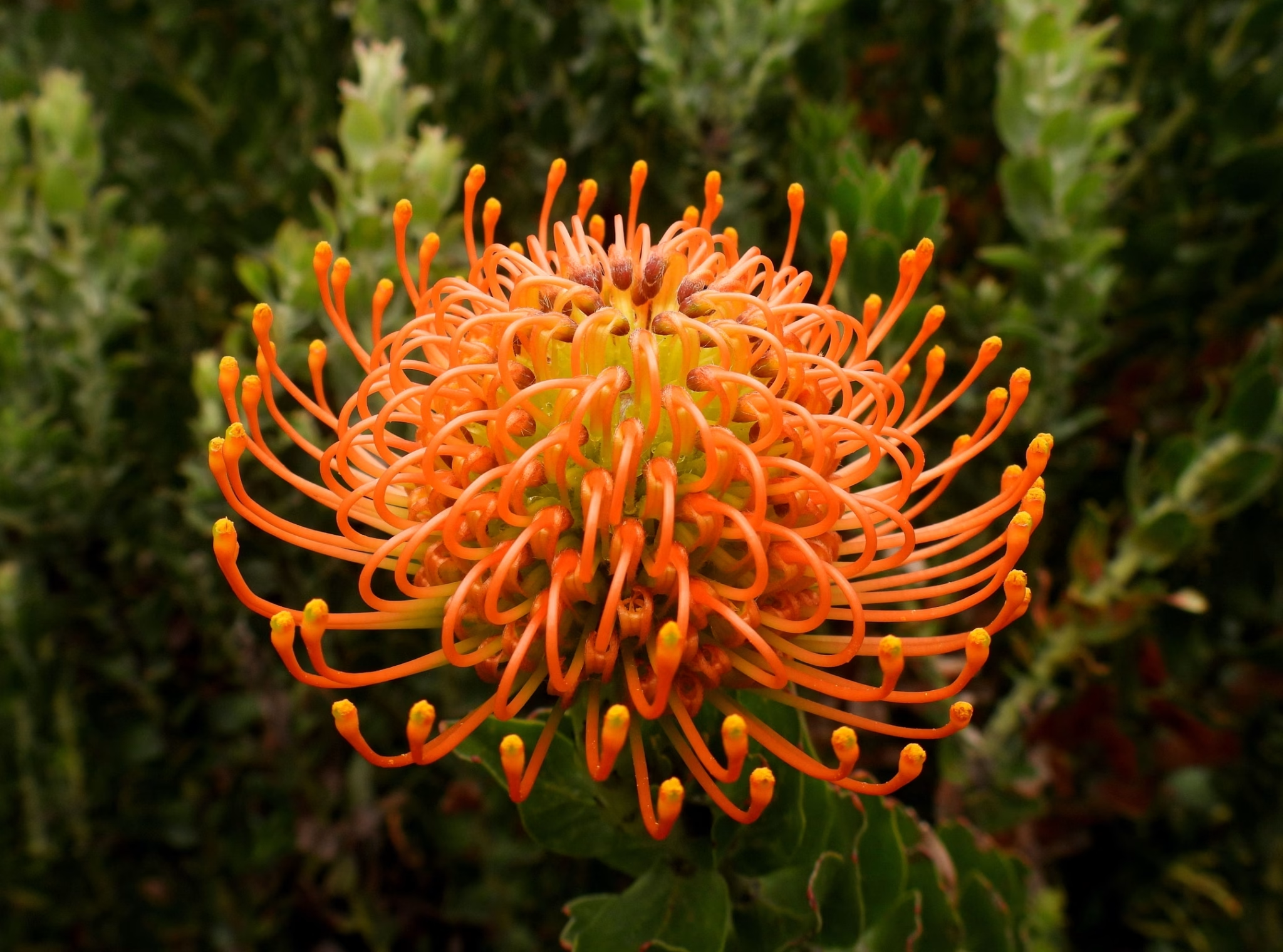
The state stacks several growing regions on top of each other, each suited to different flowers, so the harvest almost never stops. Down in the dry inland hills behind San Diego, past the coastal mountains, the dry inland conditions suit Protea and Banksia, the architectural South African blooms that look engineered rather than grown.
The central coast around Santa Barbara, Oxnard, and Carpinteria is the historic heart of the trade, long the most productive flower ground in the country. Go all the way north to Arcata, near the redwood coast, and the cool damp is right for iris and tulips.
By the flower industry’s own count, roughly three-quarters of the cut flowers grown in America come from California.
A history built by immigrants, in three eras
The exhibit at the fair lays the industry out in three eras. California’s commercial flower trade grew out of the Gold Rush and took commercial shape around 1886, when growers in Oakland began raising chrysanthemums for market.
From the start it was immigrant work. Chinese, Japanese, and Italian families built it, each community landing on a specialty. The Italians grew field flowers and greenery. The Chinese, shut out of other trades by exclusion laws, worked the Peninsula flower farms. The Japanese growers built the greenhouses that produced the roses, carnations, and chrysanthemums that became the market’s backbone.
The Domoto brothers started growing in Oakland in the 1880s, bought land in 1892 when few Japanese immigrants were permitted to, and grew their nursery into the first large-scale Japanese operation in the country. It trained so many of the growers who followed that people called it Domoto College.
By 1912, fifty-four Japanese American growers had pooled their money to formally establish the California Flower Market in San Francisco, the wholesale hub the industry still traces itself back to.
The order that broke the growers
Then came February 19, 1942.
Executive Order 9066 forced the removal of around 120,000 people of Japanese descent from the West Coast, and it fell hard on the very families who had built the flower business. Japanese Americans made up close to a third of California’s truck farmers at the time. They had days to leave and sold greenhouses and land for pennies on the dollar. The community’s total property loss is now estimated in the billions.
Sam Sakai, the board president of the California Flower Market, kept the market alive by mail, running it in letters from an assembly center and then from the Rohwer camp in Arkansas. He held the leases together across the war, came back in 1945, and negotiated the market’s return.
Two of the Domoto brothers died in United States incarceration camps in 1943 and never saw the recovery. By 1970, Japanese American growers were still producing roughly two-thirds of California’s flowers.
The modern squeeze
Cheap air freight and tariff-free imports from Colombia and Ecuador now supply most of the cut flowers Americans buy, and California’s growers have spent three decades competing against a bloom that lands in Miami for less than it costs to grow one here.
A tradition older than the state
The word fair comes from the Latin feria, a feast day, back when worship and market were the same event. England chartered St. Bartholomew’s Fair in 1133. The Dutch turned tulip bulbs into a speculative frenzy that famously crashed in February 1637.
When Britain built the Crystal Palace for the 1851 Great Exhibition, its designer modeled the glasshouse on the ribbed leaf of a giant Amazonian waterlily, so the most famous exhibition hall on earth was, structurally, a scaled-up flower. When San Francisco threw the 1915 Panama-Pacific International Exposition, its Palace of Horticulture wore a glass dome wider than the dome of St. Peter’s.
The flower fields you can visit now
The Carlsbad Flower Fields
The Flower Fields at Carlsbad Ranch are roughly fifty-five acres of Giant Tecolote ranunculus, planted in ribbons of red, gold, pink, and white, sloping toward the Pacific off Interstate 5 in northern San Diego County.

The bloom typically opens in early March and closes around Mother’s Day. It is a ticketed attraction, so plan on paid admission and a timed visit. Weekday mornings early in the run are the least crowded. Come at the peak on a Saturday and you are sharing the rows with a wedding’s worth of photographers.
Lompoc, the working alternative
Lompoc, in Santa Barbara County, sits inside the coastal strip that growers have long called the flower basket of the country, and its commercial fields bloom across late spring and summer.
You do not buy a ticket. You drive the roads outside town and find the color where the crops happen to be that year, which is part of the appeal and part of the gamble. Bring a map, keep to the public roads, and treat the fields as someone’s livelihood.

Super blooms and the wild version
In the years when winter rain lands just right, California’s deserts and hillsides detonate into wildflowers, and a good super bloom draws crowds that rival any planted field. The catch is that it is genuinely unpredictable, tied to rainfall months earlier, and easy to miss by a week.

I wrote a whole separate piece on how to chase one without wrecking the ground you came to see. If a super bloom is what you are after, read the California super bloom guide and watch the reports rather than the calendar.
Bringing California flowers home
The easiest way to support the growers in this story is to buy California grown at your local florist, ask what is in season, and keep something alive on your kitchen counter.
There is real research on what a few stems in the house actually do for you, and it is more convincing than the florist-marketing version suggests. I put all of it in a companion piece: the art and science of keeping flowers at home.

Frequently Asked Questions
Can you see flowers at the California State Fair?
Yes. The fair’s CA GROWN Floral Shop in Pavilion B features live floral designers, competitions, and displays of California grown flowers, and floral display has been part of the fair since 1854.
Where are the flower fields in California?
The best known planted fields are the Flower Fields at Carlsbad Ranch in northern San Diego County and the commercial flower fields around Lompoc in Santa Barbara County. Wild wildflower displays, including super blooms, appear across the state’s deserts and foothills in wet years.
When do California’s flower fields bloom?
Carlsbad’s ranunculus generally bloom from early March to around Mother’s Day. Lompoc’s commercial fields run later, across late spring and summer. Wild super blooms depend on winter rainfall and usually peak from March into April, though timing shifts every year.
Are the California flower fields free?
The Carlsbad Flower Fields are a ticketed attraction with paid admission. The Lompoc fields are commercial farms you can view for free from public roads. Wildflower and super bloom areas on public land are typically free, though popular spots may charge for parking.
Does California grow most of America’s flowers?
Yes. By the flower industry’s own figures, California grows the large majority of the cut flowers produced in the United States, most of it grown along the coast, with the central-coast counties around Santa Barbara and Ventura the traditional heart. Most flowers sold in U.S. stores overall are imported, but of the flowers grown domestically, California leads by a wide margin.
What is the best time to visit the Carlsbad Flower Fields?
Weekday mornings early in the March-to-May run give you the fullest color with the smallest crowds. Weekends near peak bloom are beautiful but busy.
Article Updates
- July 19, 2026: Article published, drawing on a visit to the California State Fair floral exhibit and an interview with Marty Espe of the California State Floral Association.


