
It showed up along the side fence three summers ago. A thin green vine with a couple of white funnel flowers, threading through the bottom of the redwood pickets. I recognized it as morning glory, decided it looked almost pretty, and told myself I would deal with it when it became a problem.
Last year I stopped telling myself that and just let it run.
By August it had climbed a rose, swallowed a section of the fence, and laced itself flat across a bed of salvia. This spring it came up everywhere. Front yard, back yard, between pavers, twenty feet from where it started, in beds it had never touched.
The fescue out front is the worst of it now. Little white funnels and thin vines threading up between the blades, across the whole lawn.

The morning glory that behaves like a weed and returns year after year no matter what you do is almost never the ornamental from a seed packet. It is field bindweed, Convolvulus arvensis, a different animal wearing a similar flower.
Ornamental morning glory is an annual. Cut it down, deny it a season, and it dies. Field bindweed is a perennial with roots that reach past twenty feet and a seed bank that outlives the people who plant it.
Treat bindweed like an annual and you will lose, slowly, for years. I know, because that is exactly what I did.
✦ Key Takeaways
- Identify it first. A perennial weed with 1-inch white or pink funnel flowers and arrowhead leaves is field bindweed, not the annual morning glory people grow on purpose. The control strategy is completely different.
- The roots go past 20 feet. UC IPM documents vertical roots of 20 feet or more, with new plants sprouting from root buds as deep as 14 feet.
- The seeds last decades. Buried bindweed seed stays viable up to 60 years. In one lab test, 62% of 50-year-old seeds were still alive. Killing today’s plants is only half the job.
- Never rototill it. A root fragment as small as 2 inches becomes a new plant. One 2-inch piece produced 25 shoots in four months. Tilling multiplies bindweed; it does not remove it.
- Smothering works but takes years. UC IPM puts complete death under mulch or fabric at 3 to 5 years. Pull the cover early and it comes right back.
- Glyphosate suppresses, it does not eradicate. Spray at flowering on unstressed plants, expect two to three weeks for kill, and plan on repeat applications. It has no effect on the seed bank.
- In a lawn, reach for quinclorac or a three-way selective. Products with quinclorac control bindweed without killing turf grass. Plain 2,4-D alone tends to disappoint.
- Plan for a multi-year campaign. Every credible source says the same thing: 2 to 5 years of steady pressure, then ongoing vigilance for seedlings.
First, make sure it’s bindweed and not true morning glory
Search for how to get rid of morning glory and half the results are people describing bindweed, because the two names get used interchangeably. They are cousins in the same family, Convolvulaceae, and both roll out funnel-shaped flowers on twining vines.
Field bindweed flowers run small, roughly 1 to 1.5 inches across, white or washed with pale pink. The leaves are shaped like arrowheads, a half inch to two inches long, with two lobes flaring at the base. The stems trail and climb to about six feet, and the plant dies back in winter, then returns from the same roots every spring.

True ornamental morning glory, the Ipomoea you buy as “Heavenly Blue” or “Grandpa Ott’s,” carries showier blooms two to three inches wide in vivid blue, purple, or magenta, with broad heart-shaped leaves, and it lives a single season. It sets seed and dies. If it returns, it returns only from that dropped seed, never from a surviving root.
Hedge bindweed, Calystegia sepium, is a close relative with larger leaves and bigger white flowers. It behaves like field bindweed for control purposes, so if your arrowhead-leaved vine has flowers closer to two inches, treat it the same way.
If you never planted it and it returns from the same spot every year, you have bindweed, and cutting it down will not be enough.
| Feature | Field bindweed (the weed) | True morning glory (Ipomoea) |
|---|---|---|
| Lifecycle | Perennial, returns from roots yearly | Annual, dies each winter |
| Flower | 1 to 1.5 in, white or pale pink | 2 to 3 in, blue, purple, or magenta |
| Leaves | Arrowhead, ½ to 2 in, lobed base | Broad heart shape, larger |
| Roots | 20+ ft deep, spreading rhizomes | Shallow, fibrous, single season |
| How it spreads | Root fragments and long-lived seed | Seed only |
| How you kill it | Multi-year campaign, roots and seed | Cut it down or deny it one season |
Why field bindweed is so hard to kill
UC IPM, the University of California’s integrated pest management program and the authority I trust most for California conditions, documents vertical roots reaching 20 feet or more. The USDA’s fire effects database puts other vertical roots at 17 to 30 feet depending on climate and soil. About 70% of the root mass sits in the top two feet, yet new plants can emerge from root buds as deep as 14 feet down.
A single plant spreads more than ten feet in one growing season. That is how mine crossed the entire back yard.
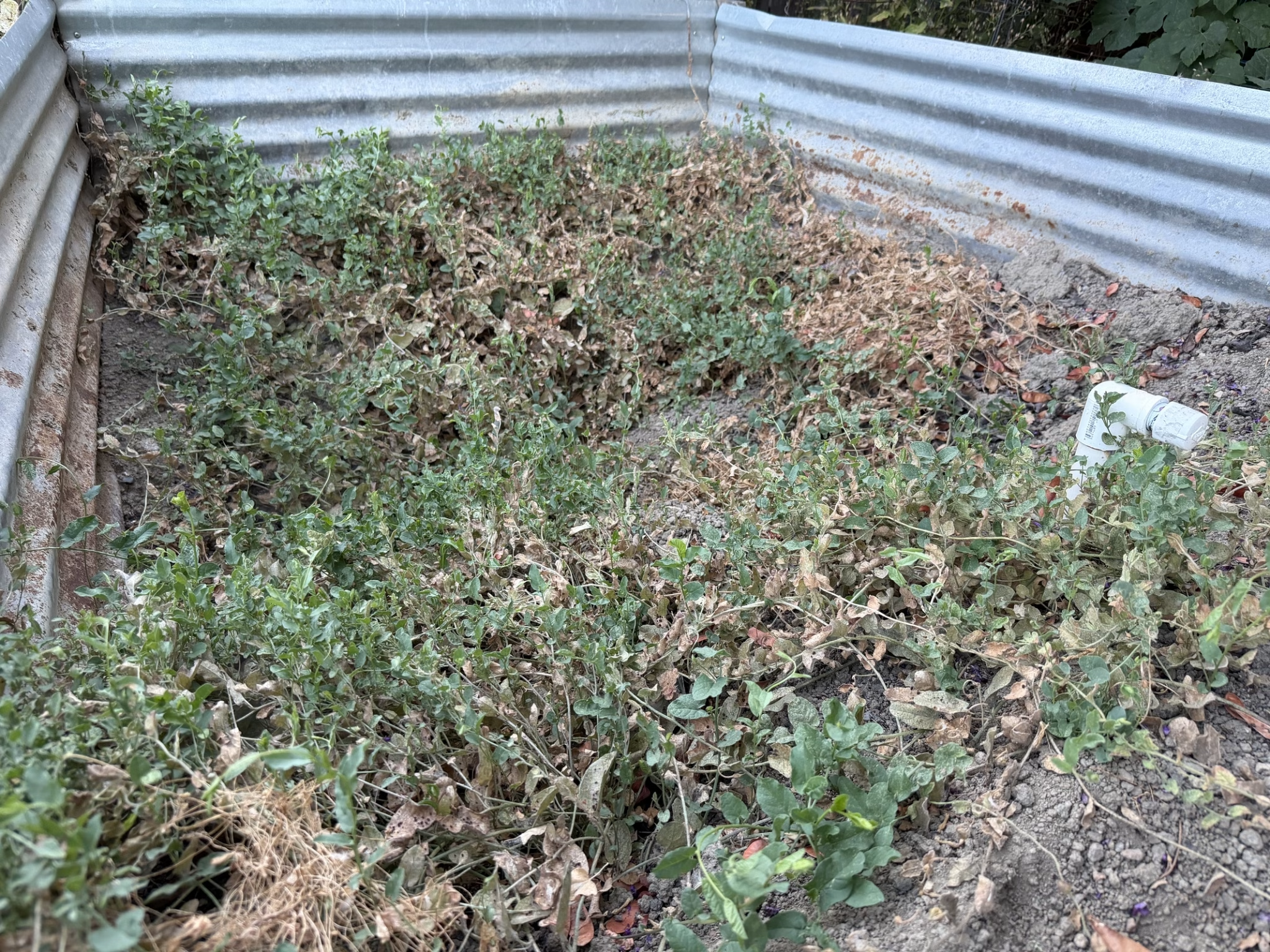
Field bindweed seed stays viable in soil for decades. UC IPM says up to 60 years. In a study cited by the USDA, 62% of seeds that had sat in the ground for 50 years were still viable when tested. A single plant produces hundreds of seeds a year, somewhere between 300 and 600 depending on which source you read, and roughly 90% of them are viable.
So the seeds my plant scattered last August will keep germinating into beds long after I have forgotten which corner they came from. When UC IPM writes that “eradication isn’t always possible,” this is why.
Bindweed regenerates from root fragments, and a piece as small as two inches can grow a whole new plant. Researchers in Saskatchewan planted a single 2-inch fragment and counted 25 shoots emerging over the next four months, spreading more than four feet from where they buried it.
That is why the most tempting solution, running a tiller through the patch, is the worst thing you can do.
Manual and organic control
If you want to avoid chemicals, or you are dealing with bindweed woven through vegetables and ornamentals you cannot spray around, the mechanical route works. It just demands patience measured in years rather than weekends.
Bindweed lives on food reserves stored in that enormous root system, and your job is to starve the reserves faster than the leaves can refill them.
Cut, don’t pull, and do it on a schedule
Yanking an established vine feels satisfying and accomplishes almost nothing. The vine snaps off a root that reaches deeper than your shovel, and the root sends up a new shoot. Worse, a pull can leave fragments behind that turn into more plants.
Hand removal only works on seedlings, and only within the first three to four weeks after they germinate, before they build a root system. For those, a narrow weeding fork pops them out cleanly.
After that, switch to cutting. Sever the plant at the soil line every two to three weeks, every time it recovers, through the whole growing season. UC ANR’s weed scientists describe roughly two years of this cadence to exhaust an established stand. It is tedious, and it works, because each cut forces the root to spend reserves regrowing leaves it never gets to keep.
Smother it, and leave the cover on far longer than feels reasonable
Light exclusion is my main weapon in the beds where bindweed has taken hold. Lay down heavy landscape fabric or a thick black tarp, overlap the edges, weigh it down, and deny the plant sunlight.
UC IPM puts complete death under mulch or fabric at three to five years, and bindweed will hunt for any gap, growing sideways to reach a planting hole or the edge of the fabric. Pull the cover after one season and green shoots come right back.
Commit to leaving it down for years, not months, and check the perimeter for escapees.
Soil solarization, with realistic expectations
Here in Sacramento, our long dry summers make soil solarization practical. You lay clear plastic over moist soil in the heat of summer, June through August, and let the trapped heat cook the top layer.
UC IPM’s targets are soil temperatures of 108 to 140 degrees at two inches deep, which the Central Valley hits easily in July. Solarization excels at killing weed seeds near the surface and knocking out annual weeds, so it does put a real dent in the bindweed seed bank in the top few inches.
UC IPM notes that solarization gives inconsistent control of established perennials like bindweed, because the deep roots sit far below the zone the heat reaches and resprout on their own. So I use it to hammer the seed bank in a bed before replanting, not as a standalone cure for a mature infestation.
Outcompete and mulch
Bindweed exploits bare ground and thin, stressed turf. A dense, healthy lawn mowed a little high, or a raised bed packed with vigorous, drought-tolerant plantings under a thick mulch layer, gives seedlings far fewer openings. This will not clear an established stand on its own, but paired with cutting or smothering it slows the spread and shrinks the number of new seedlings you have to chase each spring.
Chemical control: what works and when to spray
When bindweed has colonized a large area, or the mechanical grind is more than you can sustain, herbicides earn their place.
Glyphosate (Roundup) in beds and open ground
Glyphosate is systemic, meaning it moves from the leaves into the plant. It is the standard non-selective choice for bindweed in beds, along fences, and on open ground with no surrounding plants to spare.
UC IPM specifies spraying a 2% solution when the plant is actively growing with no moisture stress. A drought-stressed bindweed shuts down and will not carry the herbicide down to the roots, which matters in a dry Sacramento summer. Water the area, let the plant grow, then spray.
The best window for reaching the roots is at or just after flowering, when the plant is naturally pushing resources downward.
Glyphosate takes two to three weeks to visibly kill top growth, it kills some of the root but rarely the whole system in one pass, and it has zero residual activity, so it does nothing to the seed bank. New seedlings will keep coming and need separate attention.
As Washington State University’s weed team puts it, an herbicide applied once will never eliminate an established stand. Several retreatments are required.
So I spray, wait, let it regrow, and spray again, across more than one season. For anything larger than a few plants, a concentrated glyphosate you mix yourself goes much further than the ready-to-use bottles.
Selective herbicides for bindweed in the lawn
The fescue in my front yard is where bindweed is winning right now, so this is the fight I am in the middle of. Glyphosate kills grass, so it is the wrong tool for bindweed running through turf. This is the “how do I kill bindweed without killing my lawn” problem, and the answer is a selective broadleaf herbicide.
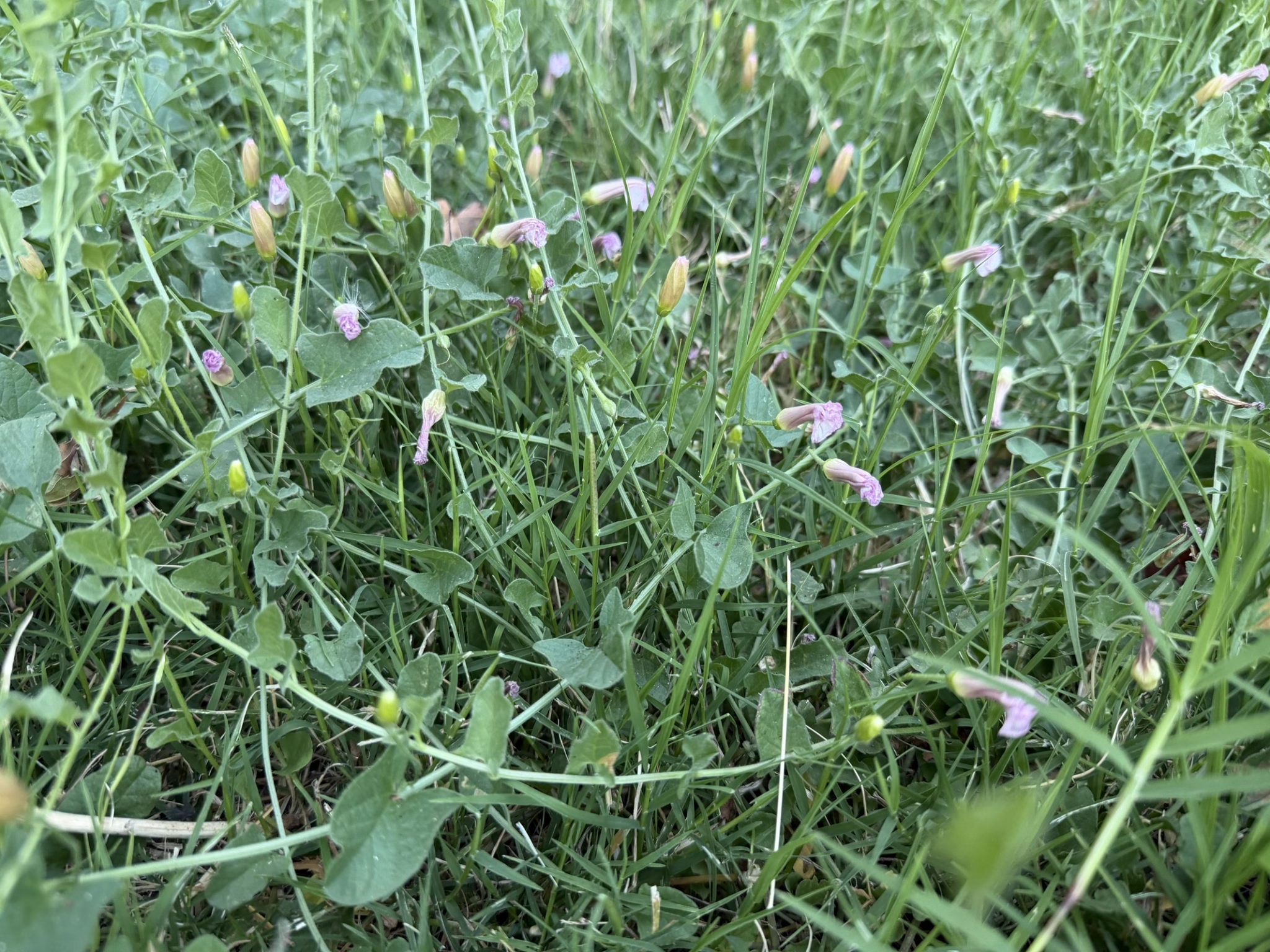
Colorado State University’s extension is blunt that 2,4-D on its own is largely ineffective on bindweed. What works is quinclorac, sold in homeowner products such as Ortho Weed B Gon Plus Crabgrass Control and Drive-based formulas, or a three-way selective that combines 2,4-D with dicamba and MCPP. UC IPM confirms 2,4-D plus dicamba as effective in turf, with more than one application needed across the summer.
Whichever you choose, plan on repeat treatments and follow the label rates for your grass type.
The wipe-on method for bindweed tangled in good plants
When bindweed has climbed into a shrub or laced through perennials you want to keep, broadcast spraying is off the table. The workaround is targeted contact.
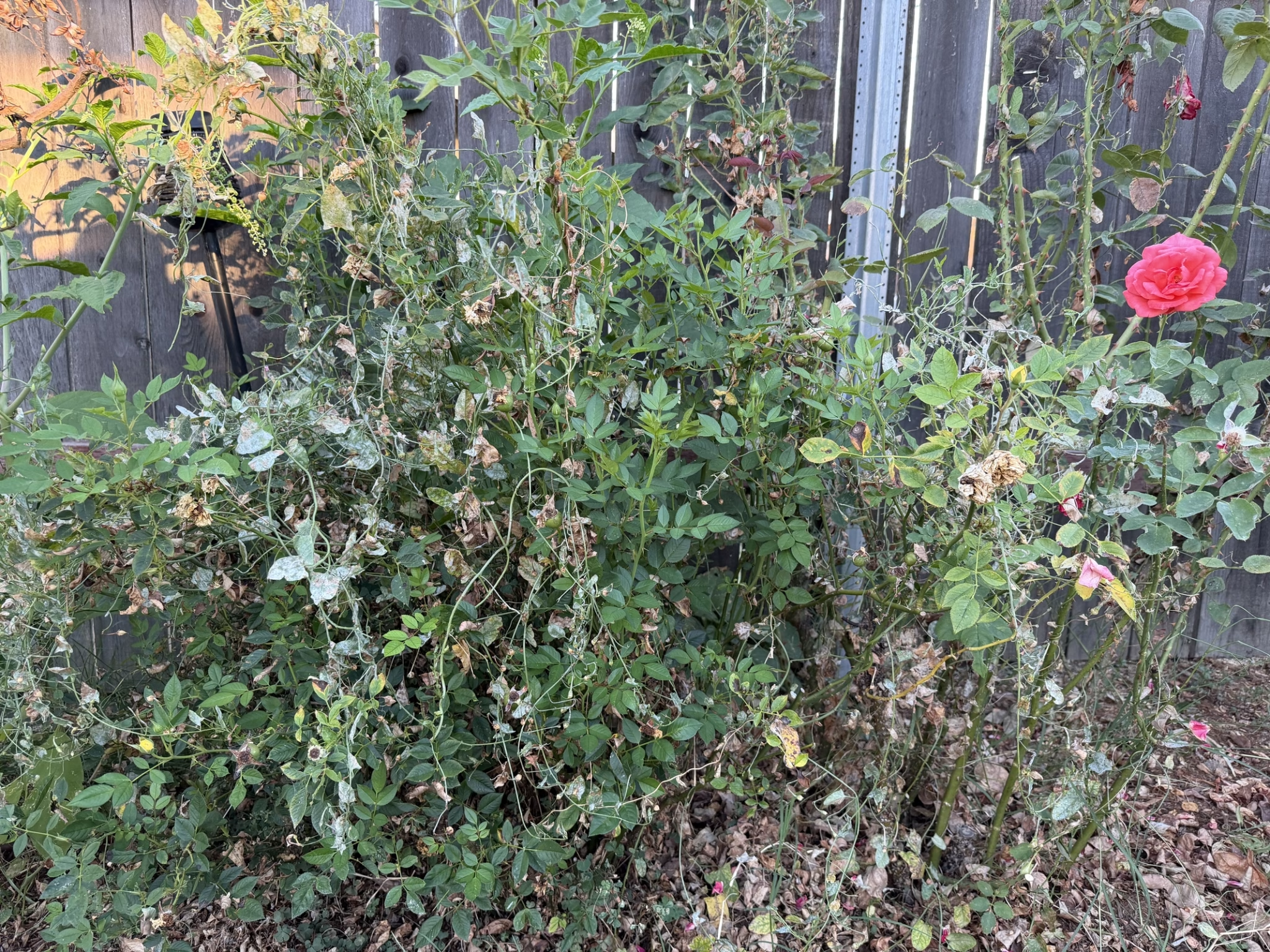
Put on a chemical-resistant glove, and over it a cheap cotton glove, dip the cotton in glyphosate solution, and wipe it directly along the bindweed foliage and stems, hitting only the weed. A wick or sponge applicator does the same job. It is slow and finicky, and it lets you deliver systemic herbicide to the vine without a single drop touching the rose it is strangling.
If a rose has been buried under bindweed for a season, check it once you free it. The shade and dead air the vine created are exactly what powdery mildew on roses thrives in, and I found mine caked white the summer I finally pulled the tangle off.
Extension programs recommend wipe-on application broadly for this situation. I have not found a bindweed-specific protocol from UC, so treat it as a sensible general technique rather than a guaranteed one, and keep the herbicide off anything green you value.
The long game: killing the seed bank and staying ahead of it
Every method above kills plants. None of them touches the decades of seed waiting in the soil.
Even after you clear the visible bindweed, seedlings will surface for years.
Keep the soil covered, pounce on seedlings inside that three-to-four-week window when a quick cut or pull still kills them, and refuse to let a single plant reach flowering and reload the bank. Folding a spring bindweed sweep into your seasonal yard routine is what keeps it from getting away from you again. Do that consistently and the number of new seedlings drops year over year.
UC IPM’s own summary is that control cannot be accomplished with a single treatment or in a single season. The extension sources are unanimous that two to five years of steady pressure is the realistic timeline.
What not to do
- Don’t rototill or dig through a patch. Every chopped root fragment over two inches can become a new plant. One-time tilling scatters bindweed across ground it never reached before.
- Don’t hand-pull established plants and call it done. You snap the vine off a twenty-foot root that resprouts, and you may leave fragments that multiply. Pulling is for seedlings only.
- Don’t compost it. It took seven days at 180 degrees to kill bindweed seed in compost, a temperature home piles rarely hold. Rhizome pieces and seed survive a cool pile and you reseed your own garden. Bag it for the trash.
- Don’t pull the tarp or mulch after one season. Three to five years of light exclusion is the standard. Early removal restarts the clock.
- Don’t spray a moisture-stressed plant. A wilted, drought-stressed bindweed will not translocate herbicide to its roots. Water first, let it grow, then treat.
Frequently Asked Questions
Is bindweed the same as morning glory?
They are close relatives in the same plant family and look similar, which is why the names get swapped. But they are different plants. Field bindweed (Convolvulus arvensis) is a spreading perennial weed with small white or pink flowers. True morning glory (Ipomoea) is an annual grown as an ornamental, with larger, showier blooms. If your “morning glory” comes back from the same roots every year and you never planted it, it is bindweed.
Can you ever fully get rid of bindweed?
Complete eradication is rare. UC IPM states that eradication is not always possible, mainly because the seed bank stays viable for up to 60 years. What is achievable is control: reduce it to a few seedlings a year that you catch and kill before they establish. Expect two to five years of steady effort to get there, then ongoing vigilance.
Does Roundup kill bindweed?
Glyphosate, the active ingredient in Roundup, suppresses bindweed and kills some of the root, but rarely the whole system in one application. Spray a 2% solution on actively growing, unstressed plants at flowering for the best root translocation. It has no residual activity, so it will not stop new seedlings from the seed bank. Plan on repeat treatments over more than one season.
How do I kill bindweed in my lawn without killing the grass?
Use a selective broadleaf herbicide that spares turf grass. Quinclorac-based products or a three-way mix of 2,4-D, dicamba, and MCPP are the effective choices; 2,4-D alone tends to underperform on bindweed. You will need more than one application across the growing season. A thick, well-fed lawn mowed slightly high also crowds out new bindweed seedlings.
How long do bindweed seeds stay alive in the soil?
Decades. UC IPM says up to 60 years. In one study, 62% of bindweed seeds buried for 50 years were still viable when tested. A single plant drops several hundred seeds a year, most of them viable, which is why control has to include preventing plants from flowering and setting new seed.
Can I compost bindweed?
Not in a normal home pile. Killing bindweed seed in compost took seven days at 180 degrees Fahrenheit, a temperature most backyard piles never sustain. Root fragments can also survive and resprout. Bag the pulled vines and roots for the trash rather than risk seeding your own garden through the compost.
Is field bindweed poisonous to pets or livestock?
It is considered mildly toxic. Field bindweed contains alkaloids that can affect horses and other livestock if eaten in quantity, causing digestive problems. Sources vary in how much they emphasize this, and at least one state weed board lists it as not known to be toxic, so the risk is low. Still, I would not let a horse graze a patch of it. For dogs and children, there is no strong evidence of a specific hazard, but keeping animals from grazing on it is the sensible call.
Why is bindweed considered so bad?
Its roots reach past 20 feet and regenerate from tiny fragments, its seed survives in soil for up to 60 years, and it spreads more than ten feet a season while twining over and smothering desirable plants. It is a listed noxious weed in California and roughly 20 other states. UC IPM has called it one of the worst weeds in California and much of the West.
The Bottom Line
I am two seasons in and the front yard is nearly clear. The back is coming.
For the authoritative, California-specific rundown I leaned on throughout, the UC IPM field bindweed page is the best single reference, and its soil solarization guide covers the summer-heat approach in detail.
Affiliate Disclosure: Some links in this article are affiliate links. If you buy through them, I may earn a small commission at no additional cost to you. I only recommend products I would use in my own yard.
Article Updates
- July 21, 2026: Article published. Identification, manual and chemical control methods, and long-term seed-bank strategy compiled from UC IPM, USDA, WSU, and university extension sources.


