
Amanita muscaria, the red-and-white mushroom from countless fairy tales, has moved from folklore into real hobbyist and research interest. Dried caps, capsules, and extracts now sell online, and demand climbed sharply after 2023. That growth raises fair questions about identification, safety, and what the different color forms actually are.

This explainer walks through the main forms and the practical points to weigh first. If you are comparing sellers, one starting point is a shop that lists a variety of amanita muscaria with clear sourcing and labeling. The sections below cover what separates each color form and why preparation matters so much.
What Is Amanita Muscaria and Why the Sudden Interest?
Amanita muscaria, commonly called fly agaric, grows across the Northern Hemisphere. You find it in birch, pine, and spruce forests, rarely in open fields. Its bright red or orange cap dotted with white warts is one of the most recognized shapes in nature. The species forms a root partnership with certain trees, which explains where it shows up.
The mushroom contains three main isoxazole compounds: ibotenic acid, muscimol, and muscazone. These set it apart from culinary mushrooms and are why caution matters. A plant profile from NC State Extension lists its habitat, look-alikes, and toxicity notes in plain terms.
Careful identification is the whole game with wild fungi. For readers who enjoy the broader hobby, guides like mushroom foraging for morels are a good reminder that practice separates a safe find from a risky one.
What Varieties and Color Forms Should You Know About?
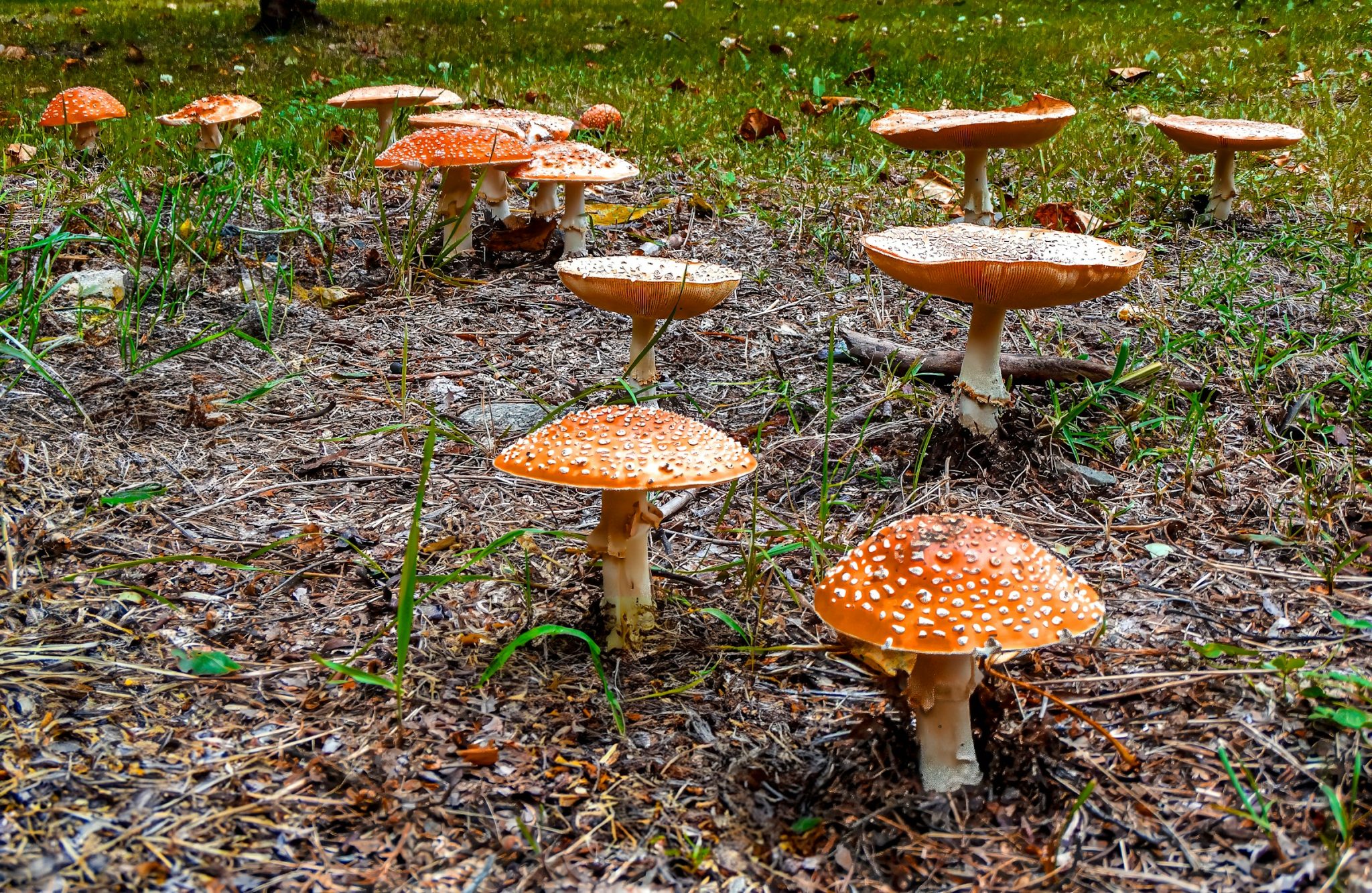
Botanists recognize several varieties, and color is the fastest way to tell them apart. Here are the ones you are most likely to see named.
- var. muscaria. The classic scarlet cap with white warts, native to Europe and Asia. This is the storybook version.
- var. flavivolvata. A red cap with yellow to cream warts, common along western North America.
- var. guessowii. A yellow to orange cap, widespread across the northeastern US and eastern Canada. Many American sellers stock this form.
- var. formosa. A yellow-orange European type, easily confused with guessowii.
- var. persicina. A peach or salmon cap found in the southeastern US, along the Gulf Coast.
- var. alba. An uncommon white to silvery cap that trips up beginners who expect only red.
That gives you 6 named forms in regular circulation. Sellers do not always label variety accurately, so treat color photos as a starting point rather than proof.
How Do the Active Compounds and Drying Change Things?
Fresh caps contain more ibotenic acid, the more irritating of the compounds. Drying and gentle heat convert much of that acid into muscimol. Traditional users across Siberia relied on this step for generations, which is why serious sellers offer dried product rather than fresh.
This is also why fresh and dried material behave so differently. A clinical literature review from the NIH library records reported effects and the wide variation between individual samples. Two caps from the same patch can differ in strength.
Regulators have taken notice. In 2024, the US FDA published a scientific memo flagging safety concerns and moved to restrict these compounds in food products. None of this is settled, and the science is still thin, so keep expectations modest and read primary sources rather than marketing copy.
What Should You Check Before Buying Amanita Muscaria?
Product quality varies widely between shops. Standards for botanicals get real scrutiny at trade events like Natural Products Expo West, where testing and honest labeling are the price of entry.
Before you buy, look for the following:
- Named species and variety. A listing that says only “mushroom” tells you nothing useful.
- Third-party lab testing. A certificate of analysis showing muscimol and ibotenic acid content is the gold standard.
- Preparation method. Confirm whether caps are fresh, air-dried, or heat-treated, since that changes the chemistry.
- Country of origin. Foraged location and harvest date signal a careful supplier.
- Plain warnings, no medical claims. Honest sellers avoid promising cures or specific health outcomes.
- Local legality. Rules differ by place; Louisiana restricts the mushroom, and other jurisdictions have their own limits.
How Do People Approach These Mushrooms Responsibly?
Responsible buyers treat fly agaric with the respect any potent botanical deserves. They start with tiny amounts of properly dried material, never fresh caps, and they wait a long time before considering more. They keep product sealed, labeled, and stored away from children and pets, exactly as you would with any restricted substance.
They also skip driving or operating anything for a full day after use, and they never mix it with alcohol or medication. Anyone with a health condition should talk to a qualified professional first. Above all, they confirm the legal status where they live before ordering, since a mushroom that is legal in one state may be restricted 20 miles away.
What to Remember Before You Buy
- Fly agaric comes in at least 6 named color forms, from scarlet var. muscaria to white var. alba.
- Color helps identify a variety, but seller labels are not always accurate.
- Drying converts ibotenic acid to muscimol, so fresh and dried product differ sharply.
- Look for lab testing, clear variety labels, and honest warnings before ordering.
- Legality varies by location, and the FDA raised safety concerns in 2024.
- Start with very small amounts and keep everything away from kids and pets.
Studying Fly Agaric the Careful Way
Amanita muscaria is more than the toadstool of picture books. It spans a handful of distinct color forms, its chemistry shifts with how it is dried, and its legal footing changes from one place to the next. None of that should scare off a careful researcher, but it does argue for slowing down. Learn the varieties, insist on tested and clearly labeled product, and check your local rules first.
FAQ
Is Amanita Muscaria the Same as Psilocybin Mushrooms?
No. Amanita muscaria contains muscimol and ibotenic acid, while psilocybin mushrooms contain a completely different compound. They are unrelated species with different chemistry, effects, and legal treatment, so information about one does not transfer to the other.
Which Variety Is the Most Common In North America?
Two forms dominate. var. guessowii, with its yellow to orange cap, is widespread in the northeastern US and eastern Canada, while var. flavivolvata is the typical red form out west. Sellers marketing to American buyers often stock guessowii.
Why Do Sellers Dry the Caps Before Sale?
Drying and gentle heat convert much of the ibotenic acid into muscimol, which changes how the material behaves. This is a traditional preparation step rather than a modern shortcut. Reputable shops describe their drying method plainly so buyers know what they are getting.
Is Amanita Muscaria Legal to Buy?
It depends entirely on where you live. The mushroom is unregulated in many places but restricted in others, such as Louisiana, and the FDA has moved against its use in food products. Always confirm current local rules before ordering anything.


