I’ve ridden the trails, paddled both lakes, and spent enough evenings on Sutter Street to have favorites.

A good day usually mixes one historic stop, something outdoors, and a solid meal, and the town is small enough to fit all three in before dark.
✦ Key Takeaways
- Old Town is the heart. Historic Sutter Street is walkable, with the Folsom History Museum ($7), a railroad turntable dating to 1856, a miniature steam railway ($5), and the restaurant scene that makes the town worth a return trip.
- Folsom was California’s first railroad terminus (Sacramento Valley Railroad, 1856). That single fact is why the old town looks the way it does.
- The Powerhouse is free to walk through. The 1895 hydroelectric plant that sent power 22 miles to Sacramento charges only for parking ($10).
- The zoo is a rescue sanctuary. Every animal is a seized exotic or a wild animal that cannot go home. Admission is $10, it’s open Thursday through Sunday, and mornings beat the afternoon heat.
- The Prison Museum sits outside the prison. A $2 building near the gate holds a Gatling gun and a Ferris wheel a prisoner built from a quarter-million toothpicks. The active prison stays off-limits. Bring cash.
- Two lakes, two moods. Folsom Lake is the big-water, six-gate summer day. Lake Natoma below the dam is the calm water where the paddlers and rowers go.
- Plan around summer. The rodeo (July 2 to 4), the Saturday farmers market, and the concert series all land in summer, but the zoo closes at 3 PM in the heat.
Old Town Folsom: Start on Sutter Street
If you only have a few hours, spend them here.

Historic Folsom calls itself “the place where the west came and stayed,” the kind of line a marketing committee writes. In this case it’s close to true. Sutter Street is a few walkable blocks of brick storefronts, boutiques, coffee, pubs, and restaurants, and the whole district exists because of a railroad.
Folsom was the western terminus of the Sacramento Valley Railroad, California’s first railroad, and the turntable that spun the locomotives around went into the ground in February 1856. The original was dismantled in 1913, and a replica A-frame turntable now anchors the plaza.
The Folsom History Museum at 823 Sutter Street is the best $7 you’ll spend in town if you care how this place came to be. Admission is $7 general, $4 for students and military, free for kids under six. It’s open Thursday through Monday, 11 AM to 4 PM, so check the day before you drive over. A second outdoor site, The Square, opens weekends for a suggested $5.
For families, the Folsom Valley Railway is the easy win. It’s a miniature steam railway out of Lions Park, $5 a person for about ten minutes on 4,200 feet of track. It has run since 1970 and is the only twelve-inch-gauge railroad still operating in the country, which means nothing to a four-year-old and everything to the adult who reads plaques.
Walk toward the river and you hit the Historic Truss Bridge. Built in 1893, abandoned in 1917, sold to the state for $250, and shipped to Siskiyou County, where it spent seventy years carrying traffic over the Klamath River as the “Walker Bridge.”
Folsom bought it back in 1998 and reopened it to foot traffic in 2000, set down on its original 1893 stone abutments. The old signage lists a $5 fine for crossing faster than a walk, $25 for driving more than twenty head of horses or fifty head of cattle across at once.
The Restaurant Scene
These are some of my favorites, grouped by where they sit.

On and Around Sutter Street
Karen’s Bakery, a block north of Sutter on Gold Lake Drive, runs from-scratch scones and pastries and a breakfast-and-lunch kitchen until mid-afternoon. It’s been an Old Town fixture since 2001, and the patio takes dogs.
On the street itself, Plank Craft Kitchen + Bar at 608 Sutter does house-smoked pastrami Reubens, prime rib French dips, and a two-level patio with firepits over the old town.
A few doors down at 609, The Vine has taken best wine bar in the area five years running, with fifty-plus pours and small plates to share.
Then there’s the Backroom at Gaslight Co. at 718 Sutter, Folsom’s first speakeasy, hidden behind the Gaslight kitchen. It carries the deepest whiskey list in town, plus house syrups and washes you won’t find elsewhere. I wrote that one up here.
Elsewhere in Folsom
Off the historic strip, the East Bidwell corridor carries more. Bacchus House is a seasonal bistro and wine bar with a nightly happy hour and live music. Visconti’s has been turning out Calabrian and Sicilian plates since 1992. Pho ABC simmers its broth eight hours and has the awards to back it. And Umami Ramen over on Blue Ravine covers the tonkotsu-and-karaage craving.
Just Over in El Dorado Hills
A few minutes east, El Dorado Hills adds a few more. Milestone at the Town Center is New American with a patio over the water. Sienna leans upscale and steak-forward. Vacanza does hand-made pasta and Neapolitan pizza, and Eldo covers seafood and bar-and-grill standards, with ELDO Chophouse next door for the steakhouse version.
Folsom Lake: The Big-Water Day
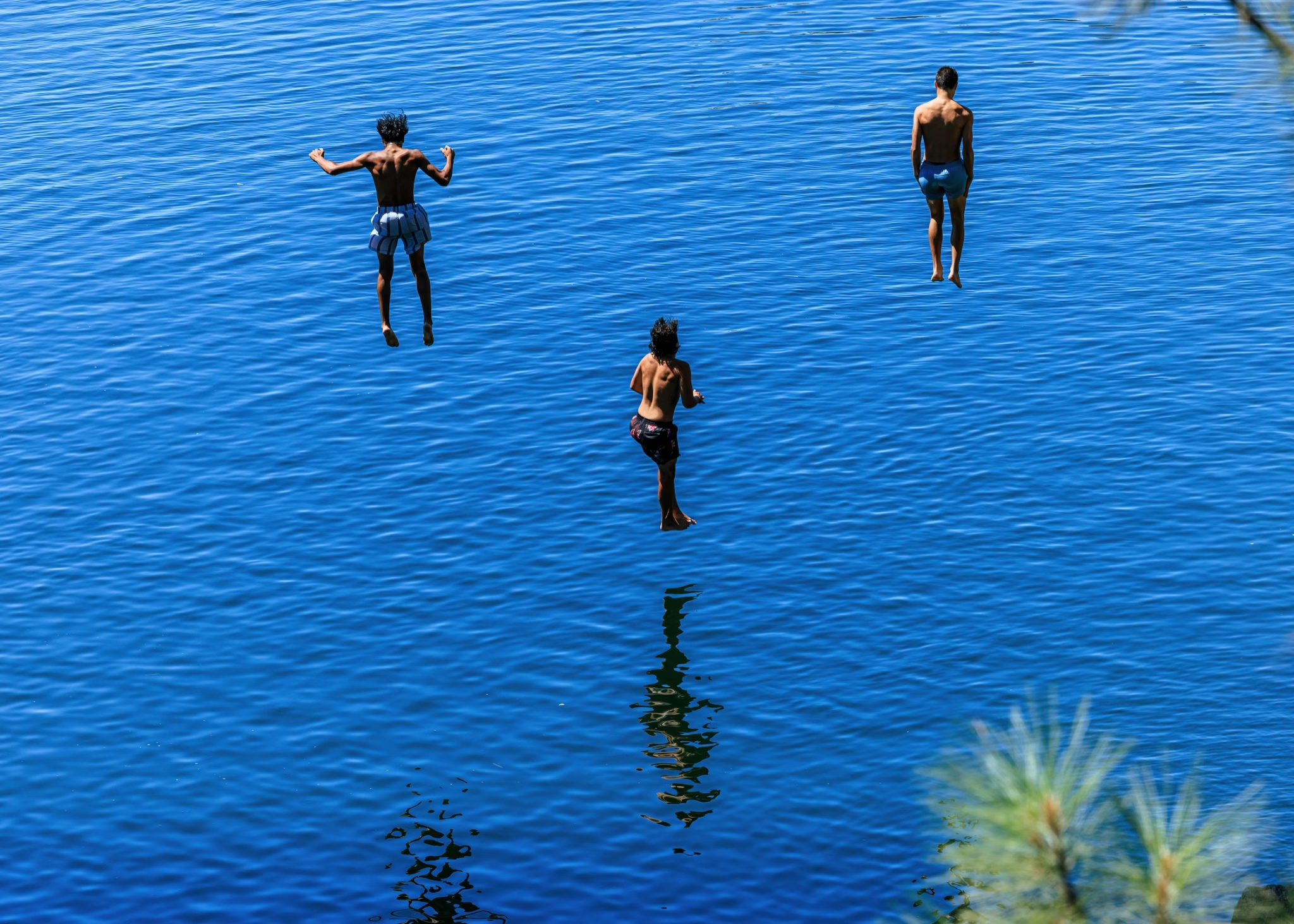
On a full-pool summer afternoon it’s one of the best days you can have near Sacramento: two long arms, swim beaches, a marina, and room for the boats and jet skis to spread out.
The lake is too big to have a single front door, and it has six gates. Granite Bay and Beals Point hold the busy swim beaches, Brown’s Ravine has the marina and the rentals if you don’t own a boat, and the quieter gates reward anyone willing to drive a few extra minutes.
The water level swings hard too. Folsom is a flood-control reservoir drawn down every fall, so the shoreline that laps the parking lot in May can sit a hundred yards back across cracked dirt by September.
I wrote the complete gate-by-gate version, with camping, the golden-mussel boat inspection rules, and the Gold Rush town sitting on the lakebed, here, and it’s the one to read before you load the car.
Lake Natoma, the Bike Trail, and the Fish Hatchery
Below the dam, Folsom Lake becomes Lake Natoma. Natoma is the calm afterbay, a five-mile reservoir with a 5 mph limit and a hand-launch-only rule that has made it the home water for kayakers, paddleboarders, and one of the best collegiate rowing stretches in the country.

The paved American River Bike Trail runs 32 miles from Beals Point to Old Sacramento, where the California Automobile Museum sits near the riverfront end of the ride, and the Folsom stretch along Natoma, crossing the historic bridges, is one of the prettier rides or walks around.
Near the Nimbus end sits the Nimbus Fish Hatchery, free and worth a stop in late fall when the Chinook salmon climb the ladder. I put the full Natoma guide, including the Aquatic Center rentals and the hatchery timing, here.
Folsom Powerhouse State Historic Park
The Folsom Powerhouse on Greenback Lane went online in 1895 as one of the first plants in the world to send high-voltage alternating current over a long distance, in this case 22 miles to Sacramento.
The city threw a parade and fired a hundred-gun salute when the lights came on.
Walk in and the original generators are still standing where they were installed, behind a control switchboard faced in Tennessee marble, wired to General Electric transformers from a different century.
Hours differ between the visitor center and the powerhouse building, so confirm at the California State Parks site before you drive. A guided tour takes about two weeks’ notice through the park, but you can wander the grounds and see the machinery on your own any open day.
Heads up: Getting in is free. The $10 you pay is vehicle day-use parking, not admission.
Folsom City Zoo Sanctuary
The Folsom City Zoo Sanctuary is a rescue operation. The animals here are seized exotics, surrendered pets that outgrew a backyard, and injured wildlife that cannot be released. Roughly a hundred of them, from black bears and a Eurasian brown bear to tigers, mountain lions, wolves, and a crowd of smaller residents.
None are bred, sold, or traded. They arrive, they get a name, and they’re cared for until they die.
It started in 1963 when UC Davis asked the city’s parks superintendent to take in an orphaned bear cub, and it formally became a sanctuary in 2002. Admission is $10 for anyone two and up.
Heads up: Open Thursday through Sunday only. In summer it closes at 3 PM with last admission at 2:30, partly because of the heat. Go in the morning.
The Folsom Prison Museum
Folsom Prison is the one Johnny Cash made permanent when he recorded At Folsom Prison live behind the walls in 1968.
You cannot go inside the prison, and the museum is not in it. The Big House Prison Museum is a small, separate building near the gate in Represa, and it costs $2 to get in.
The collection runs to a hand-cranked Gatling gun, old hemp ropes once used for hangings, confiscated inmate-made weapons, and the standout: an eight-foot motorized Ferris wheel a prisoner built in the 1930s out of a quarter-million toothpicks.
The museum and the Johnny Cash Trail outside are the public pieces.
Heads up: Bring cash. Card payments carry a $5 minimum on a $2 ticket. Short hours too: Saturday through Monday, 10 AM to 4 PM.
Shopping in Folsom
Folsom shops in a few registers, and they spread a little past the city line.
Sutter Street is the browse: independent boutiques, antiques, home goods, and gift shops along the same walkable blocks as the restaurants.
Palladio, off Highway 50, is the upscale open-air center, the lifestyle version with shops, restaurants, and a movie theater under one layout.
The Folsom Premium Outlets cover the deal hunt: eighty open-air stores, Michael Kors, Skechers, Under Armour, Eddie Bauer, and the rest, about twenty minutes from downtown Sacramento.
And a few minutes east, El Dorado Hills Town Center rounds it out, another open-air complex with shops, dining, and summer concerts by the fountain.
Seasonal Folsom: Rodeo, Markets, and Music
- Historic Folsom Farmers Market sets up Saturdays, 8 AM to 1 PM, in the Historic Folsom Plaza, with live music and free parking at 905 Leidesdorff Street.
- Summer concert series fill Lions Park and the Zittel Family Amphitheater through June and July.
- Winter brings an ice rink to the plaza, a Christmas fair, and the Hometown Parade.
Folsom at a Glance
| Attraction | Best for | Cost | Time needed |
|---|---|---|---|
| Sutter Street / Old Town | Walking, dining, history | Free to wander | 2-4 hours |
| Folsom History Museum | The town’s backstory | $7 | 45-60 min |
| Folsom Powerhouse | Industrial history buffs | Free (parking $10) | 1 hour |
| Folsom City Zoo Sanctuary | Families, morning visit | $10 | 1-2 hours |
| Folsom Prison Museum | The Johnny Cash hook | $2 (cash) | 45 min |
| Folsom Lake | Swimming, boating | $10-12/vehicle | Half to full day |
| Lake Natoma + bike trail | Paddling, riding, calm water | $10-15/vehicle | Half day |
| Premium Outlets | Brand shopping | Free entry | 1-3 hours |
Frequently Asked Questions
What is Folsom, California known for?
Folsom is known for Folsom Lake, the historic Sutter Street old town, and Folsom State Prison, made famous by Johnny Cash’s 1968 live album At Folsom Prison. It was also California’s first railroad terminus, established in 1856, and the home of an 1895 hydroelectric powerhouse that sent electricity 22 miles to Sacramento.
Is Folsom worth visiting?
Yes, especially as a day trip from Sacramento, about 25 minutes away. A good visit pairs the walkable Old Town and its restaurants with one outdoor stop at Folsom Lake or Lake Natoma. The town is small enough to cover the highlights in a single day.
What free things are there to do in Folsom?
Walking Sutter Street and the historic bridges, touring the Folsom Powerhouse interior (you pay only for parking), riding or walking the American River Bike Trail, and visiting the Nimbus Fish Hatchery are all free. The Saturday farmers market and summer concerts are free to attend.
Can you tour Folsom Prison?
No. Folsom State Prison is an active facility and not open for public tours. The Folsom Prison Museum is a separate building near the prison gate, open Saturday through Monday for $2, and the Johnny Cash Trail outside is publicly accessible.
What are good things to do in Folsom with kids?
The Folsom City Zoo Sanctuary, the Folsom Valley Railway miniature steam train ($5), the Nimbus Fish Hatchery, and the swim beaches at Folsom Lake’s Granite Bay and Beals Point are the family favorites. The zoo closes at 3 PM in summer, so go in the morning.
What is there to do in Folsom today?
Check the Historic Folsom calendar for the day’s events. Saturdays have the farmers market, summer evenings often have concerts, and July brings the Folsom Pro Rodeo. Old Town, both lakes, and the museums are open year-round on their posted schedules.
How far is Folsom from Sacramento?
About 25 miles east, a 25 to 35 minute drive via Highway 50 or Interstate 80, depending on traffic.
What is the best time of year to visit Folsom?
Late spring through early fall for the lakes, rodeo, markets, and concerts, though summer afternoons get hot, so plan outdoor activities for the morning. Spring and fall are more comfortable for walking Old Town and the trails.
Article Updates
- June 21, 2026: Initial publication.