
Two to three miles off Oʻahu’s North Shore, I slid off the side of a boat into water about 300 feet deep and watched four Galapagos sharks circle below my fins. They passed close enough for long looks, and once my breathing settled, shark diving on Oʻahu turned serene.
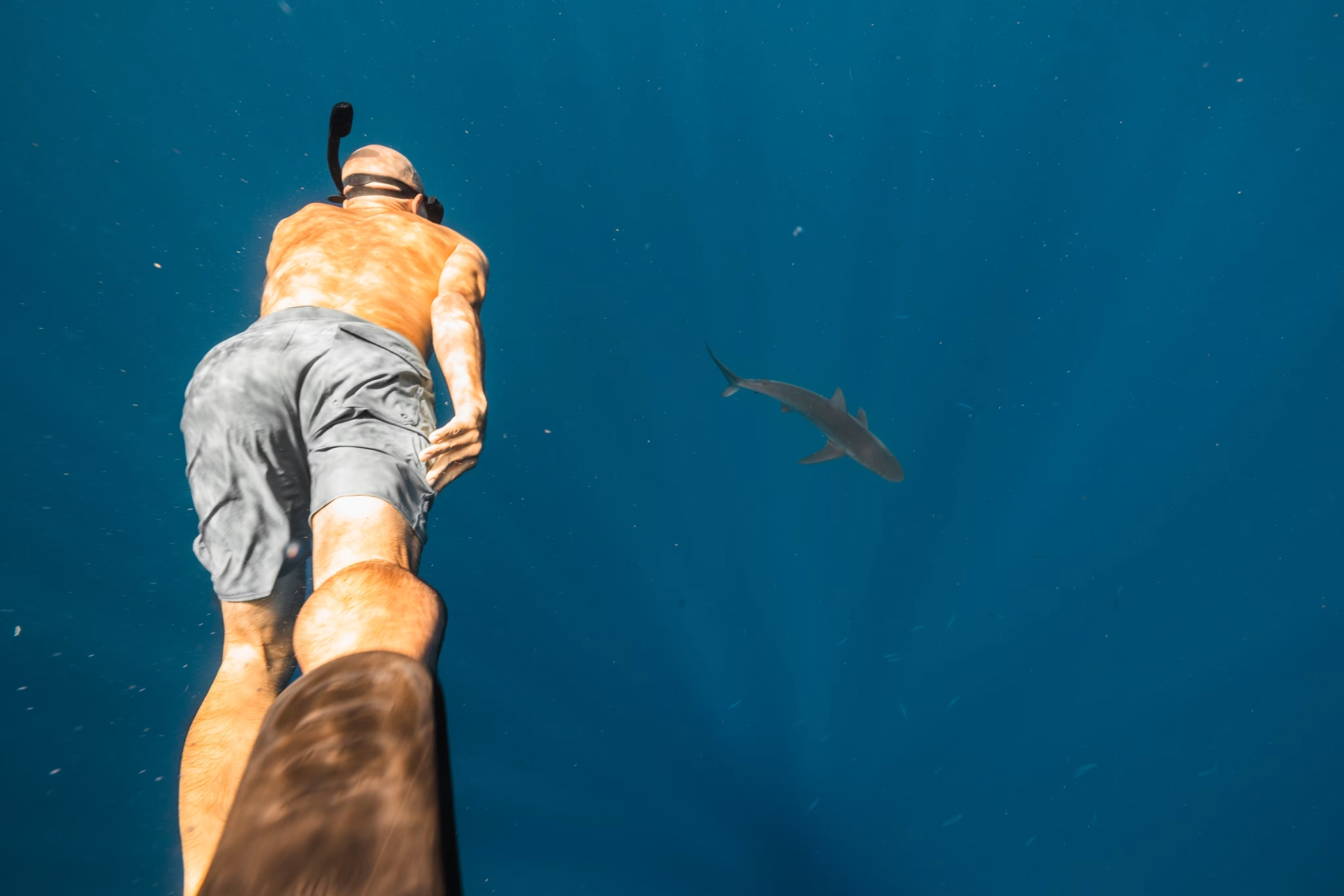
I booked with Go Adventure Hawaii in August 2026, paid for the trip myself, and spent about 30 minutes in the water.
All six operators I compared leave from Haleʻiwa Boat Harbor and run a few miles out before anyone gets wet.
Key Takeaways
- Expect to pay $112 to $150 per person. Six North Shore operators cover both cage and cage-free formats, with private charters from $700 to $1,500.
- The boats leave Haleʻiwa and run a few miles out. Go Adventure Hawaii put our site between two and three miles offshore, over a deep water ledge where sharks already hunt.
- Depth runs into the hundreds of feet. Go Adventure put ours past a couple hundred and under 500, and our guide estimated about 300. North Shore Shark Adventures cites about 150 at its own site. No bottom in sight either way.
- Water sits between about 73 and 82 degrees. Warm enough to skip a wetsuit year round.
- You enter softly and hold a line. One fin at a time, minimal splash, then a rope tethered to the boat so the current cannot carry you off.
- Crews use yellow, sound, and splashing to draw sharks in. On our boat, a yellow microfiber cloth and the yellow bristle end of a brush, noisemakers under the surface, and a fair amount of splashing.
- Sharks sense the electrical field your body puts out. They have a dedicated sense for it, and the crew said camera electronics attract the same curiosity.
- Cageless is the better experience if you can swim. The cage addresses fear, and the safety risk comes from weak swimming.
Six North Shore Operators Compared
| Operator | Format | Price | Time in water |
|---|---|---|---|
| Go Adventure Hawaii | Cage free | $140 per person, $700 private charter | 30 to 45 minutes of a 90 minute tour |
| Deep Blue Eco Tours | Cage free | $150, $130 kamaʻāina, $100 ride along | About 30 minutes of a 90 minute tour |
| One Ocean Diving | Cage free | $150, $105 ride along, $1,500 private charter | 45 to 60 minutes of a 2 hour tour |
| Hawaii Adventure Diving | Cage free | $150 | Not listed, 2 hour tour |
| North Shore Shark Adventures | Cage | From $112 | About 20 minutes of a 2 hour tour |
| Hawaii Shark Encounters | Cage | $125, $90 ages 12 and under, $100 ride along, $1,350 private charter | Not listed, 2 hour tour |
Go Adventure’s time in the water runs from 30 minutes up to 45, depending on the guests, the conditions and the sharks. My 30 minutes did not feel short once I was floating over open ocean.
The lead photo is by Parker (@sharker.parker), who photographed and filmed me in the water. Go Adventure sells a photo package at $75 per person, and Hawaii Adventure Diving lists photos at the same price. Deep Blue prices photo and video separately at $85 and $120, and also lists a four foot height minimum and a three guest minimum for a shared charter.
What It Is Like in the Water
The snorkeling is harder than the sharks.
The first stretch was work. The ocean is moving, you are swallowing water while you sort out the snorkel, and your brain keeps circling back to the fact that you cannot see the bottom and therefore cannot see what else is down there.
Once you stop fighting the water it turns serene. Four Galapagos came through relaxed enough to give everyone long, close looks, circling and drifting off with the unhurried confidence of an animal that has never needed to worry about anything.
I held the rope for about half of my 30 minutes. For the rest I snorkeled around the boat with Parker to see the sharks from different angles and get photos. I posted a reel of the dive on Instagram.
I wore contacts, and seeing clearly changed the experience. If you normally wear glasses, sort that out before you go.
How Far Offshore You Go
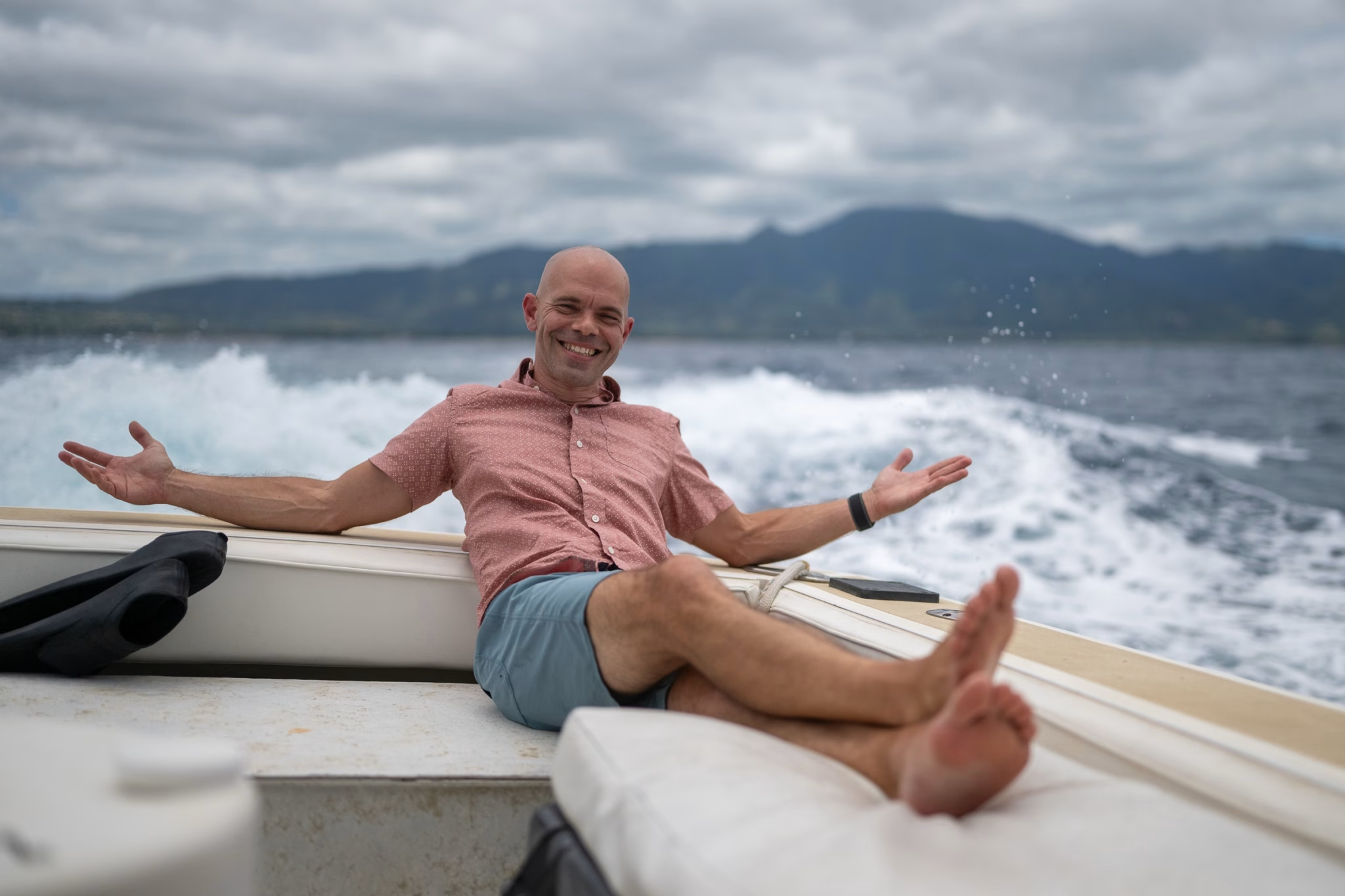
Distance varies by operator and site. Go Adventure told me ours sat between two and three miles offshore, at a site the boat returns to regularly. We ran almost due north from the harbor. The location data on the selfies I took on the ride out puts the boat 3.0 miles from Haleʻiwa Boat Harbor at 12:46 p.m., still moving.
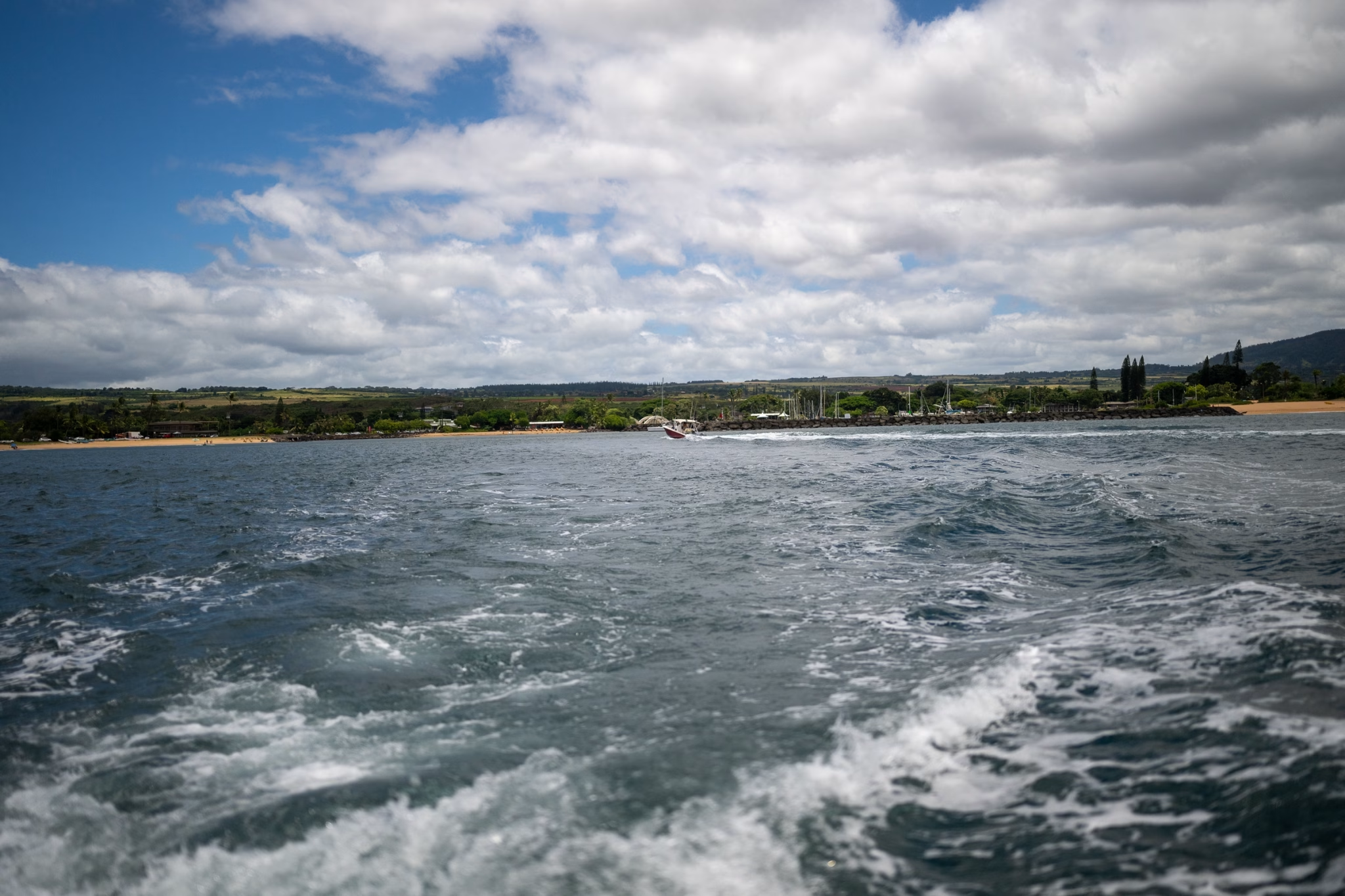
Hawaii state waters reach three miles from shore. Inside that line, feeding sharks is illegal, and state law specifically bars shark tour operations that use feeding or any other attractant to draw sharks in for viewing. Shark tour workers went to trial over illegal feeding in 2010, and a boat crewman was charged in 2018.
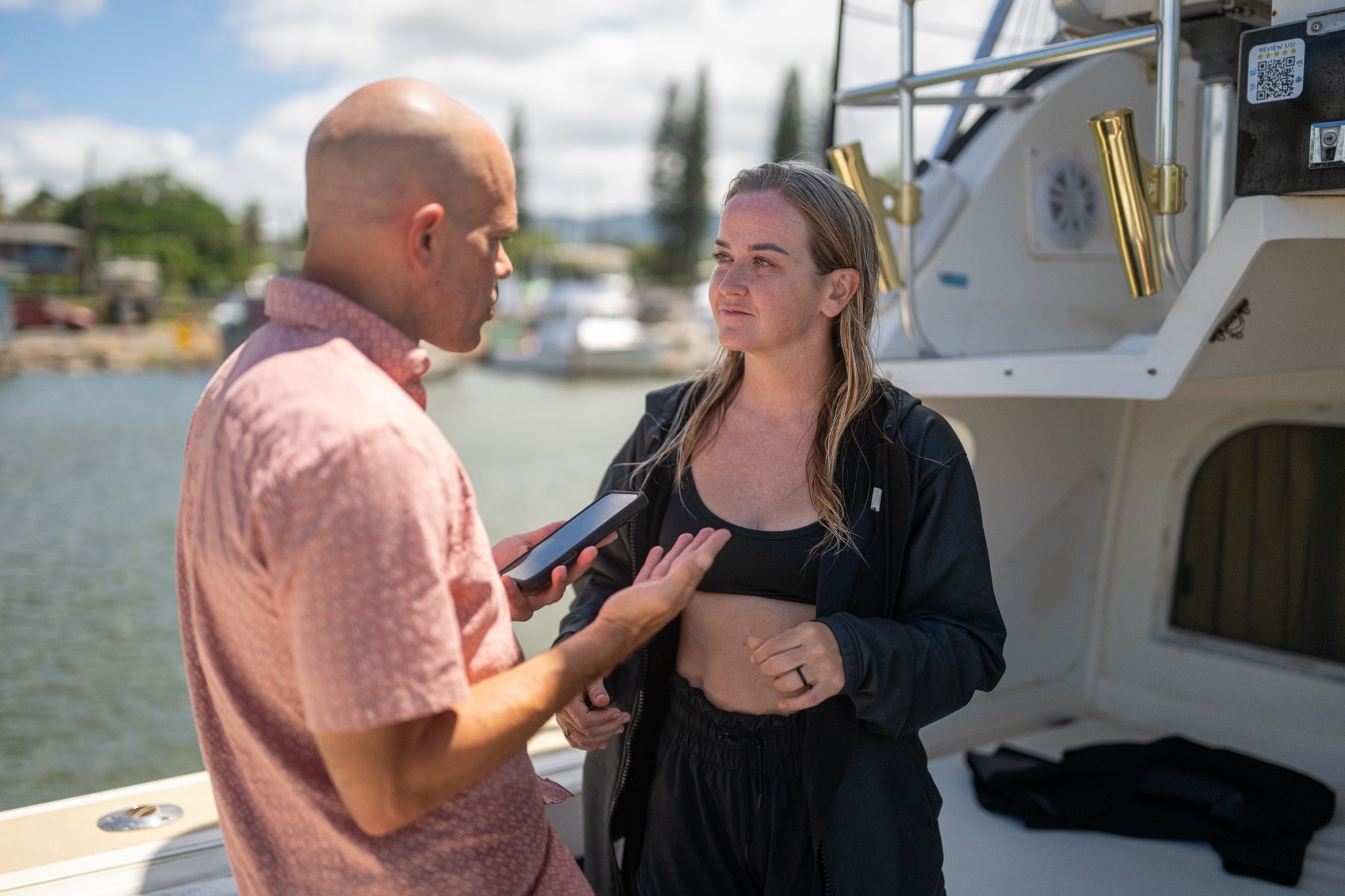
Go Adventure does not feed or chum, which is the practice the statute targets, and our guide, Rachel Caroline Strohl, said the ledge decides where they set up.
The water out there is open blue ocean with a swell that never stops.
The Water You Are Getting Into
Depth
North Shore Shark Adventures cites roughly 150 feet at its site. Go Adventure told me ours ran past a couple hundred feet and stayed under 500, and Strohl put it at around 300. Hawaii Shark Encounters lists a little over 500 feet at its site, about three miles out. Either way you will see no bottom at all.
I traced our northward line on the GEBCO ocean depth grid. The seafloor passes 100 feet about a mile and a half from the harbor and 250 feet at three miles. It levels off between 330 and 350 feet from about three and a half miles to a little past four, then falls to 450 feet at five miles and 700 at six. Strohl’s estimate of about 300 feet matches the water just past my last selfie position.
Below you is blue going to darker blue.
Temperature
Hawaii coastal water runs from about 73 degrees Fahrenheit in the coolest winter months to roughly 81 or 82 in late summer. The North Shore trends a touch cooler than Waikiki in winter, when big swells pull deeper water toward the surface.
We went in August with no wetsuit and never thought about it. In January a shorty is worth considering, mostly because you float still rather than swim hard.
For a live number before you book, the PacIOOS wave buoy off Waimea Bay reports water temperature continuously from about four miles offshore, close to where these tours operate.
Current and Surface Conditions
Our guide said ours was her favorite dive of the day because the current had dropped off and left the water calm. Visibility was excellent and there were fish everywhere. On a pushier current you spend more energy holding position relative to the boat and less energy looking at sharks.
Morning slots bring lighter wind and cleaner surface conditions. North Shore winter, roughly November through February, is when the big swells arrive, which affects comfort on the boat far more than it affects the sharks.
How You Get in the Water
You enter softly, with as little splash as you can manage. One fin on at a time, then a slow slide off the side into the water rather than a jump. Thrashing at the surface is the one thing you are told not to do, since a commotion reads differently to an animal below you than a body quietly settling in.
A rope runs from the boat, and you keep a hand on it while you sort out your breathing and your mask. The current out there moves, and without the tether you would drift away from the boat faster than you would notice.
If the sharks are behaving as expected and you look like you know what you are doing in the water, the crew lets you swim clear of the line, move around, and free dive down for a better angle.
How the Crew Brings Sharks Close
The crew is not baiting the water, and Strohl’s answer when I asked about putting fish in was that they do not have to.
A deep water ledge runs along this stretch of coast, and you can pick out the shark boats working it up and down the shoreline. Sharks hunt the ledge on their own. The same water has been fished and crabbed for generations, and crab boats keep the crab and throw everything else back, so the animals have learned that a boat overhead can mean an easy meal. Strohl’s description of them was excellent hunters and lazy opportunists in equal measure.
From there the crew uses color, sound, and splashing to invite a closer look.
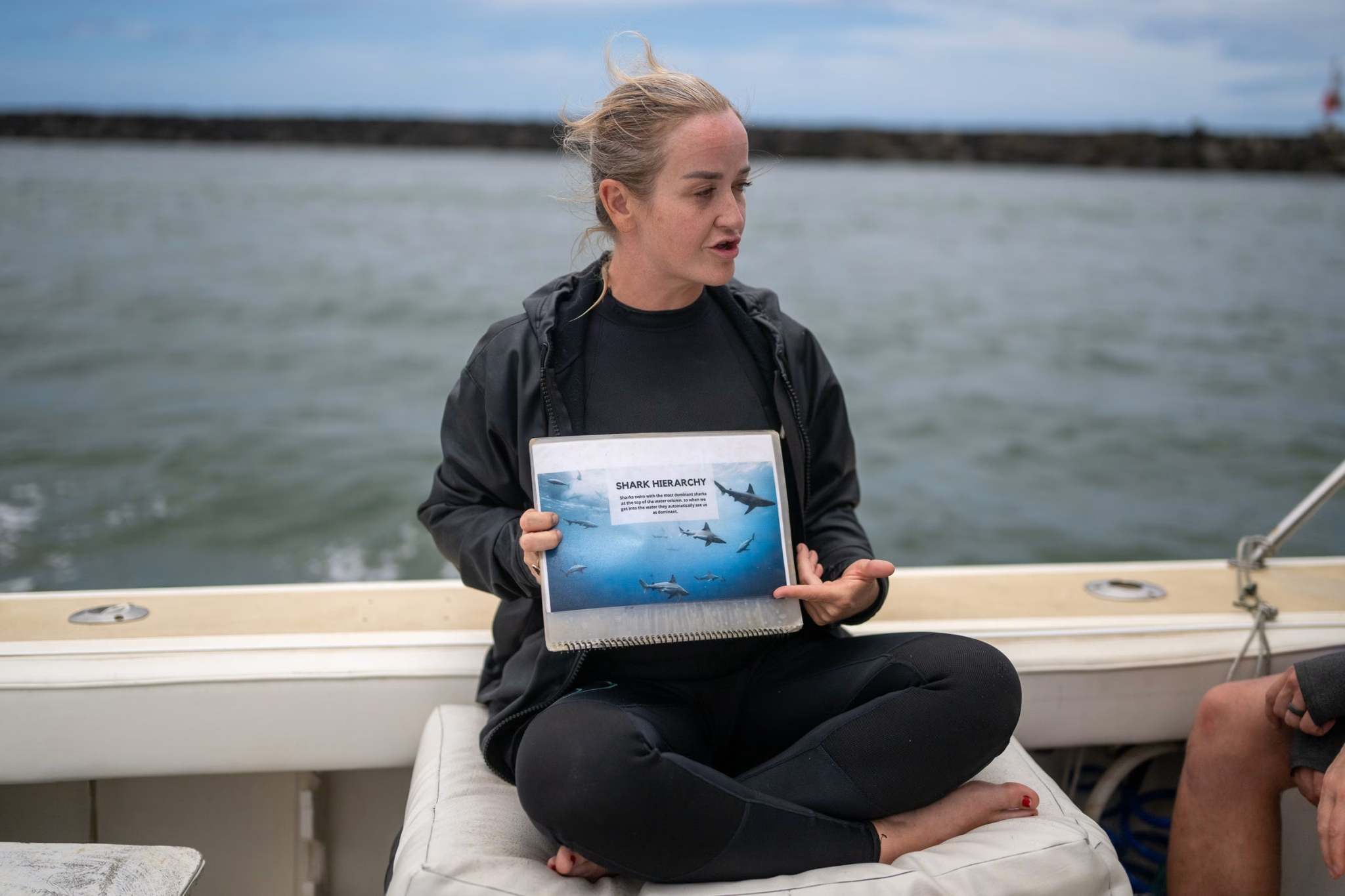
The color is bright yellow. On our boat that meant a yellow microfiber cloth trailed in the water and the end of a brush with yellow bristles. A shark cruising past catches the contrast, comes over to investigate, and gives everyone a long look before losing interest.
The crew used noisemakers below the surface to pull attention from farther out.
Our trip also took a great deal of splashing. Splashing is the crew’s job rather than yours, which is why your own entry is supposed to be quiet.
The goal is a shark close enough to see properly and no closer. Watching it work settled my nerves more than the safety briefing did.
Why the Sharks Notice You at All
Sharks have a sense we do not. Along their snouts sit clusters of pores called the ampullae of Lorenzini, jelly-filled canals wired into the nervous system that detect electric fields in water. Sharks and their relatives register fields weaker than one nanovolt per centimeter, which is what lets them find a stingray buried under sand.
Every living body produces those signals. Muscle contractions and nerve activity leak faint electricity into the surrounding water, including from your heart.
So a shark approaching you is reading you as an electrical event worth checking.
The crew added that the same sense picks up the electronics people carry, and that GoPros in the water draw their own share of curious passes. Treat that as their working observation from thousands of dives rather than a laboratory finding, though the underlying biology is well established. The animal drifting toward your camera is investigating.
Cage or No Cage
Strohl has been with the company about two years and came to the work from a background as a free-dive instructor. She has never cage dived. She finds cages claustrophobic and would skip one every time, and her view is that open water is a more intimate way to meet the animals.
A cage gives a nervous swimmer something solid to hold and makes a first encounter feel survivable. She added that a cage can also mean being boxed in with strangers, in swell, while somebody nearby gets seasick.
Sharks were her biggest fear. She books herself into things that scare her, went on a shark dive, found the animals were nothing like the coverage had promised, and kept coming back until it became a career.
My read after doing it: if you swim comfortably in open water, skip the cage. It addresses fear, and the safety risk comes mostly from swimming.
Is It Safe
Everyone got out unscathed.
For the wider numbers, Hawaii’s Department of Land and Natural Resources cites the International Shark Attack File: worldwide between 2004 and 2013, shark bites ran from 53 to 81 per year, and fatal bites ranged from one to thirteen annually. ISAF’s recent five year average sits near eight fatalities a year worldwide. Set that against the millions of people in the ocean on any given day.
DLNR adds that none of it is much comfort if you are the one bitten, or you love someone who was.
Strohl’s concern was people who cannot swim well. Someone panicking in open water can change how the sharks behave, and the scramble back to a rocking boat is where people crack their heads. Know how to swim before you book.
What to Know Before You Book
- Pick an operator that takes safety seriously. Strohl’s first piece of advice was to choose a reputable company that works methodically, and to never attempt a DIY version.
- Take motion sickness medicine before you leave the dock. Once the nausea arrives it is too late for the pill to help.
- Be able to swim. Well enough to stay calm in moving water with nothing underneath you.
- Book a morning slot. Lighter wind and cleaner surface conditions.
- Sort out your vision. Contacts beat squinting through a mask.
- Bring a camera you can hold onto. A wrist strap or a float. You are in swell with no bottom to recover anything from.
- Stay calm and keep your eyes up. Strohl’s core instruction was to breathe through the nerves, hold eye contact, and take it in rather than brace against it.
- Pack reef-safe sunscreen. Hawaii law bans the sale of sunscreens containing oxybenzone and octinoxate. The ones I wear on the water are in my reef-safe sunscreen guide.
- Decide on photos before you board. Go Adventure sells a photo package at $75 per person, and holding a line in swell leaves you one free hand at best.
Which Sharks You Might See
Galapagos and sandbar sharks are the regulars on North Shore dives, with tiger sharks appearing less often. Operators also report oceanic blacktips, and pelagic company such as tuna, mahi mahi, and barracuda.
Nobody guarantees species or numbers. We saw four Galapagos, all of them unbothered.
Sharks Could Use Better Press
Strohl asked for one thing in return for her time, which was that anyone who does this should describe it accurately. Nobody writes a headline about the millions of uneventful swims. The coverage is built from the rare bad day, and the popular image of a shark comes from a film about one hunting swimmers.
A study by Boris Worm and colleagues in the journal Marine Policy estimated humans killed roughly 100 million sharks in 2000 and about 97 million in 2010, with a possible range between 63 and 273 million a year. Demand for fins drives much of it, where the fins are cut off and the animal is dumped back in the water, frequently still alive. Bycatch in other fisheries accounts for much of the rest.
Per DLNR, most species mature slowly, carry small litters, and may not reproduce until somewhere between eight and twenty years old, with females often going years between pregnancies. Bony fish spawn thousands of eggs a year. Some shark species have fallen by as much as 80 percent over the last fifty years.
In 2010 it became the first state in the country to ban possession, sale, trade, and distribution of shark fins. On January 1, 2022, a state ban on shark fishing took effect, making it illegal to knowingly capture or kill a shark in Hawaii marine waters. Federally, the Shark Finning Prohibition Act has been law since 2000.
Strohl’s argument is that the fastest lever available to a visitor is telling people what the water was like, because fear of sharks works against protecting them.
Frequently Asked Questions
How much does shark diving cost on Oʻahu?
Between $112 and $150 per adult across six North Shore operators. Cage free, Go Adventure Hawaii lists $140, and Deep Blue Eco Tours, One Ocean Diving and Hawaii Adventure Diving each list $150. In a cage, North Shore Shark Adventures starts around $112 and Hawaii Shark Encounters lists $125. Private charters run from $700 to $1,500.
Is shark diving allowed in Hawaii?
Yes, with a significant limit. Feeding sharks is illegal inside Hawaii state waters, which reach three miles from shore, and state law bars tour operations that use feeding or any other attractant to draw sharks for viewing there. The prohibition targets feeding and attractants rather than shark tours as a category.
How deep is the water where you dive?
It varies by operator. North Shore Shark Adventures cites about 150 feet at its site, and Go Adventure Hawaii put ours past a couple hundred feet and under 500, with our guide estimating about 300. Sites sit roughly two to three miles offshore. You stay at the surface the whole time, with no bottom in view.
How cold is the water?
Hawaii coastal water ranges from about 73 degrees in winter to 81 or 82 in late summer. That is warm enough to skip a wetsuit. In winter a shorty is worth considering since you float rather than swim.
How do you get into the water?
Softly, with minimal splash. Put one fin on at a time and slide in rather than jump. You then hold a line tethered to the boat while you settle. If the crew is satisfied with conditions and with you, they will let you release the rope to swim and free dive.
Do you need to be a certified diver?
No certification is needed for a snorkel-based cageless dive. You do need to swim competently and be comfortable in open water. Scuba-based shark dives are a different product with different requirements.
How do the crews get sharks to come close?
The site does much of the work. Boats set up over a deep water ledge where sharks already hunt, in water that has been fished and crabbed for generations, so the animals associate a hull overhead with an easy meal. Crews then use bright yellow objects, noisemakers below the surface, and a lot of splashing. Feeding is illegal in state waters and is not part of a responsible operation.
Can sharks sense your heartbeat?
They detect the electrical fields your body generates. Sharks carry pores called the ampullae of Lorenzini that register fields weaker than one nanovolt per centimeter, and muscle and nerve activity, including the heart, produce exactly those signals. It is the sense that lets a shark find prey buried in sand.
Is cageless shark diving safe?
Weak swimming, panic, and seasickness cause more trouble than the sharks. Worldwide, fatal shark bites have ranged from one to thirteen a year per the International Shark Attack File, against millions of daily ocean swimmers.
Cage or no cage, which should I pick?
Treat it as a comfort decision. Open water is more immersive and, per our guide and my own experience, the better version. A cage helps a nervous swimmer through a first encounter, at the cost of sharing an enclosed space with strangers in moving swell.
Will I get seasick?
Possibly. You are a few miles offshore in open swell with no land reference while floating face down. Take motion sickness medication before departure rather than after symptoms start.
What is the best time of year to go?
Summer and shoulder seasons bring warmer water and calmer North Shore surface conditions. Winter, roughly November through February, brings the big swells the coast is known for, which affects comfort on the boat more than shark activity.
Is shark diving worth it?
Yes, if you swim comfortably in open water. I paid $140 for about 30 minutes in the water, four Galapagos sharks passed at close range, and the dive turned serene once my breathing settled.
Where can you swim with sharks on Oʻahu?
Shark tours leave from Haleʻiwa Boat Harbor on the North Shore and run a few miles offshore. Go Adventure Hawaii, Deep Blue Eco Tours, One Ocean Diving and Hawaii Adventure Diving run cage-free trips. North Shore Shark Adventures and Hawaii Shark Encounters use a cage.
Bottom Line
Shark diving is worth doing if you want adventure and a look at the wild ocean around Hawaii while staying safe and in good hands.
Article Updates
- October 8, 2026: Article published. Based on a cageless dive with Go Adventure Hawaii off Oʻahu’s North Shore on August 11, 2026, including an on-boat interview with guide Rachel Caroline Strohl. Go Adventure Hawaii confirmed the distance and depth figures directly.


