
The 2026 California Super Bloom wildflower season is fast approaching, and if there is anything I’ve learned over the past few years, it’s that there is no better time than the present to stop and smell the flowers. The extremely rainy California winter may mean that we will finally be treated to another rare super bloom somewhere in the state this year.
This guide will help you find the best super bloom spots and wildflower locations around California. While you are out searching for wildflowers, be sure to take in the natural beauty that already exists by taking a closer look at trees, shrubs, wildlife, and the geology of the land.
Read on to discover what kind of wildflower season we are in for this year!

Table of Contents
- Key Takeaways
- 2026 Season Outlook
- Fire Followers: 2026’s Unexpected Bloom
- Know Before You Go
- Wildflower Blooms by Month
- Wildflower Hunting Tips
- Northern California Super Blooms
- Central California Super Blooms
- Southern California Super Blooms
- Antelope Valley State Park
- Montaña de Oro State Park
- Anza-Borrego State Park / Anza Borrego Super Bloom
- Channel Islands National Park
- Mojave National Preserve
- Joshua Tree
- Death Valley National Park
- Figueroa Mountain Recreation Area
- Shell Creek Road Meadows
- Trona Pinnacles
- Lake Elsinore
- Carrizo Plain National Monument
- Frequently Asked Questions
- Will there be a superbloom in California in 2026?
- What are fire followers and where can I see them in 2026?
- When does the Theodore Payne Wildflower Hotline start?
- Is Walker Canyon at Lake Elsinore open for wildflower viewing?
- What’s the best wildflower identification app?
- Why do superblooms fail even after heavy rain?
- What’s the best time to photograph wildflowers?
- Should I visit Anza-Borrego or Death Valley in 2026?
- Where are the best locations to see wildflowers?
- Map the Super Bloom
- Article Updates:
Key Takeaways
- 2026 outlook is mixed: Second-wettest January in 21 years, but unseasonably warm temperatures threaten Southern California blooms
- Fire followers may steal the show: Areas burned in 2025 wildfires could produce spectacular native wildflower displays
- Peak timing varies by elevation: Mid-February to mid-April (deserts), April to May (foothills), May to July (mountains)
- Track blooms in real-time: Theodore Payne Wildflower Hotline starts March 1 (818-768-1802 ext 7)
- Top 2026 prospects: Death Valley (good September rains), Anza-Borrego (early blooms appearing), Northern California (less heat impact)
- Access restrictions: Lake Elsinore’s Walker Canyon has banned visitors during peak bloom in recent years
2026 Season Outlook
If there’s anything I’ve learned from years of chasing California wildflower seasons across the state, it’s that rainfall alone doesn’t guarantee a superbloom. 2026 is proving that lesson again.
The Good News
California just experienced its second-wettest January in 21 years, according to the Los Angeles Almanac. The rain came at the right time to germinate seeds across the deserts and foothills. Early displays are already appearing at Anza-Borrego Desert State Park, and desert candle sightings have been reported near California City.
Death Valley received significant rainfall in September 2025, improving odds for a normal to above-normal spring bloom there. If you’re planning one desert destination this year, Death Valley may be the safer bet.
The Concern
Here’s where things get complicated. Despite the rain, Southern California experienced record warmth in November and December 2025, and January continued the trend with temperatures hitting 83°F in parts of LA, well above the typical 68°F average.
Wildflowers need at least six weeks of cool weather after germination. Heat at the wrong time can force plants into abbreviated blooms that fizzle quickly, or desiccate emerging buds before they ever flower.
“Superblooms are not guaranteed every year, even after lots of rain. When it happens, it’s extraordinary, but you need all the stars to align, with rain, temperature and timing. We’ve had some of those ingredients, but it remains to be seen if the weather will cooperate.”
— Naomi Fraga, Director of Conservation Programs, California Botanic Garden
What This Means for Your Plans
Southern California deserts: Temper expectations. You may see good blooms, but a true superbloom is increasingly unlikely unless cooler weather arrives soon.
Death Valley: Better prospects than SoCal. The September rains hit at the right time, and Death Valley’s extreme environment sometimes operates on its own schedule.
Northern California: Less impacted by the heat wave. Higher elevations and coastal areas may fare better than the southern deserts.
Fire-affected areas: Paradoxically, areas burned in 2025’s devastating fires may produce some of the most spectacular displays. See the Fire Followers section below.
I’ll update this section as the season progresses. Check back, and consider calling the Theodore Payne Wildflower Hotline (starting March 1) for real-time conditions.
Fire Followers: 2026’s Unexpected Bloom
After the devastating Los Angeles-area wildfires of late 2025, there’s a silver lining that most wildflower guides won’t tell you about: fire followers.
Fire followers are native wildflower species that remain dormant in the soil for years, sometimes decades, waiting for fire to clear competing vegetation. When it finally burns, they explode into bloom. The scale of the 2025 fires means 2026 could produce fire follower displays unlike anything we’ve seen in years.
What to Look For
Plummer’s mariposa lily (Calochortus plummerae): Deep pink, lavender, white, and yellow blooms. One of the most striking fire followers in Southern California.
Fire poppy (Papaver californicum): Orange-red flowers that only appear after fire. Easy to confuse with California poppy, but the timing and location give it away.
Whispering bells (Emmenanthe penduliflora): Pale yellow, bell-shaped flowers that rustle in the breeze. The name is accurate.
Native snapdragons: Dense stands of color in burned chaparral areas.
Lupine: Already a superbloom favorite, but lupine thrives especially well in post-fire conditions.
Where to See Them
Based on expert guidance from Naomi Fraga at California Botanic Garden, the most promising areas for 2026 fire followers include the Santa Monica Mountains, Altadena foothills, and other 2025 fire zones.
To be completely transparent, I can’t recommend specific trails yet because access to many burned areas remains restricted for safety and erosion concerns. Check with local ranger stations before visiting any fire-affected area. I’ll update this section as areas reopen and conditions become clearer.
Timing
Fire followers typically bloom 2-4 months after significant rainfall following a fire. For 2025 burn areas that received January 2026 rains, expect displays in March through May, depending on elevation and continued weather conditions.
Important Note
Fire-affected areas have unstable soil and debris hazards. Respect all closures. The flowers will be there next year too if conditions aren’t safe this spring.
Know Before You Go
One of the biggest threats to wildflowers during significant blooms is humans. In our excitement and carelessness, tourists disturb delicate terrain and flowers by venturing off of paths, trampling native plants, laying out blankets, and leaving behind trash. If you decide to visit a wildflower hotspot, please be extra mindful of protecting and preserving the landscapes.
Consider not traveling to bloom regions where you are seeing lots of coverage on social media, which may include some of the regions listed below. Many Instagram photos in the same location probably mean the local town and environment are already being overrun by people.
I’ve tried to include some lesser-known wildflower hotspots below, but in the internet age, there are few kept secrets. If we are to continue enjoying super blooms in the future, we must do all we can to protect our fragile native flowers when they are in bloom.
Theodore Payne Wildflower Hotline
The best real-time resource for Southern and Central California wildflower conditions. Founded in 1983, this is the gold standard.
- Phone: 818-768-1802 ext 7
- Schedule: Weekly recorded updates every Friday, March through May
- Website: theodorepayne.org/learn/wildflower-hotline
- Format: Narrated recordings by Tom Henschel covering specific locations, what’s blooming, and peak timing
The hotline doesn’t start until March 1, so don’t call in February expecting updates. I usually check every Friday morning during peak season before making weekend plans.
Other Resources
DesertUSA Wildflower Reports: desertusa.com maintains current sighting reports throughout the season.
CalFlora: calflora.org for identifying what you’re seeing and checking species ranges.
iNaturalist: Community sightings can give you real-time intel on what’s blooming where.
Wildflower Identification Apps
I’ve tested several. Here’s what actually works in the field:
- Google Lens: Already on your phone, surprisingly accurate for common species
- iNaturalist: Best for unusual species; community verification helps
- PlantNet: Good for California natives specifically
- PictureThis: Aggressive upselling but decent free tier
Wildflower Blooms by Month
Depending on which part of the state you’re in, wildflowers will come and go at different parts of the year. Wildflowers will bloom and die much sooner in the desert than in the mountain landscapes, so be sure to plan accordingly. No matter when or how you do it, the most important thing is to simply get out and (responsibly) enjoy nature!
Mid February to Mid April
Where: Lower elevations, deserts and foothills.
Wildflowers: Desert Gold (Geraea canescens), Notch-leaved phacelia (Phacelia crenulata), Caltha-leaved Phacelia (Phacelia calthifolia), Golden Evening Primrose (Camissonia brevipes), Gravel Ghost (Atrichoseris platyphylla), Bigelow Monkeyflower (Mimulus bigelovii), Desert Five-spot (Eremalche rotundifolia)
Early April to Early May
Where: 3000 to 5000 feet elevations, upper desert slopes, canyons, higher valleys
Wildflowers: Desert Dandelion (Malacothrix glabrata), Brittlebush (Encelia farinosa), Desert Princes’ Plume (Stanleya pinnata), Desert Paintbrush (Castilleja chromosa), Fremont Phacelia (Phacelia fremontii), Mojave Aster (Xyloriza tortifolia), Bigelow’s Coreopsis (Coreopsis bigelovii), Indigo Bush (Psorothamnus arborescens), Desert Globemallow (Sphaeralcea ambigua)
Early May to Mid July
Where: 5000 to 11,000 feet elevation on mountain slopes, pinyon pine/juniper woodlands
Wildflowers: Desert Mariposa (Calochortus kennedyi), Purple Sage (Salvia dorrii), Rose Sage (Salvia pachyphylla), Panamint Beardtongue (Penstemon floridus), Magnificent Lupine (Lupinus magnificus), Inyo Lupine (Lupinus excubitus)
Wildflower Hunting Tips
- Bring a California Wildflower Field Guide. There are many different versions that can be found online or at a local bookstore. Taking the time to identify and study the natural flora in detail will make your experience that much more memorable.
- Snap pics. You don’t have to be a professional photographer, but getting that perfect Instagram pic is crucial.
- Get the timing right. Wildflowers are likely to bloom earlier in years when there is little rainfall. Check in with the agencies managing the natural areas you are hoping to visit before you head out!
- Look, but don’t touch. You may be tempted to bring back a couple of flowers as souvenirs, but if everyone did that, there would be nothing left to see! Leave the flowers undisturbed for the bumblebees, butterflies, and future sight-seers.
- Stay on the paths, and as with any nature outing, be sure to leave no trace!
Northern California Super Blooms
Eastern Sierras
In most of these areas, blooming occurs from late May to July. Among many others, you may see orange tiger lilies, yellow mule ears, scarlet gilia, blue lupine, purple wild iris, and rosy desert peach.


McGee Creek by Crowley Lake
Take the McGee Creek exit off of Highway 395, approximately six miles north of Tom’s Place or eight miles south of the Highway 203 exit. This road is narrow and winding and will lead you to a parking lot at the end of the road. To catch more beautiful blooms, follow the McGee Creek Trail, with mountainous views and many native flowers.
Little Antelope Valley Pack Station
Take Golden Gate Road to the station. You can find fields blooming with wild mustard, mule ears, lupines, and wild iris.
Bridgeport Valley/Bodie Hills


From Highway 395, 7 miles south of Bridgeport, take the Bodie Road (Highway 270) east for 13 miles toward Bodie State Historic Park. There is a multitude of beautiful flora that can be found here, including Townsend daisy and limestone aster. Blooms of white and blue lupine, Anderson’s larkspur, yellow hawksbeard, and Coville’s phlox come later in Bodie Hills.
For more flower hotspots in Bodie Hills, try meandering down Geiger Grade Road, heading north out of Bodie State Historic Park. In Bridgeport Valley, you can discover fields of wild iris and lupine in mid-to-late June.
Tioga Pass Road
Just before the entrance to Yosemite National Park, the short Nunatak Nature Trail and Bennettville Trail offers displays of subalpine flowers that have adapted to survive in somewhat harsh conditions. Some of these plants include rock cress, whitlow grass, and shield leaf rodgersia. Other wildflower species you may see are red and white heather, penstemon, crowded lupine, ground-level carpets of dwarf bilberry, and Labrador tea shrub.
For more wildflower hotspots in this region, check out this free PDF: Wildflower Hot Spots of the Eastern Sierra.
Folsom Lake – Beeks Bight

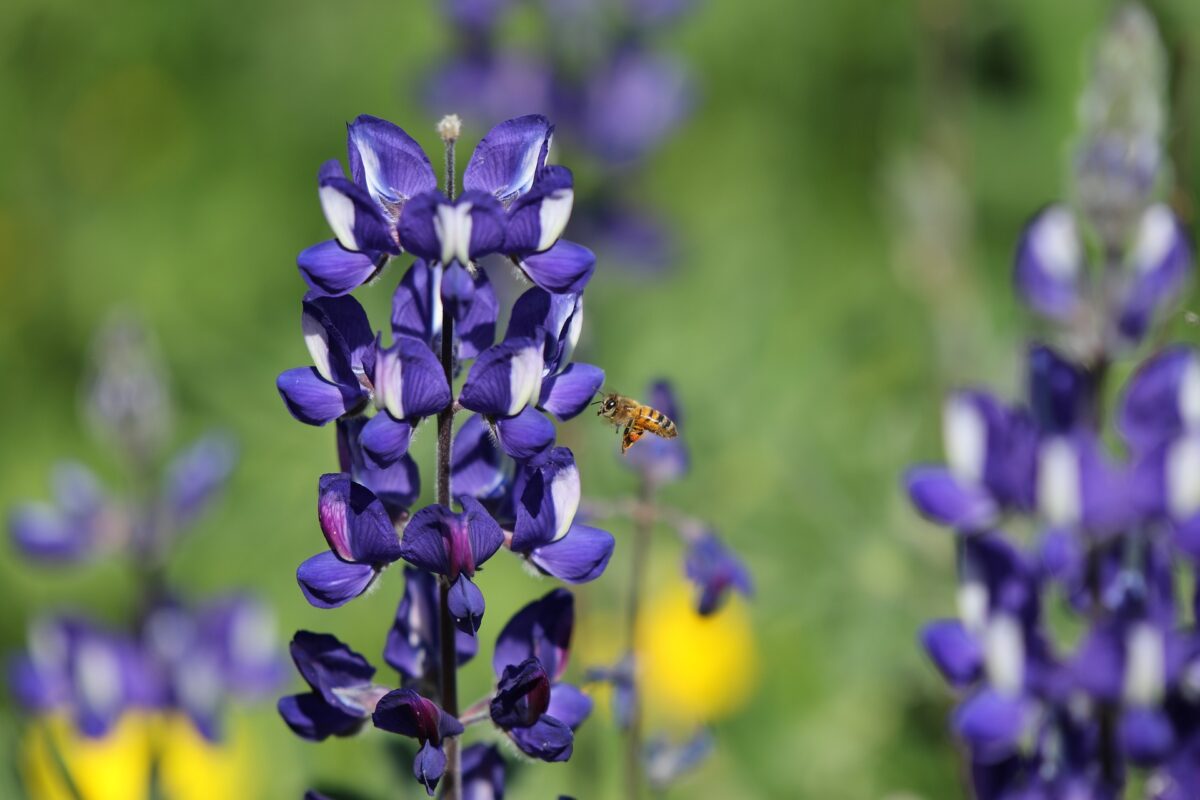
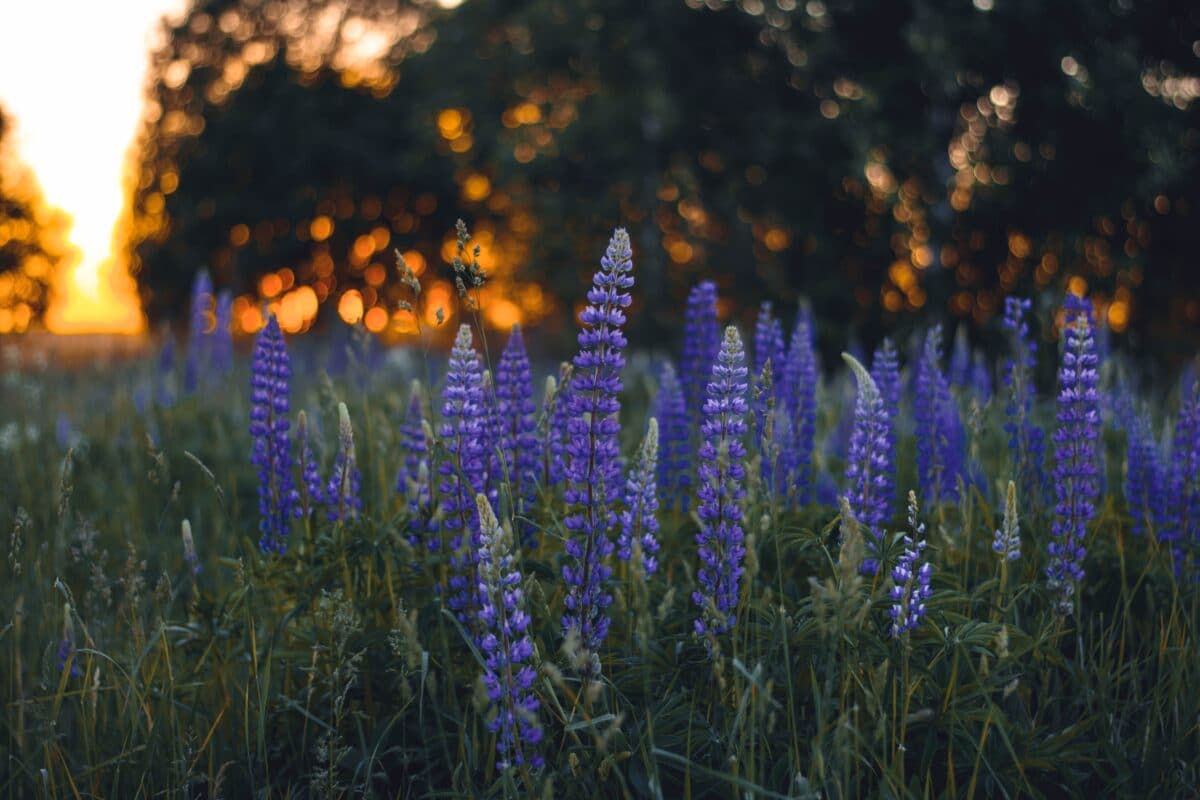
Folsom Lake is home to huge swaths of blue lupines. From mid-April to early May, you can find fields upon fields of these gorgeous flowers. Get there by going to the Beeks Bight parking lot and taking a stroll. You can’t miss them!
Lake Tahoe
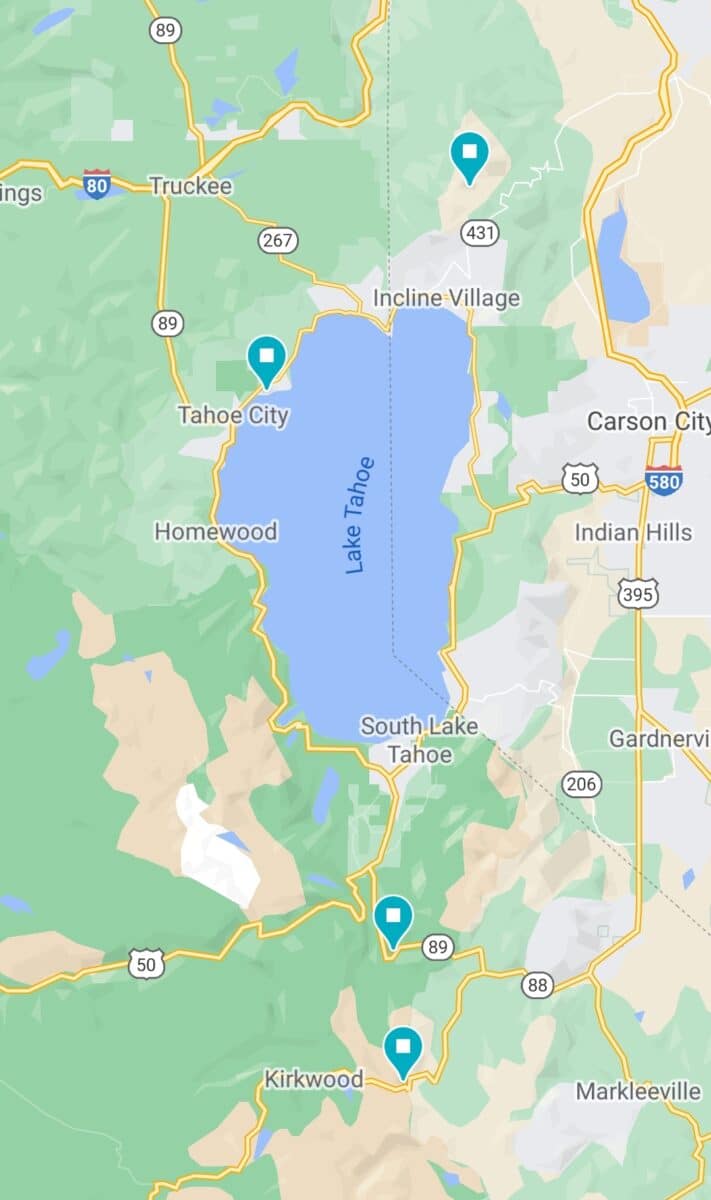
Blooming in the higher altitudes occurs from late April to July, but in years with little rain, flowers may bloom earlier in the season. In Lake Tahoe, you may find white phlox, Mariposa lily, yellow plantain buttercup, blue lupine, bright-red snow plant, Indian paintbrush, and lacy pussypaws.
Big Meadow Trailhead
About 1.5 miles into the Big Meadow trail, you will find a large meadow that is usually abundant with alpine wildflowers. For a full-day hike, continue on the trail to Dardanelles Lake (an 8-mile journey).
Galena Falls
As you start your hike to the falls, you should begin to see wildflowers within the first mile. For a longer hike, loop back on the maintenance road (5 miles) or make your way up to the summit of Mount Rose (10 miles).
Winnemucca Lake + Meiss Lake
Winnemucca Lake, near Kirkwood, is a well-known spot for wildflower sightseeing because of the rich volcanic soil that supports spectacular alpine blooms. It is a moderate 5-mile hike to reach the lake, and you will pass by Frog Lake in the first mile.
Make your way along the Meiss Lake trailhead, located close to the summit of Highway 88 at Carson Pass, and walk about 2 miles to the Meiss family cabin, where you will find a colorful wildflower display.
Lake Forest Beach
Lake Forest Beach on the north shore is one of the best places to snap a photo of Lake Tahoe, with fields of buttercups and lupines covering the ground. The shore of this public beach will become blanketed in brilliant purple wildflowers, attracting photographers and wildflower seekers alike.
In years with little rain, the flowers may start blooming earlier in the season (late May or June). To get there, follow N. Lake Boulevard north towards Lake Forest, and turn right on Lake Forest Road. Turn right again onto Bristlecone Street, and parking along the road is free.
Lassen Volcanic National Park


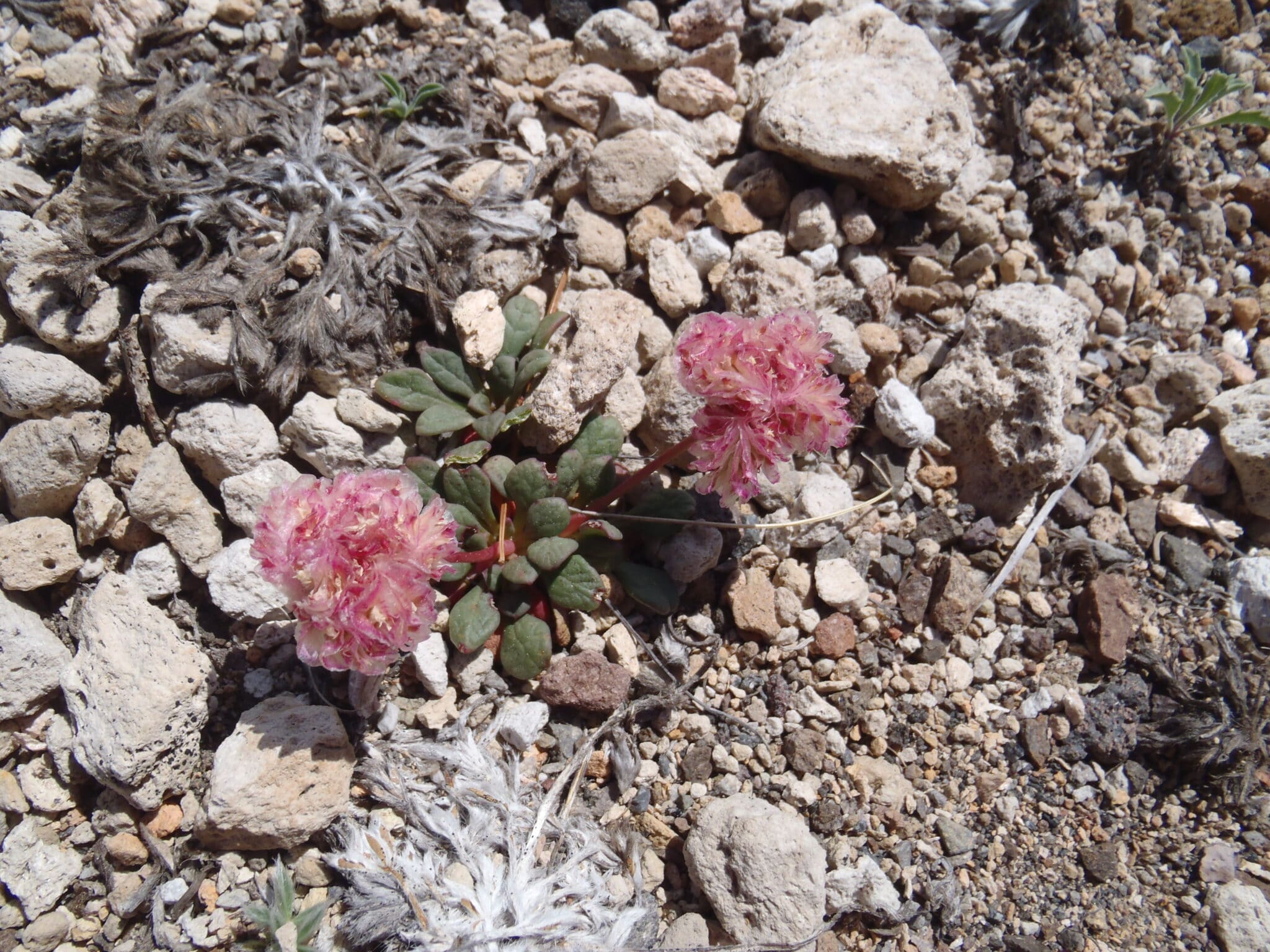


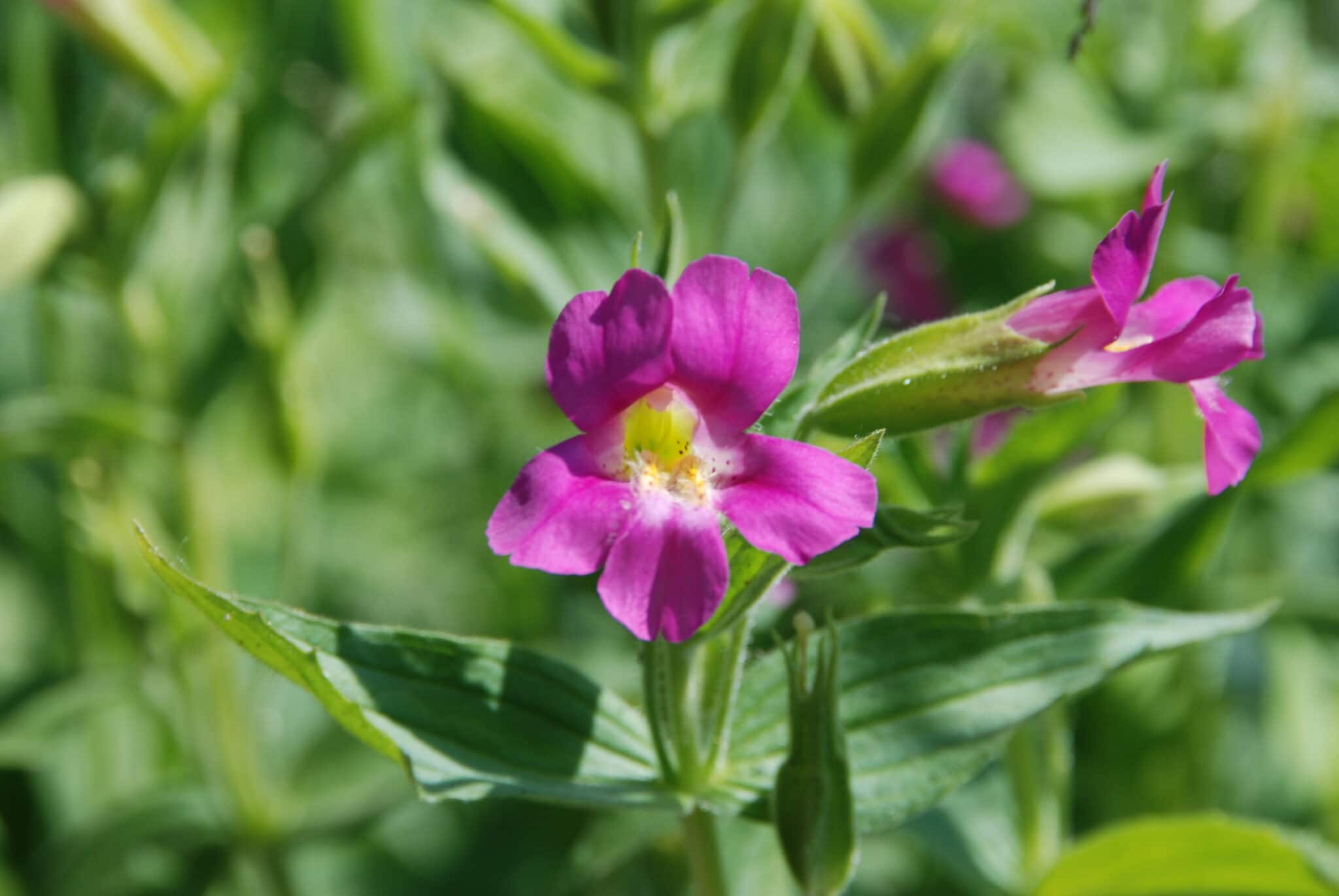
Depending on snow-melt and rain levels, wildflowers will tend to bloom from late May through August throughout Lassen. Early in the blooming season, look for mountain mule’s ear, pussypaws, snow plant, and western wallflower, followed by corn lily and lupine. California corn lily and silverleaf lupine tend to bloom later. The National Park Service has put together a general schedule of when wildflowers bloom in various areas within Lassen.
Mount Diablo State Park


Blooming occurs from early March to May. Throughout the park, you may see blue skullcap, Fendler’s meadow-rue, Johnny jump up’s, bush lupine, monkey flowers, globe lilies, California poppies, bird’s eyes, and wallflowers. Check out this wildflower identification guide from the Mount Diablo Interpretive Association and this awesome What’s Blooming Now on Mount Diablo spreadsheet, which is updated regularly.
Donner Creek Loop Trail
This beautiful 5-mile loop is the number one pick for viewing wildflowers on AllTrails, and features mountain views and waterfalls galore, especially after a rain. Parking at the trailhead is for residents only, but paid parking is available at the nearby Mitchell Canyon Visitor Center for $6.
Mount Diablo Grand Loop Trail
Mount Diablo Grand Loop Trail is a difficult 6.8-mile loop trail that features beautiful wildflowers and sweeping views of the Bay Area (and beyond on clear days).
Secret Valley Loop
Secret Valley Loop trail is a moderate 6-mile loop near Walnut Creek that features beautiful wildflowers and views of Mt. Diablo, the East Bay, and Napa Valley.
For more trails in Mount Diablo State Park that feature wildflower hotspots, check out this list of trails on AllTrails.com.
Napa County

The rolling hills throughout Napa county offer ample opportunity to view wildflowers. Renowned for endless fields of yellow mustard, you can drive for miles and miles to view wildflowers among vineyards. This is a must-do and easy to find for anyone living near San Francisco.
More Creek Trail


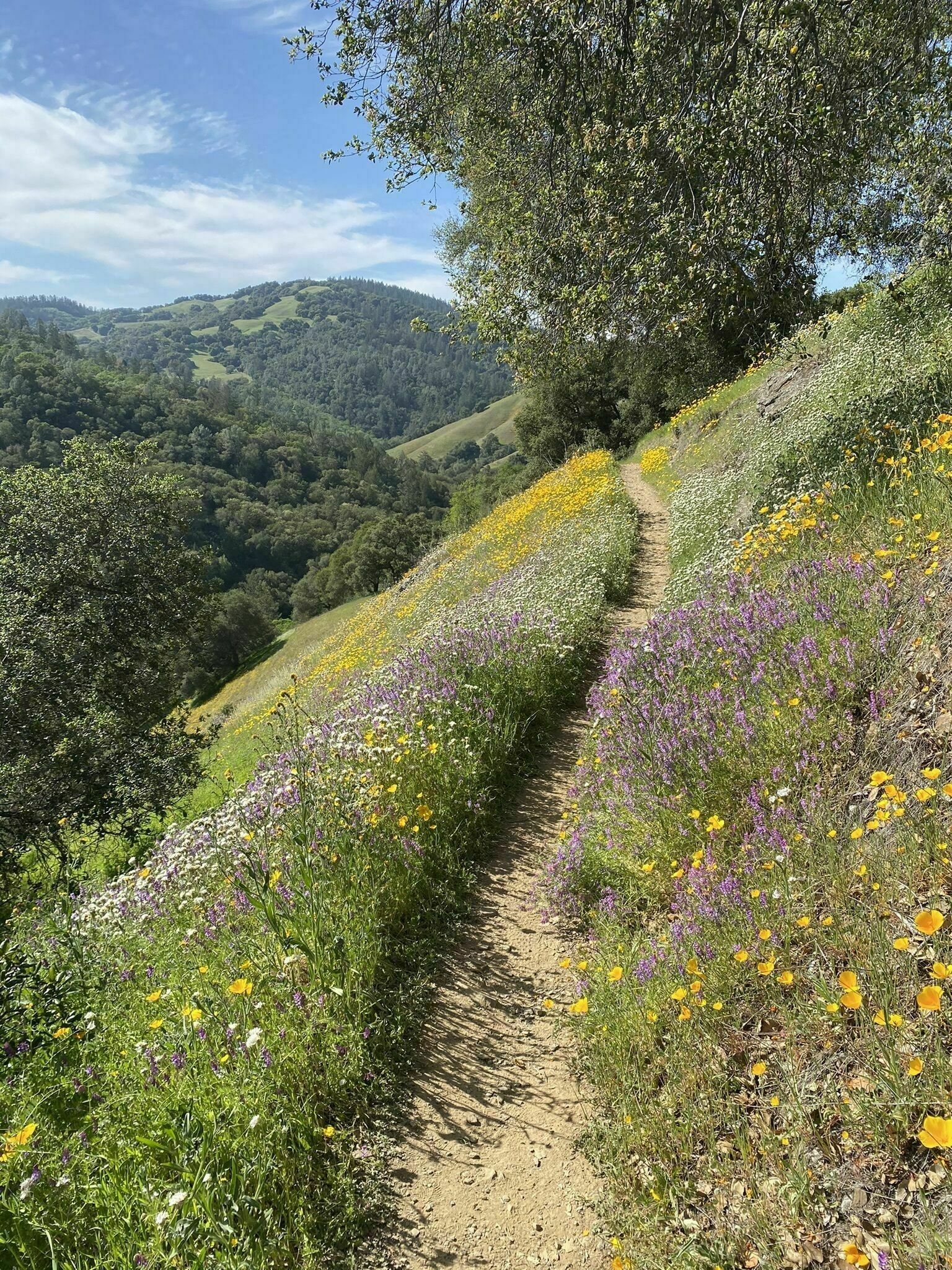
This 7.1-mile hike in More Park, St. Helena takes you through a loop into a canyon absolutely rife with wildflowers. You’ll make about five creek crossings to find some unmatched beauty of Napa’s wine region beyond the grape.
Per the Napa Regional Park Page: The Moore Creek Fire Road is temporarily closed for user safety during trail construction. Redwood Trails Alliance is working on new trails in the area and there is high risk of falling rock on the fire road. The trail is only closed between the parking lot and the caretaker’s residence. Please use Valentine Vista Trail from the parking lot to access Dryfoot Trail and the trails beyond the ranch house.
North Table Mountain Ecological Reserve

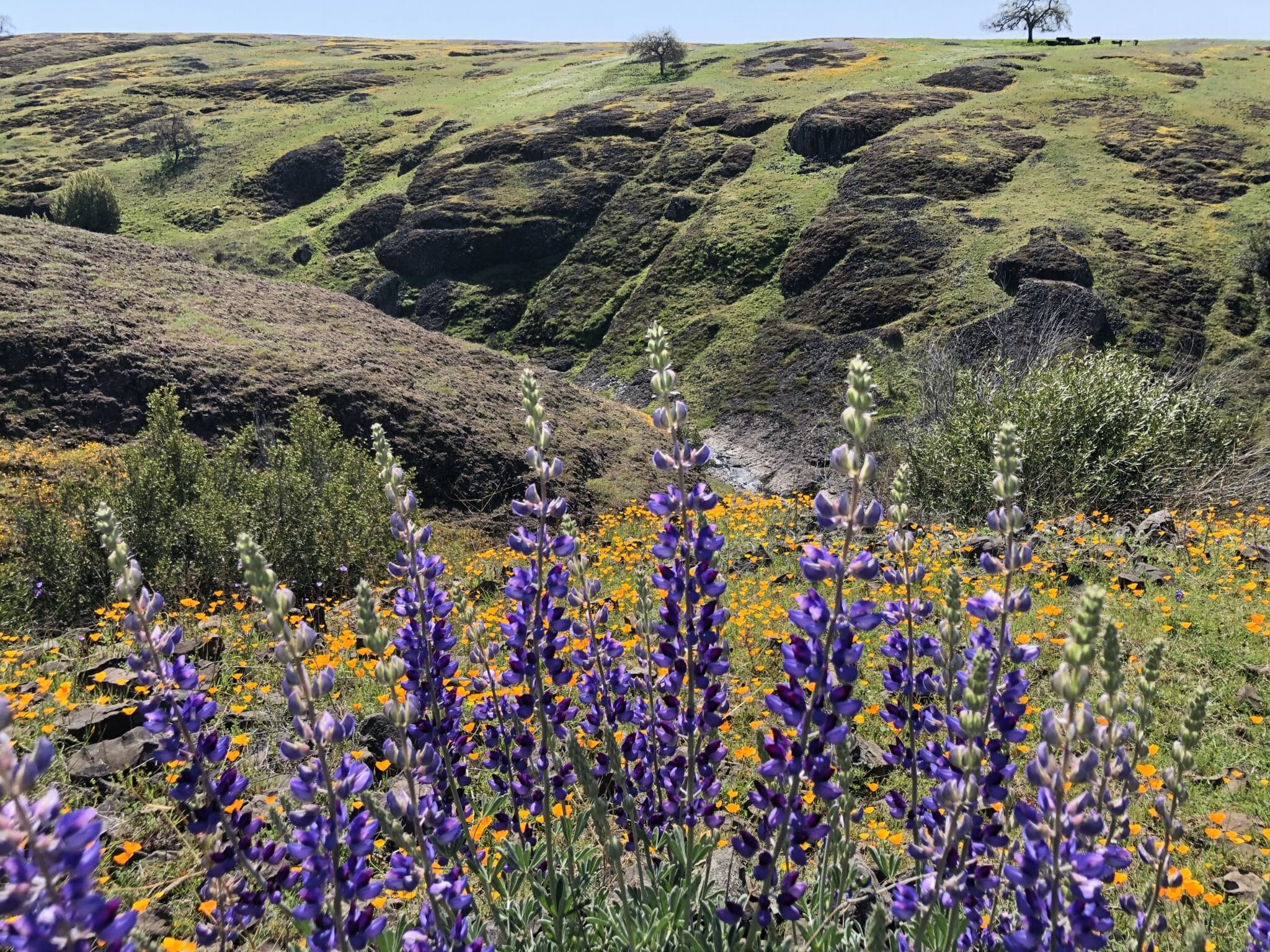
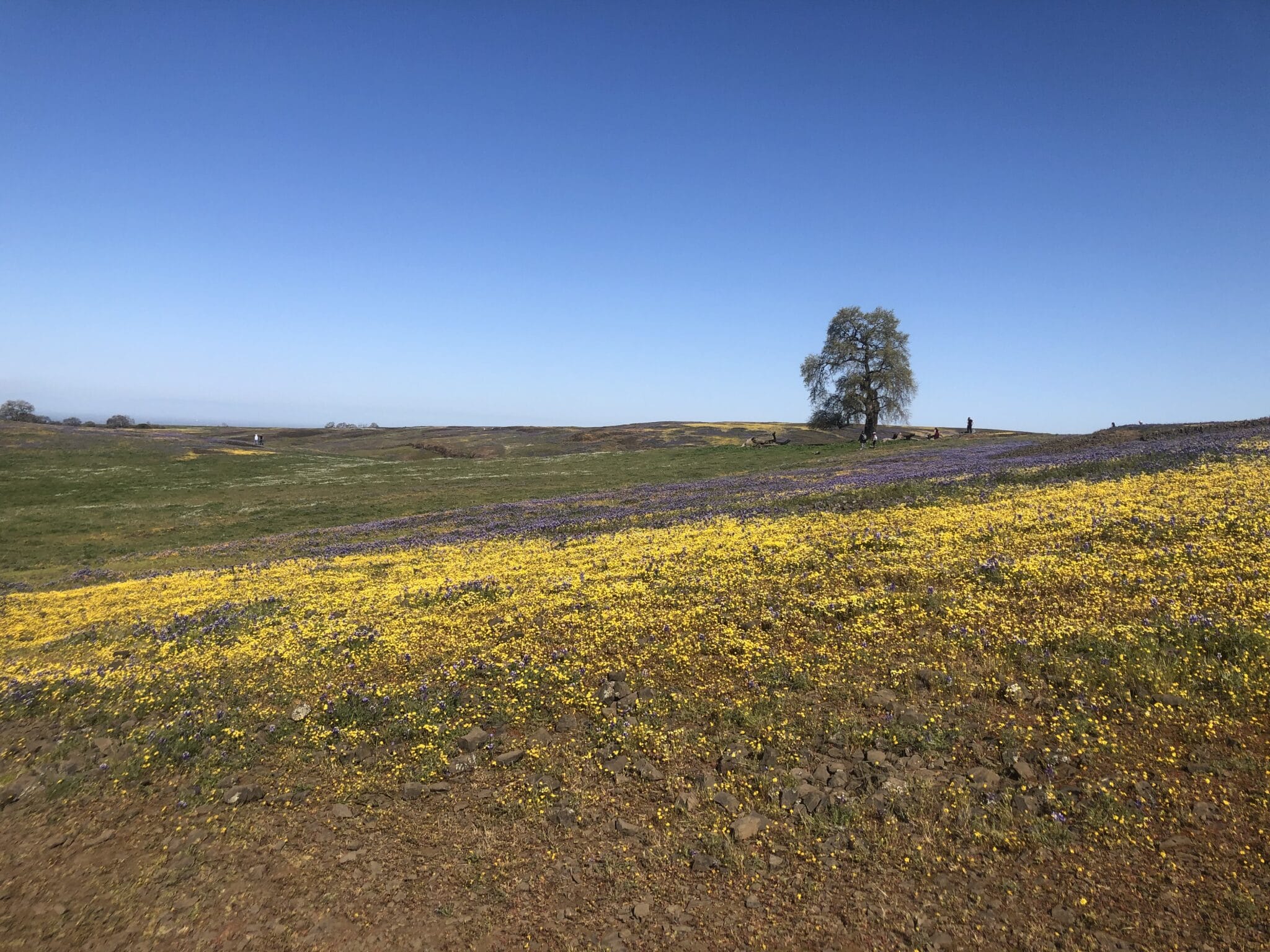
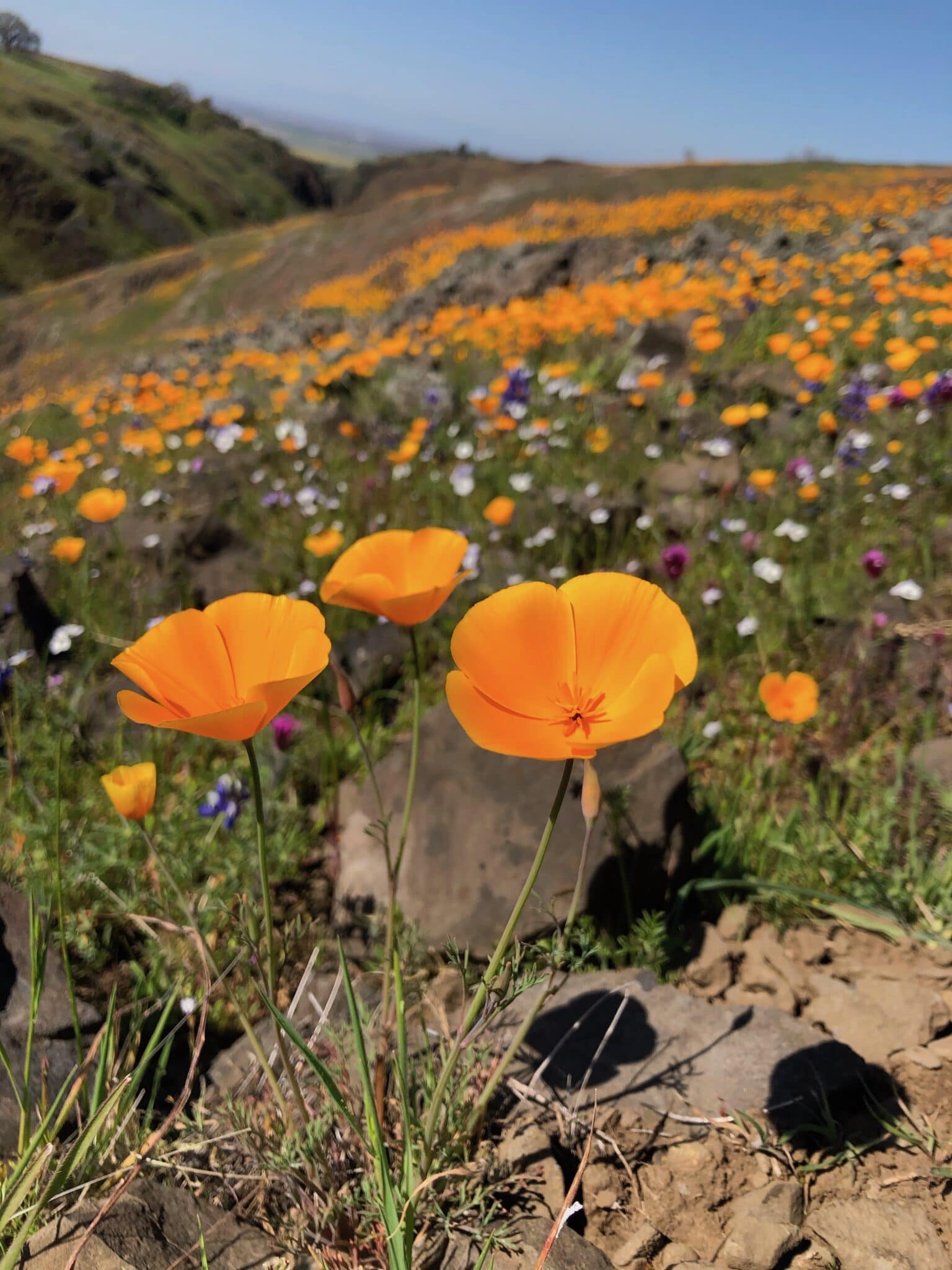
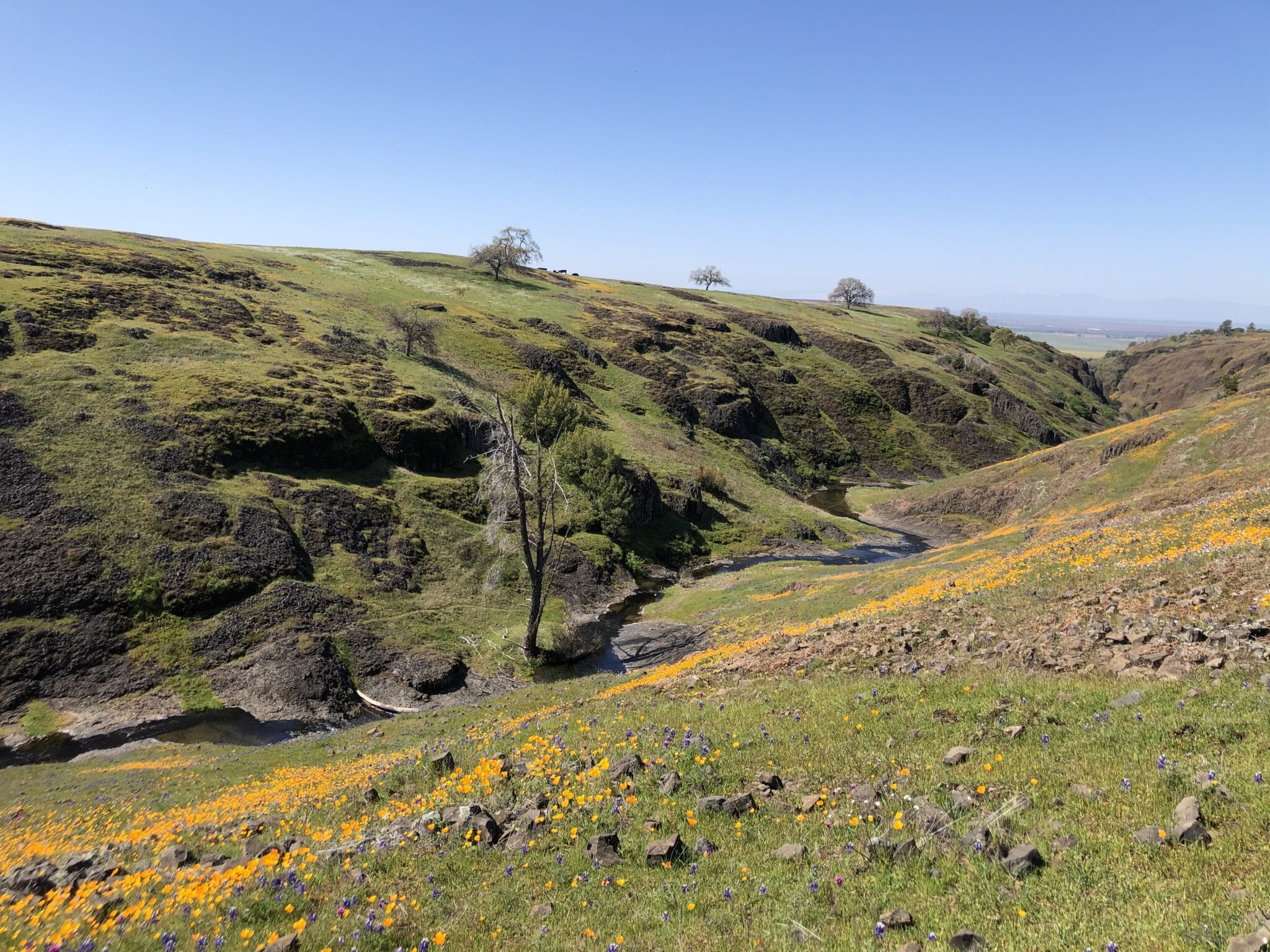


This expansive mesa formed by ancient lava flow located near Oroville attracts wildflower enthusiasts during the blooming season, from early March to mid-May. Among many others, you may see lupine, Foothill triteleia, Sierra primroses, blue dicks, and poppies. By early April, bright yellow Douglas’ violets will start to pop up in the grasslands, along with pale yellow daisies, white meadowfoam, and magenta shooting stars and buttercups. Other flower species present in the area include blue dicks, blue-and-white bird’s eye gilia, magenta Kellog’s monkeyflower, and purple owl’s clover.
The showy wildflowers are likely to come and go fast this year, so plan a trip soon! You will need to purchase a land pass for the day online before visiting. Official access is through a small parking lot on the west side of Cherokee Road. North Table Mountain is also renowned for its Phantom Falls hike, which is well worth trekking to view as well.
2024 Update: All the majestic waterfalls in North Table Mountain are currently in full flow, but the trails are somewhat muddy and slippery. As with most of the state, expect a great wildflower season beginning in early March. On the Phantom Falls Loop, you will likely find (soon) birds-eye gilia, frying pans, poppies, sky lupine, goldfields, white nemophila, yellow monkeyflowers, blue dicks, and redmaids. There are groups of California poppies on the northwest side of the loop by the ravine. Flowers should bloom through April.
For more information on the native wildflowers you can find on North Table Mountain Reserve, check out this great resource.
Pinnacles National Park


About 80 miles south of San Jose, this small but incredibly unique national park features geological wonders and an amazing display of wildflowers.
Depending on rainfall, blooming occurs from March to mid-May. Early bloomers include milkmaids, shooting stars, and Indian warriors. These are followed by California poppies, bush poppies, fiesta flowers, monkey flowers, baby blue eyes, bush lupine, clarkias, orchids, penstemon, and roses. In April, species such as Johnny jump up’s, virgin’s bower, gilia, suncups, chia, black sage, pitcher sage, larkspur, and bush lupine join the spectacular display of flowers that bloomed in March.
Point Reyes National Seashore

Just north of San Francisco, Point Reyes National Seashore is an ideal spot to take in both expansive ocean vistas and close-up wildflower displays. There are plenty of hikes that will take you through fields dotted with native flowers and along colorful ocean cliffsides. Because of the climate, you may be able to catch flowers in bloom from as early as February to as late as August. A few great locations to visit early in Spring include Abbotts Lagoon, Chimney Rock, and Tomales Point.
For more information on the wildflower species in Point Reyes, visit the Point Reyes National Seashore Wildflower Species List
Central California Super Blooms
Edison Point Wildlife Area / Pine Flat Lake
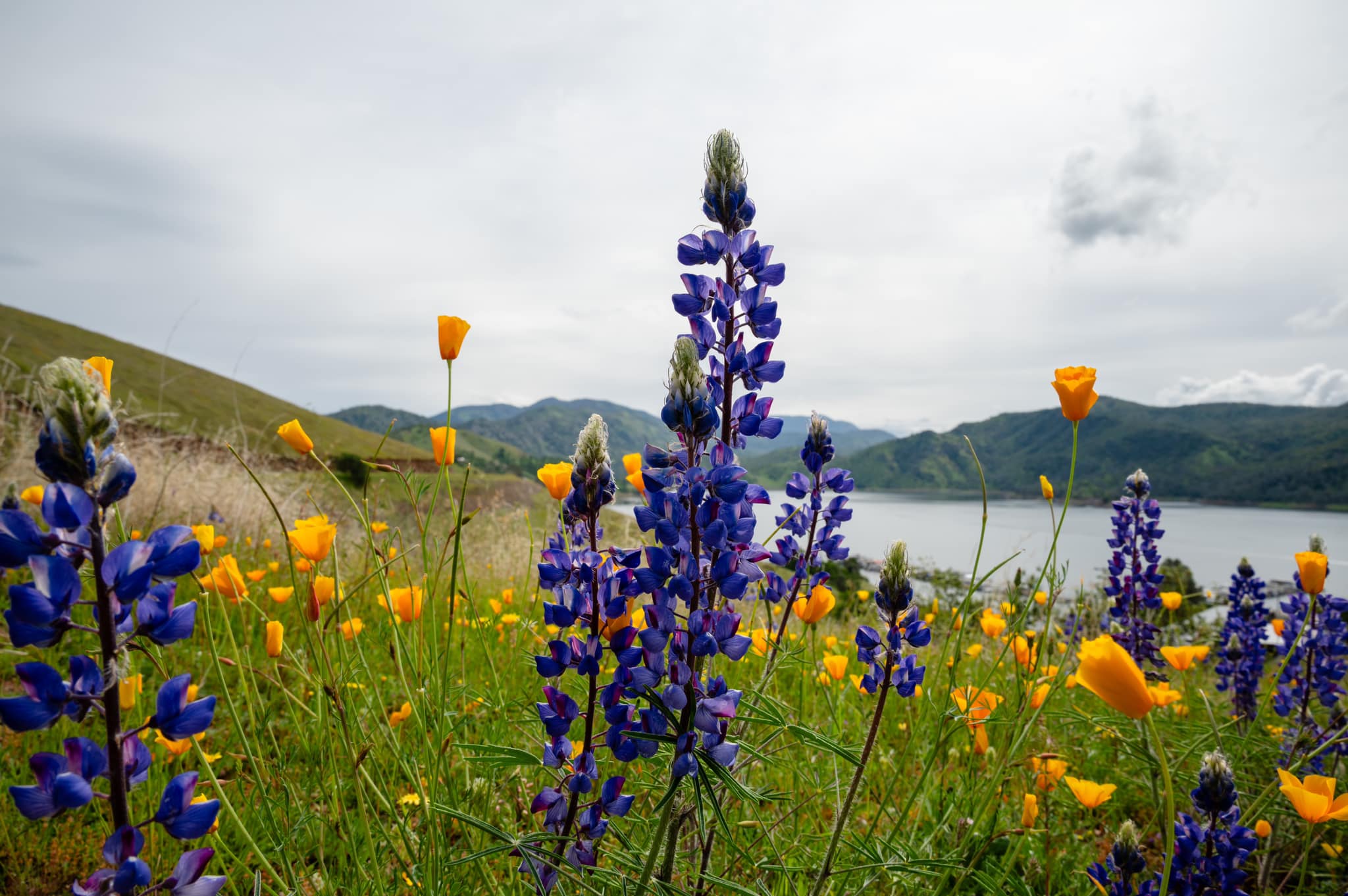
Edison Point Wildlife Area is about a 45 minute drive East of Fresno, where you will find blossoming orange poppies amongst the oak covered foothills of the Sierra Nevadas. Part of Pine Flat Lake, you can also camp or get a day use pass.
Southern California Super Blooms
Check out the latest report on the Theodore Payne Foundation Wildflower Hotline, which provides an in-depth look at which wildflowers are in bloom in Southern California as of 2024.


Antelope Valley State Park
Located 75 miles north of Los Angeles, the Antelope Valley California Poppy Reserve has become famous for its rolling hills of poppies, painting the landscape with orange and yellow. One of my favorite things about visiting this park, is for miles in either direction you travel to get here, you can spot countless poppies along the drive.
The park itself has several loops you can walk along that span up to around 7 miles if you do them all. I like to do the side right of the visitor’s center, starting at the North trail which climbs up, then take the South trail back which is decent and fairly flat. This path takes you onwards to the left side of the visitor’s center, where you can cross a wooden bridge with some picturesque scenery and continue onto the remaining smaller loop.
Blooming starts around the middle to end of February and can last through May, with the peak bloom occurring from mid-March to mid-April. Poppies are the most predominant flower here, but they are accompanied by desert pincushion, blue dicks, California aster, blue lupin, yellow fiddlenecks, and pink filaree. There are currently sparsely populated blooms, with the potential for more with a significant amount of late-season rain.
For an up-to-date flower watch, this Live Poppy Feed shows you what’s currently in bloom.
2024 Update: There are no poppies currently in bloom. Look for updates as we get closer to spring!
Montaña de Oro State Park

Located just west of San Luis Obispo along the coast, Montaña de Oro State Park offers pristine beaches, rugged cliffs, coastal plains, and hillsides covered in poppies. Montaña de oro translates to mountain of gold, named after the California poppies that emerge in spring. Other wildflowers that bloom in the area include lupines, sticky monkey flowers, wild radish, and mustard. There are plenty of scenic trails to explore in the park, many of which feature wildflowers.
The Montaña de Oro Bluff trail is a 4-mile loop that meanders along ocean bluffs and is known for gorgeous displays of California poppies in the spring. This trail will also bring you to one of the most popular beaches, Spooner’s Cove. You will also catch some wildflowers blooming along the 4.4-mile out-and-back Valencia Peak trail, which brings you to the top of the 1,347-foot coastal mountain. According to hikers, wildflowers have begun to bloom in the park (as of February 21), and will likely continue blooming through May.
Anza-Borrego State Park / Anza Borrego Super Bloom

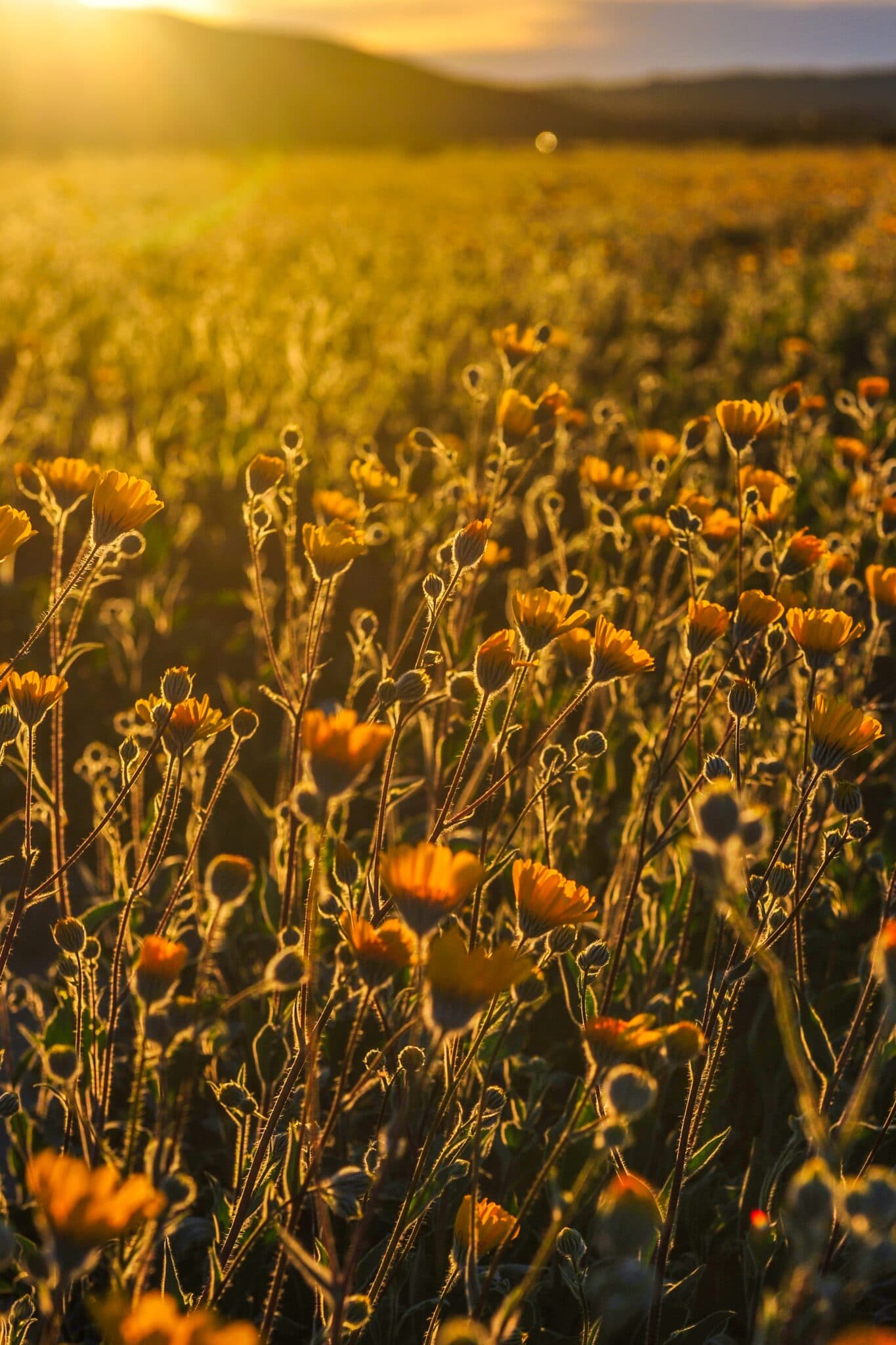


Located in the Colorado Desert, this large state park comes alive with an amazing display of wildflowers from mid-February to mid-May. The wildflowers you may see include desert marigold, desert lily, sand verbena, desert sunflower, apricot mallow, desert five-spot, Orcutt’s woody aster, and blooming cacti. While you will not see an abundant bloom this year, the park’s canyon trails feature a variety of natural blooms.
As of February 2024, patches of wildflowers have begun to bloom within the park, including the stunning desert lily! Learn more about potential wildflower hotspots in this overview of Anza-Borrego State Park.
For more current updates on wildflowers in the park, visit DesertUSA and the Anza-Borrego State Park Facebook Page.
Channel Islands National Park
Over 800 plant species begin to bloom on the five Channel Islands from mid-February to mid-May. Due to microclimates and the distance each island is from the shore, each island supports a unique array of flora. The vibrant yellow coreopsis begins blooming on Anacapa, Santa Barbara, and San Miguel Islands in January and usually lasts through March. San Miguel is also home to lupine and poppies, while Anacapa features red Indian paintbrush and island morning glory. Santa Barbara Island blossoms with lavender chicory and pale-yellow cream cups, and the elusive is only found on Santa Rosa Island.
For current wildflower updates and information, visit the Theodore Payne Wildflower Hotline. Reports for the 2024 wildflower season will resume in March.
Mojave National Preserve
For a full list of flora that you may be able to witness in the Mojave desert, visit DesertUSA’s desert plant page.

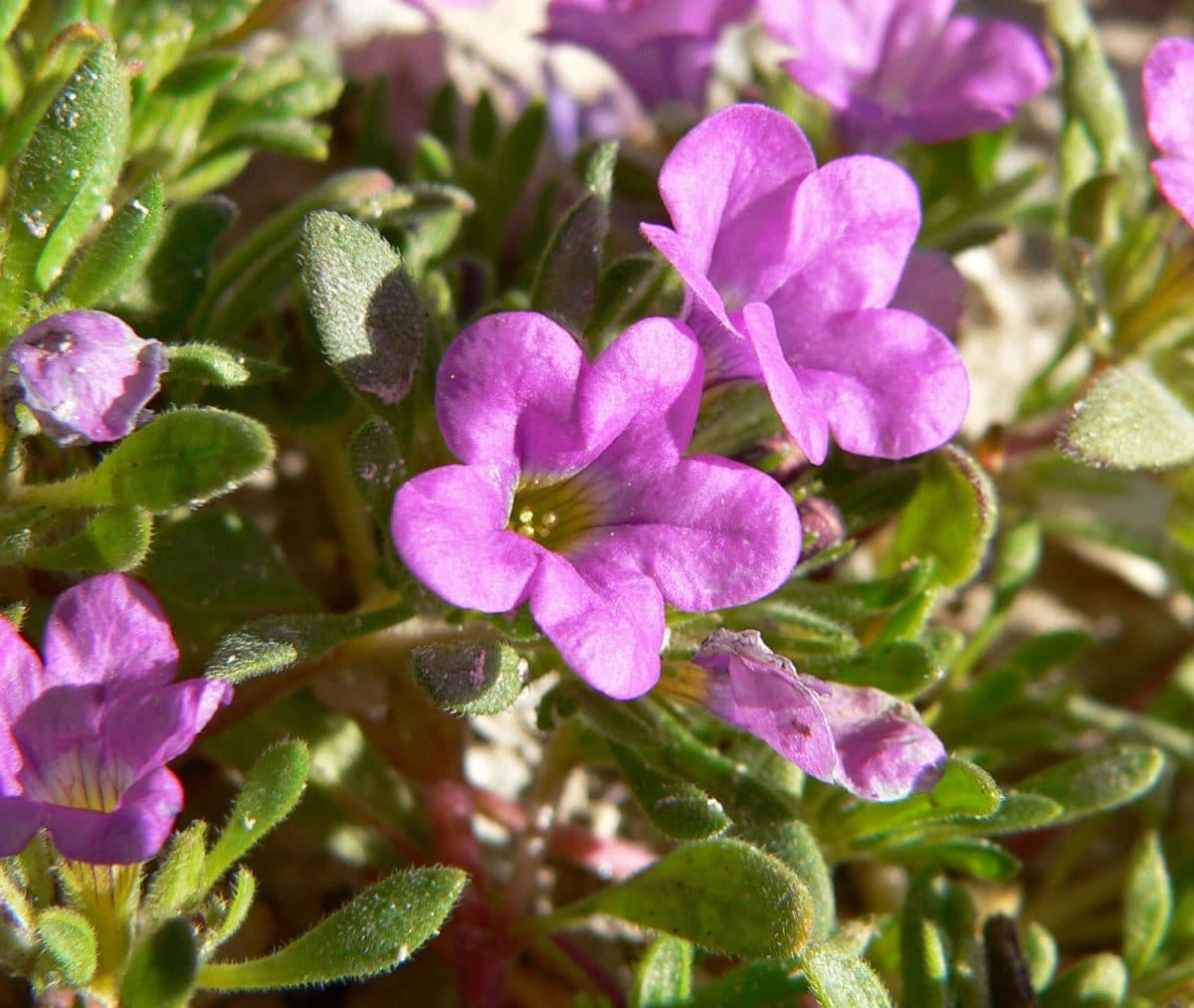
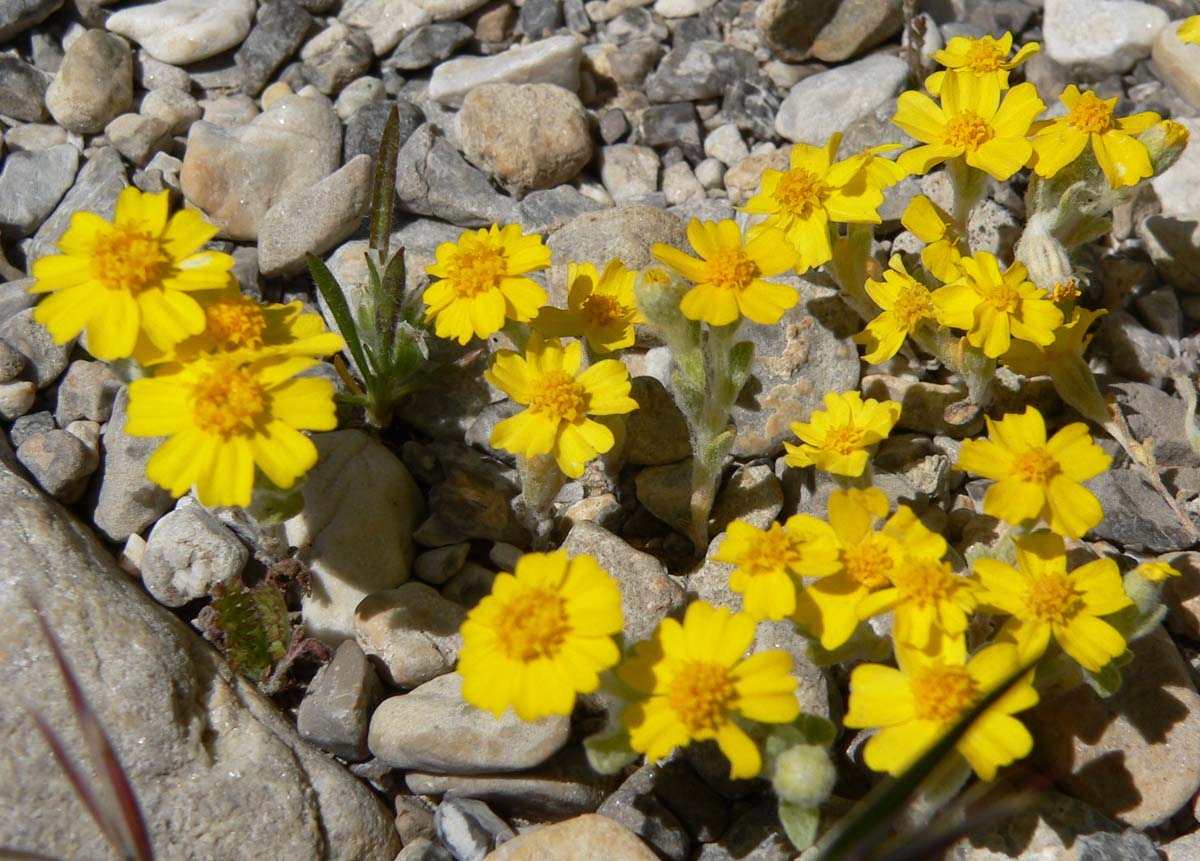
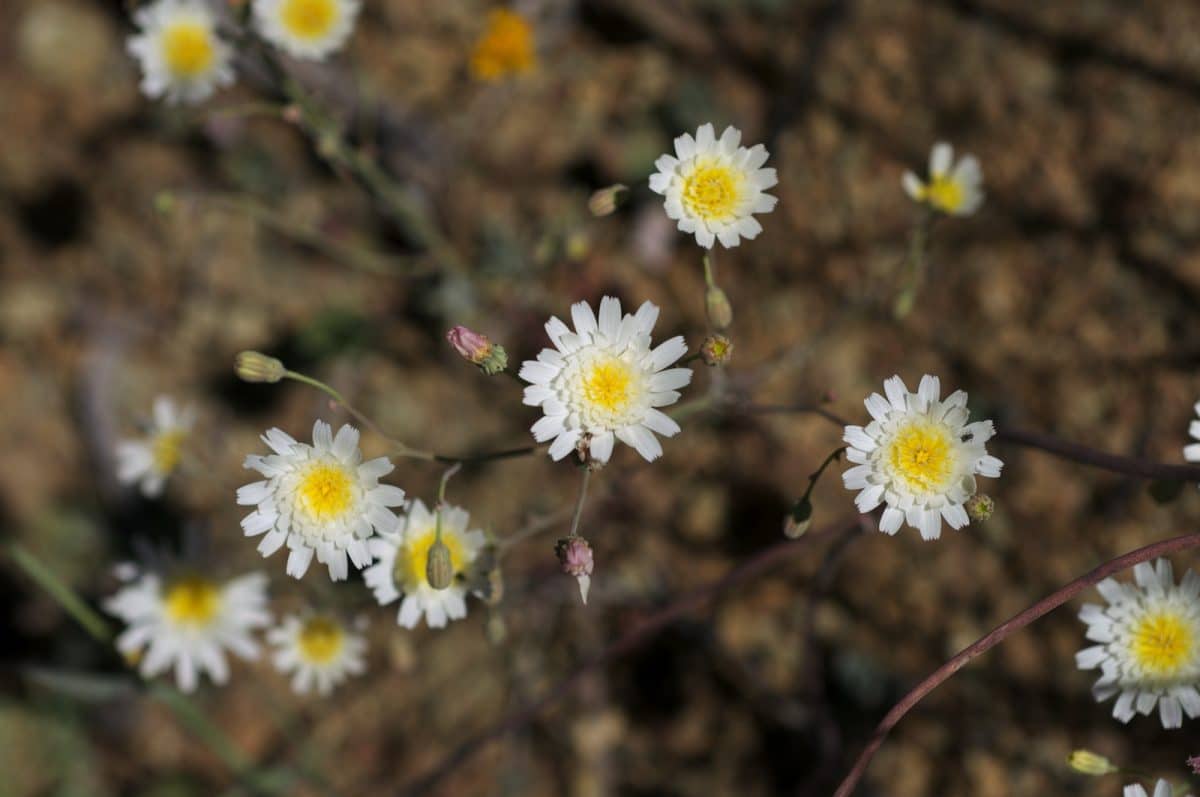
Cima Cinder Cones (Mid to late March) – Purple mat, woolly daisy, Bigelow mimulus, brown-eyed primrose, desert dandelion, fiddleneck, lilac sunbonnet, little gold poppy, desert sunflower, Anderson lycium, ratany, bladderpod, desert mallow, desert trumpet, Mojave aster.
From the NPS: “If rain has fallen on the cinder cones and lava beds, hundreds of tiny Biglow monkeyflowers lend a purple cast to the dark volcanic soil. Locals call these “belly flowers,” as they are best photographed lying down! With a high-clearance vehicle, you can also visit a lava tube cave. Bring a flashlight for this activity.”
Cima Dome and Mid Hills Campground (Mid to late April) – Desert marigold, yellow throats, white tidy tips, groundsel, chia, locoweed, rattlesnake weed, turpentine broom, palmer penstemon, goldenbush, Indian paintbrush, and Mojave sage
High Peaks (Early May) – Hoary aster, groundsel, California chicory, Pringle eriophyllum, golden gilia, Apache plume, serviceberry, heliotrope, long-leaf phlox, piñon aster, yellow cut-leaf, banana yucca, and giant four-o’clock
Hole-in-the-Wall (Late March to early April) – desert tobacco, forget-me-not, Fremont pincushion, white-stemmed stick-leaf, Mojave horsebrush, desert alyssum, windmills, and prince’s plume.
From the NPS: “If you are looking for flowers in late April and May, visit Hole-in-the-Wall. A profusion of desert globemallow and verbena often covers an area that burned in a massive wildfire in 2005. This is the best area for hikers, with trails leading past petroglyphs, through cactus and yucca gardens, and into Banshee Canyon, where you’ll discover the holes of Hole-in-the Wall.”
Kelso Dunes (Late March to early April) – Borrego locoweed, dune primrose, sand verbena, wooly marigold, silk dalea, spectacle pod, dune lily
Von Trigger Hills and Piute Range (Late March to early April) – Canterbury bells, notch-leaved phacelia, stellate gilia, sand blazing star, Mariposa lily, and desert senna
Wildflowers have also been spotted emerging around the Amboy Crater along Route 66. Check here for further information as spring draws near.
Joshua Tree


Although Joshua Tree is a desert, there are plenty of opportunities to witness gorgeous desert flowers bloom in a year with good rainfall. The National Park Service says this about catching wildflowers in bloom: “Wildflowers may begin blooming in the lower elevations of the Pinto Basin and along the park’s south boundary in February, and at higher elevations in March and April. Desert regions above 5,000 feet may have plants blooming as late as June.”
If we continue to receive good rainfall, you may be able to see desert flowers such as brittlebush, dandelions, monkey flowers, and desert Lupine. Visitors have also reported seeing wildflowers growing near Hidden valley, Belle and Ryan campgrounds.
As we get closer to spring, stay up to date on the wildflower status on Joshua Tree’s Wildflower Watch site.
Death Valley National Park


2026 Outlook: Better than average. Death Valley received significant rainfall in September 2025, which is ideal timing for spring wildflowers. While it’s too early to predict a superbloom, the odds of excellent blooming in areas that received that rainfall are improved.
Death Valley’s last spectacular superblooms occurred in 2016, 2005, and 1998. I’ve visited during both peak and disappointing years, and the park operates on its own schedule, sometimes producing stunning displays when the rest of California disappoints.
Best areas to check:
- Badwater Road (lowest elevations, earliest blooms)
- Jubilee Pass area
- Ashford Mill area
Mid-Feb to Mid-April: In the foothills and at lower elevations you may see desert Gold, Phacelia species, Golden Evening Primrose, Gravel Ghost, Bigelow Monkeyflower, and Desert Five-spot.
Early April to Early May: At mid-level elevations (3000 to 5000 ft.) and in canyons, you may find Desert Dandelion, Brittlebush, Desert Paintbrush, Fremont Phacelia, Mojave Aster, Bigelow’s Coreopsis, Indigo Bush, and Desert Globemallow.
Early May to Mid-July: At high elevations (5000 to 11,000 ft.) and on mountain slopes, you may find Desert Mariposa, Purple Sage, Rose Sage, Panamint, Magnificent Lupine, and Inyo Lupine.
Pro tip: Death Valley’s vastness means blooms are localized. A “good bloom” doesn’t mean flowers everywhere. I’ve driven hours to find carpets of gold in one valley and nothing in the next. Call the visitor center or check recent trip reports to narrow down specific areas before making the drive.
You might also want to read: Visiting Lake Manly in Badwater Basin, Death Valley National Park
Figueroa Mountain Recreation Area

Located in the Los Padres National Forest, and 30 minutes north of Los Olivos, the Figueroa Mountain Recreation Area often puts on a fantastic display of wildflowers. In addition to being able to see the colorful array of flowers, you will be able to see panoramic views of the San Rafael Wilderness and the Santa Ynez Valley.
Blooming occurs on the mountain between mid-February and mid-May. In March, you may see purple shooting stars, followed by chocolate lilies, and scarlet Indian paintbrush. In the grassland areas, you can find goldfields, sky lupine, and California poppy. Other wildflowers present include pitcher sage, blue dicks, wild hyacinth, shooting stars, buttercups, milkmaids, Johnny-jump-ups, purple fiesta flowers, and popcorn flowers.
Shell Creek Road Meadows

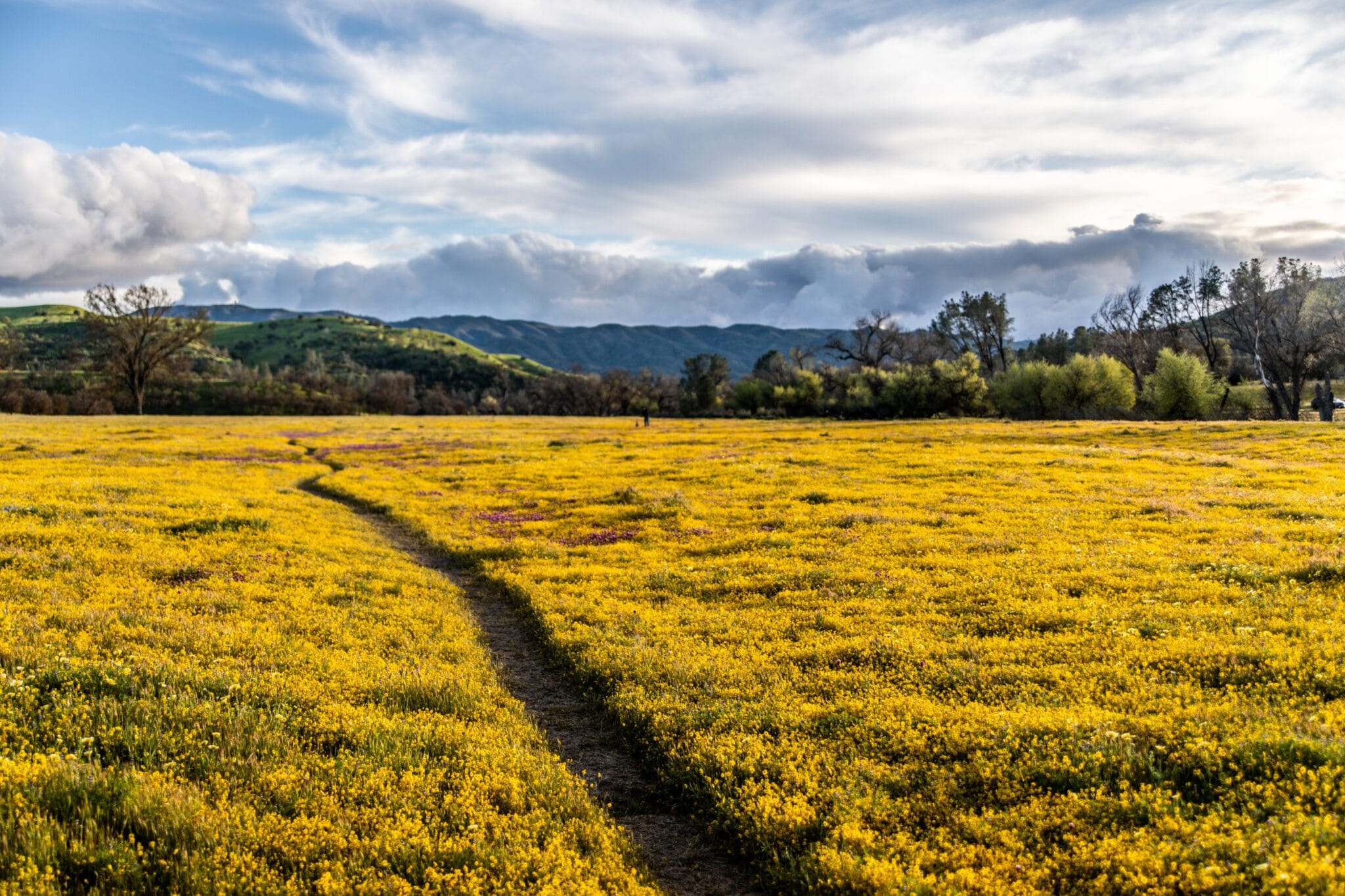

Shell Creek Road becomes an important destination for wildflower enthusiasts and photographers alike. There is a stunning mix of goldfields, coastal tidy tip, baby blue eyes, and California poppies that create a beautiful blanket of blooms in a super bloom year. But even in drier years, a trip to the meadow is well worth your time.
The Shell Creek Road Meadows is located in San Luis Obispo County, 130 km northwest of Santa Barbara.
Trona Pinnacles
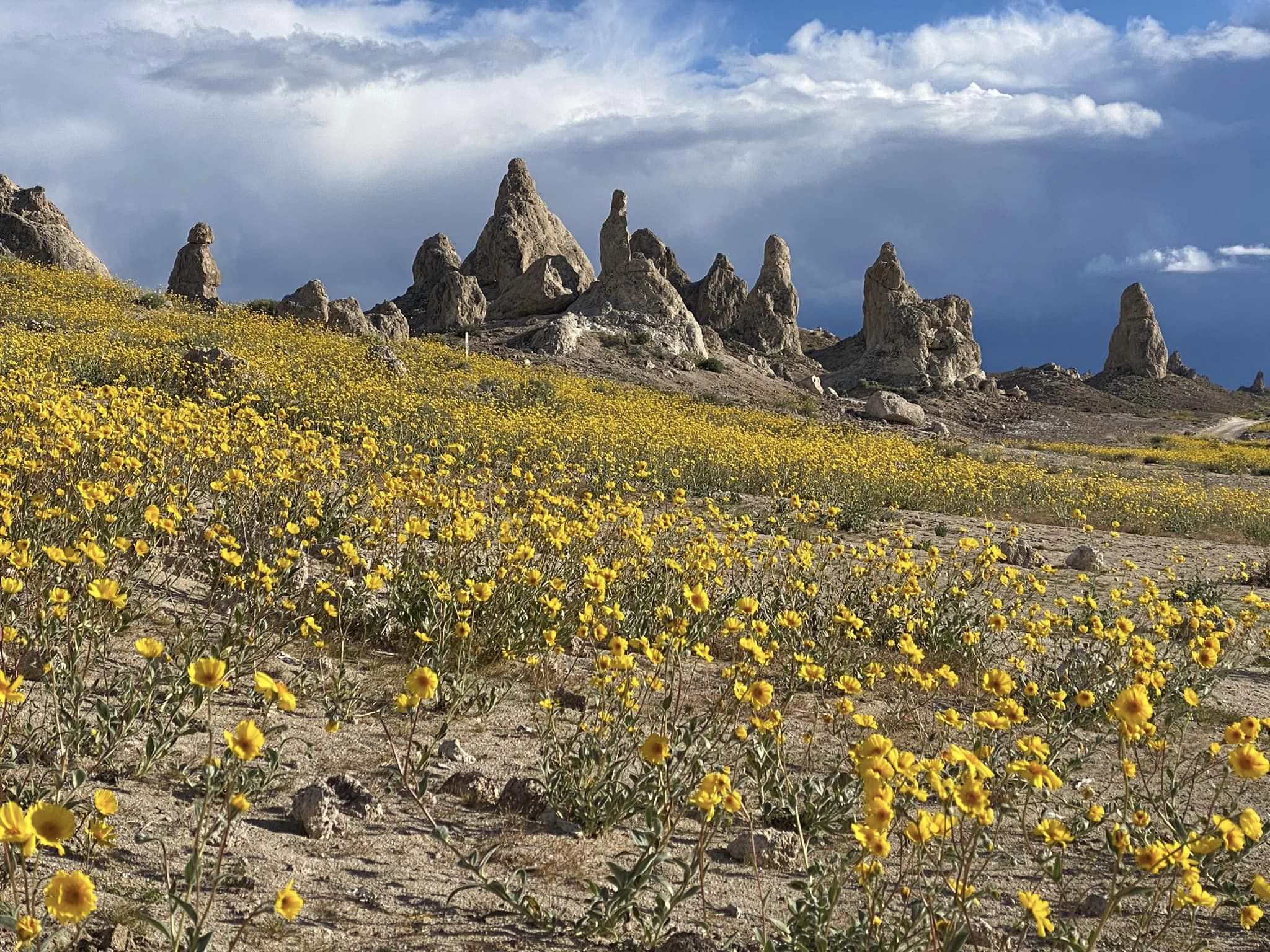
Desert sunflowers and patches of purple sand verbena surround many of the pinnacle rock formations.
Lake Elsinore

Walker Canyon has banned all visitors and parking during wildflower season in 2023 and 2024 due to the extreme crowds and ecological damage seen during the 2019 superbloom. Verify current access status before planning a visit.
I visited Walker Canyon before and during the 2019 chaos, and the transformation was jarring. What had been a relatively peaceful hillside hike became a traffic nightmare with people trampling flowers for Instagram shots, blocking emergency vehicles, and creating gridlock on the 15 freeway. The city’s decision to close access was frustrating but understandable.
The only way to witness the bloom in Walker Canyon this year will be through this live poppy webcam.
- Check the City of Lake Elsinore website for current closure status
- Have a backup destination planned
- If open, arrive before 7 AM or expect significant waits
If Walker Canyon is closed, consider the Antelope Valley California Poppy Reserve instead. I’ve found it better managed for crowds and equally spectacular in a good year.
Carrizo Plain National Monument

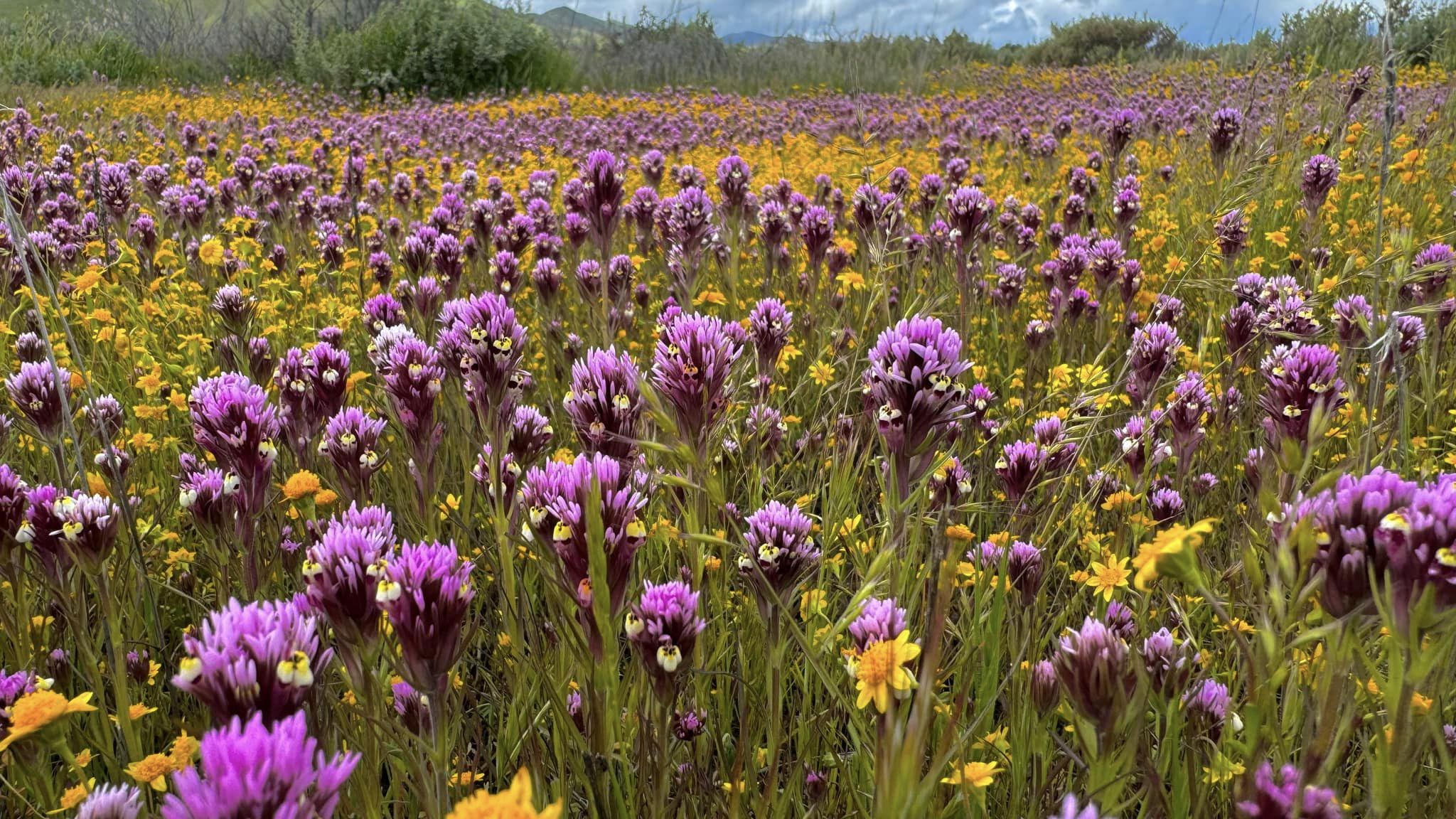
An important site to the Chumash and the Yokut Native American tribes, the Carrizo Plain National Monument is now the single largest native grassland remaining in California. This 250,000-acre sprawling plain is a wildflower hotspot in the spring, drawing in thousands of visitors in a good bloom year.
With enough rain, you will be able to witness vast meadows and hillsides painted in yellow, orange, and purple. The bloom usually begins in mid-March and peaks sometime in late March or early April. By mid-June, most flowers have dried or wilted.
March 17th Update: “Right now, there are few, if any, wildflowers at the monument and the roads are extremely muddy from all the rain. They’ve had numerous vehicles get stuck, so plan your visit later this spring!” – per the BLM website.
Best viewing locations:
- Soda Lake Road just south of the Visitor Center (Hillside Daisies, Valley Phacelia, Owl’s Clover)
- Near Traver Ranch (Phacelia, Hillside Daisies)
- Simmler Road (Coriposis/Tickseed, Tidy Tips, common hillside daises, wild mustard)
- Temblor Mountain Range (Hillside daises, Phacelia, and Desert Candle)
Note for visitors: High clearance vehicles are recommended for access to the Temblors and be aware that some of the mountain range is private property.
One of the dominant geographic features of the Carrizo Plain is Soda Lake, a salty dry lakebed that occasionally holds water after a big rain. There may not be much water to speak of, but if you walk the boardwalk trail that runs by the shore you can immerse yourself in a sea of wildflowers! For a panoramic view of Soda Lake and Carrizo Plain in bloom, just head across the road from the Soda Lake boardwalk and walk a short trail to the top of Overlook Hill.
You will NOT find food, water, or fuel in the Carrizo Plain National Monument, so plan accordingly and stop by neighboring communities before you visit. Some camping is allowed, but spots tend to fill up very quickly, so plan accordingly. Stop by either Santa Margarita or Taft for more information on the Carrizo Plain National Monument.
Full blog post: Carrizo Plain National Monument
Frequently Asked Questions
Will there be a superbloom in California in 2026?
The outlook is mixed. Southern California received its second-wettest January in 21 years, but unseasonably warm temperatures in November through January threaten bloom quality. Death Valley and Northern California have better prospects than SoCal deserts. Fire-affected areas may produce spectacular “fire follower” displays regardless of superbloom conditions. Check the Theodore Payne Wildflower Hotline starting March 1 for real-time updates.
What are fire followers and where can I see them in 2026?
Fire followers are native wildflower species that remain dormant until fire clears competing vegetation. After the 2025 Los Angeles-area wildfires, burned areas may produce spectacular displays of Plummer’s mariposa lily, fire poppies, whispering bells, and dense lupine stands. Watch for blooms in the Santa Monica Mountains and Altadena foothills, but respect all area closures for safety.
When does the Theodore Payne Wildflower Hotline start?
The hotline begins March 1 and runs through May, with weekly updates posted every Friday. Call 818-768-1802 ext 7 for recorded reports on the best viewing locations in Southern and Central California. This has been the most reliable wildflower tracking resource since 1983.
Is Walker Canyon at Lake Elsinore open for wildflower viewing?
Lake Elsinore banned visitors and parking at Walker Canyon during wildflower season in 2023 and 2024 due to extreme crowds and ecological damage from the 2019 superbloom. Check the City of Lake Elsinore website for current 2026 access status before planning a visit. The Antelope Valley California Poppy Reserve is a better-managed alternative.
What’s the best wildflower identification app?
Google Lens works surprisingly well for common California wildflowers and is already on your phone. For unusual species, iNaturalist offers community verification. PlantNet is good specifically for California natives. I use Google Lens first, then iNaturalist if I can’t identify something.
Why do superblooms fail even after heavy rain?
Rain alone isn’t enough. Superblooms require well-spaced rainfall (not all at once), at least six weeks of cool temperatures after germination, and minimal drying winds. Heat at the wrong time forces plants into abbreviated blooms or kills emerging buds. In 2026, Southern California had the rain but experienced record warmth in November through January, threatening bloom quality despite excellent precipitation.
What’s the best time to photograph wildflowers?
Early morning (golden hour after sunrise) and late afternoon provide the best light. Midday sun washes out colors and creates harsh shadows. Overcast days actually work well for wildflower photography, reducing contrast and saturating colors. Wind is your enemy for close-up shots; calm mornings are ideal.
Should I visit Anza-Borrego or Death Valley in 2026?
Both have decent 2026 prospects, and I’ve had memorable visits to each over the years. Anza-Borrego is showing early displays as of January 2026 and is closer to San Diego and LA. Death Valley received good September 2025 rainfall and historically produces blooms when other areas disappoint. If you can only pick one this year, Death Valley may be the safer bet given SoCal’s temperature concerns.
Where are the best locations to see wildflowers?
The best location to spot a super bloom or admire wildflowers depends on rain, time of year, and what type of flower you want to see. Browse through the many locations listed in this guide and you can quickly narrow down some favorites for yourself.
Map the Super Bloom
For quick access to browse through the many destinations to find super blooms across California, I have saved a list of places on Google Maps.
Click “Follow” on this list and it will save to your account and automatically update as new places are explored and added.
Article Updates:
January 20, 2026: Major update for 2026 season. Added Key Takeaways section. Revised outlook based on temperature concerns affecting SoCal despite record rainfall. Added Fire Followers section for post-wildfire bloom potential. Updated Theodore Payne Hotline details. Added Lake Elsinore Walker Canyon access warning. Updated Death Valley outlook based on September 2025 rainfall. Expanded FAQ section with 2026-specific questions.



We just saw Table Mountain for the first time! Incredible! Thank you!
Now we would like to see Donner Creek Trail in Mt. Diablo park, but can’t find a trail map. Do you know where we can find one? I don’t see it listed on the Park site.
Isn’t Table Mountain spectacular! Try this one for Donner Creek: https://www.alltrails.com/trail/us/california/donner-canyon-middle-earth-and-falls-loop
Are we having a super bloom, or a good show of flowers on Figuroa Mountain at the moment, 3/24?
Could you please email me when best blooming happens at El Carizzo NM.
Can we expect a super bloom this spring at Carizzo and when?
Thank you
Are there wildflowers near Temecula
Lake Elsinore has blocked the entrance to Walker Canyon so you cannot fully enjoy the blooms without a considerable walk just to get there.
Sporadic show at Carizzo Plains.
Woodlake, Lake Kaweah, Three Rivets has more show but rapidly fading in the heat.
Thanks for the update, Marie!
No super bloom in Lake Elsinore for 2022
Aware there any areas blooming in this coming week?
Hey BJ, wildflowers are currently blooming in Borrego Palm Canyon and at the Antelope Valley Poppy Reserve. Happy wildflower hunting!
Aware there any areas blooming in this coming week? March 18-25?