
“Fits a range of heights” is the kind of line that shows up on every spec sheet and tells a buyer almost nothing. What actually matters is a number most listings bury: seat height, and how many inches of it separate one model from another. A 6-plus-inch spread within a single brand’s own lineup is common, and that spread is what decides whether a rider feels planted or precarious the moment the bike stops moving.

Measure Your Real Inseam Before You Look at a Single Spec Sheet
Height is a poor stand-in for inseam. Two riders who are both 5’8″ can have leg lengths a couple of inches apart, which means a “recommended rider height” range is a starting filter, not the number that actually predicts how a stop is going to feel.
The measurement worth taking is simple enough to do at home: stand against a wall in the boots that will actually get worn riding, and pull a firm, flat object — a book works fine — up snug into the crotch the way a seat sits underneath a rider. Mark the wall at the top edge, then measure from the floor to that mark. That’s a real working inseam number, not a guess pulled from a height chart.
What the Numbers Actually Mean at a Stop
Compared against a seat height spec, that inseam gives a genuine estimate instead of a vague sense of whether a bike “should” fit. As a rough guide: an inseam close to or above the seat height points toward close-to-flat footing. A seat height an inch or two taller than the inseam usually still means solid, confident contact on the balls of the feet. Beyond a few inches of gap, footing starts to feel genuinely uncertain, especially on uneven ground.
Seat width and shape shift this too — a wider seat pushes the legs further apart and effectively shortens how far down either foot reaches, which is why the same inseam can feel different across two bikes with identical seat height numbers on paper. Treat the measurement as a planning estimate, and confirm it by actually sitting on the bike before buying.
Foot-Ground Contact: What “Fits” Really Looks Like
Flat-footed at a stop is the wrong bar to set for a dirt bike in the first place. Ground clearance and suspension travel both push seat height up by design, which means most riders — even taller ones — end up on the balls of their feet rather than fully flat when they stop, and that’s normal, not a sign of a bad fit.
What actually separates confident from precarious is whether that contact feels balanced and solid enough to hold the bike upright without straining, not whether both feet reach flat. A rider barely scraping the ground on tip-toes, weight tipping to one side, is a different situation entirely from a rider planted firmly on the balls of both feet.
Bike Weight and the U-Turn Test
Seat height alone doesn’t tell the whole story — bike weight compounds it, especially in the moments that matter most. A narrow trail that dead-ends, a technical section that turns out to be a bad idea halfway through, a stop on off-camber ground with one foot on higher terrain than the other: these are the situations where a rider is holding the bike upright entirely through footing and upper-body strength, with no momentum or gyroscopic stability doing any of the work.
A simple way to check this before committing to a bike: find a narrow, slightly uneven spot and attempt a slow, controlled U-turn at walking pace. A bike that feels planted through that turn — solid footing the whole way around, no fight to keep it from tipping — is a much better sign than a seat height number or a curb-weight spec taken in isolation. A tall seat height and a heavy bike compound each other in exactly this scenario; either one alone is usually manageable, but together they turn a routine trail U-turn into something that takes real effort every single time.
Real Numbers From One Current Lineup
Spec sheets rarely make this concrete, but the gap between models can be substantial. Across HappyRun’s three-model dirt bike lineup, seat height spans 26.5 inches on the F18 2.0 up to 33.1 inches on the G18 Pro, with the G300 Pro sitting in between at 31 inches — a 6.6-inch spread inside one brand’s own lineup. For a rider with a 28-inch inseam, that’s the difference between confident, balanced footing on the lowest model and a noticeably taller reach on the tallest one.
The F18 2.0’s lower seat height lines up with its more compact mid-drive layout, and it’s positioned as the more manageable option for newer or shorter riders specifically because of that lower stance — not just because of the bike’s overall size, but because of how directly it changes confidence at a stop. That’s a good illustration of why seat height deserves its own line in a buying decision instead of getting folded into a general sense of whether a bike “fits.”
Comparing Models the Right Way
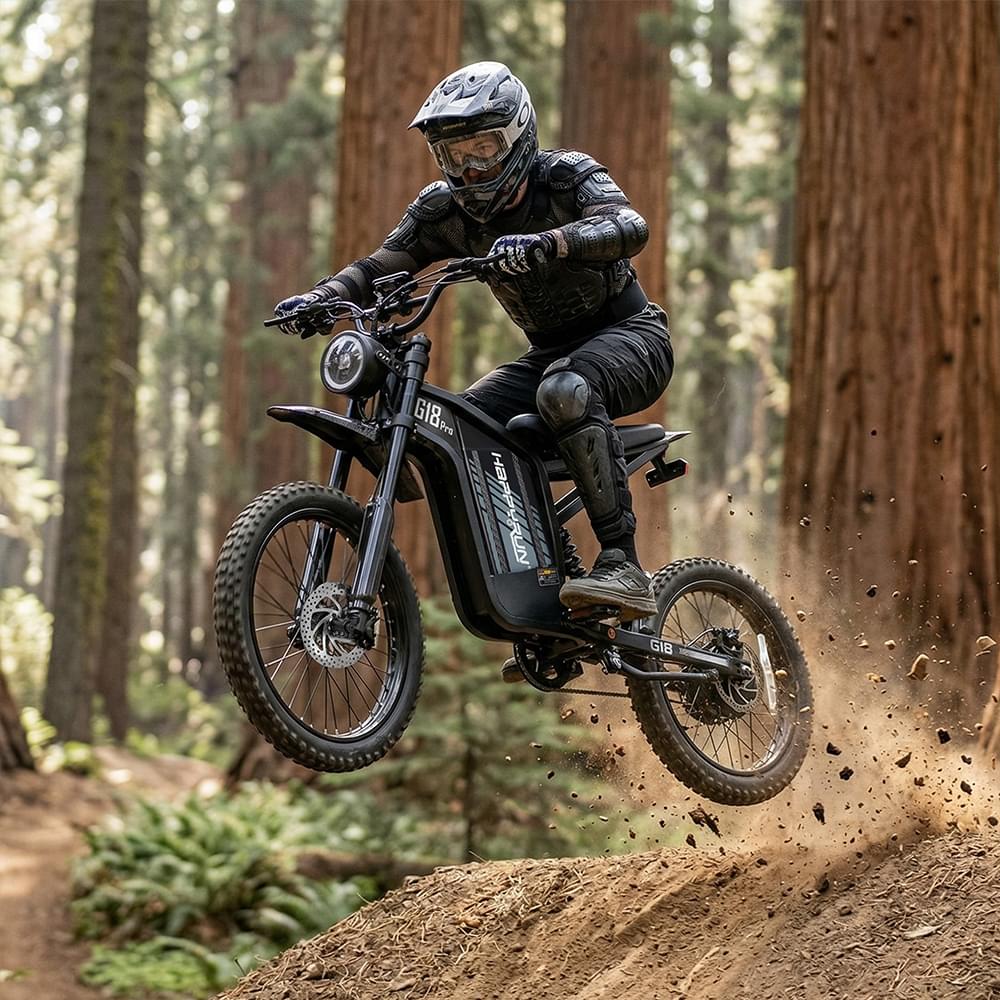
Torque, top speed, and range are still worth comparing — they’re just not the first filter. Starting with a measured inseam, checking it against the actual seat height number for each model, and only then moving on to power figures tends to surface a genuinely better match than starting with the biggest motor and hoping the fit works out afterward.
Browsing HappyRun’s electric dirt bike collection with seat height as an early filter, not a last-minute check, makes it much easier to land on a model that feels controlled at a stop rather than one that just wins on paper.
Sit On It Before You Spec It
A big torque number or a high top speed doesn’t mean much if a rider doesn’t feel steady the moment the bike stops moving. Seat height, standover feel, and how a bike’s weight handles at a near standstill deserve genuine attention — measured, not guessed at from a height chart — before horsepower enters the comparison at all.
Sitting on an actual bike, running the slow U-turn test, and comparing real seat height numbers across off-road electric dirt bikes is worth doing before the spec sheet comparison even starts.


