A balcony, patio or deck can add valuable living space to a home, yet these areas are often treated as an afterthought. A couple of chairs appear when the sun comes out, a few pots gather in the corner, and the space remains largely unused for the rest of the year.
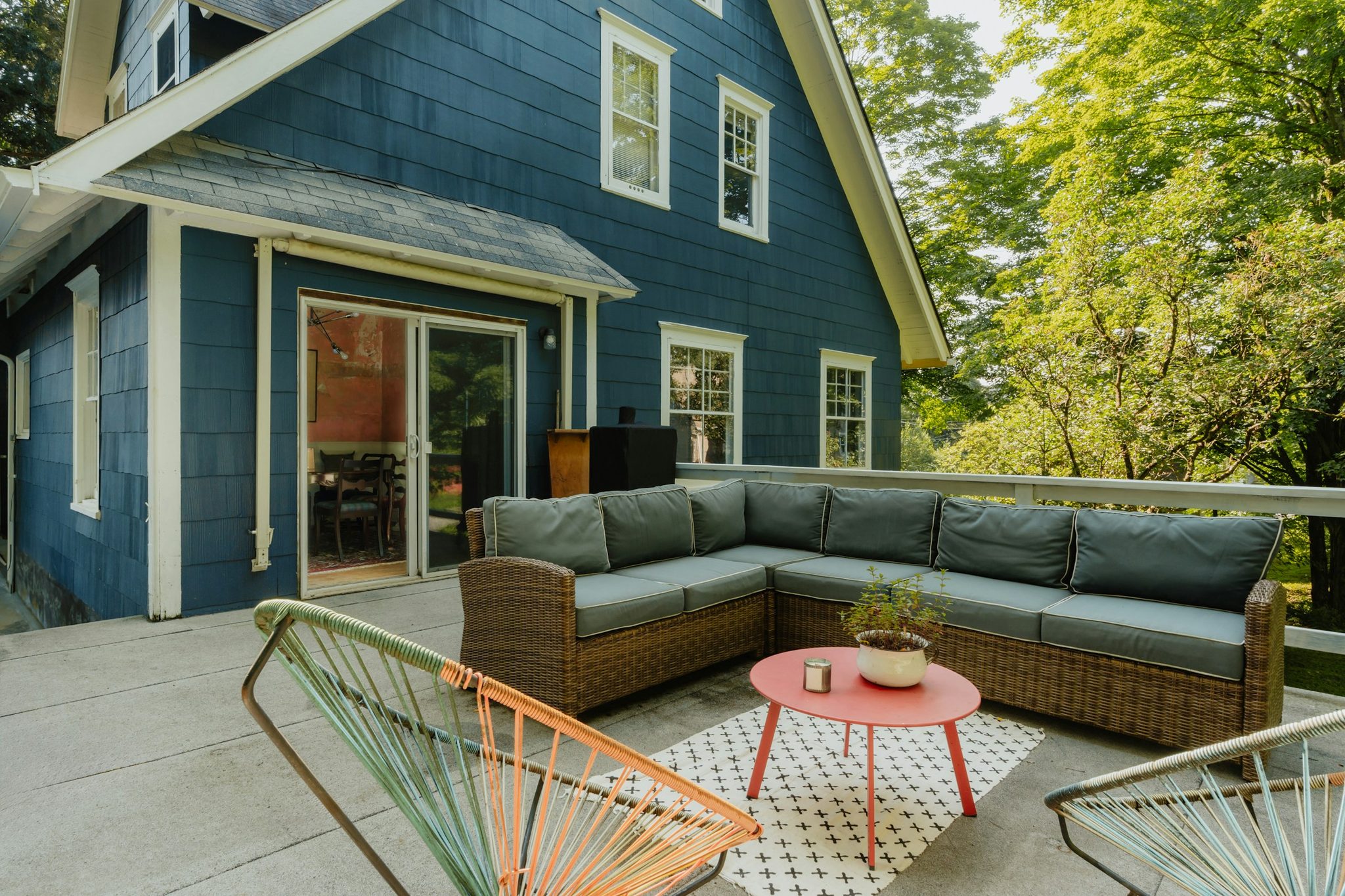
The better approach is to think of an outdoor area as a room with different requirements. It needs a clear purpose, comfortable proportions, practical surfaces and some protection from the elements. Whether you have a narrow apartment balcony or a large garden deck, thoughtful choices can turn it into somewhere you genuinely want to spend time.
Begin with How You Want to Use the Space
Before buying furniture or choosing plants, decide what the area is for. Trying to accommodate dining, cooking, entertaining, gardening and relaxation in a limited footprint usually creates clutter rather than versatility.
Think about your normal routine. Would you use the space for coffee in the morning, family meals, evening drinks or quiet reading? A compact balcony might work best with two comfortable chairs and a small table. A larger patio could support separate dining and lounging zones.
Pay Attention to Movement
Measure the usable area rather than relying on visual estimates. Doors must open freely, chairs need room to pull back, and people should be able to move around without squeezing between furniture.
As a general guide, allow around 75 centimetres for a comfortable walkway. Behind dining chairs, more space may be needed. On balconies, take particular care not to obstruct drainage outlets, access points or escape routes.
Furniture scale matters too. Deep sofas may look inviting in a showroom but overwhelm a modest deck. Slim-framed seating, benches and folding tables can provide the same function while preserving a sense of openness.
Create Definition Without Closing the Area In
Outdoor spaces feel more intentional when they have visible boundaries. On a patio, that might mean positioning furniture around an outdoor rug or changing the direction of paving. Planters can frame a seating area, while a pergola creates the impression of a ceiling without fully blocking light.
Balconies and raised decks require a more technical balance. Their edges must provide safety, but heavy or visually dense barriers can make a small area feel enclosed. Clear balustrades are often effective where preserving a garden, countryside or city view is important. They can also allow more daylight to reach adjoining rooms.
Any barrier at height must be selected and installed with structural loads, fixing points and current building requirements in mind. This is not an area for guesswork. Homeowners planning a new balustrade can consult modern outdoor glass installation specialists to understand suitable systems, glass specifications and fixing options before work begins.
Privacy deserves equal consideration. Rather than screening every side, identify the main sightlines from neighbouring windows or gardens. A single slatted panel, tall planter or carefully positioned small tree may provide enough separation without making the space feel boxed in.
Choose Materials for Real Life
Appearance matters, but outdoor materials are exposed to sunlight, rain, temperature changes and everyday wear. The best choice is not necessarily the one that looks most impressive when new; it is the one that ages well under the conditions you actually have.
Match the Surface to the Setting
Porcelain paving is durable, stain-resistant and available in a wide range of finishes, although correct installation is essential. Natural stone offers variation and character but may require sealing. Timber decking feels warm underfoot, while composite boards generally need less routine maintenance.
Whatever the material, prioritise slip resistance and drainage. Smooth surfaces can become hazardous when wet, especially near steps. Decking boards should have suitable gaps, patios should fall gently away from the house, and drainage channels must remain accessible.
Before choosing a finish, ask:
- Does it become slippery in rain or frost?
- Will direct sunlight make it uncomfortably hot?
- What cleaning or treatment does it require?
- Can individual boards, slabs or tiles be replaced?
- Will its colour and texture complement the building?
These practical questions often reveal more than samples viewed indoors.
Use Planting to Soften Hard Edges

Plants bring movement, shade and seasonal change to an outdoor space. The common mistake is choosing them only for appearance. Wind exposure, sunlight and container size are equally important.
Sunny patios can support aromatic herbs, ornamental grasses and drought-tolerant Mediterranean planting. Shaded balconies may suit ferns, heucheras and compact evergreen shrubs. In exposed locations, avoid top-heavy pots and delicate plants that scorch or tear easily.
Use fewer, larger containers rather than many small ones. Bigger pots create a calmer arrangement, retain moisture for longer and give roots room to develop. Repeating one plant or container material also helps connect different parts of the space.
Plan for Evenings and Changing Weather
A useful outdoor area should not depend on perfect summer weather. Shade sails, parasols and retractable awnings can control midday sun, while a sheltered corner extends the time you can spend outside. In exposed gardens, planting or slatted screens can reduce wind without causing the turbulence associated with solid barriers.
Lighting should create atmosphere while supporting safe movement. Combine low-level illumination near steps with softer light around seating or planting. Bright floodlights tend to flatten the space and disturb neighbours. Warm, restrained lighting is usually more welcoming.
Finally, consider storage. Weatherproof benches, compact cabinets or space beneath built-in seating can hold cushions, gardening tools and tableware. When essentials are close at hand, the outdoor space becomes easier to use spontaneously.
Let the Space Evolve
You do not need to complete everything at once. Start with layout, safety and the main surface, then observe how sunlight, wind and movement affect the area. Add planting, lighting and accessories once you understand what is genuinely needed.
The most successful balconies, patios and decks are not simply decorated. They are planned around daily life, maintained realistically and allowed to change over time. Get those fundamentals right, and even a modest outdoor area can become one of the most useful parts of the home.