My first scoop of lavender ice cream came from a tiny shop in Sacramento, summer 2010, where the owner rotated flavors weekly and that day’s experiment was lavender honey. I’d only ever associated lavender with sachets, essential oils, and bathroom décor. The scoop tasted earthy and floral and faintly sweet, like something I’d never tasted before but somehow recognized. It reframed an herb I’d dismissed as decoration.
Fifteen years and a lot of trial and error later, I cook with lavender often, sometimes badly. The first time I made lavender shortbread I went heavy on the buds and produced something that tasted like sugary soap. Less is more is the rule everyone repeats and everyone has to learn the hard way. This guide is what I’ve figured out about cooking with lavender, plus ten recipes that use it well.
Cook with English lavender (Lavandula angustifolia). Varieties like ‘Munstead’ and ‘Hidcote’ carry low camphor content and a sweeter flavor, while ornamental Spanish and French lavenders run bitter and medicinal.
Restraint matters more than the variety. A teaspoon of dried buds in a four-serving dish is usually plenty. Double that and the dish reads as soap.
Buy organic or culinary-grade only. Garden-center lavender is often sprayed with insecticides not approved for food, and the variety is rarely labeled.
Pair with sweet-tart fruit, citrus, honey, or sharp cheese. Strawberry, blueberry, peach, lemon, and goat cheese are reliable starting points; chocolate and lamb work once you have the dose dialed in.
Toast briefly in a dry pan before folding into savory dishes. Heat tames the perfume notes and brings the herbal side forward.
Substitute dried for fresh by reducing volume to one-third. Dried buds concentrate the camphor and the floral oils both, so a one-to-one swap turns dishes harsh.
There are 47 species in the genus Lavandula, all in the mint family Lamiaceae. Lavender is an Old World herb, native across Europe, North and East Africa, the Mediterranean, and into Southeast Asia. The color we call lavender refers to one specific species, Lavandula angustifolia, pictured above. It’s also the species you want for the kitchen.
Growing and Harvesting Lavender
Lavender thrives in dry, arid climates with sandy or gravelly soil. USDA zones 5 through 9 will find lavender easy to grow and quite prolific. The Sacramento Valley sits squarely in zone 9 and the herb takes to it like it was bred for the Mediterranean climate, which it more or less was. If you live somewhere humid, lavender prefers a pot over open ground. Soil should sit on the alkaline side, pH 6.7 to 7.3. Prune in early spring to push branching and new growth. Berms, mounds, and raised beds give the plant the drainage it likes; in a flat clay yard it sulks.
You can harvest lavender any time of year by cutting about a third of the stem. The flowers hold their perfume for several months even after drying. Hang the stems upside down in a dark, well-ventilated spot to preserve the purple coloring. My garage works as a drying space, with a paper bag underneath to catch falling buds.
If you’re harvesting for the kitchen, look for stalks where the flowers are still closed. A stalk full of buds about to open delivers the best flavor. Once the flowers fully open, they turn bitter and too floral for cooking, though they remain fine for tea or sachets.
Lavender in the Culinary World
From floral to sweet, earthy to savory, lavender slots into a wider range of dishes than people give it credit for. The trick is treating it as a supporting note, not the lead.
Savory cooking is where lavender surprises most people. A pinch in compound butter for grilled Ora King Salmon registers as a faint perfume rather than soap, and the floral note plays well against the buttery richness of fatty fish. Rub crushed lavender, thyme, and garlic into a leg of lamb before roasting and the herb disappears into the background while making everything around it taste more interesting. Lavender salt on duck breast or a roast chicken is the entry-level move.
Tips for Cooking With Lavender
A small amount of lavender goes a long way. Too much and your dish ends up tasting like the soap you bought at the farmer’s market. This is different from cilantro, which can taste like soap to certain people regardless of dose. With lavender, the soap problem is something you can dial out.
Lavender is best as a complementary flavor to whatever else is leading the dish. If a recipe calls for fresh lavender and you only have dried, reduce the amount by two-thirds, otherwise the dried buds introduce bitterness. If you’re buying lavender rather than growing your own, pick organic or specifically labeled culinary grade. Standard nursery lavender often sees pesticide treatment that isn’t food-safe, and the variety is rarely identified, so you don’t know whether you have low-camphor angustifolia or one of the spicier intermedia hybrids.
Common pairings to play with: strawberries, blueberries, peaches, pears, lemon, orange, honey, sage, rosemary, oregano, thyme, black pepper, goat cheese, dark chocolate, lamb, duck, salmon.
For sweet dishes, infuse lavender into a simple syrup or steep into warm cream. The fat and sugar carry the flavor evenly without letting any one bite turn perfumey. For savory dishes, toast the buds in a dry skillet over medium heat for thirty seconds. The brief heat strips off the more aggressive perfume notes and pulls the herbal side of the flavor forward.
What I Wish I’d Known About Cooking Lavender
Three lessons I learned by doing them wrong first.
Variety is half the battle. The first batch of lavender shortbread I made used buds I bought at a generic grocery store spice rack. They were unlabeled, probably an intermedia hybrid, and the cookies came out aggressively medicinal. I rebuilt the recipe with ‘Munstead’ from a local farm and the second batch was the version everyone asked for again.
Measure the buds, not the stems. A teaspoon of fresh lavender flowers is a different beast than a teaspoon of stems-and-buds chopped together. The stems carry less oil and add bitterness without flavor. Strip the buds first, then measure.
Bloom the buds in fat or syrup before adding them. Sprinkling dried lavender directly into a finished dish gives you uneven hot spots where one bite is fine and the next is perfume. Steeping the buds in warm cream, butter, honey, or sugar syrup first distributes the flavor evenly and you can strain them out before serving.
Lavender Recipe Roundup
Recipes color-coded by category. Sweet in light green, savory in dark green, drinks in amber. Each card carries an estimated time at the top so you can plan around hands-on, steep, chill, or proof windows.
✦ Drink Base
⏱ 35 min (5 active + 30 steep)
Lavender Simple Syrup
The base recipe for everything that follows in the drinks section. Make a batch on a Sunday and it will carry you through a month of cocktails, lemonades, and drizzles over fruit.
Ingredients
1 cup water
1 cup white sugar
1 tablespoon fresh lavender flowers
1 teaspoon citric acid
Instructions
Combine ingredients and bring to a boil.
Simmer for 1 minute and remove from heat.
Steep for 30 minutes, then strain.
Store in a sealed container in the fridge for up to a month.
This is the recipe that converted me. Adapted from David Lebovitz’s The Perfect Scoop. Honey rounds out the lavender’s edges and the result lands striking and mild at the same time.
Ingredients
½ cup honey
¼ cup fresh lavender flowers
1 ½ cups whole milk
¼ cup sugar
Pinch salt
1 ½ cups heavy cream
5 large egg yolks
Instructions
In a small saucepan, warm the honey with 4 grams (2 tablespoons) of the lavender. Once warm, let it steep for 30 minutes.
In a medium saucepan, warm the milk and stir until the sugar is just dissolved.
While the milk warms, place the cream in a large bowl topped with a fine strainer. Pour the honey through the strainer and gently press on the lavender to release flavor.
Whisk together the egg yolks, warmed milk, sugar, and a pinch of salt. Pour back into the saucepan over medium heat.
Stir constantly, scraping the bottom, until the mixture is thick enough to coat a spoon.
Pour the custard through the strainer into the honey-cream mixture and whisk to combine. Add the remaining lavender and cover with plastic wrap.
Chill for at least 2 hours, preferably overnight.
Strain the lavender from the custard.
Freeze in your ice cream maker according to the manufacturer’s instructions.
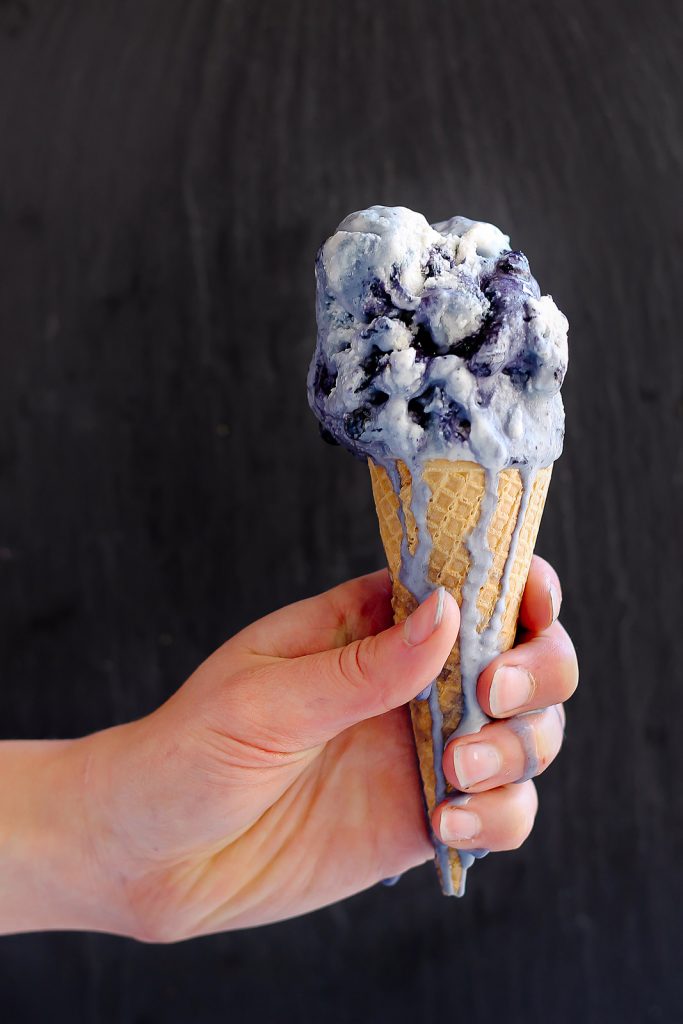
A dairy-free version that doesn’t feel like a compromise. The wild blueberry swirl carries enough fruit acid to balance the floral notes, and full-fat coconut milk does the work cream usually does.
⅓ cup coconut palm syrup (honey works if not vegan)
1 teaspoon vanilla extract
2 teaspoons dried culinary lavender
1 ½ cups wild blueberries or wild berry mix
2 tablespoons coconut sugar
Instructions
Place a medium saucepan over medium heat and add the coconut milk, almond coconut milk, and coconut palm syrup or honey.
Whisk until smooth and bring to a slight simmer (several minutes). Do not bring to a full boil.
Once at a simmer, whisk again, then transfer to a blender. Add the lavender and vanilla. Blend for 30 seconds.
Cool for a few minutes, then transfer to a large bowl, cover, and refrigerate for 4 hours until very cold.
While the base chills, make the blueberry syrup. Add blueberries and coconut sugar to a saucepan over medium heat. Mash with a fork and stir until thickened, about 15 to 20 minutes.
Once syrup is thick, transfer to a bowl, cover, and refrigerate.
Pour the cold coconut milk base into your ice cream maker and churn until it resembles soft serve.
Layer half the ice cream into a freezer-safe container, swirl in half the blueberry syrup, then repeat. Swirl with a knife to create marbled layers.
Cover and freeze 4 to 6 hours until set. Let sit at room temperature for a few minutes before scooping. Makes 8 servings.
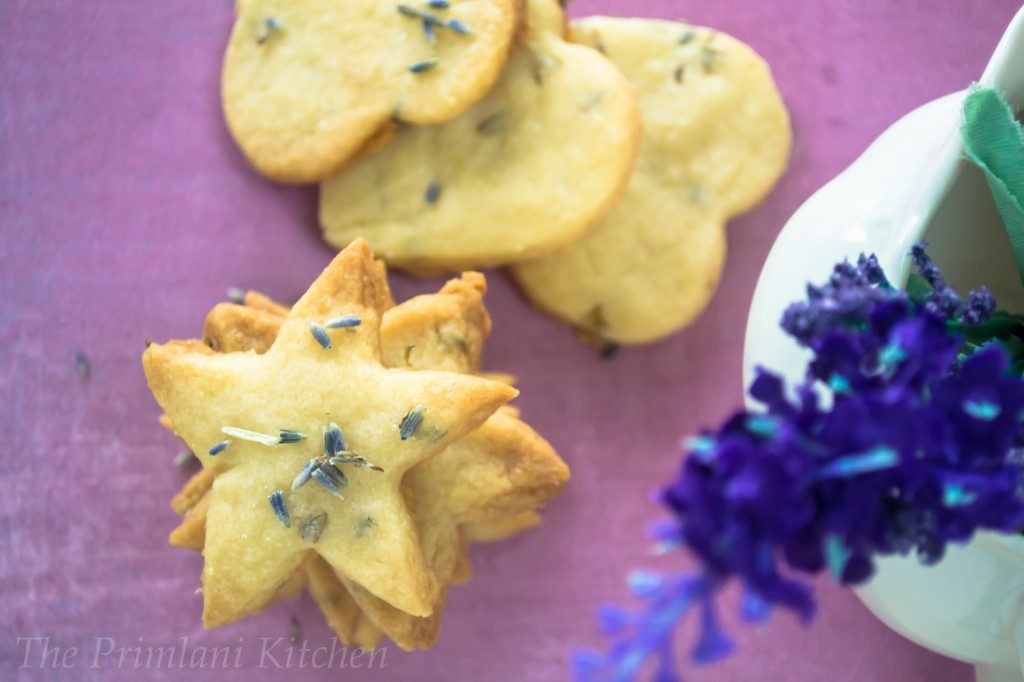
The shortbread that turned my second attempt into the version friends keep requesting. Salt and lavender pull in opposite directions and meet somewhere unexpected.
Ingredients
1 cup all-purpose flour
½ teaspoon fine sea salt
⅓ cup sugar
2 teaspoons chopped dried culinary lavender
½ cup unsalted butter, softened
1 teaspoon pure vanilla extract
Fleur de sel for finishing
Instructions
Sift the flour and fine sea salt together in a small bowl.
Combine the sugar and lavender in the bowl of a stand mixer fitted with a paddle attachment. Mix for 15 to 20 seconds. Add the butter and mix until combined. Mix in the vanilla. Add the flour mixture and mix on low speed until it forms a soft dough.
Shape the dough into a disk, wrap tightly in plastic, and refrigerate for 20 to 30 minutes.
Line a baking sheet with parchment paper. Roll the dough to ¼ inch thick and cut into 1 ½ to 2 ½ inch shapes. Place on the baking sheet, sprinkle with fleur de sel, and freeze for 15 minutes until the dough is stiff.
Meanwhile, preheat the oven to 350°F (175°C).
Bake for 12 to 15 minutes, until the edges turn golden. Cool 5 minutes on the sheet, then transfer to a wire rack. Keeps for up to 5 days in an airtight container.
Twisted lavender buns with cream cheese and fig filling.
A baker’s-percentage recipe. Scale to the flour weight you have on hand. The lavender goes in with the milk so it disperses through the entire dough rather than clumping in spots.
Ingredients
Dough
100% bread flour
62.5% milk
2% salt
2.8% yeast
16% sugar
18% butter
0.5% dried lavender, blitzed with the milk
Filling
18% cream cheese (more is fine; it shrinks during baking)
12.5% sugar (or to taste)
4 to 5 dried figs, finely chopped
Topping (optional)
Egg for wash
Simple syrup for wash
Chopped, toasted walnuts
Instructions
Make the dough, knead until smooth, and let it rise until doubled.
Cream the cream cheese and sugar together.
Roll the dough on a floured surface into a rectangle, about a nickel’s thickness. Spread the cream cheese over the surface and sprinkle figs on top.
Fold in thirds along the long edge, with the two sides going over the middle.
Roll out again to just under finger thickness, working wider rather than longer.
Cut into strips about an inch wide along the short edge (around 50g each is a good snack size).
Gently stretch each strip and twist it into a bun shape.
Proof on a baking sheet until about doubled.
Egg wash and bake at 415°F for 15 minutes, or until the tops are golden brown. Watch the bottoms.
Brush with simple syrup right out of the oven and top with walnuts.
Late-summer salad when peaches are at their peak. The grilled fruit goes from sweet to caramelized, and the lavender in the dressing keeps the whole thing from reading as just another stone-fruit-and-cheese plate.
Worth the canning setup if you live near a stone-fruit grower. A jar of this in the fridge upgrades morning toast, plain yogurt, and cheese boards through the fall.
Ingredients
2 tablespoons dried lavender flowers
½ cup boiling water
4 cups finely chopped peaches (5 to 6 medium peaches, peeled)
2 tablespoons lemon juice
6 cups granulated sugar
1 pouch liquid fruit pectin
Instructions
Place the lavender flowers in a small bowl. Pour boiling water over them and steep for 20 minutes. Strain and discard the flowers.
Prepare a canner and wash and sterilize 6 half-pint mason jars. Keep jars in hot (not boiling) water until ready to use. Warm lids in hot water to soften the seal.
Combine the lavender liquid, peaches, lemon juice, and sugar in a very large stainless steel or enamel saucepan. Bring to a full boil over high heat and boil hard for 2 minutes, stirring constantly. Remove from heat and stir in pectin.
Ladle hot jam into jars, leaving ¼ inch of headspace. Wipe rims and threads. Screw on lids and rings. Process in a boiling water bath for 10 minutes. Cool completely, 12 to 24 hours. Check seals. Refrigerate any unsealed jars and use within 3 weeks.
The savory recipe that converts skeptics. Spatchcocking gets the bird flat enough to roast quickly with crisp skin everywhere, and the lavender butter melts into the breast and the pan juices both.
Ingredients
1 whole small chicken (3 to 3 ½ pounds)
Kosher salt and freshly ground black pepper
1 tablespoon juice and 1 teaspoon zest from ½ lemon, the other half cut into wedges
1 ½ tablespoons dried lavender
1 tablespoon fresh thyme leaves, chopped
1 tablespoon extra-virgin olive oil
1 tablespoon honey
1 tablespoon butter, softened
1 loaf hearty sourdough bread
Instructions
Preheat the oven to 400°F with the rack in the center. Cut the backbone out of the chicken with kitchen shears. Lay the chicken breast-side up in an enameled baking dish. Press down on the breastbone to break it so the chicken lies flat. Season generously, front and back, with salt and pepper.
In a bowl, mix the lemon juice, lemon zest, lavender, thyme, olive oil, and honey. Stir to combine. Add the butter and use a fork to mash the mixture until homogeneous.
Slather the lemon, lavender, and honey butter all over the top and underside of the chicken. Roast for 20 minutes. Nestle lemon wedges under the chicken and return to the oven. Continue roasting until golden with charred bits and an instant-read thermometer registers 150°F in the breast and at least 165°F in the thigh, 15 to 25 minutes longer.
Remove from the oven and let rest for 10 minutes. Cut in half and serve with the pan juices, roasted lemon wedges, and bread for soaking up juices.
A vegetarian centerpiece that fills the spot a roast usually fills. Roasted honey squash, toasted buckwheat, a few whispers of lavender, and a dollop of yogurt and honey to finish.
Ingredients
2 tablespoons coconut oil
1 cup kasha (dry-roasted buckwheat groats)
1 squash (honey squash works well)
1 teaspoon fresh lavender
¼ cup Greek yogurt
A few teaspoons of honey
Instructions
Heat the coconut oil in a flat sauté pan to melt. Add the kasha, using a ratio of 1.5 to 2 tablespoons of oil to 1 cup of kasha. Bring to high heat and cook until bubbles form and the kasha browns. Season with salt.
Cut the squash lengthwise and season with oil, salt, and pepper. Place cut-side down in a 425°F oven. The squash roasts and steams within itself.
To serve, plate the squash with kasha, sprinkle with lavender, top with yogurt and a drizzle of honey. Garnish with pomegranate seeds, coconut flakes, or cocoa nibs if you like.
A lighter, brighter take when you want a long drink rather than a stirred-down classic. Yields one large glass.
Ingredients
Drink
1 pear, juiced
2 oz vodka
2 oz lemon juice
2 oz water
¾ oz lavender simple syrup
Pinch of salt
Lavender Simple Syrup
1 cup sugar
1 cup water
10 to 12 stalks fresh lavender or about ¼ cup dried
Instructions
Make the lavender syrup. Boil 1 cup sugar, 1 cup water, and the lavender in a pot. Reduce to low and simmer for 10 minutes. Cool and strain.
Juice the pear and strain out any pulp.
Combine the pear juice, vodka, lemon juice, water, ¾ oz lavender syrup, and pinch of salt in a shaker with ice.
Shake hard, then strain into a tall glass filled with fresh ice.
Cooking With Lavender: Frequently Asked Questions
What kind of lavender can you cook with?
English lavender (Lavandula angustifolia) is the species used for cooking. The varieties most often called out for culinary use are ‘Munstead’, ‘Hidcote’, and ‘Folgate’, all chosen because they have low camphor content and a sweeter, less medicinal flavor than the lavandin hybrids and Spanish or French lavenders.
Is all lavender edible?
Technically all true lavender species are non-toxic, but only English lavender tastes good in food. Lavandin hybrids (‘Grosso’, ‘Provence’) are edible but high in camphor and read as medicinal. Spanish (L. stoechas) and French (L. dentata) lavenders are usually too pungent for the kitchen. Skip nursery lavender of unknown variety, and never eat ornamental lavender that has been sprayed.
How much lavender should I use in a recipe?
Start small and adjust up. A good rule for sweet dishes serving 4 to 6 people is 1 to 2 teaspoons of fresh flowers, or ⅓ to 1 teaspoon dried. For savory cooking, less again. The first time you use lavender in a dish, halve whatever the recipe says. You can always add more next time. You cannot subtract lavender once it’s in.
What does lavender taste like in food?
Floral, slightly sweet, faintly herbal, with a mild eucalyptus or mint undertone in some varieties. The closest taste comparisons are rosemary, thyme, and mint, all in the same Lamiaceae family. Used in restraint, lavender reads as perfume in the best sense. Used in excess, it reads as soap.
Can I substitute dried lavender for fresh?
Yes, but reduce the amount to about one-third. Dried lavender concentrates both the floral oils and the camphor. A one-to-one swap turns dishes harsh and medicinal. So if a recipe calls for 1 tablespoon fresh, use 1 teaspoon dried.
Where can I buy culinary-grade lavender?
Local lavender farms are the best source if you have one nearby; the variety is usually labeled and the buds were grown without pesticides. Otherwise, look for “culinary lavender” or “food-grade lavender” from spice retailers like Penzeys, The Spice House, or organic suppliers on Amazon. Avoid bulk lavender sold for sachets or potpourri, which is grown for fragrance rather than flavor and is sometimes treated with non-food-safe inputs.
Can I cook with lavender essential oil?
Only with food-grade lavender essential oil, and only at extreme dilution. One drop in a 4-cup batch of frosting is plenty. Aromatherapy-grade essential oils are typically not labeled food-safe and may contain solvents or carriers that don’t belong in food. Cooking with whole flowers is forgiving; cooking with essential oils is not.
Why does my lavender dish taste like soap?
Three usual causes: too much lavender, the wrong variety (probably a high-camphor lavandin hybrid), or stems mixed in with the buds. Strip the buds off the stem before measuring, switch to L. angustifolia ‘Munstead’ or ‘Hidcote’ if you can source it, and start with half the amount the recipe calls for.
What flavors pair well with lavender?
Sweet-tart fruit (strawberry, blueberry, peach, pear), citrus (lemon, orange, bergamot), honey, vanilla, dark chocolate, goat cheese, sharp blue cheese, lamb, duck, salmon, rosemary, thyme, sage, oregano, and black pepper. Avoid garlic-forward dishes where the alliums fight the floral notes.
How long does dried lavender last?
About a year for peak flavor when stored in an airtight jar away from light and heat. The buds remain safe to use indefinitely, but the volatile oils that carry the flavor fade over time, and lavender that’s been in the cupboard for two years will taste flat. If a sniff test gives you nothing, replace it.
Affiliate Disclosure: Some links in this article are affiliate links. If you buy a product through these links, MK Library may earn a small commission at no additional cost to you. This helps support our work and allows us to continue providing free content. We only recommend products we have used or believe will provide value to readers.
Article Updates
April 27, 2026: Major refresh and recipe restyle. Rewrote the lead and the growing, harvesting, and cooking-tips sections in tighter first-person voice. Added a Key Takeaways box, a callout on lessons learned the hard way, and a Frequently Asked Questions section covering variety selection, dosing, and substitutions. Replaced the malformed hand-written table of contents with the auto-generating SimpleTOC block. Restyled all 12 recipes as bordered cards with category badges (Sweet, Savory, Drink), estimated time meta, and a two-column ingredients-and-instructions layout. Updated dead source links to archived versions and modernized affiliate links to canonical Amazon format.
July 9, 2025: Added section on pairing lavender with premium seafood.
I write about the things I actually spend my time on: home projects that never go as planned, food worth traveling for, and figuring out which plants will survive my Northern California garden. When I'm not writing, I'm probably on a paddle board (I race competitively), exploring a new city for the food scene, or reminding people that I've raced both camels and ostriches and won both. All true. MK Library is where I share what I've learned the hard way, from real costs and real mistakes to the occasional thing that actually worked on the first try. Full Bio.
If you buy something from a MK Library link, I may earn a commission.
6 thoughts on “Cooking with Lavender – A Culinary Herb Beyond Colorful Aromatics”
I grow lavender and always wondered how to use it for cooking other than ice cream. Great recipes and I will be trying them. Love the vodka drink too 🙂
This is super informative! Thank you! I remember buying some lavender from Trader Joe’s one time and wanting to cook with it, but I had no idea where to start!
These are good collection of recipes using lavender. I’m dying to try that Lavender Ice cream. I really thought Lavenders are only used for fragrance and essences. 🙂
I’ve done several variations of lavender ice cream – the honey lavender recipe is REALLY good. I’d recommend making it when you’re ready to enjoy it pretty quickly. It can turn to rock hard ice in the freezer after a few days. If you use crystalized honey, the end result will become a bit creamier. Good luck and report back with your taste bud trip report!








I grow lavender and always wondered how to use it for cooking other than ice cream. Great recipes and I will be trying them. Love the vodka drink too 🙂
This is super informative! Thank you! I remember buying some lavender from Trader Joe’s one time and wanting to cook with it, but I had no idea where to start!
These are good collection of recipes using lavender. I’m dying to try that Lavender Ice cream. I really thought Lavenders are only used for fragrance and essences. 🙂
Joy,
I’ve done several variations of lavender ice cream – the honey lavender recipe is REALLY good. I’d recommend making it when you’re ready to enjoy it pretty quickly. It can turn to rock hard ice in the freezer after a few days. If you use crystalized honey, the end result will become a bit creamier. Good luck and report back with your taste bud trip report!
Mike, I loved this post! Thank you so much for all of the time you put into your research and for sharing all of these wonderful recipes.
Anna,
I’m glad you found this helpful! If you make one of these, I’d love to hear how it turns out!