
Few everyday objects have travelled as far as the humble deck of cards. The pack sitting in a kitchen drawer carries ideas from medieval Egypt, Renaissance Italy, the workshops of Rouen and the tax office of Georgian London. Every suit, every court figure and even the fancy ace of spades has a reason for looking the way it does.
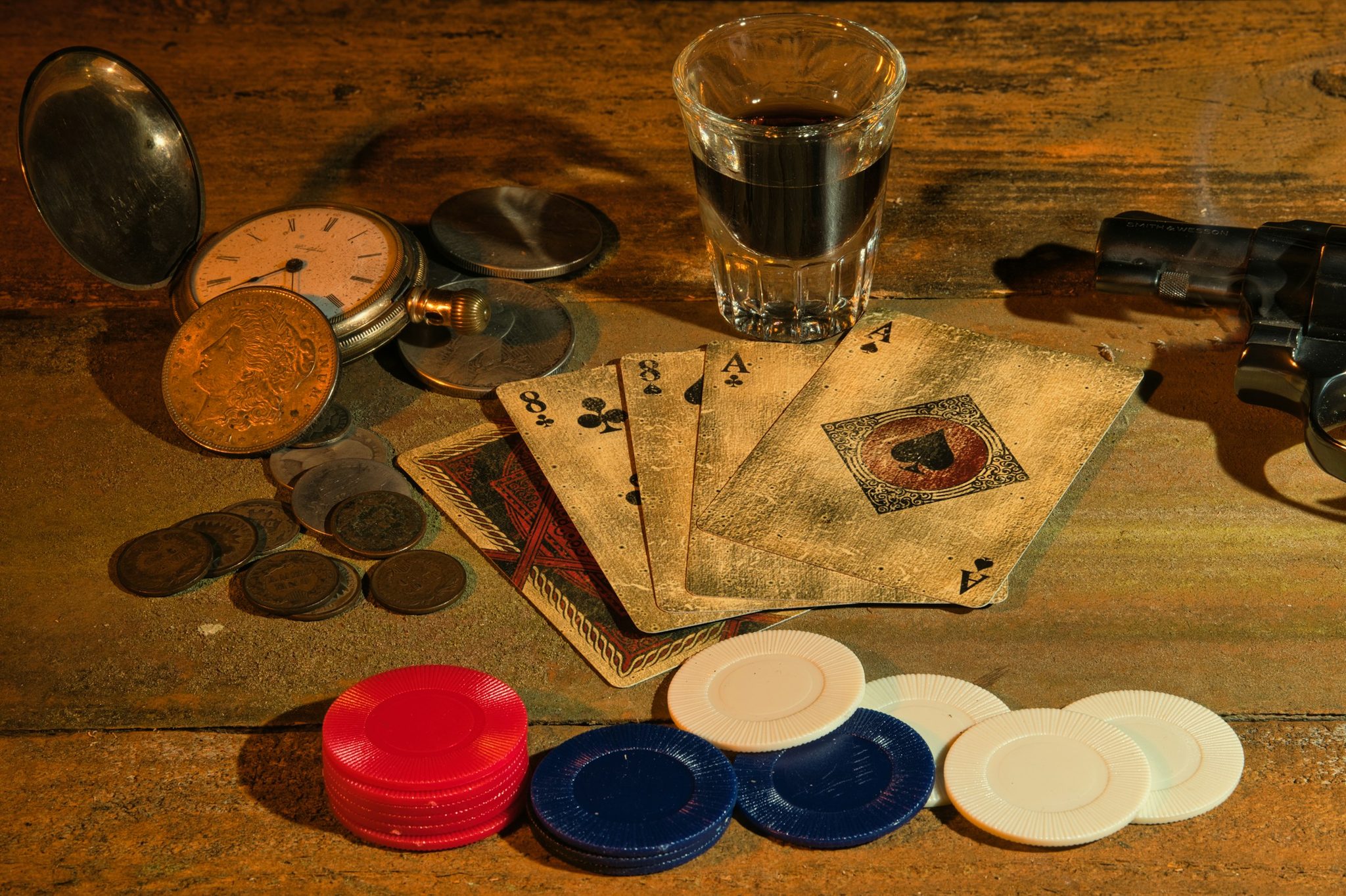
This guide follows that journey in plain steps, up to the screens where classic card games are dealt today.
Where the First Cards Came From
Most historians trace playing cards back to China, where paper cards were in use by around the ninth century. From there the idea moved west along trade routes. The decks that matter most to the European story came from the Mamluk Sultanate, which ruled Egypt and Syria in the late Middle Ages.
Mamluk cards used four suits: cups, coins, swords and polo sticks. Their court cards showed no human figures, only titles and abstract designs. When European travellers and merchants brought these packs home, artists swapped the polo sticks for batons and added kings, knights and pages painted as real people.
Cards were clearly popular by the late 1370s, because city records from Florence and parts of Switzerland start mentioning them around then. Several of those records are bans, which tells you how quickly people took to them.
How France Gave Us Hearts, Spades and Diamonds
The suits most English speakers know came out of France in the late fifteenth century. French card makers settled on hearts, tiles (diamonds), clovers (clubs) and pikes (spades). The advantage was practical. These shapes could be stencilled in a single colour, which made printing faster and cheaper than the hand-painted Italian and German designs.
Rouen and Paris became major centres of production, and the French pattern spread through trade to England. The English kept the French suit shapes but gave them their own names, which is why a pike became a spade and a clover became a club.
Those shapes have outlasted every change in how cards are played, including the move to screens, where blackjack and baccarat are now part of licensed online gambling in the UK. One British example is mrq, a gaming site founded in 2018 that grew out of bingo and now lists blackjack and roulette categories, live dealer tables and 900+ games in total. Registration requires players to be 18 or older and in the UK, and the operator, Tek Fox Ltd, appears on the Gambling Commission’s public register.
The court cards changed too. Early English kings and queens were copied from Rouen designs, and over the centuries the printing blocks were recut so many times that the figures drifted into the slightly stiff, symmetrical faces still printed today.
Why the Ace of Spades Looks So Fancy
In 1628 the Worshipful Company of Makers of Playing Cards received its royal charter in London, giving English card makers their own livery company. Cards were also a handy source of tax. For long stretches of British history a duty was charged on every pack, and from the eighteenth century proof of payment was printed on the ace of spades.
That is why the ace of spades became the decorated card in the pack. Makers later kept the ornate design as a kind of signature, long after the stamp itself stopped mattering. The duty on playing cards in the United Kingdom was finally abolished in 1960.
Other familiar features arrived in the nineteenth century. Double-ended court cards meant players no longer had to turn cards the right way up. Corner indices let a hand be fanned tightly. The joker appeared in the United States for the game of euchre and was later adopted almost everywhere.
The Games That Kept Cards in Circulation
A deck is only as interesting as the games played with it. Whist was a staple of British drawing rooms in the eighteenth and nineteenth centuries, and bridge grew out of it. Rummy, cribbage and patience filled countless evenings. In casinos, the long-running favourites are blackjack, built around reaching 21, and baccarat, a game of comparing two hands with a long history in European salons.
When those games moved online, the cards themselves barely changed. A blackjack hand dealt in a streamed studio today uses the suits Rouen printers settled on more than 500 years ago, and the dealer still reads totals much as a croupier in a Victorian club would have done.
Researching the History Yourself

If this short tour has sparked an interest, libraries are the best place to keep going. Many hold facsimile decks, catalogues of card makers and books on the social history of games. Archives in London, Paris and Vienna have digitised parts of their collections, which makes early packs easy to study from anywhere.
Librarians are also good guides to finding reliable sources on topics like this, where myths spread quickly. The CILIP site, run by the UK’s professional body for library and information workers, is a useful starting point for understanding how library services and information professionals support that kind of research.
It is worth checking any story about cards against a trustworthy source. Popular claims that the four kings stand for specific historical rulers, for instance, come from French printers who sometimes labelled them that way, but those labels changed over time and were never universal.
A Pack Worth Looking at Twice
Next time a deck comes out, look closely. The single-colour suits come from French efficiency, the double-ended courts from Victorian practicality, and the showy ace of spades from a tax collector. For anyone who enjoys a card game at a casino table, online or in person, setting a time and budget before starting keeps it the pleasant pastime it has been for six centuries.


