If you’ve ever watched ash fall from an orange sky while your weather app casually reports “Unhealthy” air quality, you know the feeling. That unsettling moment where you realize the air inside your home might not be much better than what’s outside.
I first wrote this guide in August 2020, right in the middle of California’s wildfire season. Ash was collecting on my car every morning. The AQI in Sacramento bounced between 150 and 300+ for weeks. I sealed up the house, cranked the HVAC fan, and started researching everything I could about indoor air quality.
Six years later, I’ve tested MERV filters, sealed every window and door gap I could find, run HEPA vacuums on a near-religious schedule, and added a Levoit Core 600S-P air purifier that I monitor through Home Assistant. Some of what I learned surprised me. Some of it contradicted advice I’d been following for years.
This is everything that actually works.

Table of Contents
- Key Takeaways
- What’s Actually in Your Indoor Air
- Check the Air Quality Around You
- Quick Wins You Can Do Right Now
- Change Your HVAC Air Filters
- Air Purifiers: The Levoit Core 600S-P
- Seal Your Windows and Doors
- Vacuum with a HEPA-Rated Appliance
- The Houseplant Myth
- Frequently Asked Questions
- What is the fastest way to improve indoor air quality?
- Do HEPA filters remove wildfire smoke?
- What MERV rating should I use for my furnace filter?
- Is the Levoit Core 600S-P worth it?
- Can I use an air purifier with Home Assistant?
- Do houseplants actually clean indoor air?
- How often should I change my air purifier filter?
- Does sealing windows and doors really help air quality?
- What causes poor indoor air quality in new homes?
- Is it better to open windows or run an air purifier?
- Article Updates
Key Takeaways
- Multiple layers work best: No single solution fixes indoor air quality. Combine HVAC filters, air purifiers, sealing, and cleaning for real results.
- MERV 13+ filters are the EPA’s recommended minimum for meaningful particle removal, but check that your furnace can handle them first.
- A standalone HEPA air purifier is more effective than forcing HEPA filters through your furnace, which can shorten its lifespan.
- Smart air quality monitoring with devices like the Levoit Core 600S-P and Home Assistant gives you real PM2.5 data so you can see what’s actually happening in your home.
- Seal your home first: Air purification is pointless if polluted air is leaking in through gaps in your windows and doors.
- Houseplants don’t clean air: The widely circulated NASA study has been debunked. You’d need 1,000 plants in a 10×10 room to match one air exchange per hour.
What’s Actually in Your Indoor Air
Before you can fix the problem, it helps to know what you’re breathing. There are seven main categories of pollutants that affect indoor air quality, and most homes have at least a few of them circulating right now.
Long-term exposure to these pollutants can cause premature death in people with heart or lung disease, nonfatal heart attacks, irregular heartbeat, aggravated asthma, decreased lung function, and increased respiratory symptoms. That’s not scare-tactic language. That’s directly from the CDC and EPA.
Even short-term exposure gives you hints that something’s off: irritation of the eyes, nose, and throat, coughing, phlegm, chest tightness, and shortness of breath.
Particulate Matter (PM2.5 & PM10)
Small solid and liquid particles that enter your lungs. PM10 (2.5 to 10 micrometers) comes from grinding, crushing, and road dust. PM2.5 originates from power plants, wildfires, and combustion processes. This is the big one during wildfire season and the number your air purifier’s sensor is tracking.
Formaldehyde
That new furniture smell? Likely formaldehyde off-gassing from pressed wood, mattresses, and certain fabrics. Causes nasal and eye irritation, eczema, and changes in lung function. New homes and recently furnished rooms are the worst offenders.
Ozone
Ground-level ozone forms when vehicle emissions, power plant output, and industrial exhaust react with sunlight. It causes over 4,000 emergency room visits annually in New York City alone. Central Valley summers are particularly brutal for ozone levels.
Benzene
Sweet-smelling and highly flammable, benzene comes from tobacco smoke, vapes, vehicle exhaust, and household products like glues, paints, furniture wax, and detergent. Long-term exposure causes cancer of blood-forming organs and leukemia.
Carbon Monoxide
One of the better-known pollutants. Carbon monoxide comes from vehicles, wildfires, and industrial combustion. It’s odorless and colorless, which is exactly why CO detectors exist. If you don’t have them on every floor, stop reading this and go install some.
Sulfur Dioxide & SOx
Created when coal and oil fuels containing sulfur are burned. The oxides of sulfur (SO2, SO3, SO4) are regulated as federal and state pollutants. They also contribute to the formation of other particulate matter. More of an industrial concern, but they seep into homes near highways and refineries.
Nitrogen Dioxide
Produced by road traffic and fossil fuel combustion. Like sulfur dioxide, nitrogen dioxide contributes to increased formation of other air pollutants. Gas stoves are a significant indoor source, which is part of why gas vs. electric stove debates have gotten so heated (pun fully intended).
Highest Risk Groups
People with heart or lung disease feel effects at lower exposure levels. Older adults are more likely to be hospitalized. Children face long-term developmental risks to lungs and airways. Infants are particularly vulnerable as their lungs continue developing after birth.
Sources: CDC Environmental Health Tracking | AirNow Education | EPA Air Quality Data
Check the Air Quality Around You
Before you spend money on filters and purifiers, know what you’re dealing with. The EPA maintains a real-time air quality map that shows particulate matter levels across the United States. During the 2020 wildfires, I was checking this multiple times a day watching AQI bounce from the 70s to well over 150, all from fires burning hundreds of miles away.
EPA Air Quality Map
Real-time AQI readings across the country. Bookmark this one.
Understanding the AQI Scale
| AQI Color | Level | Values | What It Means |
|---|---|---|---|
| 🟢 Green | Good | 0 to 50 | Air quality is satisfactory. Little or no risk. |
| 🟡 Yellow | Moderate | 51 to 100 | Acceptable for most. Some risk for sensitive individuals. |
| 🟠 Orange | Unhealthy for Sensitive Groups | 101 to 150 | Sensitive groups may experience health effects. General public is less likely affected. |
| 🔴 Red | Unhealthy | 151 to 200 | Everyone may begin to experience health effects. Sensitive groups face more serious risk. |
| 🟣 Purple | Very Unhealthy | 201 to 300 | Health alert. Risk of effects increased for everyone. |
| 🟤 Maroon | Hazardous | 301+ | Emergency conditions. Everyone is likely to be affected. |
Quick Wins You Can Do Right Now
Before we get into the bigger investments, these cost nothing and make an immediate difference:
- Don’t smoke indoors. This should be obvious, but benzene from tobacco smoke is one of the worst indoor pollutants.
- Skip the aerosol sprays. Every burst introduces volatile organic compounds into your air.
- Vacuum and dust frequently. Settled particles become airborne again every time someone walks through the room.
- Seal your chemicals. Properly cap cleaners, paints, and solvents when you’re done to prevent off-gassing.
- Switch to low-VOC products. Environmentally safe cleaning products and paints make a measurable difference.
- Reduce fireplace and wood stove use. Romantic? Sure. Great for your lungs? Not even close.
- Skip gas-powered garden equipment. Exhaust from leaf blowers and mowers drifts inside faster than you’d think.
- Run your HVAC fan. Set it to recirculate with just the fan (no heating or cooling) for 15 minutes, three times daily. This filters air without the energy cost of running the full system.
Change Your HVAC Air Filters
Regularly changing your air filter is the single easiest thing you can do for indoor air quality. It’s also the one most people put off the longest. I’ve been guilty of this myself.
The most common advice from HVAC professionals is to use the cheapest generic filter available. This allows maximum airflow without stressing the motor. For everyday furnace cleanliness, that’s fine.
But if you’re trying to actually remove pollutants from your air, you need to understand the difference between HEPA and MERV ratings.
HEPA vs. MERV: What Actually Matters
HEPA filters are considered the gold standard for particle removal. The catch: your HVAC system must be rated to handle one. Force a HEPA filter into a system that can’t handle the airflow restriction and you’ll overwork the motor, shorten the furnace lifespan, and potentially face a very expensive repair.
The EPA’s 2018 study determined that a MERV rating of 13 and above is necessary for meaningful air cleaning:
| MERV Rating | Particle Removal (0.3-1 μm) | Best For |
|---|---|---|
| MERV 6-8 | ~20% efficiency | Basic furnace protection. Catches dust and large particles. |
| MERV 11 | 20% minimum efficiency | Improved filtration. Catches pollen, mold spores, pet dander. |
| MERV 13+ | 50% minimum efficiency | EPA recommended. Captures fine particles, smoke, bacteria. |
| MERV 16 | 95%+ efficiency | Equivalent to HEPA. Rarely suitable for residential furnaces. |
What I do: For normal everyday use, I run basic Filtrete filters. When wildfire smoke rolls in or allergy season peaks, I swap in Nordic Pure MERV 12 filters. They cost more, so I keep the packaging and switch back when conditions improve. No reason to run premium filters year-round if you don’t need to.
A Note from an HVAC Professional
One HVAC technician I consulted offered this perspective on choosing the right filter:
A 2,000 square foot home requires approximately 1,800 CFM of airflow. You’ll typically need at least two large filter rack areas to keep static pressure down to 0.5 inches of water column. You can never have too much filter area because you want to keep the airflow velocity through the filter as low as possible. As filters load, velocity increases, and so does static pressure.
Pleated filters load on the surface and therefore load faster than deep media filters, resulting in increased velocity through the filter sooner.
His bottom line: MERV 6 filters are sufficient to keep the furnace clean. For serious air quality concerns, use a separate HEPA air purifier rather than pushing HEPA-level filters through your furnace. Most residential systems simply aren’t built for it.
You may also want to check the home maintenance checklist for more things to inspect throughout your house.
Air Purifiers: The Levoit Core 600S-P
This is where things changed for me. After years of relying solely on HVAC filters and weatherstripping, I finally invested in a dedicated air purifier. Based on the HVAC professional’s advice above (use a separate HEPA unit rather than forcing your furnace to do the work), I went with the Levoit Core 600S-P.
Why this one specifically? Three reasons.
Coverage
Rated for up to 2,933 square feet, which covers most of our main living area. I run it in the open-concept kitchen and living room where we spend the most time. One unit handles the space that would require two or three smaller purifiers.
Built-in PM2.5 Sensor
The laser dust sensor tracks particulate matter in real-time and displays it right on the unit. More importantly, it feeds that data to the VeSync app and, through the VeSync integration, directly into Home Assistant. Actual numbers, not just a vague “air quality: good” indicator.
Smart Home Ready
WiFi connected with Alexa and Google Assistant support out of the box. But the real value for me is the Home Assistant integration through VeSync, which lets me build automations and track historical air quality data over time.
The 600S-P uses a 3-in-1 filtration system: a pre-filter for hair and large particles, a True HEPA filter that captures 99.97% of particles down to 0.3 micrometers, and a high-efficiency activated carbon filter for gases and odors. Auto Mode adjusts fan speed based on what the PM2.5 sensor detects, which means it ramps up when air quality drops and quiets down when things are clean.
To be completely transparent, it’s not quiet on the highest setting. You’ll notice it. But in Auto Mode or on the lower fan speeds, it blends into the background. Sleep Mode is genuinely silent.
On replacement filters: Levoit recommends replacing the filter every 6 to 8 months depending on usage. The standard replacement filter runs around $50. If you’re dealing with wildfire smoke specifically, the Smoke Remover filter uses a 4-in-1 design with denser activated carbon. I keep one of each on hand so I can swap based on the season.
Tracking Air Quality with Home Assistant
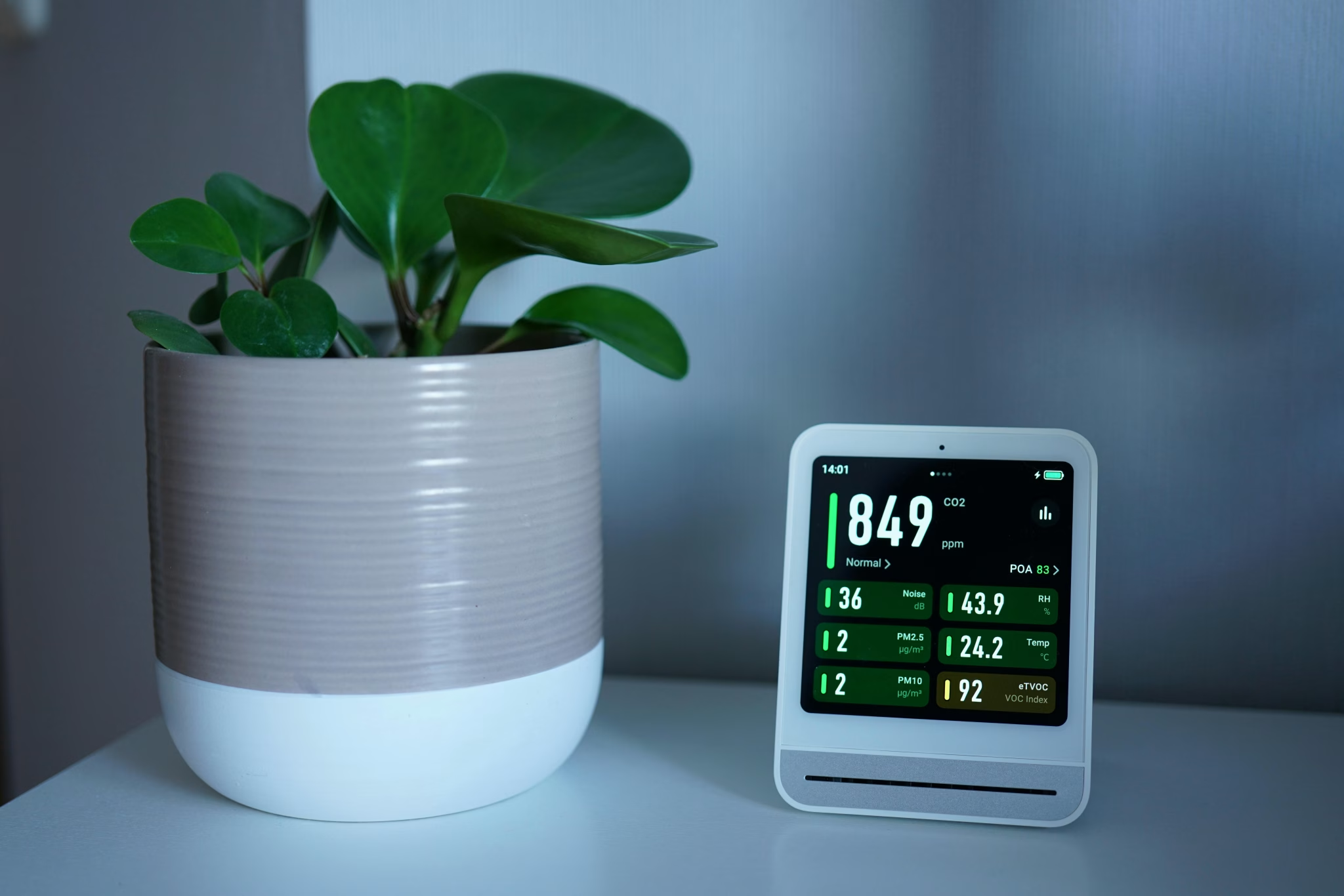
Here’s where things get interesting if you’re into smart home setups. The Levoit Core 600S-P connects through the VeSync app, and Home Assistant has a native VeSync integration that pulls in all your device data.
Once connected, you get real-time PM2.5 readings as a sensor entity in Home Assistant. That means you can:
- Build a historical air quality dashboard that shows PM2.5 trends over hours, days, and weeks. I can now see exactly when air quality degrades in our house and correlate it with cooking, opening windows, or wildfire smoke events.
- Create automations that trigger based on air quality thresholds. When PM2.5 exceeds a certain level, Home Assistant can bump the purifier to a higher fan speed, send a notification to my phone, or even close smart blinds.
- Track filter life and get replacement reminders before the filter is actually depleted, instead of waiting for the indicator light.
- Control fan speed and modes directly from your Home Assistant dashboard without opening the VeSync app.
If you’re already running Home Assistant (I’ve written about installing it on a Synology NAS), adding the VeSync integration takes about two minutes. Register your Levoit with the VeSync app first, then add the integration in Home Assistant with your VeSync credentials. All entities show up automatically.
The data has been genuinely eye-opening. I learned that cooking on the stovetop spikes PM2.5 dramatically (sometimes into the 100+ range for 15 to 20 minutes), that opening windows during “Good” AQI days still brings in more particulate matter than I expected, and that the purifier in Auto Mode brings levels back down to single digits within about 30 minutes of closing everything up.
Seal Your Windows and Doors
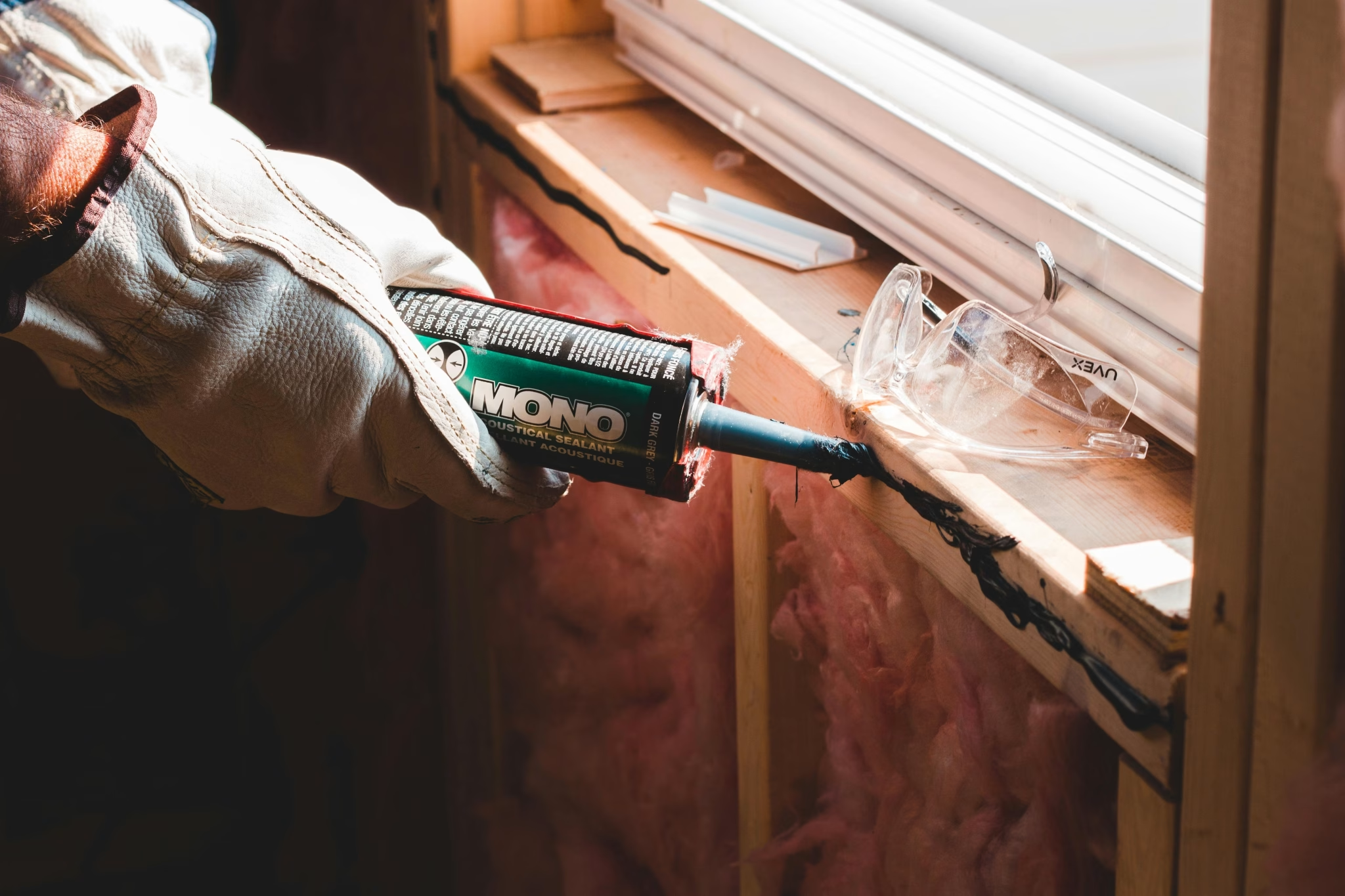
Running an air purifier while your home leaks outside air through every gap is like trying to cool a room with the windows open. Sealing airflow gaps is one of the highest-impact, lowest-cost improvements you can make.
Caulking and weatherstripping handle most residential air leaks. Here’s the approach that worked for me:
- Weather stripping kits: Measure the gaps on your doors and choose an appropriate thickness. Too thin and air still gets through. Too thick and you’ll struggle to close the door. It should be snug.
- Foam seal tape: Works well for window frames and smaller gaps. Measure carefully before applying. I made the mistake of going too thick on our back door and had to peel it off and start over.
- Caulking: Use white or clear, depending on your window and exterior colors. Make sure it’s paintable and rated for exterior use. This handles the small cracks around framing that weatherstripping can’t reach.
With your home properly sealed, your HVAC system and air purifiers circulate and filter air far more effectively. The added bonus: better energy efficiency and lower utility bills. Our energy costs dropped noticeably after sealing the worst offenders around the front door and two kitchen windows.
Vacuum with a HEPA-Rated Appliance
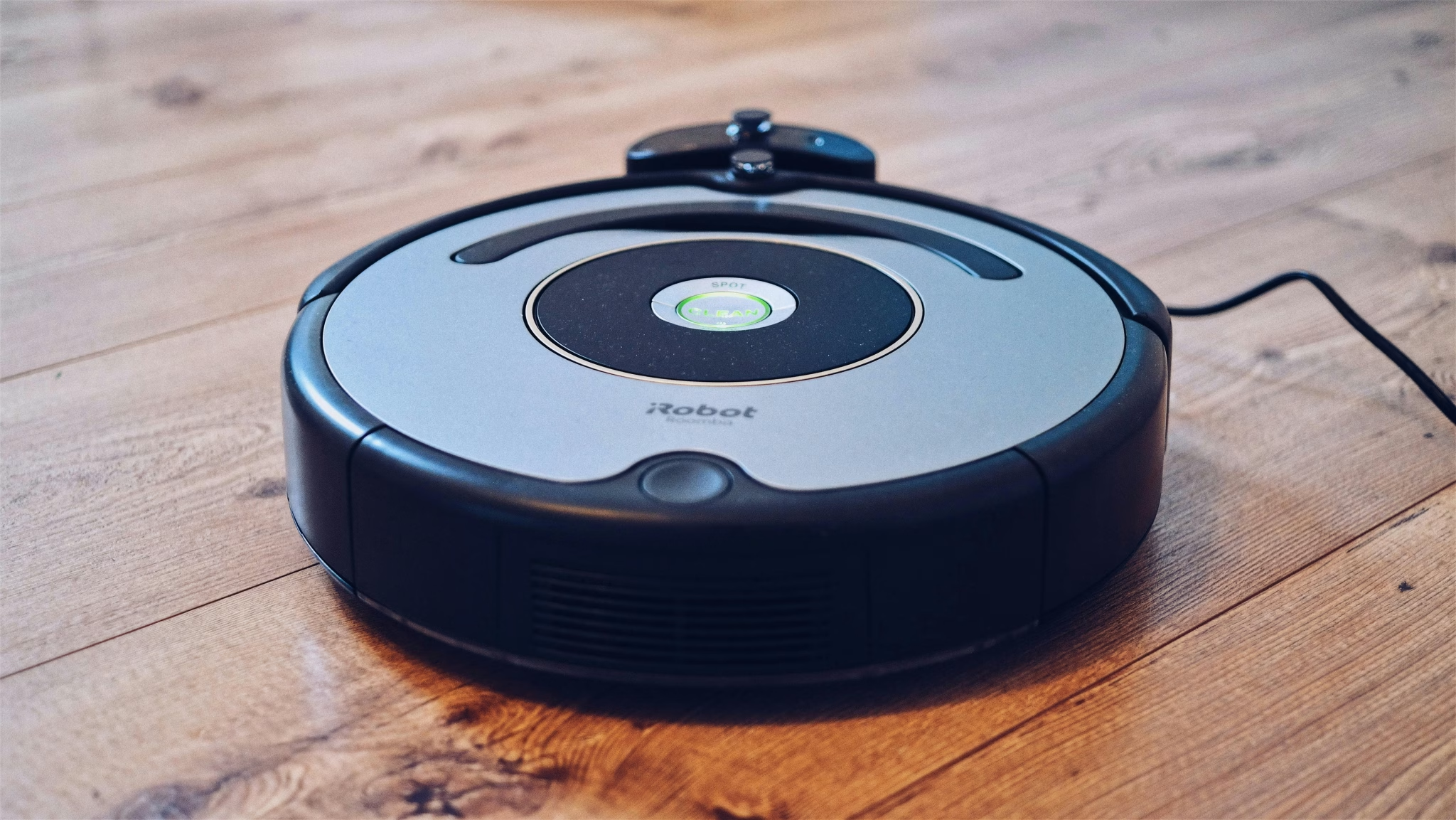
When you vacuum without HEPA filtration, you’re essentially picking up dust from the floor and blowing the finest particles right back into the air. A HEPA-filtered vacuum captures those particles instead of recirculating them.
My cleaning routine: dust all surfaces, nooks, and crannies first (baseboards, air vents, top of the fridge are the spots everyone misses), then vacuum everything with the HEPA unit. The order matters because dusting knocks particles loose, and vacuuming picks them up.
I’ve used a Sebo upright for over 10 years now and it’s still running strong. For spot cleaning and daily maintenance, a robot vacuum handles the main floors. For DIY projects that generate dust (and they all generate dust), a HEPA-filtered wet/dry vacuum like the ones from Vacmaster keeps your shop air from becoming a health hazard.
The Houseplant Myth
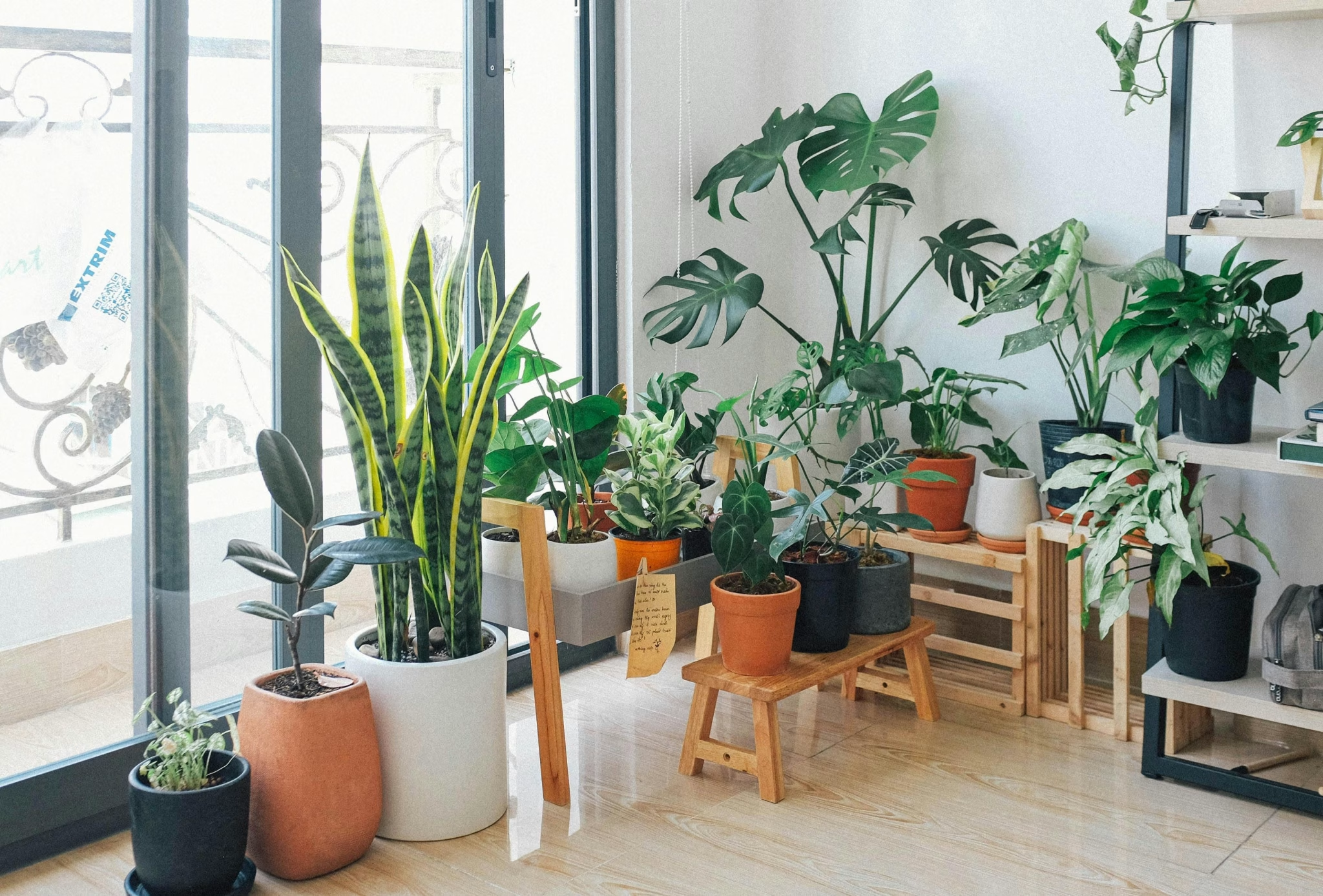
I have to address this because it still circulates everywhere. “Get some spider plants and peace lilies for better air quality!” You’ll see this advice on every lifestyle blog and home improvement site. It’s wrong.
The myth traces back to a 1989 NASA-funded study (How to Grow Fresh Air: 50 Houseplants That Purify Your Home or Office) that tested plants in sealed chambers. The results were real, but the application was wildly misinterpreted. Your living room is not a sealed NASA test chamber.
Houseplants do not clean the air any more than an old pair of socks or baseball cap that I would hang on the wall.
The Atlantic broke this down clearly: you would need 1,000 plants in a 10-by-10-by-8 foot room to match a single hourly air exchange. Even the most effective VOC-filtering plant would require one plant per square foot. That’s not a home. That’s a greenhouse.
It gets worse. Plants actually produce volatile organic compounds and hydrocarbons, including green leaf volatiles (GLVs). These mix with nitrogen oxides and can create ozone inside your home. A 2019 Nature study provides the detailed science behind why the original NASA findings don’t translate to real-world conditions.
The honest take: For air quality purposes, plants do nothing meaningful. But from a quality-of-life perspective, the psychological benefits of having greenery around are real. Fill your home with whatever plants make you happy. Just don’t expect them to replace an air purifier.
Frequently Asked Questions
What is the fastest way to improve indoor air quality?
Run your HVAC fan on recirculate mode for 15 minutes three times daily, and add a standalone HEPA air purifier to the room where you spend the most time. These two steps provide immediate, measurable improvement in particle levels.
Do HEPA filters remove wildfire smoke?
Yes. HEPA filters capture 99.97% of particles down to 0.3 micrometers, which includes the fine particulate matter (PM2.5) in wildfire smoke. A standalone HEPA air purifier is more effective for smoke than HEPA furnace filters, which most residential systems aren’t designed to handle.
What MERV rating should I use for my furnace filter?
The EPA recommends MERV 13 or higher for meaningful air cleaning. However, check your furnace specifications first. Many residential systems perform best with MERV 6 to 8 for basic protection, supplemented by a separate air purifier for serious filtration. Using too high a MERV rating can restrict airflow and damage your furnace.
Is the Levoit Core 600S-P worth it?
For large rooms and open floor plans, yes. It covers up to 2,933 square feet, includes a real PM2.5 laser sensor, and integrates with smart home systems through the VeSync app. Replacement filters cost around $50 every 6 to 8 months. The main downside is noise on the highest fan speed, but Auto Mode and Sleep Mode are both quiet.
Can I use an air purifier with Home Assistant?
Many smart air purifiers work with Home Assistant through manufacturer integrations. The Levoit Core 600S-P connects via the VeSync integration, giving you PM2.5 sensor data, fan speed control, and the ability to build automations based on air quality readings. You need the VeSync app set up first, then add the integration in Home Assistant.
Do houseplants actually clean indoor air?
No, not in any meaningful way. The widely cited 1989 NASA study tested plants in sealed chambers, and the results don’t translate to real homes. You would need approximately 1,000 plants in a 10×10 foot room to match one air exchange per hour. Plants also produce their own VOCs, which can actually contribute to indoor ozone formation.
How often should I change my air purifier filter?
Most HEPA air purifier filters need replacement every 6 to 8 months with regular use. During periods of heavy use (wildfire season, high allergy periods), the filter may need replacement sooner. The Levoit Core 600S-P has a filter life indicator, and if you connect it to Home Assistant, you can track filter degradation over time.
Does sealing windows and doors really help air quality?
Absolutely. Sealing air leaks prevents unfiltered outdoor air from bypassing your filtration and purification systems. It also improves your HVAC efficiency and lowers energy bills. Weatherstripping and caulking are inexpensive and can be completed in an afternoon.
What causes poor indoor air quality in new homes?
New construction and recently furnished homes often have elevated formaldehyde levels from pressed wood products, new carpeting, and furniture off-gassing. Paint, adhesives, and building materials also release VOCs for weeks or months after installation. Running an air purifier with an activated carbon filter helps, as does increasing ventilation during the first few months.
Is it better to open windows or run an air purifier?
It depends on outdoor air quality. On days when the AQI is in the “Good” range (0 to 50), opening windows for ventilation can help. When outdoor air quality is “Moderate” or worse, keep windows closed and run the purifier. My Home Assistant data showed that even on “Good” AQI days, opening windows raised indoor PM2.5 levels more than I expected.
Affiliate Disclosure: Some links in this article are affiliate links, which means I may earn a small commission if you make a purchase through them, at no additional cost to you. I only recommend products I personally use and trust.
Article Updates
- March 11, 2026: Major rewrite. Added personal experience with Levoit Core 600S-P air purifier and Home Assistant integration. Restructured with improved formatting and native WordPress 6.9 blocks. Added Key Takeaways, FAQ section, and affiliate links. Updated all pollutant information and HVAC filter guidance. Replaced broken Amazon shortcode blocks.
- September 10, 2024: Updated links, adjusted some info for clarity and best practices.