
Creating a high-end backyard in North Texas requires a specific understanding of both local climate demands and architectural trends. As the line between indoor and outdoor living continues to blur, the deck surrounding your pool has transitioned from a mere utility walkway into a primary design feature. The critical hook for a modern renovation is moving beyond basic aesthetics and focusing on “thermal resilience”—ensuring your backyard remains a sanctuary even when the Texas sun is at its most intense. A well-planned deck doesn’t just hold lounge chairs; it manages heat, directs water flow, and serves as the structural anchor for your entire property.

Navigating the Soil and Sun of North Texas
For homeowners considering a concrete pool deck installation in Fort Worth, the geological reality of expansive clay soil must be the starting point for every decision. This specific soil type shifts significantly with moisture changes, which can lead to unsightly cracking in rigid surfaces. Expert masonry contractors suggest that utilizing a reinforced sub-base is non-negotiable for long-term stability. While a standard pour is the most budget-friendly option, a professional “deck overlay” or lace finish is often preferred because it provides an extra layer of protection and keeps surface temperatures up to 20% cooler than bare concrete.
Selecting Partners for Structural Success
The difference between a surface that lasts five years and one that lasts twenty often comes down to the expertise of the crew on-site. When vetting deck builders, it is essential to look for specialists who understand the “why” behind proper expansion joints. Professional installers emphasize that placing these joints strategically allows the deck to breathe and move without fracturing the main surface. The pro of hiring a specialized team is the precision in drainage and leveling, whereas the con of choosing a general handyman is the risk of “bird baths”—annoying puddles that form in low spots and create slip hazards or algae growth.
Comparing Natural Stone vs. Engineered Surfaces
The choice between natural stone and stamped concrete involves a balance of maintenance and initial cost. Travertine pavers are widely considered the gold standard for luxury decks because they are naturally slip-resistant and porous. Hardscape specialists note that if a single paver is damaged by a heavy fallen object, it can be replaced individually without leaving a scar on the deck. In contrast, stamped concrete offers a seamless, uniform look that many homeowners prefer for modern architectural styles. The pro of stamped concrete is the endless variety of patterns and colors available, while the con is that it typically requires a high-quality sealant every two to three years to maintain its luster.
Enhancing Safety and Social Flow
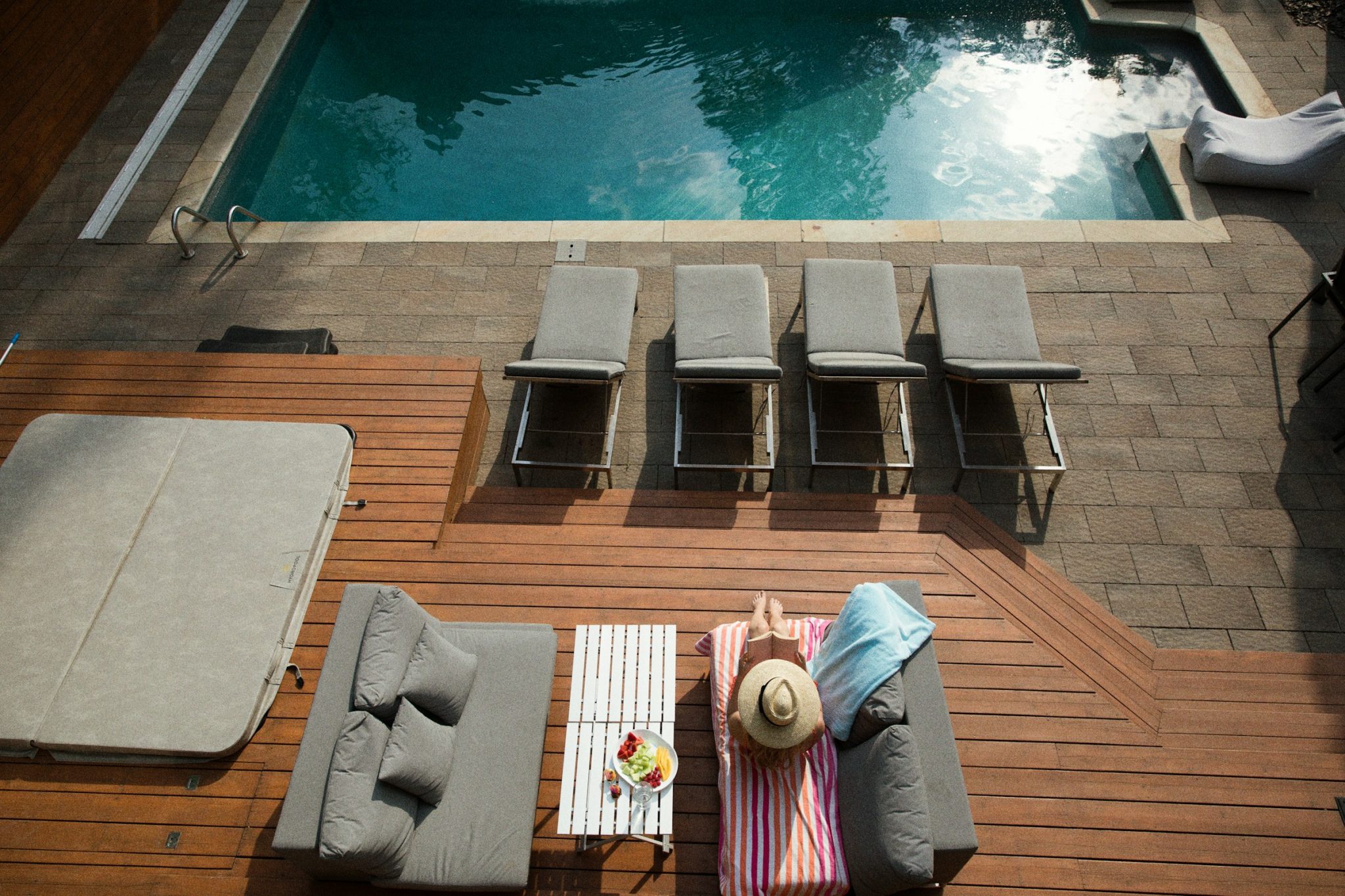
A deck should do more than just surround the water; it should guide guests through the space naturally. This is achieved through “built-in” transitions, such as slight elevation changes to separate the dining area from the splash zone. Safety experts advocate for the use of “bullnose” coping on the pool edge, which provides a smooth, rounded surface that is much gentler on the legs of swimmers exiting the water. Additionally, integrating subtle LED lighting into the perimeter of the deck ensures that the space remains safe for evening gatherings. These small engineering details often provide the highest return on enjoyment for families who use their pools after sunset.
Making a Sustainable Investment
Ultimately, a pool deck renovation is an investment in your home’s infrastructure that requires a balance of logic and style. If you plan to remain in your home for the next decade, prioritizing durable materials like natural stone or high-grade cooling overlays will save you thousands in maintenance and repair costs. While the construction process involves a temporary disruption to your backyard, the final result is a highly functional, multi-seasonal space. By choosing the right materials and expert guidance, you can transform a simple swimming hole into a sophisticated retreat that stands up to the unique environmental pressures of the Lone Star State.


