
Sharing the highway with commercial trucks can be intimidating, especially when large blind spots, sudden lane changes, and long stopping distances leave little room for mistakes. One careless move can put your safety, finances, and well-being at risk. Discover how to recognize truck blind zones, pass safely, and understand the precautions that can help you avoid dangerous collisions on busy highways.
The Reality of Commercial Truck Blind Zones
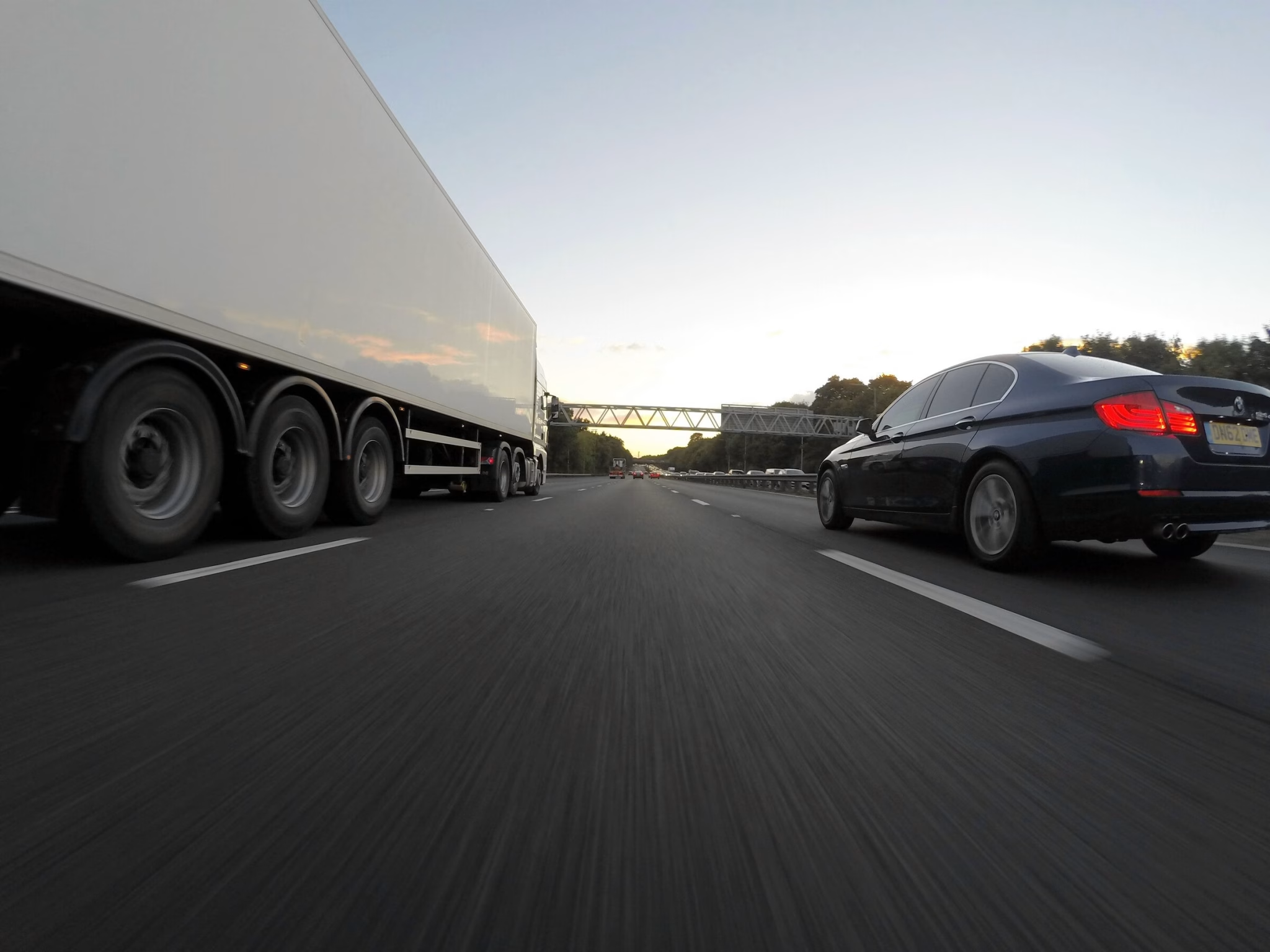
Commercial trucks have large blind zones directly behind the trailer, along both sides and in front of the cab. The passenger side can be especially difficult because the driver sits far from that edge. Federal guidance describes these areas as truck No Zones.
Use the truck’s side mirror as a quick reference. If you can’t see the driver’s face in the mirror, assume the driver can’t see your vehicle. Avoid lingering beside the cab or trailer, even when traffic is moving steadily. At an intersection, give a turning truck extra space because its trailer may track across an adjacent lane.
Passing Strategies on High-Speed Highways
Check that the lane ahead offers enough clear space before starting a pass. Signal early, move smoothly, and maintain a steady speed until you can see the entire truck in your rearview mirror. Then signal and return to the lane without cutting into the truck’s stopping space.
Wind can push your vehicle away from the truck as you approach, then pull it toward the trailer while you pass. Keep both hands on the wheel and expect that pressure to change. Never pass on the shoulder or squeeze through a narrowing gap near an exit. If traffic prevents a clean pass, stay several seconds behind the trailer until conditions improve. On downhill stretches, remember that a heavily loaded truck may gain speed even if your cruise control remains unchanged.

Complex Liability in Commercial Collisions
A commercial collision can involve several parties, including the driver, carrier, maintenance contractor, or company responsible for loading cargo. Records such as electronic driving logs, inspection reports, dispatch messages, and onboard data may help establish what happened. Some evidence can be overwritten or lost, so prompt documentation matters.
After a collision, photograph vehicle positions, road markings, visible damage, and nearby signs if you can do so safely. Exchange information, seek medical attention, and avoid guessing about fault in conversations with insurers. North Carolina residents evaluating a negligence claim may consult a Matthews Personal Injury Lawyer about insurance communications, available records, and filing deadlines. Keep repair estimates, medical documents, and receipts together because those materials can show the collision’s financial effects.
Defensive Driving in Heavy Freight Traffic
Build a space cushion that gives you time to react without abrupt steering. A following interval of at least three or four seconds is a useful starting point in good conditions, and rain, darkness, or roadwork calls for more room. Look beyond the nearest vehicle so you can spot brake lights, merging traffic and lane closures early. It’s also worth knowing how truck driver fatigue can affect safety on the highway, since tired drivers may have slower reactions and difficulty making safe decisions.
Avoid driving between two large trucks when another lane is available. If a truck signals a lane change, ease off the accelerator and create space instead of accelerating alongside it. At rest areas, check your route and handle messages before returning to traffic. Fatigue also affects judgment, so stop when you notice repeated yawning, drifting within the lane, or difficulty recalling the last few miles.
The safest position near a commercial truck is one where you remain visible and have a clear escape path. On your next highway drive, treat time beside a trailer as a temporary phase: hold back when space is limited, then pass cleanly when the road opens.