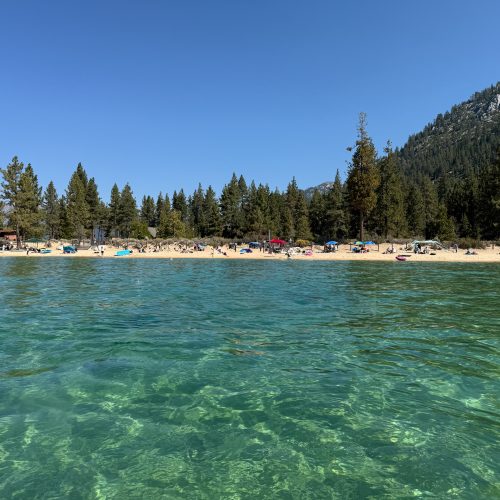
Anza-Borrego sprawls across 650,000 acres of Colorado Desert in San Diego County. California’s largest state park. Larger than Rhode Island.
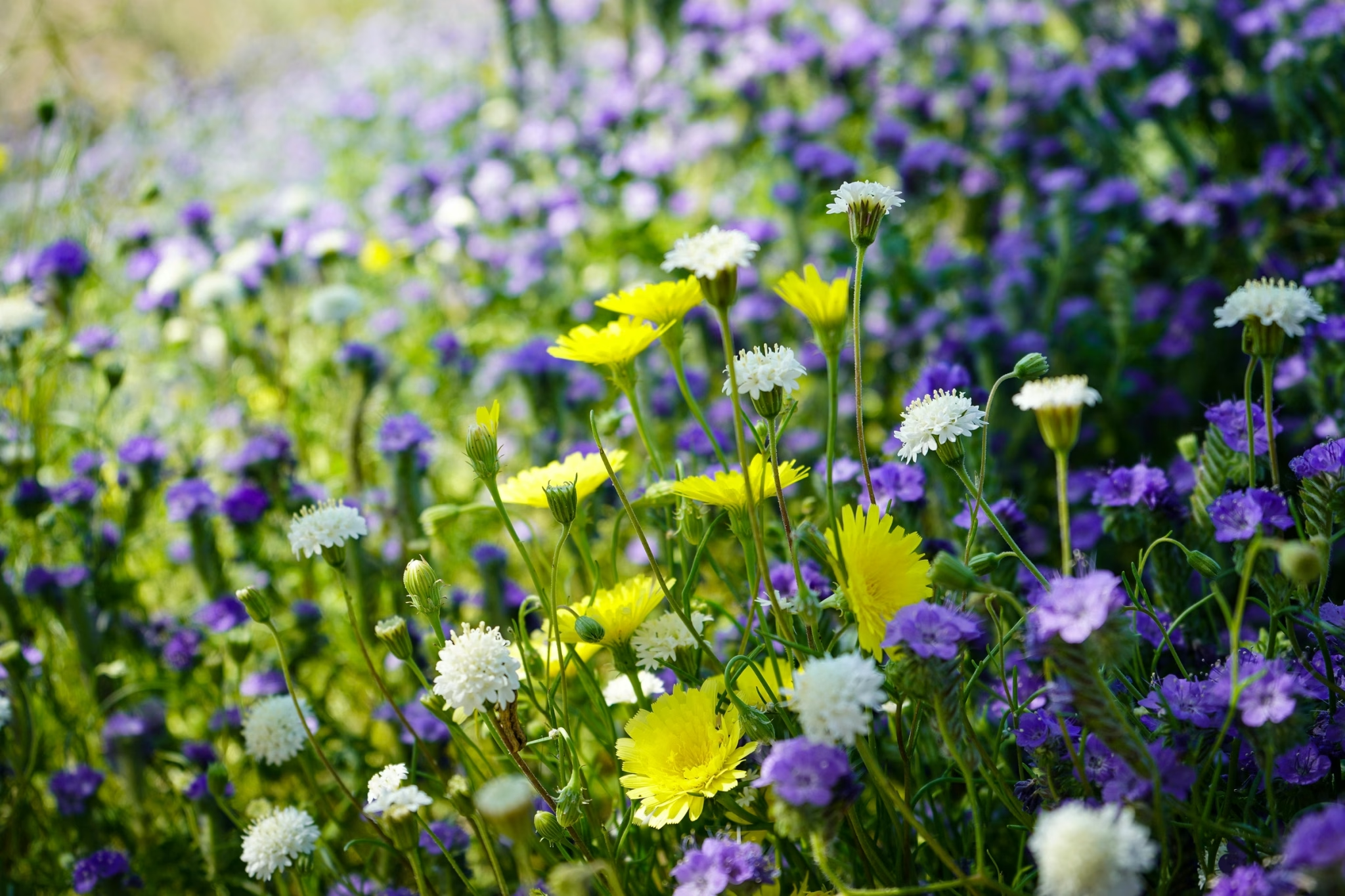
Elevation runs from a foot above sea level near the Salton Sea up to Combs Peak at 6,193 feet. Six hundred native plant species across 92 plant families bloom on a staggered schedule from January through May. Some years the desert delivers a true super bloom. Most years, including 2026, it delivers something more honest: a moderate, real, beautiful bloom that rewards the people who actually showed up.
This article tells you what’s blooming, when, and where. Mostly without the tourism-board cliches.
Two practical things to know first.
Coyote Canyon, the canyon most often cited as the wildflower viewing area, has been partially closed since Tropical Storm Hilary struck on August 19, 2023. That was the first tropical storm to hit Southern California in 84 years. A 10.7-mile section beyond the Lower Willows gate remains closed to vehicles with no announced reopening date. Henderson Canyon Road has stepped in as the marquee early-bloom drive.
Second: the Anza-Borrego Foundation runs a wildflower hotline at (760) 767-4684 with weekly bloom updates. Call it before driving down. Anza-Borrego is a 9-10 hour drive from Sacramento. You don’t want to make that drive on a bad bloom week.
Walker Canyon up at Lake Elsinore went the other way. The city permanently closed it to public wildflower viewing in 2024, after the 2019 super bloom crowds turned the trail into a parking-lot mob scene.
Anza-Borrego did the opposite. Rangers actively maintain hotlines, citizen-science survey forms, and printed bloom maps. The whole 650,000 acres remains explicitly open and encouraged for visitation, even in moderate years.
Key Takeaways
- 2026 was a moderate bloom, not a super bloom. Park received about 4+ inches of rain. Super blooms require more than 6 inches plus sustained delivery, cool nights, and minimal heat spikes. Peak ended early March on lower elevations, cut short by mid-March heat.
- 600 native plant species across 92 plant families and 346 genera. The “200+ species” figure that appears in older guides understates the park’s biodiversity by two-thirds.
- Coyote Canyon is partially closed. Tropical Storm Hilary diverted Coyote Creek onto the dirt road on August 19, 2023. Lower section to the Third Crossing gate remains accessible (4WD past Desert Garden); the 10.7 miles beyond is closed to vehicles indefinitely. Hikers, cyclists, and equestrians may pass.
- Henderson Canyon Road is now the marquee early-bloom drive. Sand verbena, dune primrose, desert sunflower carpet from late January through early March on the valley floor.
- Bloom progresses with elevation. Lowest elevations bloom first (January), and the front advances upward through May, finishing in higher Peninsular Range canyons. Cactus stage runs March-April. Smoke trees and ironwood bloom purple in June.
- Anza-Borrego Foundation Wildflower Hotline: (760) 767-4684. Weekly updates during bloom season. Theodore Payne hotline (818) 768-1802 ext 7 covers all of Southern California, weekly Fridays March through May.
- The park is open year-round and free to enter. Visitor Center 760-767-4205 for current conditions. Borrego Springs is also a designated International Dark Sky Community for night photography after a wildflower day.
What’s Blooming Right Now: The 2026 Season
California State Parks called 2026 a “moderate-to-strong” wildflower bloom in their January 23, 2026 forecast. Not a super bloom.
The Anza-Borrego Foundation later clarified the distinction. About 4+ inches of rain fell on the park in the lead-up to bloom season, which the Foundation called “a significant amount for the desert” but explicitly below super bloom conditions. A true super bloom needs more than 6 inches of rain plus sustained delivery across multiple months, cool nights, minimal heat spikes, and calm winds.
The 2026 season peaked early March on lower elevations and was largely fading by mid-month.
By March 16 the Anza-Borrego Foundation reported peak early bloom had ended due to heat. Cactus took over: beavertail, cholla, hedgehog, barrel. By April 25 California State Parks shifted official focus to the cactus stage, with featured species rotating to beavertail cactus, fishhook cactus, orcutt aster, desert woolstar, apricot mallow, phacelia, pink cheesebush, and barrel cactus.
Why does this matter for an article that will outlive the 2026 season? Because the four-condition framework is evergreen. Sustained rain, cool nights, no heat spikes, calm winds.
When all four show up in the same winter, you get 2017 (6.6 inches, the most dramatic bloom in nearly 20 years), 2019, 2020, and 2023. When one or more is missing, you get a year like 2026. Or 2025, when less than an inch fell at park headquarters and the bloom was limited.
Average annual rainfall in Borrego Springs hovers around 5.5 inches. Most years aren’t super bloom years. They’re moderate years.
And moderate years still produce remarkable bloom on species that don’t require boom-and-bust seedling cycles, particularly ocotillo, brittlebush, beavertail cactus, and the Colorado Desert trees.
The headline 2026 viewing areas: Henderson Canyon Road for purple-and-white carpets in February, Cactus Loop Trail near Tamarisk Grove for the late-March cactus pivot, the badlands corridor at San Felipe Wash and Fonts Point for mid-March mid-elevation bloom. None of which require a super bloom year to be worth a visit.
Why Anza-Borrego Gets a Four-Month Bloom Season
Most California wildflower destinations bloom in a tight three-to-four-week window. Carrizo Plain, the 2026 super bloom location farther north, peaks roughly mid-March through early April and that’s it. Antelope Valley California Poppy Reserve runs slightly longer, late February through April.
Anza-Borrego runs from late January through early May, with cactus and trees extending the show into June.
The reason is elevation.
The park covers more than 6,100 feet of elevation difference, from below sea level near the Salton Sea to Combs Peak at 6,193 feet. Solar warming and soil temperature reach bloom-trigger thresholds at low elevations first, then progressively higher.
South-facing alluvial fans on the lowest desert floor warm in January. Borrego Springs valley floor (around 500 feet) follows in early February. Mid-elevation areas around 3,000 feet hit peak in early March. Higher canyons in the 4,000-foot range bloom in April. The highest peaks of the Peninsular Range finish in May.
Anza-Borrego sits in the Colorado Desert, the lower and hotter subregion of the Sonoran Desert. The Mojave Desert lies to the north and is colder; the rest of the Sonoran extends south into Mexico.
The park is part of the Mojave and Colorado Deserts Biosphere Reserve and spans three counties: San Diego, Riverside, and Imperial. The biodiversity numbers are striking: 600 native plant species across 92 plant families and 346 genera, with 12 designated wilderness areas and 8 cultural preserves on the books.
California fan palm here is the only palm species native to California.
The park’s name combines two Spanish proper nouns: explorer Juan Bautista de Anza, who passed through in 1774, and borrego, the Spanish word for the desert bighorn sheep that roam the canyons.
Real-Time Bloom Reports: The Hotline Network
If you’re driving from Sacramento or anywhere else north of the Bay, you do not want to commit to the trip without confirming what’s blooming.
Three resources matter. Check all three before you leave.
Anza-Borrego Foundation Wildflower Hotline
(760) 767-4684. Operated by the Anza-Borrego Foundation, weekly recorded updates during bloom season, Anza-Borrego specifically. The Foundation also publishes weekly written updates at theabf.org/experience-anza-borrego/wildflowers/wildflower-updates/ along with an annually-updated wildflower map (PDF) and an interactive map for the current year. Their @AnzaBorregoDesertSP Facebook and Instagram accounts post photo updates more frequently than the recorded line. This is the closest thing the park has to ground truth.
Theodore Payne Foundation Hotline
(818) 768-1802 ext 7. Tom Henschel narrates the recorded weekly Friday update. Coverage spans Southern and Central California, so Anza-Borrego is one of many areas referenced.
The advantage of this hotline: it tells you whether to skip Anza-Borrego in favor of a different region in a given week.
Theodore Payne also runs a free email subscription, a weekly podcast on RSS, Spotify, Apple Podcasts, plus a complete archive going back to 2013. Season runs March through May.
California State Parks Live Resources
Parks.ca.gov runs a live PoppyCam at parks.ca.gov/WildflowerBloom and a citizen-science wildflower survey at arcg.is/KW54r where visitors upload photos and species data. Phone the visitor center at 760-767-4205 for current road conditions on the day you’d arrive. The District Office line is 760-767-4037 if the visitor center isn’t picking up.
Practical sequence: check the Anza-Borrego Foundation update on a Friday or Saturday, cross-reference Theodore Payne’s Friday report, look at recent @AnzaBorregoDesertSP Instagram posts for photo confirmation, then call the visitor center on the morning you’d drive down.
Three independent confirmations is the difference between a great trip and a 9-hour gas burn.
Bloom Calendar by Elevation
The corrected bloom calendar, verified against Anza-Borrego Foundation, California State Parks, and Calscape species data. Elevations are approximate; bloom timing varies year to year by 2-3 weeks depending on rainfall onset and temperature.
| Period | Elevation | What’s Blooming | Where to See It |
|---|---|---|---|
| January (early) | Below 500 ft | First desert lilies; scattered desert sunflowers; brown-eyed primrose | S22 Borrego Salton Seaway corridor; Henderson Canyon Road approaches |
| February | 500-1,500 ft (valley floor) | Sand verbena, dune primrose, desert sunflower, desert lily, lupine, brittlebush starting, Spanish needles | Henderson Canyon Road peak; lower Coyote Canyon to closure gate; S22 |
| Early March | 1,500-3,000 ft | Annual carpet at peak; ocotillo bloom begins; ghost flower; phacelia; chuparosa | Henderson Canyon Road continues; Borrego Palm Canyon (first grove closed for fire); lower Coyote Canyon |
| Mid-late March | 3,000-4,000 ft | Bloom moves uphill; cactus stage starts at lower elevations | Cactus Loop Trail (Tamarisk Grove); badlands at San Felipe Wash, Cut Across, Fonts Point |
| April | 4,000+ ft | Beavertail cactus peak, cholla, hedgehog, barrel cactus; chuparosa continues; Blue Palo Verde yellow flowers in dry washes | Cactus Loop Trail; S22 mile marker 30; Coachwhip Canyon |
| May | 5,000-6,000+ ft | Mariposa lilies; late higher-elevation bloomers; Blue Elderberry in higher canyons | Combs Peak area; higher Peninsular Range canyons |
| June | All elevations | Smoke Tree purple bloom; Desert Ironwood purple bloom | Sandy washes throughout park |
| Summer (Jul-Sep) | Conditional | Rare summer monsoon rains can trigger Chinchweed (Pectis papposa) and Desert Unicorn Plant (Proboscidea altheifolia) | Variable per rainfall |
| Fall (Oct-Nov) | All | Rabbitbrush (Ericameria nauseosa), Alkali Goldenbush (Isocoma acradenia) | Variable |
Henderson Canyon Road: The 2026 Lead Hotspot
Henderson Canyon Road runs east-west off Borrego Springs Road just north of the town center. Two-wheel-drive paved access. No 4WD required, no hike-in needed.
California State Parks named it the marquee viewing area in their January 2026 forecast. The Anza-Borrego Foundation grouped it with Coyote Canyon as the lower-elevation lead hotspot through February and into early March.
What you see here in a moderate year: purple-magenta carpets of Abronia villosa sand verbena overlaid with white-to-pink Oenothera deltoides dune primrose, scattered yellow Geraea canescens desert sunflower, and the occasional white-fragrant Hesperocallis undulata desert lily.
The verbena lays down prostrate, almost crawling. The carpet effect comes from millions of these plants laid flat against sand sheets. Up close it’s not what you’d expect from a distance.
Park along the road shoulder. Walk the verges. Don’t pick anything (flower picking is prohibited park-wide).
Weekend parking saturates fast in peak bloom. Arrive before 8 a.m. or after 4 p.m. for the lowest crowd density and the better photographic light.
Henderson Canyon Road has been the closest thing to a guaranteed bloom payoff in the park for the past three seasons, even when other areas underperform.
Coyote Canyon: What’s Open After Hilary
Coyote Canyon is the most-searched named viewing area in the cluster.
For decades the canonical Anza-Borrego wildflower drive ran north on DiGiorgio Road from Borrego Springs, picked up the Coyote Canyon Dirt Road past Desert Garden, crossed Coyote Creek at three named crossings, and continued up through Lower Willows, Middle Willows, and on to Collins Valley for the full canyon traverse.
That drive no longer exists.
On August 19, 2023, Tropical Storm Hilary, the first tropical storm to hit Southern California in 84 years, diverted Coyote Creek directly onto the dirt road. Borrego Springs recorded the highest precipitation totals in San Diego County during the storm.
California State Parks closed 10.7 miles of Coyote Canyon Dirt Road from the Lower Willows / Third Crossing gate (5.2 miles in from the canyon entrance) to Middle Willows. Sheep Camp backcountry sites are closed. The Bypass Road and Collins Valley sections are closed.
As of February 5, 2026, the road conditions update from California State Parks confirms there is no set reopening date for full access. Staff are designing reroutes through what they describe as sensitive cultural and wilderness areas, which is going to take time.
What is still open: drive north on DiGiorgio Road from Palm Canyon Drive in Borrego Springs. Pavement ends roughly three miles north. Park at the interpretive kiosk, or continue on a half-mile of sandy 2WD-passable road.
Beyond that point you need high clearance and four-wheel drive. The road continues to Desert Garden and on to the closure gate at Lower Willows / Third Crossing, which is the turnaround. Hikers, cyclists, and equestrians may pass the gate on a day-use basis. Vehicles cannot.
This matters because Coyote Canyon used to be one of the better wildflower viewing experiences in the park. Lower Willows in particular: year-round water from the diverted creek supported a denser ribbon of bloom than the surrounding desert.
The lower canyon section is still beautiful in February and early March. The dramatic full canyon traverse to Middle Willows and Collins Valley is gone, possibly for years.
Other Named Viewing Areas
Anza-Borrego Foundation maintains a working list of bloom hotspots that updates each season. Beyond Henderson Canyon Road and lower Coyote Canyon, here’s what’s worth a stop in a moderate year:
- Borrego Palm Canyon. Popular oasis hike from Borrego Palm Canyon Campground. The first palm grove is currently closed due to fire damage, but the rest of the canyon and the trail to it remain open. Spring chuparosa bloom along the lower trail; ocotillo on the alluvial fans on the approach.
- S-22 / Borrego Salton Seaway corridor (mile marker 30). Drive-through bloom viewing along the highway between Borrego Springs and the Salton Sea. Pull-outs on both sides. This is where the earliest January bloom starts, on south-facing alluvial fans below the Santa Rosa Mountains.
- Cactus Loop Trail at Tamarisk Grove Campground. Short loop, March-April cactus stage destination. Beavertail, cholla, hedgehog, barrel cactus all in close proximity. Best when annual carpets have ended and visitors want the next show.
- Badlands corridor: San Felipe Wash, Cut Across, Fonts Point. Mid-late March viewing as lower elevations fade. Fonts Point at sunset is one of the most-photographed locations in the park regardless of bloom.
- Coachwhip Canyon (East Side). Wash bloom; less trafficked than the headline areas.
- Rainbow Canyon. Listed by the Anza-Borrego Foundation; spring viewing.
- Bow Willow to Torote Bowl Loop Trail. Southern park, longer hike, less crowded.
- Visitor Center Garden. At the Borrego Palm Canyon Visitor Center. Manicured native garden for visitors who can’t drive the dirt roads or want a wheelchair-accessible introduction.
Fourteen Species Worth Learning
Out of 600 native plant species in Anza-Borrego, the following 14 are the ones most photographed, most asked about, and most likely to show up on a single bloom-season visit. Each entry has the verified botanical family per current taxonomy (APG IV). Several species in older guides carry incorrect family assignments. Those have been corrected here against Calscape and the California Native Plant Society database.
Desert Lily (Hesperocallis undulata)
- Family: Asparagaceae, subfamily Agavoideae (per APG IV; older sources put it in Agavaceae or Liliaceae)
- Bloom: February to May, peak March-April
- Habitat: Sandy flats and creosote bush scrub on well-drained soils
Desert lily is a perennial geophyte. Bulbs sit dormant in the soil for years between bloom events and only flower after sufficient rainfall conditions. The fragrance is genuinely lily-like, striking in the middle of a creosote flat that smells of nothing else. White flowers with a wavy leaf rosette at ground level. Almost impossible to source commercially because of the wait time on bulbs.
Desert Sand Verbena (Abronia villosa)
- Family: Nyctaginaceae (four o’clock family)
- Bloom: February through May
- Habitat: Sandy desert and coastal environments; Creosote Bush Scrub
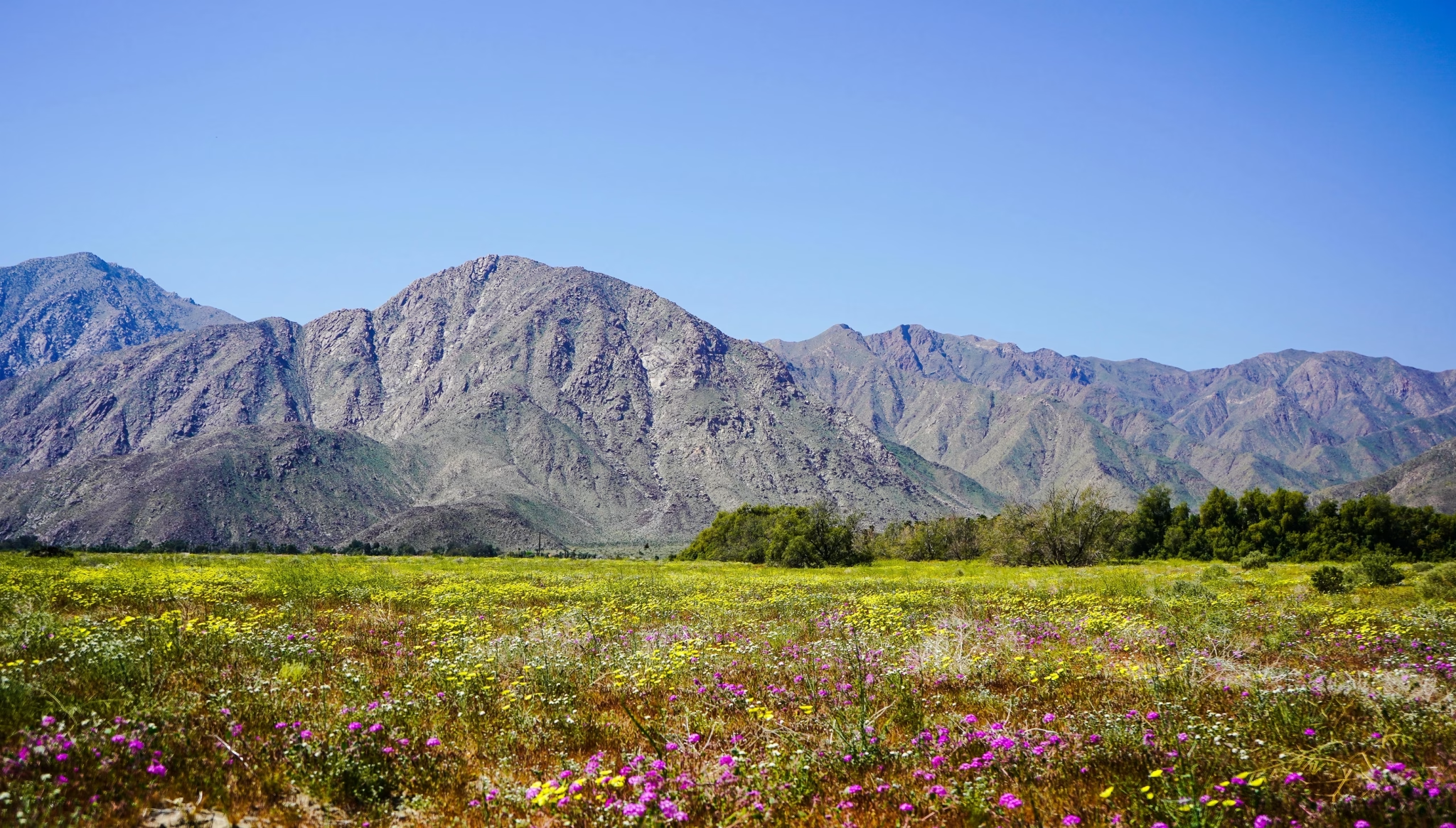
Bright magenta or purplish-pink flowers in rounded clusters on a short, hairy annual that grows in creeping prostrate masses along the ground. This is the species responsible for half the carpet effect on Henderson Canyon Road. Up close it’s almost crawling, leaves dull green and oval. Sticky to the touch. Very sweet fragrance, especially in late afternoon when temperatures drop.
Dune Primrose / Birdcage Evening Primrose (Oenothera deltoides)
- Family: Onagraceae (evening primrose family)
- Bloom: Spring, summer, fall depending on rainfall
- Habitat: Sandy, often dunes; multiple desert plant communities
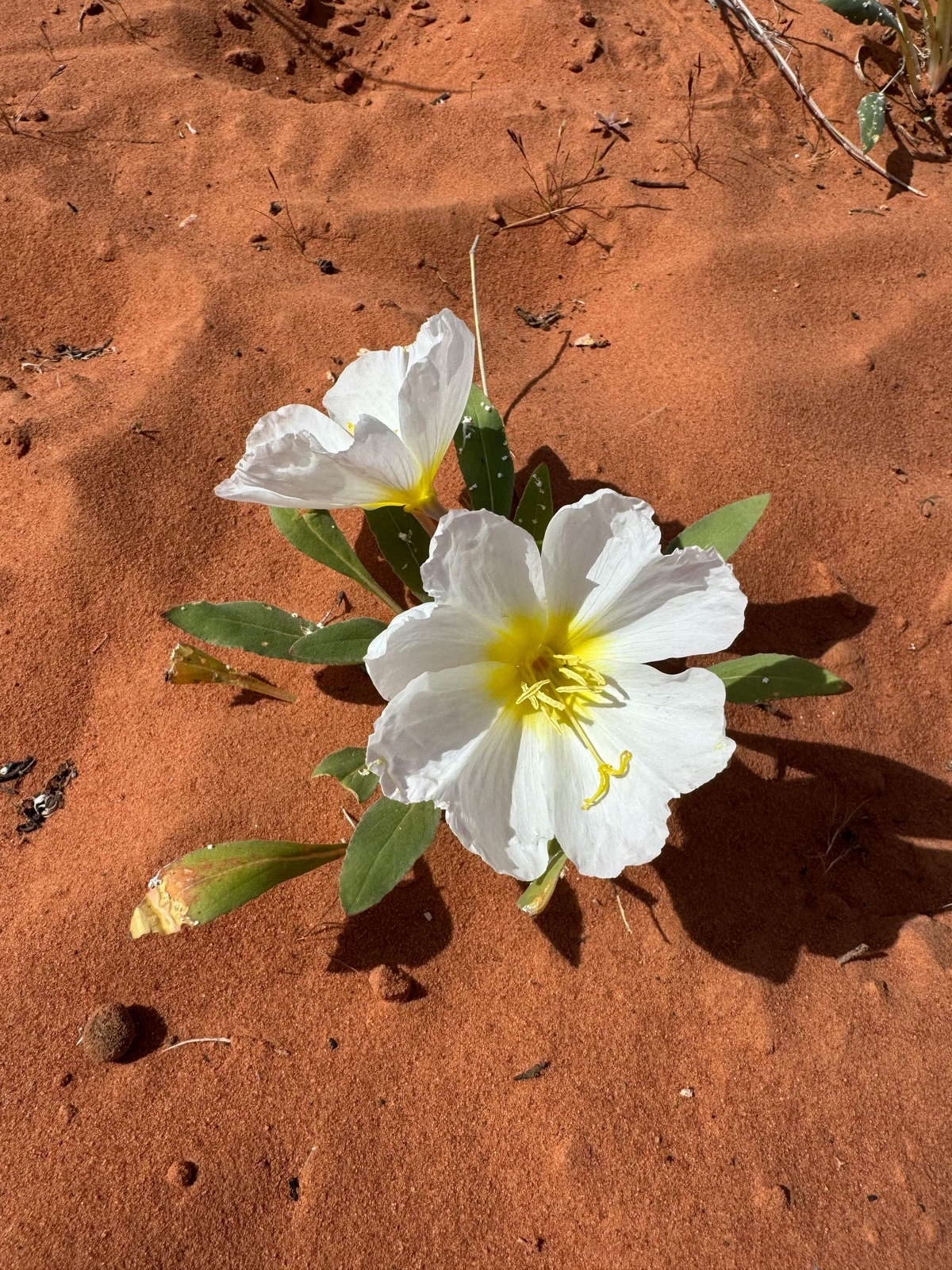
White flowers turning pinkish as they mature. Basal leaf rosettes shaped like deltas. Plants run 4 to 40 inches tall.
The interesting feature comes after bloom.
When plants die, stems curl upward and form a basket-like skeleton, the “birdcage” structure that gives the species its common name. These dried cages are visible all summer in dunes and washes long after the flowers themselves are gone.
Late-season hikers find them more memorable than the flowers, particularly when desert light hits a stand of birdcages near sundown.
Ocotillo (Fouquieria splendens)
- Family: Fouquieriaceae (ocotillo family)
- Bloom: Spring (reliable each year on established plants)
- Habitat: Arid slopes, canyons, washes, alluvial fans in sandy gravelly soil
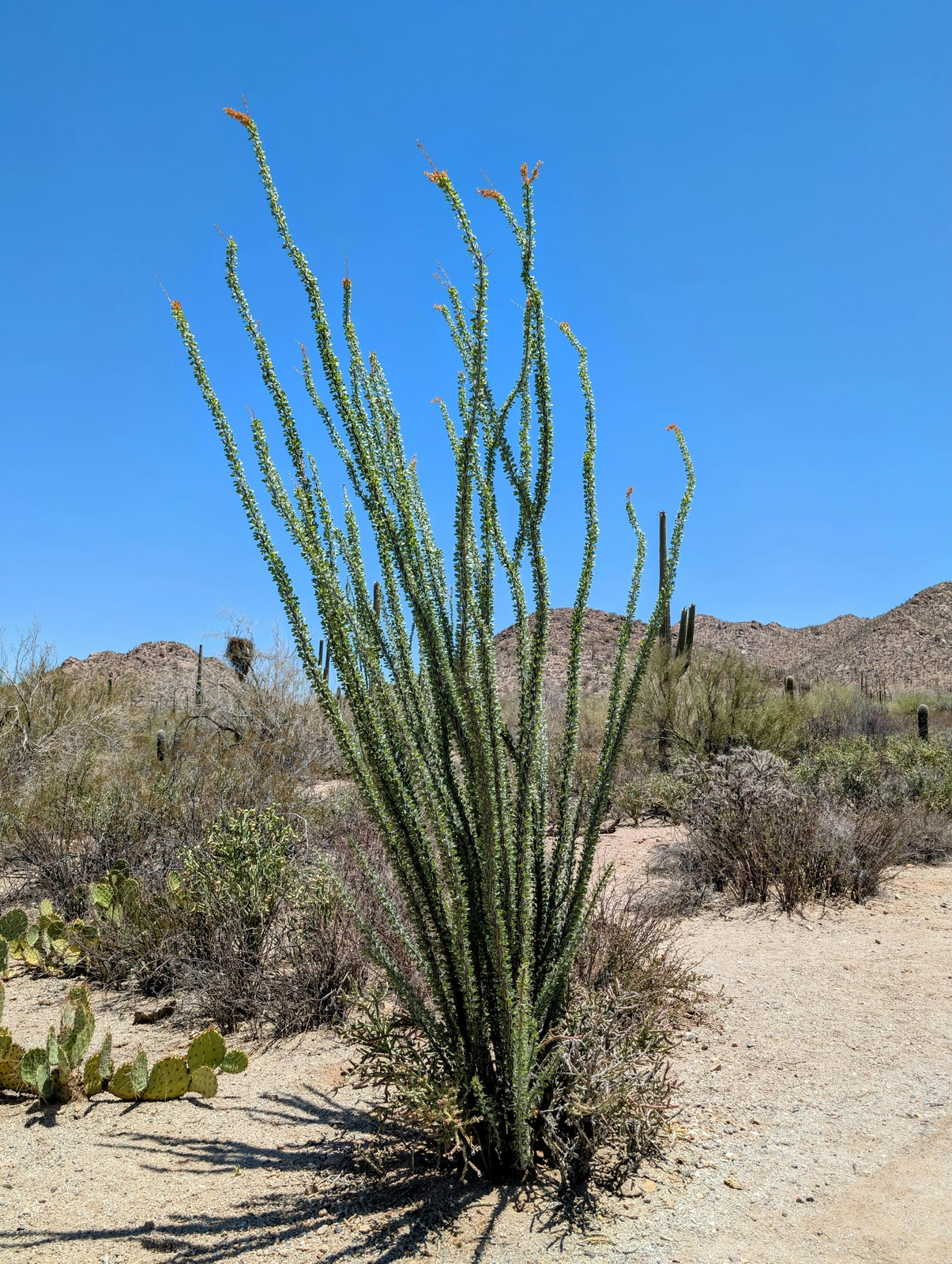
Multi-stemmed succulent shrub reaching 20 feet tall, sometimes more. Often 60 or more whip-like canes from a single base.
Bright red tube-flowers cluster at the cane tips in spring, attracting hummingbirds and carpenter bees.
Older guides sometimes claim ocotillo “blooms during years of drought.” That’s backwards. Ocotillo is perennial and blooms reliably each spring on established plants.
What depends on rain is the leaf-out cycle. Within days of a good rain the canes go from gray-bare to lush with small ovate green leaves, which then drop again in dry weeks. Drought-deciduous behavior, not drought-blooming.
The species is one of the most photographed in the park, all because of the contrast between the bare-stick phase and the leafed-out phase.
Brittlebush (Encelia farinosa)
- Family: Asteraceae (sunflower family)
- Bloom: Late winter to spring
- Habitat: Arid slopes, canyons, washes, alluvial fans in the Colorado and Mojave Deserts
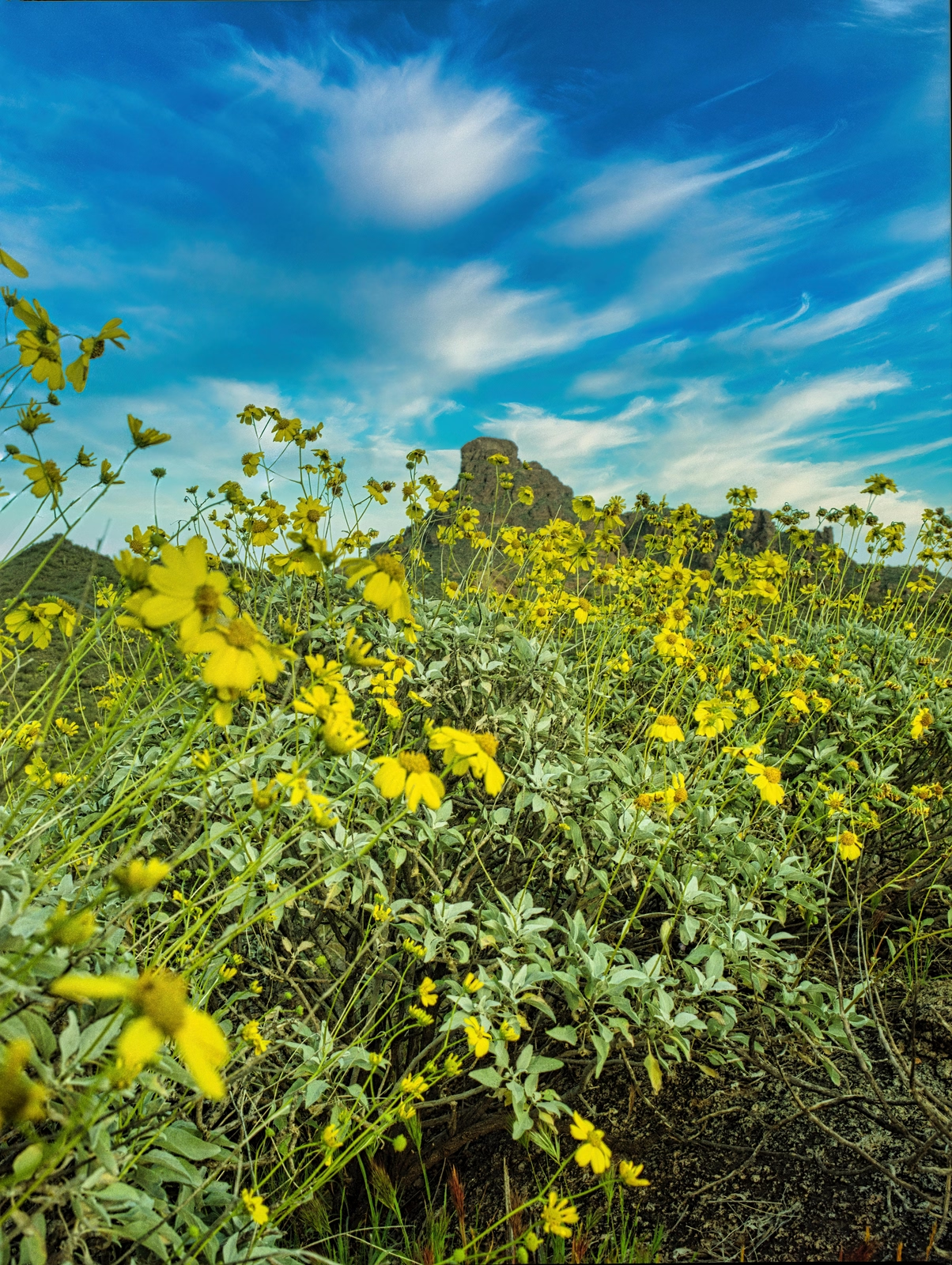
Foundation species of the desert shrub layer. White-gray foliage and bright yellow daisy-like flowerheads on long stalks held above the leaves. Brittlebush “shines” in low-angle morning or evening light when the silvery foliage catches sun. Together with ocotillo, it’s the species that defines the visual character of a Colorado Desert hillside. Very low water needs once established; foliage drops back hard in summer drought and re-flushes after rain.
Desert Sunflower (Geraea canescens)
- Family: Asteraceae (aster family)
- Bloom: Winter and spring
- Habitat: Sandy desert soils within Creosote Bush Scrub
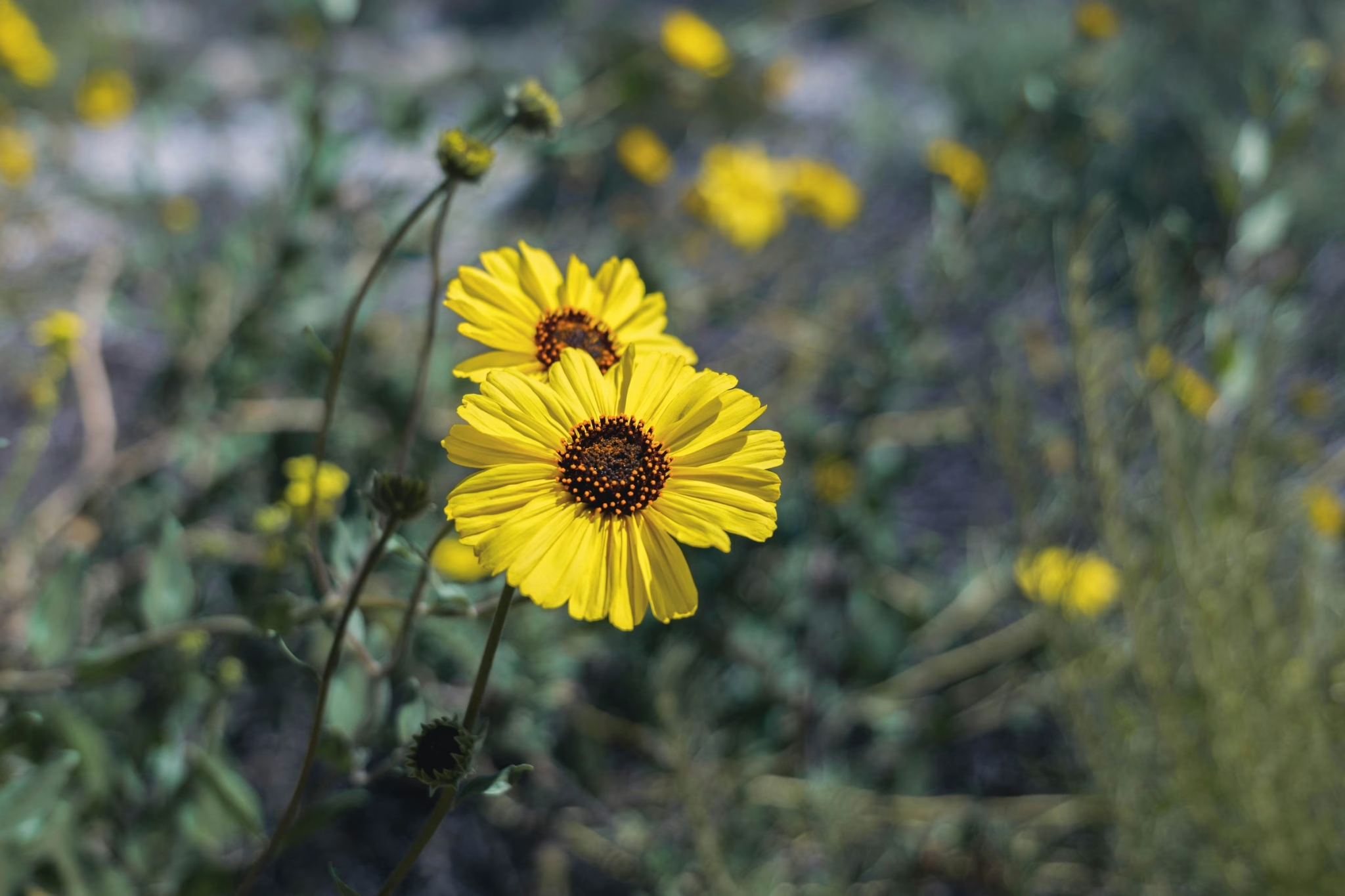
Annual herb to about three feet, with classic yellow daisy flowers held above gray-green leaves. The scientific name Geraea comes from a Greek word for “old man,” referring to the white hairs on its fruits. This is the species behind the headline photograph of yellow-flower carpet against blue sky on Henderson Canyon Road. Almost impossible to source from native nurseries, which makes it a wild-only experience.
Chuparosa (Justicia californica)
- Family: Acanthaceae (acanthus family)
- Bloom: Late winter into summer
- Habitat: Gravelly sandy washes, canyon bottoms, alluvial fans of the Colorado Desert
Multi-stemmed sprawling shrub with bright red tubular flowers, sometimes yellow on certain populations. The Spanish name chuparosa translates literally to “hummingbird,” and the relationship is genuine: hummingbirds work the flowers heavily during peak bloom. The plant itself looks loose and twiggy, not impressive standing alone. Then the birds arrive and the whole thing makes sense. Common in canyon bottoms throughout the park.
Beavertail Cactus (Opuntia basilaris)
- Family: Cactaceae
- Bloom: Spring and early summer
- Habitat: High and low desert; sandy valley floors, alluvial fans, rocky slopes, canyons
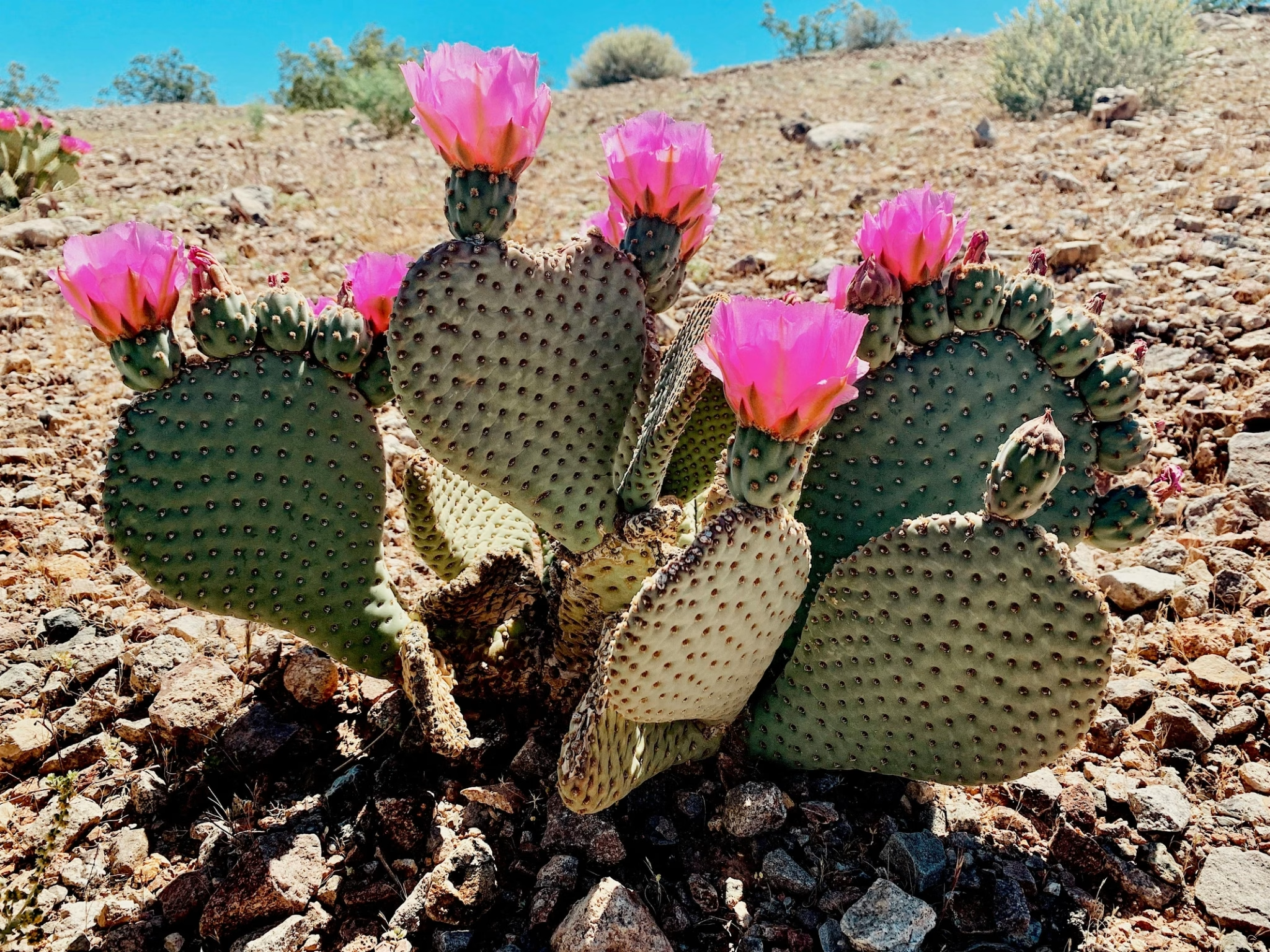
Named for its broad, flat leaf pads that resemble a beaver’s tail.
Pads carry small barbs called glochids that embed in skin on contact and are surprisingly difficult to remove. Don’t touch.
Pads can shrivel in summer drought and plump up again during winter rainy season. The flowers are shocking magenta-pink, vibrant against the dusty blue-green of the pads.
Beavertail is one of the more photogenic cacti in the park, and one of the headline species when the bloom shifts to the cactus stage in late March.
Blue Palo Verde (Parkinsonia florida)
- Family: Fabaceae (legume family)
- Bloom: Spring; sometimes additional flowering after summer rainfall
- Habitat: Mesas, bajadas, canyons, washes, flood plains of the Sonoran Desert
Tree to about 30 feet, with distinctive lime-green bark that conducts photosynthesis when foliage is absent. An adaptation for water conservation in long dry periods.
Yellow-gold pea-shaped blossoms in spring, sometimes followed by a smaller flowering pulse after summer monsoon rain.
The trunk is the visual story. Bright green bark in the middle of brown desert is genuinely strange to see for the first time.
Common in dry washes throughout the park, up to about 3,600 feet elevation.
Desert Ironwood (Olneya tesota)
- Family: Fabaceae (legume family)
- Bloom: Spring
- Habitat: Washes within Creosote Bush Scrub of the western Sonoran Desert
Sole species in its genus. Perennial flowering tree, 20 to 33 feet tall. Purple flowers in spring, not pink as some older guides claim.
Famously long-lived. Individual trees documented at over 1,000 years per BLM literature.
Ironwood washes support a remarkable density of bird life and butterfly species, including the Funereal Duskywing, whose caterpillars feed on ironwood foliage.
The wood is so dense it sinks in water, which is where the common name originates.
Smoke Tree (Psorothamnus spinosus)
- Family: Fabaceae (legume family)
- Bloom: June
- Habitat: Desert washes in southern California, Arizona, Baja California
Tree to about 26 feet, with slender twigs densely covered in fine whitish hairs.
From a distance, especially across a wash in afternoon haze, a stand of smoke trees genuinely looks like rising smoke.
The June flowers are purple in lateral clusters along the branches. Some older guides describe the flowers as blue, but Calscape lists purple as the canonical color.
June bloom is short-lived, a few weeks at most, and falls outside the main bloom-season tourism window. Smoke tree sightings are typically your reward for an off-season summer visit.
Desert Mariposa Lily (Calochortus kennedyi)
- Family: Liliaceae (lily family)
- Bloom: Spring
- Habitat: Rocky places and heavy soil; multiple plant communities
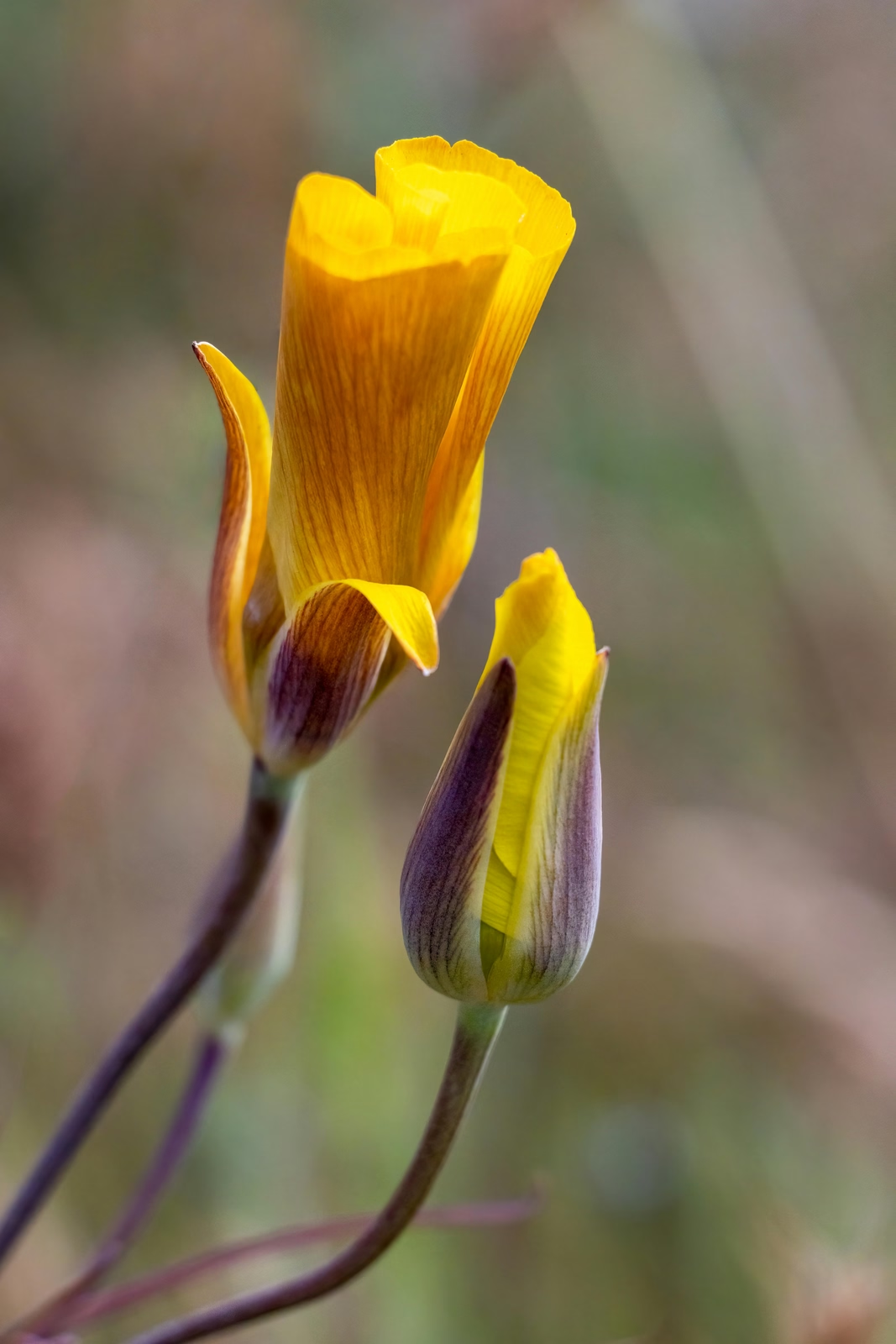
Perennial geophyte (bulb-forming) with cup-shaped flowers in yellow, orange, or red. The orange-red form is the signature desert-mariposa color, almost too vivid for the surroundings. This is a higher-elevation species, appearing later in the bloom season as the front moves uphill. Visitors who time it right can catch mariposa lilies at the same trip as the late-stage cactus bloom on the lower elevations.
Ghost Flower (Mohavea confertiflora)
- Family: Plantaginaceae (plantain family, current taxonomy)
- Bloom: March to April
- Habitat: Below 3,300 feet elevation; Colorado Desert
Annual herb, 4 to 16 inches tall, with pale cream or white petals marked with darker spots.
The story behind the species name is one of the better plant-insect interactions in California botany.
Ghost flower is nectarless. It mimics the appearance of Mentzelia involucrata, a nectar-producing species that grows in the same habitat, and the petal markings resemble female Xeralictus bees.
Male bees attempt to mate with the flower. They pollinate it in the process and get nothing in return.
Floral mimicry, deception pollination, the works. A species worth its own paragraph for the science alone.
Blue Elderberry (Sambucus nigra ssp. cerulea)
- Family: Adoxaceae (formerly classified in Caprifoliaceae, the honeysuckle family)
- Bloom: March to April in Anza-Borrego canyons; June-July in higher-elevation populations elsewhere
- Habitat: Higher-elevation canyon bottoms in the Peninsular Range portion of the park
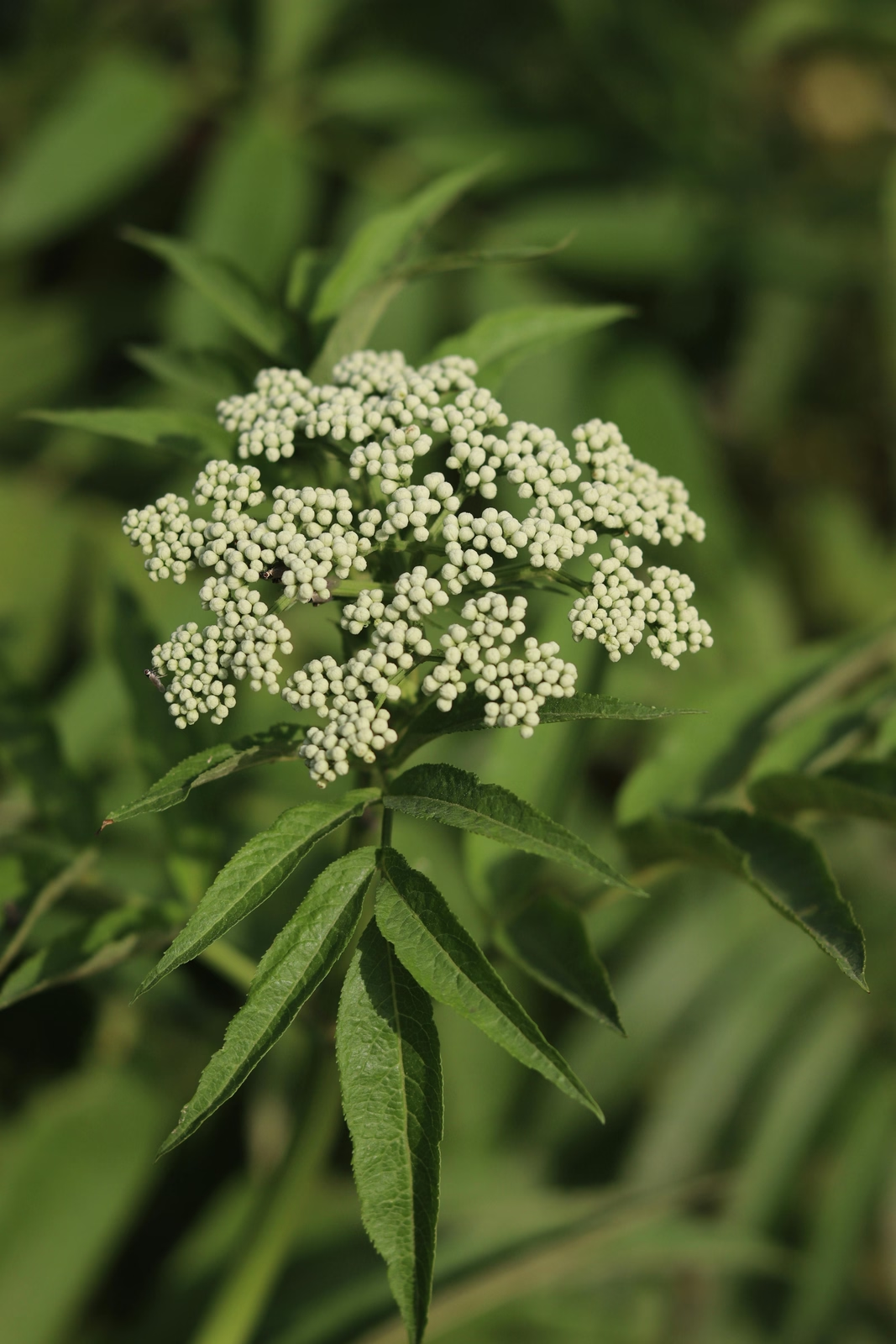
Large deciduous shrub up to 20 feet tall and wide. White flower clusters 5 to 9 inches across, pinnately compound.
Bluish-black berries with a glaucous powder coating that lends the light-blue color from which the common name comes.
This is the only species on the list that you won’t see on the headline carpet routes.
Blue elderberry lives on the higher-elevation western edge of the park, in canyon bottoms with seasonal water. Most Anza-Borrego wildflower visitors won’t encounter it.
The berries have a real ethnobotanical history with regional Indigenous peoples.
The Super Bloom Years
Super blooms are not annual events. They’re 1-in-3-to-5-year events. California State Parks tracks them by rainfall: when the park exceeds 6 inches of precipitation in the lead-up to bloom season, with that rainfall delivered across multiple months and not concentrated in a single storm, super bloom conditions become possible. The park hit that threshold in 2017, 2019, 2020, and 2023. Every other recent year fell short.
| Year | Status | Rainfall | Notable |
|---|---|---|---|
| 2017 | Super bloom | 6.6 inches | Most dramatic bloom in nearly 20 years; thousands of visitors; hundreds of thousands across Anza-Borrego, Antelope Valley, Ocotillo Wells |
| 2019 | Super bloom | >6 inches | The Walker Canyon mob year; bloom magnitude generated permanent damage at related California viewing destinations |
| 2020 | Significant bloom | >6 inches | Quieter than 2017/2019 because of pandemic-era visitor caps |
| 2023 | Significant bloom | >6 inches | Strong Henderson Canyon Road carpet; Tropical Storm Hilary later that summer triggered the Coyote Canyon closure |
| 2024 | Spectacular wildflower season | Not specified | Notable caterpillar activity (White-Lined Sphinx Moth) per the Anza-Borrego Foundation |
| 2025 | Limited bloom | <1 inch at park HQ | Park received less than an inch of rain at headquarters, well below the 5.5-inch annual average |
| 2026 | Moderate, not super | ~4+ inches | Peaked early March on lower elevations; cut short by mid-March heat |
The four conditions for a super bloom: sustained rainfall over multiple months, cool nighttime temperatures, minimal heat spikes, and calm winds that allow seedlings to establish.
When all four show up together, you get 2017, the most dramatic bloom seen in nearly 20 years per California State Parks. When one or more conditions is missing, you get a moderate year or worse.
Average annual rainfall in Borrego Springs hovers around 5.5 inches, below the 6-inch threshold.
Most years, the math doesn’t work.
Beyond the Bloom: Borrego Springs as Base Camp
Borrego Springs is the town inside the park boundary, and it doubles as base camp for any multi-day wildflower trip. Two things on top of the bloom make the visit worth a longer stay.
Galleta Meadows. A collection of 130 free-standing metal sculptures created between 2008 and 2012 by artist Ricardo Breceda on private land just outside the state park boundary. Dragons, mammoths, sabertooth cats, prehistoric birds. Free to visit, scattered across multiple plots around Borrego Springs. The dragon sculpture half-buried in the desert floor is one of the more photographed pieces of public art in southern California. Worth an hour between morning and evening bloom drives.
International Dark Sky designation. Anza-Borrego Desert State Park is a designated International Dark Sky Park. Borrego Springs town carries the separate International Dark Sky Community designation.
Translation: the night sky here is among the darkest accessible night skies in southern California. You can combine wildflower photography by day with Milky Way photography by night without driving out of the park boundary.
The Galleta Meadows sculptures shot against the Milky Way is a recognized astrophotography composition.
A new moon weekend during bloom season is the ideal date.
Camping vs. lodging. Borrego Palm Canyon Campground inside the state park has 120 sites, both tent and RV. It fills out months in advance during peak bloom weekends.
Tamarisk Grove Campground on the Cactus Loop side is smaller and quieter.
Town hotels in Borrego Springs run from budget to mid-range. Borrego Springs Resort and the Palms at Indian Head are the established options. None are luxury tier; all are within walking distance of the town center.
Planning the Trip from Northern California
Borrego Springs is roughly 530 miles from Sacramento, 9 to 10 hours of driving. Not a weekend trip if you want to actually see bloom. The decision tree before booking:
- Call (760) 767-4684 first. The Anza-Borrego Foundation hotline is the single highest-leverage call you can make. If the recording says “limited bloom” or “past prime,” cancel and try Carrizo Plain or Antelope Valley instead. Both are closer to NorCal and may be peaking on a different schedule.
- Best window for a NorCal traveler: February 15 through March 15. Henderson Canyon Road typically peaks in this window. Earlier and the upper elevations haven’t started; later and the heat may have ended the lower bloom.
- Multi-day, not single-day. Three nights is the right minimum. Drive down day one, bloom day two and three, drive back day four.
- Weekend reservations fill out months in advance during bloom season. Borrego Palm Canyon Campground and town hotels both. Book by January if you’re targeting a peak weekend.
- Cell service is spotty in much of the park. Download offline maps before you leave. Gaia GPS or Google Maps offline both work.
- Heat warning for late-season visits. Borrego Springs summer temps regularly run 100-110°F. Bloom season January through March is also high tourism, but accessing the park in July through September requires real heat preparation.
- Park entry is free. Day-use parking at most lots. You don’t need to buy anything in advance to visit.
- Carrizo Plain alternative. Carrizo (San Luis Obispo County) is about 4 hours from Sacramento. The 2026 super bloom landed there, not Anza-Borrego. If a super bloom year aligns and you have to choose, Carrizo is closer and the bloom is grasslands-dominant (poppy and lupine carpet) rather than Colorado Desert sandflats. Different aesthetic, different season window. The two destinations rarely peak simultaneously.
What to bring:
A wide-brimmed sun hat with a neck flap. Polarized sunglasses. Refillable water (plan on a gallon per person per day if you’re hiking). Sunscreen. Real hiking boots, since badlands routes run uneven.
An Osprey Talon 22L daypack for photography gear. The Sonoran Desert Wildflowers Falcon Guide (which covers Anza-Borrego specifically), or the Anza-Borrego Foundation’s annual map as a downloadable PDF or pickup at the visitor center.
A pair of Nikon ACULON 10×42 binoculars if you want to spot bighorn sheep.
A Black Diamond Spot 400 headlamp for sunset hikes back to the trailhead, plus Dark Sky stargazing after dinner.
Frequently Asked Questions
When do wildflowers bloom in Anza-Borrego?
The bloom window runs January through May. Lower elevations start first in late January, the valley floor (around 500-1,500 feet) peaks in February through early March, mid-elevations bloom in mid-late March, and higher elevations (4,000+ feet) bloom in April and May. Cactus stage runs March-April after the annual carpets fade. Smoke trees and ironwood bloom purple in June.
Are the wildflowers blooming in Anza-Borrego right now?
Call the Anza-Borrego Foundation Wildflower Hotline at (760) 767-4684 for the most current report. It updates weekly during bloom season. The Foundation also publishes written updates at theabf.org and posts photos on Facebook and Instagram. California State Parks runs a live PoppyCam at parks.ca.gov/WildflowerBloom.
What is the best time to see wildflowers in Anza-Borrego?
Mid-February through mid-March is the historical sweet spot for a single-trip visit, when Henderson Canyon Road and the valley floor typically hit peak. For mid-elevation bloom, plan late March. For cactus, target early April. The exact peak shifts year to year by 2-3 weeks based on rainfall onset and temperature, so confirm with the hotline before committing.
Where are the best places to see wildflowers in Anza-Borrego?
Henderson Canyon Road is the marquee viewing area in 2026 and recent years, with 2WD paved access and the densest carpets of sand verbena and dune primrose. Other top spots: lower Coyote Canyon (4WD past Desert Garden, vehicles stop at the closure gate), S-22 corridor at mile marker 30, Cactus Loop Trail at Tamarisk Grove for cactus stage, Fonts Point and the badlands corridor at San Felipe Wash for mid-March mid-elevation viewing.
Is Coyote Canyon closed?
Coyote Canyon is partially closed. A 10.7-mile section of Coyote Canyon Dirt Road from the Lower Willows / Third Crossing gate (5.2 miles in from the canyon entrance) to Middle Willows has been closed to vehicles since Tropical Storm Hilary diverted Coyote Creek onto the road on August 19, 2023. The lower section to the closure gate remains accessible (4WD past Desert Garden). Hikers, cyclists, and equestrians may pass the gate on day-use access. There is no announced reopening date for vehicle access.
Was 2026 a super bloom in Anza-Borrego?
No. California State Parks forecast 2026 as moderate-to-strong, and the Anza-Borrego Foundation explicitly stated that 2026 did not constitute super bloom conditions. The park received about 4+ inches of rain, which is significant for the desert but below the 6-inch threshold for a super bloom. Super blooms also require sustained rainfall over multiple months, cool nights, minimal heat spikes, and calm winds. The 2026 mid-March heat wave cut the lower-elevation bloom short.
How many wildflower species are in Anza-Borrego?
Anza-Borrego has 600 native plant species across 92 plant families and 346 genera per the Anza-Borrego Foundation. The “200+ species” figure that appears in older guides understates the park’s biodiversity by two-thirds.
Is there a wildflower hotline for Anza-Borrego?
Yes. The Anza-Borrego Foundation Wildflower Hotline is (760) 767-4684. It updates weekly during bloom season with park-specific bloom status. The Theodore Payne Foundation also runs a Southern California-wide hotline at (818) 768-1802 ext 7 with weekly Friday updates from March through May; that hotline covers Anza-Borrego as part of broader regional coverage.
Where is the Coyote Canyon Wildflower Viewing Area?
Coyote Canyon is accessed by driving north on DiGiorgio Road from Palm Canyon Drive in Borrego Springs. Pavement ends about three miles north. The interpretive kiosk is the standard parking spot for 2WD vehicles. High-clearance and 4WD allow access further to Desert Garden and on to the closure gate at Lower Willows / Third Crossing. The classic full-canyon traverse to Middle Willows and Collins Valley is no longer accessible by vehicle since the 2023 Hilary closure.
How do I plan a wildflower trip from Northern California?
Borrego Springs is 530 miles from Sacramento, a 9-10 hour drive. Plan three nights minimum. Best timing window is February 15 through March 15 for the Henderson Canyon Road peak. Call (760) 767-4684 before booking to confirm bloom status. Book Borrego Palm Canyon Campground or town lodging by January for peak weekend dates. Download offline maps. Bring gallon-per-person-per-day water for any hiking. Free park entry and free Galleta Meadows sculpture viewing on the same trip.
What’s the difference between Anza-Borrego and Carrizo Plain wildflowers?
Anza-Borrego is Colorado Desert sandflat bloom (sand verbena, dune primrose, desert sunflower, ocotillo, cactus). Carrizo Plain is California grasslands bloom (poppy, lupine, tidy tips, goldfields). Different aesthetic, different bloom triggers, different timing. Carrizo is roughly 4 hours from Sacramento; Anza-Borrego is 9-10. They rarely peak simultaneously, so check the Theodore Payne hotline (818-768-1802 ext 7) to compare current status before choosing.
Can I pick wildflowers in Anza-Borrego?
No. Flower picking is prohibited park-wide. California State Parks frames the rule as Don’t Doom the Bloom: stay on designated trails and take only photos. Picking, trampling, and off-trail driving all damage seedling banks for future years.
Plan a multi-day wildflower trip with related coverage of California’s bloom destinations:
- California Super Bloom & Wildflower Guide: the regional hub covering all major California bloom destinations and timing
- Anza-Borrego Desert State Park overview: full park guide covering history, attractions, and geography beyond the wildflower season
Affiliate Disclosure: Some links in this article are affiliate links. As an Amazon Associate, MK Library earns from qualifying purchases at no additional cost to you.
Article Updates
- May 6, 2026: Full Mike-byline closure-aware rewrite published from 2022 draft. Added 600-species biodiversity figure (corrected from “200+”), 14 verified species profiles with current taxonomy (Asparagaceae for Desert Lily, Adoxaceae for Blue Elderberry, corrected flower colors for Ironwood and Smoke Tree). Added Coyote Canyon post-Hilary closure section with current 2026 access status. Added 2026 season status (moderate, not super bloom) with parks.ca.gov and Anza-Borrego Foundation source citations. Added Henderson Canyon Road as lead 2026 viewing area. Added wildflower hotline section ((760) 767-4684 ABF + (818) 768-1802 ext 7 Theodore Payne). Added bloom-calendar table by elevation. Added 12-question FAQ with FAQPage JSON-LD schema. Added two inline SVGs (bloom progression chart and viewing-area schematic). Added historical super bloom years table (2017, 2019, 2020, 2023). Added Borrego Springs base-camp section with Galleta Meadows + Dark Sky designation context. Added trip-planning section for Northern California travelers. Bidirectional links with California Super Bloom hub and Anza-Borrego Desert State Park overview.