
Last Updated: February 21, 2026 by Michael Kahn. Published: February 21, 2026.
Mile 4.5 of a 7-mile paddle. One moment you’re cruising, rhythm locked in, sun on your shoulders. The next, your paddle feels like it weighs forty pounds. Your arms turn to wet cement. Your brain gets foggy. You’re scanning the shore for somewhere, anywhere, to pull over and eat something. Anything.
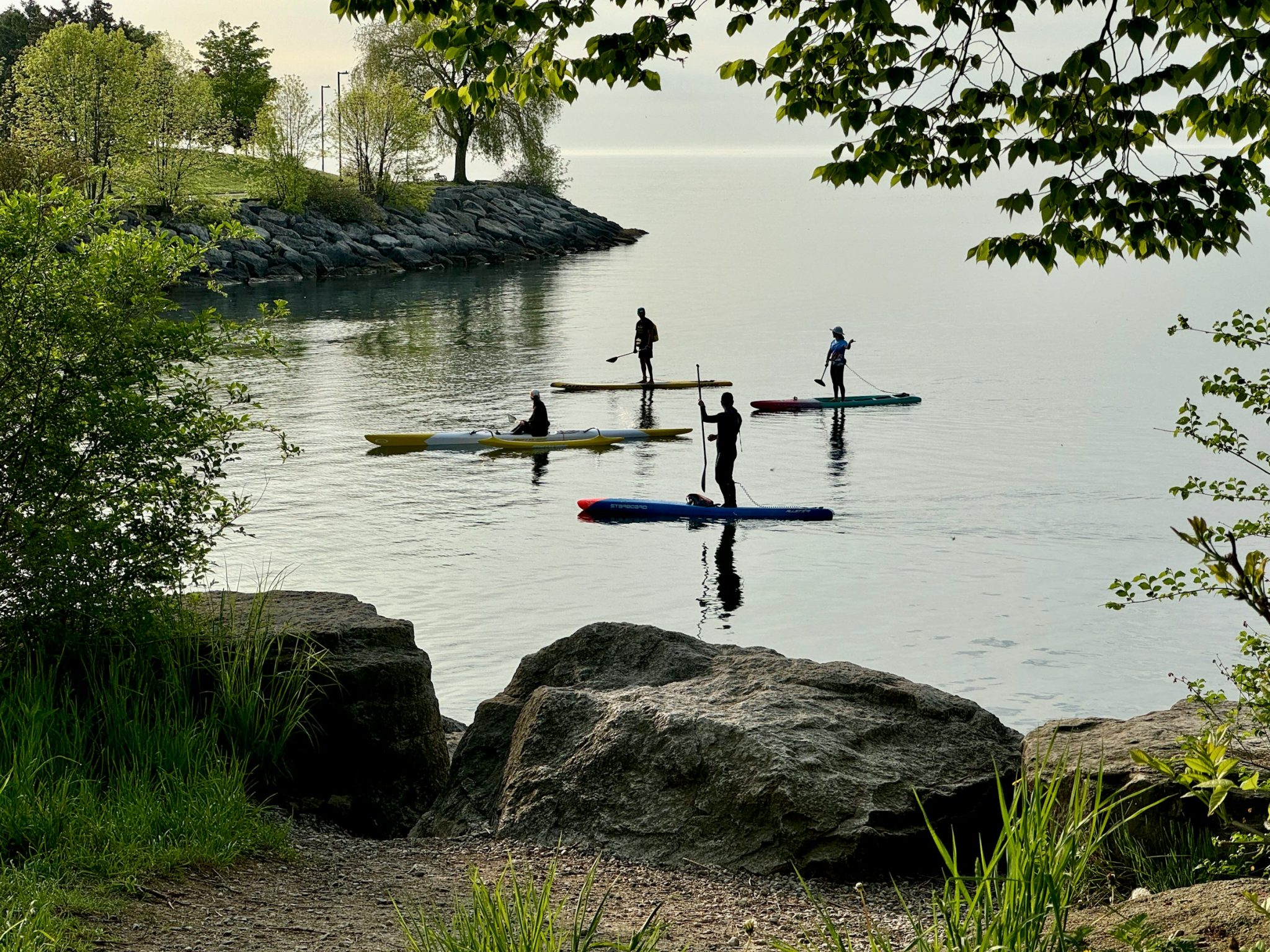
I know this feeling because I lived it recently. A 7-mile SUP session that should have been a strong finish turned into a survival crawl from mile 5 onward. Stopping every mile. Inhaling berries and coconut water on the board like a castaway who found a Whole Foods. Finishing the paddle absolutely demolished, then spending the rest of the day in a caloric black hole.
Turns out, everything about my fueling strategy was wrong. Not “slightly suboptimal.” Physiologically backwards.
So I went deep into the peer-reviewed literature. Position stands from the American College of Sports Medicine (ACSM), the International Society of Sports Nutrition (ISSN), published research in the Journal of the International Society of Sports Nutrition, Medicine & Science in Sports & Exercise, and the Journal of Applied Physiology. What I found explains exactly why I hit the wall, why my mid-paddle berries were the wrong call, and what I should have been doing from the night before.
This is everything I learned, with receipts.
Key Takeaways
- Bonking is glycogen depletion, and it’s predictable: untrained muscles store roughly 90-120 minutes of fuel at moderate intensity, which maps precisely to a mile 4-5 wall on a 7-mile paddle.
- You must eat BEFORE you’re hungry: carbohydrate intake should begin within the first 30 minutes of exercise and continue at 30-60 grams per hour (ACSM/ISSN guidelines).
- Berries are terrible mid-exercise fuel: high fiber slows gastric emptying, high water content means low caloric density, and fructose alone absorbs poorly compared to glucose-fructose combinations.
- Pre-paddle nutrition starts the night before: a high-carbohydrate dinner (8-10 g/kg/day) tops off glycogen stores that take 24 hours to fully replenish.
- The 30-60 minute post-paddle window is real: glycogen synthase enzyme activity peaks immediately after exercise, making this the most efficient time to refuel.
- Hydration means electrolytes, not just water: sodium intake of 500-700 mg/L in your drink supports intestinal water absorption during sessions over 2 hours (ACSM, 2007).
- SUP burns 615-1,130 calories per hour depending on intensity, making it a genuine endurance sport that demands endurance-level fueling.
The Physiology of Bonking: What Actually Happens at Mile 5
Let’s start with what went wrong inside my body, because understanding the mechanism makes the solution obvious.
Your Muscles Run on Glycogen (Until They Don’t)
Skeletal muscle stores approximately 300-400 grams of glycogen, your body’s preferred fuel for moderate-to-high intensity exercise. The liver holds an additional 80-100 grams. Together, these reserves provide roughly 1,600-2,000 calories of available carbohydrate energy.
Source: Murray & Rosenbloom, “Fundamentals of glycogen metabolism for coaches and athletes,” Nutrition Reviews, 2018; Hargreaves & Spriet, “Skeletal muscle energy metabolism during exercise,” Nature Metabolism, 2020.
At moderate intensity (which sustained SUP paddling absolutely qualifies as, burning 615-708 calories per hour for touring pace according to University of Montana research), your muscles oxidize a mix of carbohydrates and fat. But as intensity increases or duration extends, carbohydrate becomes the dominant fuel source.
Here’s the math that matters. At moderate SUP touring intensity, you’re burning roughly 2-3 grams of carbohydrate per minute. Over 120 minutes, that’s 240-360 grams. Your total glycogen storage? 380-500 grams. The margins are thinner than you think, especially if you started with anything less than fully topped-off stores.
The Wall Is a Metabolic Cliff, Not a Gradual Slope
What makes bonking so disorienting is how sudden it feels. You’re fine, you’re fine, you’re fine, and then you’re not. This isn’t psychological.
Research published in Frontiers in Physiology (2025) demonstrated that exercise-induced glycogen depletion reduced time to task failure by approximately 40%. The decline isn’t linear. Once glycogen drops below a critical threshold, performance collapses because glycogen is essential for ATP resynthesis at major sites including myosin ATPases and sarcoplasmic reticulum calcium pumps. Without it, your muscles literally cannot contract with the same force.
Source: “Exercise- and diet-induced glycogen depletion impairs performance during one-legged constant-load, high-intensity exercise in humans,” Frontiers in Physiology, 2025. Full text.
Simultaneously, blood glucose drops. Your brain, which relies almost exclusively on glucose, starts rationing. Cognitive function deteriorates. Decision-making gets sloppy. Your perceived effort skyrockets even though your actual output has cratered. That “fog” at mile 5? That’s your central nervous system running on fumes.
Benjamin Rapoport’s computational model from Harvard Medical School demonstrated that the probability of hitting the wall is contingent on stored glycogen, exercise intensity, pacing strategy, and body mass. For a 2+ hour session at moderate intensity with suboptimal glycogen stores and zero mid-exercise carbohydrate? Bonking isn’t a risk. It’s a certainty.
Source: Rapoport, B.I., “Metabolic factors limiting performance in marathon runners,” PLoS Computational Biology, 2010.
Why Mile 4-5 Specifically?
At a touring pace of roughly 3-3.5 mph, mile 4.5 falls right around the 75-90 minute mark. That maps almost perfectly to glycogen depletion timelines in untrained-to-moderately-trained endurance athletes. The research consistently shows the wall hits between 90-120 minutes at moderate intensity for individuals who haven’t carb-loaded or fueled during exercise.
In other words: my body did exactly what the science predicted. I just hadn’t read the science yet.
Pre-Paddle Nutrition: Building the Fuel Tank
The fix starts long before you touch water.
The Night Before (Glycogen Loading)
The ISSN Position Stand on Nutrient Timing (Kerksick et al., 2017) states that endogenous glycogen stores are maximized by following a high-carbohydrate diet of 8-12 g of carbohydrate per kg of body weight per day. For a 180-pound (82 kg) paddler, that’s 656-984 grams of carbohydrate across the day before a long session.
Source: Kerksick, C.M. et al., “International society of sports nutrition position stand: nutrient timing,” Journal of the International Society of Sports Nutrition, 14:33, 2017. PMC Full Text.
You don’t need to hit the upper range. But your dinner the night before a long paddle should be carbohydrate-forward. Think pasta with marinara, rice bowls, sweet potatoes, bread. This isn’t the meal to go low-carb.
Night-before dinner example: Large bowl of pasta with marinara sauce, side of garlic bread, mixed green salad. Approximate macros: 120-150g carbohydrate, 25-30g protein, 15-20g fat. Follow with a banana or toast with honey before bed if you’re still hungry.
2-4 Hours Before Launch: The Foundation Meal
The joint ACSM/AND/Dietitians of Canada Position Stand (Thomas et al., 2016) recommends consuming 1-4 g of carbohydrate per kg of body weight in the 1-4 hour window before exercise, scaled by timing: 1 g/kg at 1 hour, 2 g/kg at 2 hours, up to 4 g/kg at 4 hours.
Source: Thomas, D.T., Erdman, K.A., & Burke, L.M., “Nutrition and Athletic Performance,” Joint Position Statement, Medicine & Science in Sports & Exercise, 48(3):543-568, 2016. PubMed.
For a 180-pound paddler eating 3 hours before launch, that’s approximately 164-246 grams of carbohydrate. The meal should be relatively high in carbohydrate, moderate in protein, and low in fat and fiber to facilitate gastric emptying.
| Timing | Carbs (82 kg paddler) | Example Meal |
|---|---|---|
| 4 hours before | 328g (4 g/kg) | Large bowl oatmeal with banana and honey, toast with jam, orange juice |
| 3 hours before | 246g (3 g/kg) | Bagel with peanut butter and banana, sports drink, handful of pretzels |
| 2 hours before | 164g (2 g/kg) | White rice with a small amount of chicken, white bread, sports drink |
Research published in Medicine & Science in Sports & Exercise confirmed that consuming a high-carbohydrate meal 4 hours before prolonged cycling at 70% VO2max significantly increased both muscle and liver glycogen while boosting carbohydrate oxidation rates.
Key detail: white carbs outperform whole grains here. This feels counterintuitive. Whole grains are “healthier” in everyday nutrition. But before endurance exercise, you want rapid digestion and minimal fiber. White rice, white bread, regular pasta. Save the brown rice and whole wheat for recovery.
30-60 Minutes Before Launch: The Top-Off
A small, easily digestible snack of 30-50 grams of carbohydrate in the final hour before paddling provides a last bump to blood glucose without risking GI distress.
Good options: a banana (27g carb), a handful of dried dates (2-3 Medjool dates = 54g carb), a sports drink, white toast with honey, or half an energy bar.
Avoid anything high in fat, fiber, or protein at this point. Your stomach needs to be mostly empty when you start paddling. Standing on a board with a full gut is a recipe for nausea, and on SUP, nausea has consequences beyond discomfort.
During-Paddle Nutrition: The Part I Got Completely Wrong
This is where the science is most clear and where my strategy failed most spectacularly.
The Golden Rule: 30-60 Grams of Carbohydrate Per Hour
Both the ACSM (Thomas et al., 2016) and ISSN (Kerksick et al., 2017) position stands converge on the same recommendation for exercise lasting longer than 90 minutes: consume 30-60 grams of carbohydrate per hour. For sessions exceeding 2.5-3 hours, that number can increase to 60-90 g/hr using glucose-fructose combinations.
The ISSN specifically recommends consuming a 6-8% carbohydrate solution (that’s 6-8 grams of carb per 100 ml of fluid) at regular intervals of every 10-12 minutes. This maintains blood glucose, delays glycogen depletion, and sustains performance.
Source: Kerksick, C.M. et al., 2017 (ISSN); Thomas, D.T. et al., 2016 (ACSM/AND/DC). See full citations above.
Critical timing point: You must begin eating within the first 30 minutes of exercise, well BEFORE you feel hungry. By the time you feel hungry, glycogen depletion is already advanced and blood glucose is dropping. Once you’re behind, it’s extremely difficult to catch up because gastric emptying slows as exercise intensity increases and glycogen stores decline.
What I Should Have Packed
| Food | Carbs per Serving | Why It Works |
|---|---|---|
| Energy gel (GU, Maurten, etc.) | 20-25g per packet | Rapid absorption, glucose-fructose blend, no fiber, minimal volume |
| Medjool dates (2-3) | 36-54g | Natural glucose-fructose mix, calorie-dense, minimal fiber for a fruit |
| Rice cakes (homemade or Skratch) | 25-35g each | Easy to chew, low fiber, white rice base digests quickly |
| Pretzels | 22g per oz | Simple carbs plus sodium, zero fiber, easy to store on board |
| Fig bars | 22g per bar | Moderate caloric density, decent glucose source, soft texture |
| Sports drink (Gatorade, Skratch, etc.) | 14-21g per 8 oz | Carbs plus electrolytes plus hydration in one delivery |
| Honey packets/sticks | 17g per tbsp | Pure glucose-fructose, no chewing required, fast absorption |
A Practical On-Board Fueling Schedule for a 7-Mile Paddle
Assuming a 2-2.5 hour session at touring pace:
| Time/Mile | Action | Approximate Carbs |
|---|---|---|
| Mile 0.5 (15 min) | Start sipping sports drink; eat 1 date or half an energy gel | 15-20g |
| Mile 1.5 (30 min) | Finish first gel or eat second date; continue sports drink sips | 15-20g |
| Mile 2.5 (50 min) | Rice cake or fig bar; electrolyte drink sips | 25-30g |
| Mile 3.5 (70 min) | Energy gel or 2 dates; water or sports drink | 20-25g |
| Mile 5 (90 min) | Energy gel or pretzels with sports drink | 20-25g |
| Mile 6 (110 min) | Final gel or dates if needed; sip sports drink to finish | 15-20g |
| Total | 110-140g over ~2 hrs (55-70g/hr) |
That schedule delivers 55-70 grams of carbohydrate per hour, right in line with recommendations for 2+ hour endurance sessions. The key is consistency. Small amounts at regular intervals, not emergency eating after you’ve already bonked.
Hydration and Electrolytes: More Than Just Water
The ACSM Position Stand on Exercise and Fluid Replacement (Sawka et al., 2007) provides clear guidelines for endurance exercise hydration:
- Fluid intake: 0.4-0.8 liters per hour during intense endurance activity
- Sodium content: 500-700 mg/L in your drink to support intestinal water absorption
- Dehydration threshold: Performance declines when body weight loss exceeds 2% from water deficit
- Pre-hydration goal: Start euhydrated with normal plasma electrolyte levels
Source: Sawka, M.N. et al., “American College of Sports Medicine position stand: Exercise and fluid replacement,” Medicine & Science in Sports & Exercise, 39(2):377-390, 2007. PubMed.
On a SUP, you’re exposed to sun, wind, and reflected heat from the water. Sweat rates can easily exceed 1 liter per hour in warm conditions, and most paddlers underestimate their losses because the water splashing on you masks the sweating. The ACSM notes that when sweat rate exceeds 1.2 L/hr and activity lasts more than 2 hours, sodium supplementation becomes critical to prevent hyponatremia.
This is why plain water and coconut water alone aren’t sufficient. Coconut water has decent potassium but relatively low sodium (roughly 250 mg per cup versus the 500-700 mg/L the ACSM recommends). For a 2+ hour paddle, you need a proper electrolyte drink or supplemental sodium.
Hydration setup for SUP: Carry at least 40-60 oz total fluid for a 2+ hour paddle. Use a hydration bladder (CamelBak or similar) attached to your board’s bungee system for hands-free sipping. A mix of sports drink (for carbs and electrolytes) and plain water works well. Target one sip every 10-15 minutes, not just when thirsty.
What Went Wrong With the Berries: A Detailed Critique
Now for the part where I explain to myself, using published science, why my mid-paddle food choices were almost perfectly wrong for the situation.
Here’s what I ate at the halfway point of a 7-mile paddle after already bonking: 6 oz of raspberries, 6 oz of blueberries, 8 oz of coconut water, and 18 oz of Roar Organic Complete Hydration. Then continued sipping coconut water from miles 5-7.
Let’s break down why this didn’t work.
Problem 1: Caloric Density Is Abysmal
| What I Ate | Calories | Carbs | Fiber |
|---|---|---|---|
| 6 oz raspberries | ~53 | 12g | 7g |
| 6 oz blueberries | ~97 | 24g | 4g |
| 8 oz coconut water | ~46 | 9g | 0g |
| 18 oz Roar Organic | ~45 | 11g | 0g |
| Total | ~241 | 56g | 11g |
At first glance, 56 grams of carbohydrate looks decent. But there are three compounding problems.
Problem 2: Fiber Slows Everything Down When You Need Speed
Those 11 grams of fiber are actively working against you. Research on nutrient delivery during exercise consistently shows that fiber, fat, and protein all reduce carbohydrate and fluid delivery by slowing gastric emptying. The ACSM’s pre-exercise meal guidelines specifically recommend choosing foods lower in fat and fiber to reduce GI distress risk.
During exercise, blood flow is diverted from the digestive system to working muscles. Your gut is already operating at reduced capacity. Adding high-fiber food forces your compromised digestive system to do extra work, slowing absorption of the carbohydrates you desperately need and increasing the risk of cramping and bloating.
Raspberries are essentially nature’s scrub brush. Incredible for daily nutrition. Terrible for acute mid-exercise energy delivery.
Problem 3: Fructose Alone Is a Bottleneck
Berries are predominantly fructose. And fructose absorption has a hard ceiling.
Research published in the Journal of Physiology (Jeukendrup, 2010) and confirmed in a comprehensive Nutrients review (Gonzalez et al., 2017) demonstrates that fructose uses the GLUT5 transporter in the small intestine, while glucose uses a separate transporter called SGLT1. SGLT1 can transport approximately 1 gram of glucose per minute (60g/hr). GLUT5 handles fructose at a lower rate.
Source: Jeukendrup, A.E., “Carbohydrate and exercise performance: the role of multiple transportable carbohydrates,” Current Opinion in Clinical Nutrition & Metabolic Care, 13(4):452-457, 2010; Gonzalez, J.T. et al., “Fructose co-ingestion to increase carbohydrate availability in athletes,” Nutrients, 2017.
When you consume a glucose-fructose combination (like dates, many energy gels, or sports drinks with multiple sugar sources), you access both transporters simultaneously. Exogenous carbohydrate oxidation rates jump to 1.75 g/min with dual-source carbohydrate, compared to a maximum of roughly 1 g/min from a single source. You’re essentially opening two lanes on the highway instead of one.
My berries? Mostly fructose, hitting one transporter, with the fiber slowing even that down.
Problem 4: Too Little, Too Late
I ate nothing for the first 4+ miles. By the time I stopped to eat at the halfway mark, I was already in glycogen debt. The ISSN position stand is explicit: carbohydrate intake should be regular and begin early in exercise, not reactive after bonking.
Once you’ve bonked, you’re playing catch-up against your own physiology. Gastric emptying slows further when you’re glycogen-depleted and stressed. Blood flow to the gut decreases as your body prioritizes keeping depleted muscles working. The food you’re eating takes longer to become available as fuel.
What I Should Have Had Instead
| Instead of… | Should have had… | Why |
|---|---|---|
| 12 oz berries (150 cal, 11g fiber) | 3 Medjool dates (200 cal, 3g fiber) | 33% more calories, 73% less fiber, natural glucose-fructose blend |
| Coconut water (46 cal, low sodium) | Sports drink with electrolytes | More carbs, more sodium, better intestinal absorption |
| Nothing for first 4 miles | Gel + sports drink every 20-30 min from mile 0.5 | Prevents glycogen depletion instead of trying to reverse it |
Post-Paddle Recovery: The Window Is Real
After the paddle, I was ravenous and exhausted for the rest of the day. That’s not just “being tired.” That’s the downstream cost of severe glycogen depletion without proper recovery nutrition.
The Glycogen Replenishment Window
The ISSN Position Stand (Kerksick et al., 2017) reports that muscle glycogen synthesis is most efficient in the first 30-60 minutes post-exercise, when glycogen synthase (the enzyme responsible for storing glycogen) is most active. The recommendation: consume 1.2 g of carbohydrate per kg of body weight per hour for 4-6 hours post-exercise to maximally stimulate glycogen resynthesis.
For our 82 kg paddler, that’s roughly 98 grams of carbohydrate in the first hour post-paddle.
A 2021 meta-analysis in Sports Medicine – Open (Craven et al.) examined whether adding protein to carbohydrate improves glycogen resynthesis. The finding: when total caloric intake is matched, protein doesn’t significantly boost glycogen recovery over carbohydrate alone. However, when protein is added on top of carbohydrate (increasing total energy), glycogen synthesis does improve.
Source: Craven, J. et al., “The Effect of Consuming Carbohydrate With and Without Protein on the Rate of Muscle Glycogen Re-synthesis,” Sports Medicine – Open, 7:11, 2021. PubMed.
The practical takeaway from a 2025 narrative review in Sports Medicine (Springer) synthesizes the optimal approach: 0.9 g/kg/hr of carbohydrate plus 0.3 g/kg/hr of protein provides the most complete post-exercise recovery, addressing both glycogen resynthesis and muscle protein synthesis simultaneously.
Source: “Nutritional Strategies to Improve Post-exercise Recovery and Subsequent Exercise Performance: A Narrative Review,” Sports Medicine, 2025. PMC.
Immediate Post-Paddle (0-30 Minutes)
This is when compliance matters most and appetite is often lowest. Get something in immediately, even if you don’t feel hungry (though after a bonked paddle, you’ll feel hungry enough to eat your PFD).
Target: 50-80g carbohydrate + 20-25g protein
Quick options:
- Chocolate milk (the classic sports recovery drink): 16 oz = 52g carb, 16g protein
- Recovery shake: protein powder + banana + honey + milk
- Peanut butter and jelly sandwich on white bread: ~55g carb, 15g protein
- Greek yogurt with granola and honey: ~60g carb, 20g protein
Recovery Meal (1-2 Hours Post-Paddle)
Target: High-carbohydrate, moderate protein, rehydration
Example meals:
- Chicken burrito bowl: white rice, black beans, chicken, salsa. (~90g carb, 40g protein)
- Pasta with meat sauce and garlic bread. (~100g carb, 35g protein)
- Stir-fry with white rice, vegetables, and tofu or chicken. (~85g carb, 30g protein)
Rehydration Protocol
The ACSM recommends replacing 150% of fluid lost during exercise in the hours following activity. If you lost 2 pounds (roughly 1 liter of sweat), drink 1.5 liters in the 2-4 hours post-exercise, including sodium to support retention.
A simple approach: weigh yourself before and after paddling. Every pound lost equals approximately 16 oz of fluid to replace (multiply by 1.5 for the 150% guideline).
The Complete Paddle Day Meal Plan
Fueling Template: 7-Mile / 2+ Hour SUP Session
Based on an 82 kg (180 lb) paddler. Scale proportionally to your body weight.
Night Before
Dinner (high-carb focus): Large serving of pasta with marinara, side of bread, roasted vegetables. Target 120-150g carbohydrate.
Evening snack (optional): Toast with honey or a banana. 30-40g carbohydrate.
Hydration: Drink normally throughout the evening. Urine should be pale yellow before bed.
Morning of Paddle (3 Hours Before Launch)
Breakfast: Two cups of oatmeal made with milk, topped with sliced banana and 2 tbsp honey. Side of white toast with jam. Glass of orange juice. Target: 150-200g carbohydrate, 20-30g protein.
Hydration: 16-20 oz of water or sports drink with breakfast.
30-45 Minutes Before Launch
Top-off snack: 2 Medjool dates or a banana. 30-50g carbohydrate.
Pre-hydration: 8-12 oz of electrolyte drink. Goal is to start euhydrated, not waterlogged.
During Paddle (by approximate mile markers at 3-3.5 mph pace)
Mile 0.5 (15 min): Begin sipping sports drink. 1 energy gel or 1 date.
Mile 1.5 (30 min): Continue sports drink. Another date or half a rice cake.
Mile 2.5 (50 min): Rice cake or fig bar. Electrolyte drink sips.
Mile 3.5 (70 min): Energy gel or 2 dates. Water or sports drink.
Mile 5 (90 min): Energy gel. Sports drink. This is where the old you would have bonked.
Mile 6 (110 min): Final gel or dates if needed. Sip to finish.
Total target: 110-140g carbohydrate, 40-60 oz fluid with electrolytes.
Immediately Post-Paddle (Within 30 Minutes)
Recovery drink/snack: 16 oz chocolate milk or recovery shake with banana. Target: 50-80g carbohydrate + 20-25g protein.
Rehydration: Begin replacing fluid losses. 16-24 oz of electrolyte drink or water with sodium.
Recovery Meal (1-2 Hours Post-Paddle)
Lunch/dinner: Chicken burrito bowl with white rice and beans, or pasta with protein. Target: 80-100g carbohydrate + 30-40g protein.
Continue rehydration throughout the afternoon. Total fluid replacement should reach 150% of losses.
Recovery Dinner (If Afternoon Paddle)
Balanced meal: Normal dinner with emphasis on carbohydrate replenishment. Sweet potato, rice, or pasta base. Protein source. Vegetables. This meal continues glycogen restoration that takes 24 hours to complete fully.
SUP-Specific Fueling Considerations
Paddleboarding creates unique challenges that running, cycling, and swimming don’t.
Balance and eating. You’re standing on an unstable surface. Eating requires stopping or at minimum slowing down. This means your food needs to be accessible without rummaging through a dry bag, and consumable in 30 seconds or less. Gels you can tear with your teeth. Dates in a hip belt pocket. Sports drink in a hydration bladder with a bite valve. Anything requiring two hands, a plate, or careful unwrapping is going to end up in the water.
Sun exposure multiplies fluid needs. You’re getting direct sun from above and reflected UV from the water surface. On warm days, sweat rates can exceed what you’d experience running the same duration at the same perceived effort. Budget 25-50% more fluid than land-based recommendations suggest.
Core engagement changes digestion. SUP engages your core continuously for balance. This can increase intra-abdominal pressure and may contribute to GI distress, especially with high-fiber or high-fat foods. Another reason to keep mid-paddle fuel simple and easily digestible.
Cold water creates caloric demand. If you’re paddling in cooler conditions or water temperature is low, your body expends additional energy on thermoregulation. This increases caloric burn beyond what exercise intensity alone would predict.
Putting It All Together: What Changes
The Bottom Line
Bonking on a long paddle isn’t a willpower problem. It’s a fueling problem. The science is unambiguous: for endurance sessions exceeding 90 minutes, you must consume 30-60 grams of carbohydrate per hour, beginning within the first 30 minutes, using easily digestible foods with minimal fiber. Start the meal planning the night before. Eat a high-carb breakfast 2-4 hours out. Top off with simple carbs 30 minutes before launch. And carry real fuel on the board, not just healthy snacks.
The berries were a well-intentioned mistake. They’re nutritional powerhouses for daily eating. For mid-exercise energy rescue, they’re bringing a library book to a knife fight. Trade them for dates, gels, rice cakes, and a proper electrolyte drink. Your mile 5 self will thank you.
Sources and Position Stands Referenced
- Kerksick, C.M., Arent, S., Schoenfeld, B.J. et al. (2017). “International society of sports nutrition position stand: nutrient timing.” Journal of the International Society of Sports Nutrition, 14:33. PMC Full Text
- Thomas, D.T., Erdman, K.A., & Burke, L.M. (2016). “Nutrition and Athletic Performance.” Joint Position Statement of ACSM, AND, and Dietitians of Canada. Medicine & Science in Sports & Exercise, 48(3):543-568. PubMed
- Sawka, M.N., Burke, L.M., Eichner, E.R. et al. (2007). “American College of Sports Medicine position stand: Exercise and fluid replacement.” Medicine & Science in Sports & Exercise, 39(2):377-390. PubMed
- Jäger, R., Kerksick, C.M., Campbell, B.I. et al. (2017). “International Society of Sports Nutrition Position Stand: protein and exercise.” Journal of the International Society of Sports Nutrition, 14:20. PMC Full Text
- “Exercise- and diet-induced glycogen depletion impairs performance during one-legged constant-load, high-intensity exercise in humans.” (2025). Frontiers in Physiology. Full Text
- Craven, J. et al. (2021). “The Effect of Consuming Carbohydrate With and Without Protein on the Rate of Muscle Glycogen Re-synthesis During Short-Term Post-exercise Recovery: a Systematic Review and Meta-analysis.” Sports Medicine – Open, 7:11. PubMed
- “Nutritional Strategies to Improve Post-exercise Recovery and Subsequent Exercise Performance: A Narrative Review.” (2025). Sports Medicine. PMC
- Gonzalez, J.T. et al. (2017). “Fructose co-ingestion to increase carbohydrate availability in athletes.” Nutrients. PMC Full Text
- Hargreaves, M. & Spriet, L.L. (2020). “Skeletal muscle energy metabolism during exercise.” Nature Metabolism, 2:817-828.
- Rapoport, B.I. (2010). “Metabolic factors limiting performance in marathon runners.” PLoS Computational Biology, 6(10):e1000960.
- Murray, B. & Rosenbloom, C. (2018). “Fundamentals of glycogen metabolism for coaches and athletes.” Nutrition Reviews, 76(4):243-259.
- University of Montana / NK Sports SUP-Specific Calorie Study. nksports.com
- Jeukendrup, A.E. (2010). “Carbohydrate and exercise performance: the role of multiple transportable carbohydrates.” Current Opinion in Clinical Nutrition & Metabolic Care, 13(4):452-457.
Frequently Asked Questions
Why do I hit a wall at mile 4-5 on a long paddle?
At touring pace (3-3.5 mph), mile 4-5 falls around the 75-90 minute mark, which corresponds to the point where muscle glycogen stores become critically depleted in athletes who haven’t fueled during exercise. Your muscles store approximately 300-400 grams of glycogen, providing roughly 90-120 minutes of fuel at moderate intensity. Without carbohydrate intake during paddling, depletion is predictable and sudden.
How many calories does stand-up paddleboarding burn per hour?
According to research from the University of Montana, SUP touring at approximately 3 mph burns 615-708 calories per hour. Racing intensity increases that to 720-1,130 calories per hour. These numbers classify SUP firmly as an endurance sport requiring endurance-level nutrition strategies for sessions over 90 minutes.
How many grams of carbohydrate should I eat per hour while paddling?
Both the ACSM and ISSN position stands recommend 30-60 grams of carbohydrate per hour for exercise lasting longer than 90 minutes. For sessions exceeding 2.5-3 hours, intake can increase to 60-90 g/hr using glucose-fructose combination products. Start eating within the first 30 minutes, not when you feel hungry.
Are berries a good mid-paddle snack?
No. While berries are excellent for daily nutrition, they’re poor mid-exercise fuel. They’re mostly water (low caloric density), high in fiber (slows gastric emptying), and predominantly fructose (uses only one intestinal transporter). For acute energy during exercise, you want low-fiber, calorie-dense, glucose-containing foods like energy gels, dates, rice cakes, or pretzels.
What should I eat the morning before a long paddle?
The ACSM recommends 1-4 g of carbohydrate per kg of body weight, scaled by timing. For a meal 3 hours before launch, target approximately 3 g/kg. For a 180 lb paddler, that’s around 246 grams of carbohydrate. Oatmeal with banana and honey, toast with jam, and orange juice is a solid example. Keep fat and fiber low for faster digestion.
Is coconut water a good sports drink for paddling?
Coconut water provides decent potassium but has relatively low sodium (about 250 mg per cup) compared to the 500-700 mg/L that the ACSM recommends for endurance exercise hydration. For sessions over 2 hours with high sweat rates, a proper sports drink with adequate sodium content is more effective for intestinal water absorption and electrolyte replacement.
What’s the best post-paddle recovery food?
Current research recommends 0.9 g/kg/hr of carbohydrate plus 0.3 g/kg/hr of protein in the first hours after exercise. Consume an initial recovery snack within 30 minutes (chocolate milk, recovery shake, or PB&J), followed by a carbohydrate-rich meal with protein within 1-2 hours. Total glycogen replenishment takes approximately 24 hours.
Why are dates better than berries for paddling fuel?
Dates contain a natural blend of glucose and fructose (engaging both intestinal transporters for faster absorption), have minimal fiber relative to their caloric density, and pack approximately 18 grams of carbohydrate per date. Three Medjool dates provide 200 calories with only 3 grams of fiber, versus 12 ounces of mixed berries at 150 calories with 11 grams of fiber.
How much water should I drink during a 2-hour paddle?
The ACSM recommends 0.4-0.8 liters per hour during endurance activity. For SUP specifically, add 25-50% more due to sun exposure and reflected heat from the water. That translates to roughly 40-60+ ounces total over a 2-hour paddle. Use a hydration bladder for hands-free access and include electrolytes in at least half your fluid intake.
When should I start eating during a long paddle?
Within the first 30 minutes of exercise. The ISSN position stand is clear that carbohydrate intake should begin early, well before hunger signals, which indicate glycogen depletion is already advanced. Start sipping sports drink at mile 0.5 and consume your first solid fuel (gel, date, or similar) by mile 1-1.5.
What’s the difference between bonking and just being tired?
Bonking (glycogen depletion) is characterized by sudden onset: fine one moment, severely impaired the next. Research shows performance drops approximately 40% with glycogen depletion. Symptoms include cognitive fog, extreme fatigue disproportionate to effort, irritability, and ravenous hunger. Normal exercise fatigue is gradual and proportional to effort. Bonking is a metabolic cliff.
Can I train my body to need less fuel during long paddles?
Consistent endurance training improves fat oxidation capacity and can expand glycogen storage by 20-50% compared to untrained individuals (Sherman et al.). However, for high-intensity sessions over 2 hours, carbohydrate remains the dominant and rate-limiting fuel source. Training improves efficiency but doesn’t eliminate the need for mid-exercise carbohydrate intake during long sessions.
Article Updates
- February 2026: Original research and publication. All position stands and peer-reviewed sources current as of publication date.
- About the Author
- Latest Posts

I strive to paint vivid landscapes with my words, bringing the magic of far-off lands and enchanting aromas to life for my readers. Combine passion for exploration and the art of gastronomy in an unending ode to the senses. When I’m not traversing the globe, I find solace in the earth beneath my fingertips, tending to my garden and working on projects around my verdant oasis. MK Library serves as a beacon, guiding fellow travelers and homebodies alike to embrace sustainability, nurturing both our planet and our souls with purpose. Full Bio.
If you buy something from a MK Library link, I may earn a commission.


