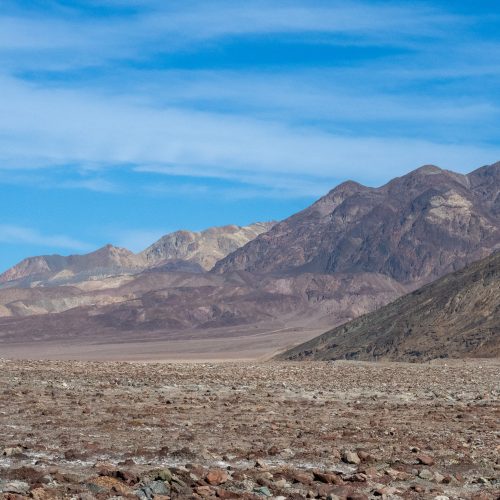
Sand Harbor State Park stands as one of Lake Tahoe’s best paddle boarding destinations, offering paddlers access to the most pristine and undeveloped shoreline of North America’s largest alpine lake. Located on the stunning east shore, this Nevada State Park serves as the gateway to crystal-clear waters, dramatic granite boulder fields, and secluded coves that define the quintessential Lake Tahoe experience.
Table of Contents
- State Park Amenities
- Paddle Distances to Nearby Beaches
- Water Temperature
- Wind Conditions
- Lake Safety and Emergency Preparedness
- Wildlife Around Sand Harbor
- Article Updates
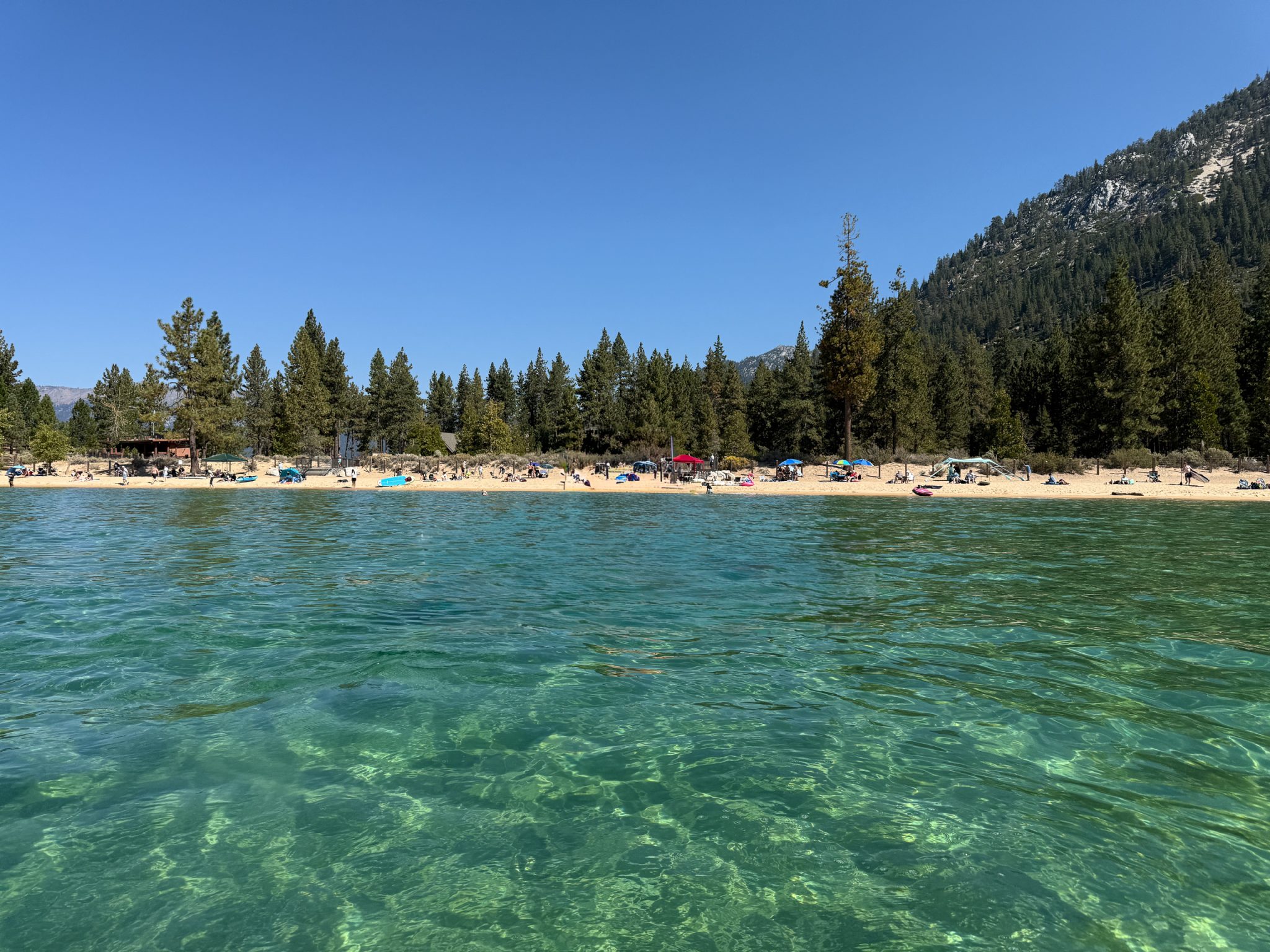

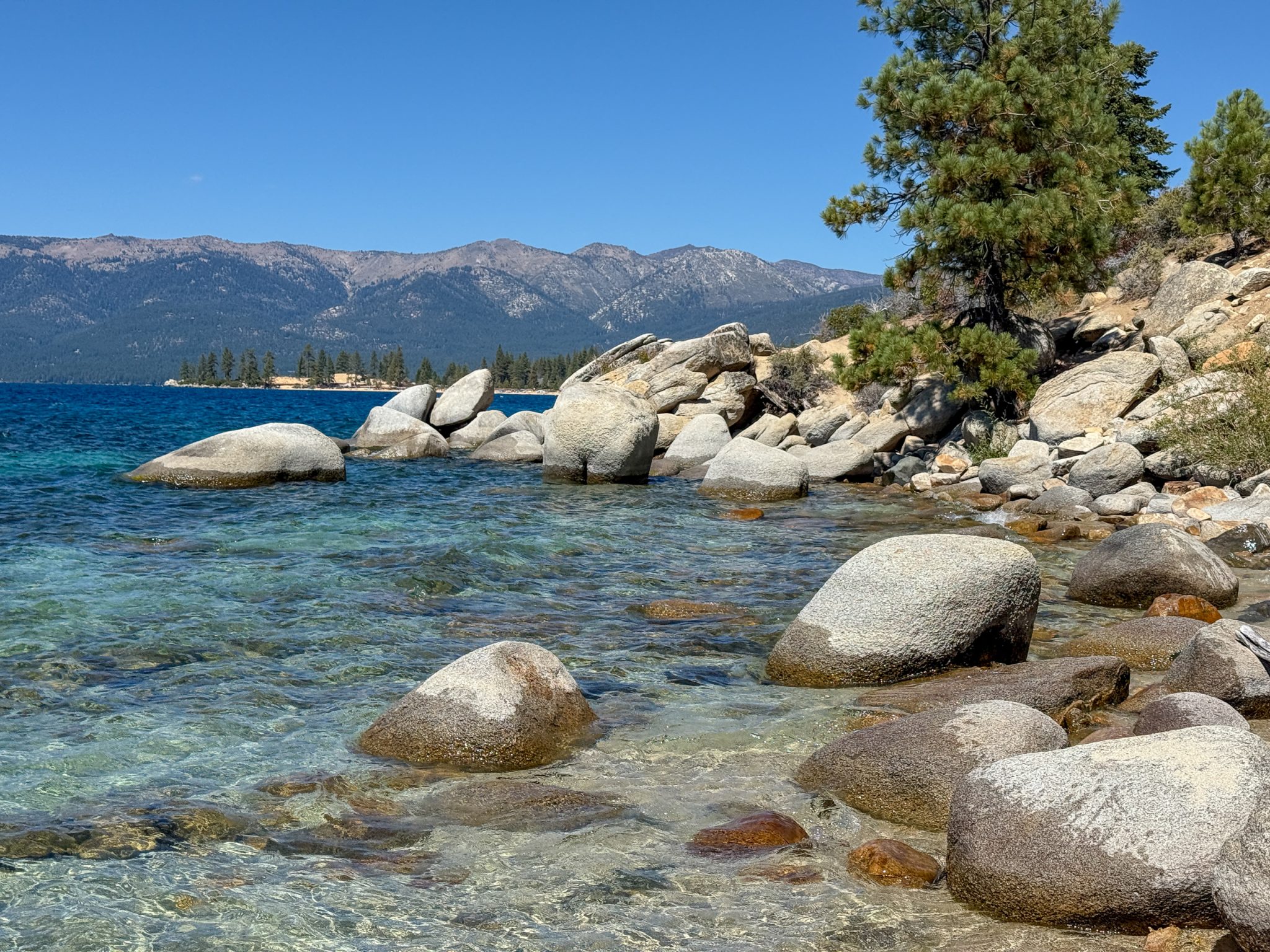
Table of Contents
- State Park Amenities
- Paddle Distances to Nearby Beaches
- Water Temperature
- Wind Conditions
- Lake Safety and Emergency Preparedness
- Wildlife Around Sand Harbor
- Article Updates
Helpful Links:
- Nevada State Park Website
- Reservations Website
- Tahoe Real Time Lake Conditions
- Paddle Boarding Accessories
- Sunscreen
- Coolers
The park’s strategic location makes it the ideal launch point for exploring Tahoe’s legendary east shore, where massive granite formations rise from cobalt blue waters and untouched wilderness stretches for miles.
Along with the state park facilities, restaurant, gift shop, rental options, and access to some of the lake’s most photographed locations, Sand Harbor provides everything paddle boarders need for an unforgettable day on the water.
Sand Harbor should be at the top of every paddle boarder’s list as a must-visit.
State Park Amenities
Entry and Parking
Sand Harbor requires day-use reservations from April 15 through October 15 for vehicle entry between 8:00 AM and 10:30 AM.
The park operates a three-tiered reservation system through reservenevada.com, with spots available 90, 30, and 7 days in advance.
Entry fees are $10 for Nevada-registered vehicles and $15 for out-of-state vehicles. There are fees on top of this, bringing it to $20 for out-of-state visitors as of 2025.
The park accepts cash only for on-site payments.
After 10:30 AM, any unclaimed reservations become available on a first-come, first-served basis. During peak summer months, the parking lot typically reaches capacity by 11 AM, making early arrival essential for securing a spot.
Food and Beverage Options
The Kokanee Bar & Grill serves as the park’s primary dining establishment, offering beachside American cuisine and deck seating from a convenient location near the visitor center.
Typical men items include:
- Grab-and-go options: Hard-boiled eggs, sandwiches, and snacks perfect for pre-paddle fuel
- Full lunch menu: Burgers, fish tacos, deli sandwiches with fresh ingredients
- Shakes and Smoothies: Thick milkshakes with chocolate, vanilla, or strawberry shakes, with edible straws also available. Tropical smoothies full of fresh fruit.
- Extensive cocktail menu: Craft cocktails, smoothies, and the famous “best Bloody Mary ever”
I’ve gotten cocktails to go, which come in plastic cups to take out on the lake with you. The food is pretty average, but will taste incredible after being in the sun all morning. If you’re bringing your own food, an insulated cooler on the beach keeps everything cold while you’re out on the water. And seriously, bring a waterproof phone pouch. The water clarity here will make you want to take a hundred photos, and Tahoe doesn’t care about your warranty.
Facilities and Services
Sand Harbor provides comprehensive amenities for paddle boarders:
Restrooms and Visitor Center
- Modern restroom facilities with four single-occupant stalls accommodating up to 180 users per hour
- Heated restrooms available year-round near the gift shop
- Sand Harbor Visitor Center with informative displays and regional information
Paddle Board Rentals and Services
- Clearly Tahoe Rentals operates on-site with walk-up availability
- Complete rental packages include US Coast Guard-approved PFDs, paddles, and dry bags
- Professional safety briefings and beach launch assistance
- Flexible hourly rates with decreasing costs for extended rentals
Additional Amenities
- Picnic areas with tables in shaded Jeffrey pine groves
- Group use area (Ramada) for events accommodating up to 120 people
- Boat launch facility with wave-protected ramps
- All-terrain wheelchair available for visitors with mobility needs
Paddle Distances to Nearby Beaches
These are beaches that have limited access by land, and are much more accessible by water. Many beaches north of Sand Harbor are not listed due to having easy access and dedicated parking lots.
Hidden Beach (1 mile north)
- Distance: 2 miles round trip from Sand Harbor
- Paddle time: 40 minutes round trip at leisurely pace
- Features: Protected cove with turquoise water and granite boulders
- Landing: Sandy beach with rocky alcoves, approximately 750 feet long
- Access alternative: Can be reached via East Shore Trail for non-paddlers
Hidden Beach provides Sand Harbor’s beauty with fewer crowds, featuring a 750-foot sandy beach flanked by massive granite boulders. The protected cove typically offers warmer surface water due to its sheltered position and shallower depth.
Large flat rock surfaces provide excellent areas for rest stops and picnicking. The beach connects to the East Shore Trail, making it accessible for non-paddling companions. This is a good option for families and those seeking a shorter, more relaxed paddle with warm water swimming.
Incline Village Beaches (2-3 miles north)
- Distance: 4-6 miles round trip depending on specific beach
- Paddle time: 1.5-2 hours round trip
- Features: Sandy beaches with warmer shallow water, developed shoreline
- Note: More populated area with potential boat traffic
Bonsai Rock (1 mile south)
- Distance: 2 miles round trip from Sand Harbor
- Paddle time: 40 minutes round trip
- Features: Iconic rock formation with bonsai trees growing from granite
- Activities: Popular cliff jumping spot and photography destination
- Recognition: Most photographed rock formation on Lake Tahoe
One of Lake Tahoe’s most recognizable natural landmarks, featuring a collection of small pine and fir trees growing from a granite boulder rising from the crystal-clear water.
Bonsai Rock has a small beach that allows for 6-8 paddle boarders or kayakers to comfortable lounge and enjoy the area. A few rocks jutting out of the water around Bonsai Rock allow for some extra lounging or jumping opportunities too. The shape of the beach area calms the water around during afternoon winds.
Thunderbird Lodge (1.6 miles south)

- Distance: 3 miles round trip from Sand Harbor
- Paddle time: 1 hour round trip
- Features: Historic 1930s estate of eccentric millionaire George Whittell Jr., featuring Tudor Revival stone mansion
- Landmarks: Stone lighthouse in the water marks the property boundary
- Significance: National Historic Site with 600-foot underground tunnel, famous Thunderbird yacht, and Castle-in-the-Sky architecture
- Access notes: Private property – can only be viewed from water unless taking guided tour
Chimney Beach (3 miles south)
- Distance: 6 miles round trip from Sand Harbor
- Paddle time: 2-2.5 hours round trip
- Features: Large granite boulders, namesake stone chimney, multiple pocket coves
- Landing: Curved shoreline with several smaller beaches and flat boulders for sunbathing
- Cliff jumping: Multiple jumping rocks including larger options than Bonsai Rock
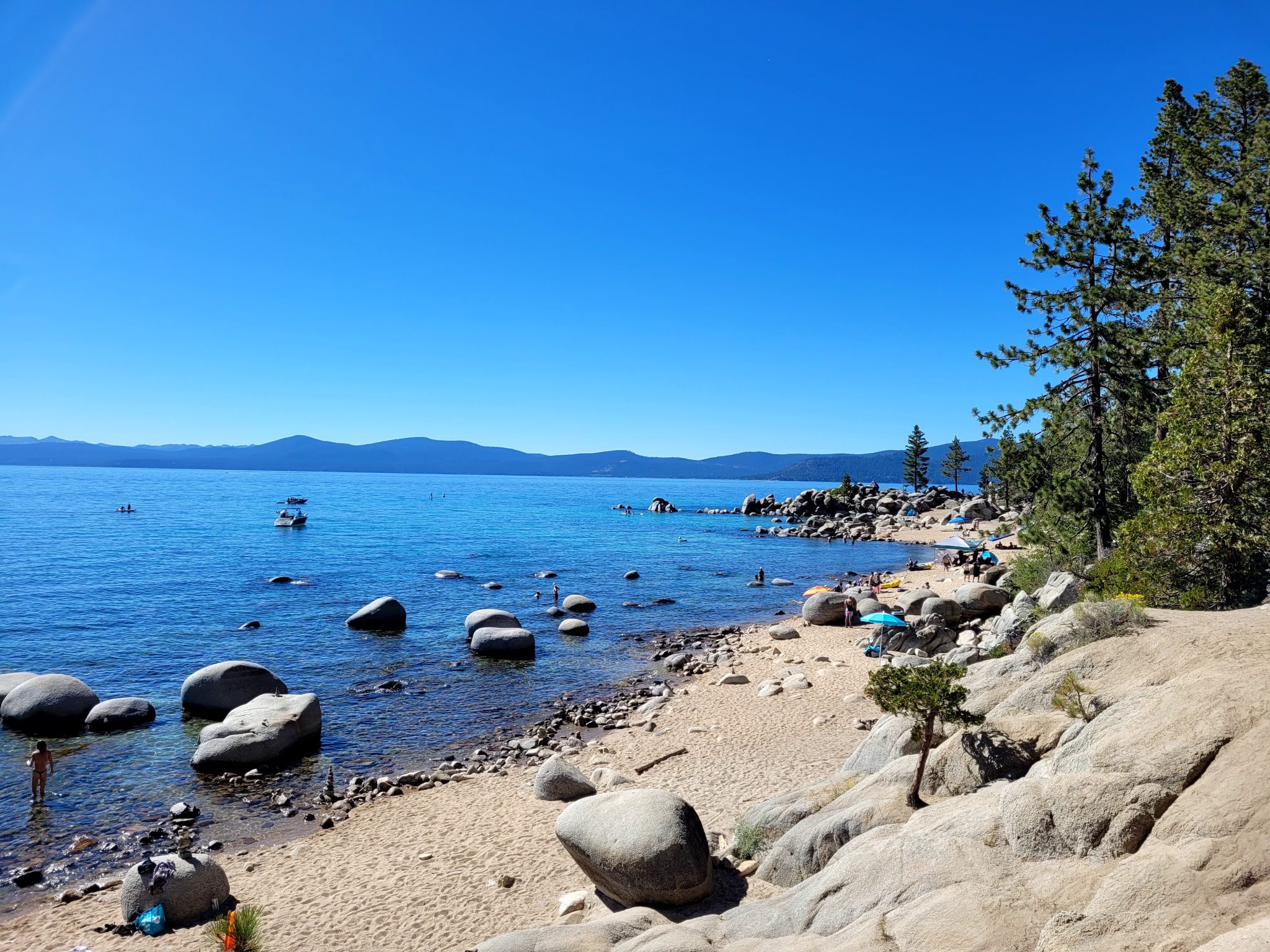
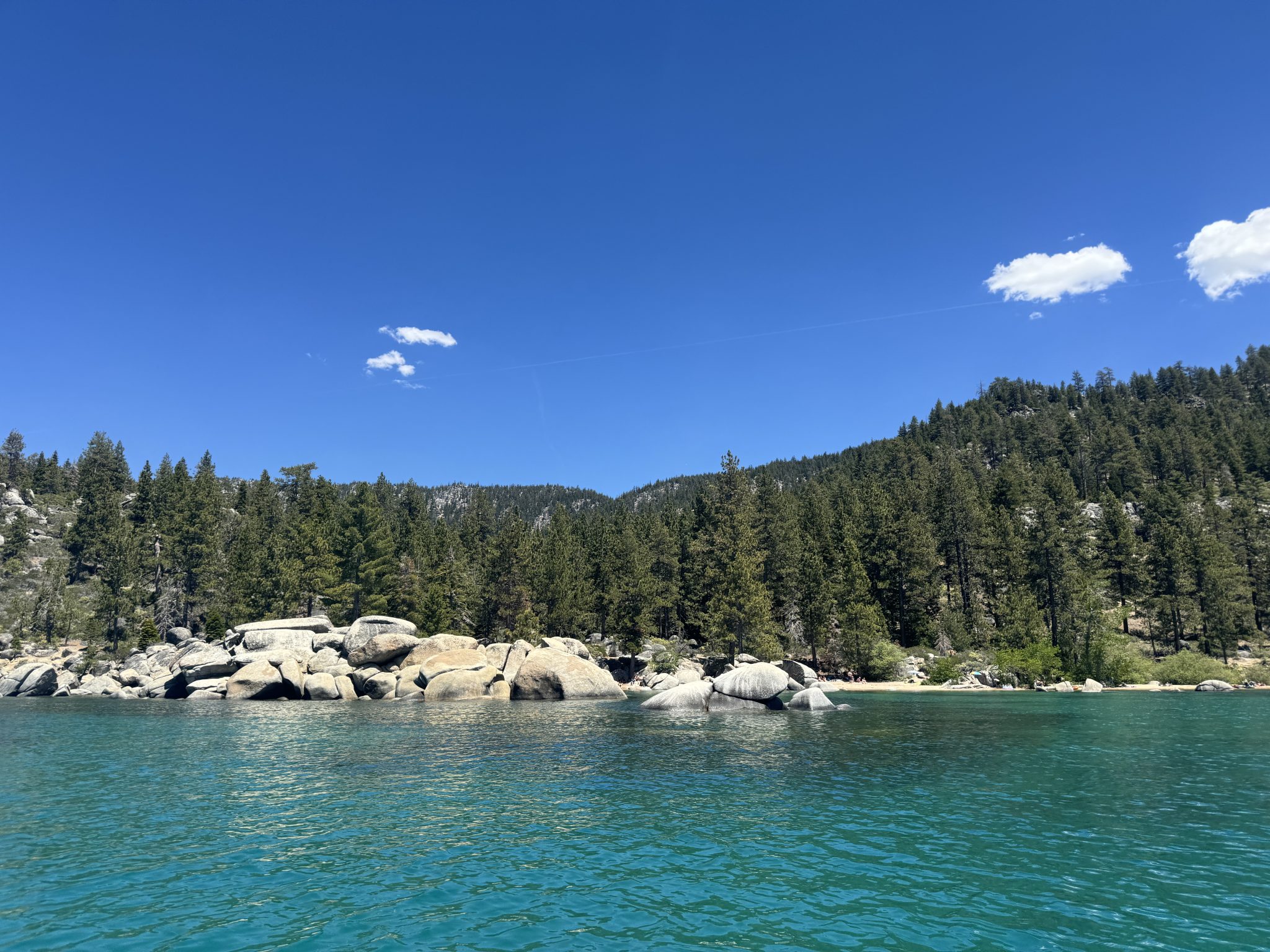
Named for its distinctive stone chimney remnant from an old cabin, Chimney Beach offers the most diverse paddle boarding experience on the east shore.
The beach features multiple pocket coves, extensive boulder fields, and several cliff jumping locations including rocks larger than Bonsai Rock.
The curved shoreline provides various landing options and excellent exploration opportunities among granite formations. A small lagoon area offers protected water for beginners to practice skills. Adventure seekers and groups wanting variety in their paddle experience can dedicate a day to paddling here and back.
Secret Cove (4 miles south)
- Distance: 8 miles round trip from Sand Harbor
- Paddle time: 2.5-3 hours round trip
- Features: Pristine crescent-shaped beach with clothing-optional designation
- Water quality: Exceptionally clear water with excellent visibility
- Seclusion: More remote and less crowded than northern beaches
Secret Cove presents Lake Tahoe’s most pristine paddle boarding environment, with glass-like water clarity that allows visibility to depths of 50+ feet.
This crescent-shaped beach maintains a clothing-optional designation but welcomes all visitors.
The protected cove offers excellent wind shelter and features numerous granite boulder formations perfect for exploring by paddleboard.
The surrounding wilderness provides complete seclusion from road noise and development. Experienced paddlers not put off by nudity and seeking pristine conditions and natural beauty will want to explore this area.
Whale Beach (5-6 miles south)
- Distance: 10-12 miles round trip from Sand Harbor
- Paddle time: 3.5-4 hours round trip
- Features: Named for whale-shaped rock formation, excellent beach for extended stops
- Recommendation: Ideal turnaround point for experienced paddlers
Whale Beach earned its name from a distinctive whale-shaped rock formation and represents the beginning of Lake Tahoe’s truly remote wilderness shoreline.
This destination requires serious commitment but rewards paddlers with complete solitude and untouched natural beauty.
The beach offers excellent camping-style day use with ample space for extended stops and exploration. Crystal-clear water provides some of the best snorkeling opportunities on the lake.
This destination is ideal for distance and experienced paddlers seeking wilderness immersion.
Skunk Harbor (6-7 miles south)
- Distance: 12-14 miles round trip from Sand Harbor
- Paddle time: 4-5 hours round trip
- Features: Historic Newhall House (1923 summer cabin), picturesque protected cove
- Significance: Represents the furthest reasonable day-trip destination
- Landing: US Forest Service beach with historical structures
Skunk Harbor serves as the practical southern limit for Sand Harbor day trips, featuring the historic 1923 Newhall House summer cabin that belonged to Lake Tahoe’s legendary George Whittell.
This US Forest Service beach provides excellent facilities and represents the boundary between accessible and truly remote east shore wilderness.
The protected cove offers reliable landing conditions and serves as an excellent lunch destination for long-distance paddlers. If you’re a history enthusiasts and accomplished paddlers, you’ll have fun padding the ultimate east shore challenge.
Distance Planning Considerations
Paddle Speed Calculations
- Average SUP speed: 3 mph for recreational paddlers
- Mile timing: Approximately 20 minutes per mile at leisurely pace
- Fitness factor: Distances assume average fitness levels and good conditions
- Board choice for distance: For routes beyond 6 miles round trip, a touring board with better glide and tracking makes a significant difference. Venture Wild builds inflatable touring and race boards designed for this kind of open-water distance (use code THEMK for 10% off).
Route Planning Tips
- Start with shorter destinations to gauge personal fitness and conditions
- Factor return trip energy: Reserve extra stamina for potential headwinds
- Check wind forecast: Afternoon winds make southern returns more challenging
- Plan turnaround time: Begin return by 2:30 PM to avoid afternoon wind and water current challenges.
Water Temperature
Sand Harbor and the greater Lake Tahoe, as a large alpine body of water, is constantly fed by snowmelt and groundwater, making the water much colder than its scenic summer surroundings might suggest. July through mid-September are typically the warmest times of the year to swim comfortable in the water.
- Winter (December–February): The coldest months, with average surface temperatures between 41–44°F. The water is much too cold for comfortable immersion and poses risks of immediate cold shock and hypothermia.
- Spring (March–May): Water slowly warms but remains cold. March averages ~42°F, reaching 50–55°F by late May, colder near shore after spring snowmelt.
- Early Summer (June): The water is still brisk (mid-50s to low 60s °F), with the beginning of the swimming season only by late June, depending on annual mountain snowpack and runoff.
- Peak Summer (July–August): Surface temperatures reach their highest, 66–70°F. This is the only period when water temperatures are typically comfortable for longer paddle sessions or swimmers not wearing wetsuits.
- Autumn (September–November): By September, surface waters quickly cool into the low 60s °F and continue dropping, averaging 58°F in October and about 52°F in November.
Monthly Average Water Temperatures in Sand Harbor
| Month | Avg (°F) | Min (°F) | Max (°F) |
|---|---|---|---|
| January | 43 | 40.1 | 45.7 |
| February | 41.9 | 39.4 | 44.4 |
| March | 42.3 | 39.6 | 47.5 |
| April | 44.6 | 40.8 | 52 |
| May | 50.5 | 43.9 | 59.5 |
| June | 57.9 | 50.5 | 68.7 |
| July | 66.2 | 58.8 | 73.4 |
| August | 68.0 | 63.9 | 72.0 |
| September | 65.1 | 59.0 | 71.4 |
| October | 58.8 | 53.2 | 64.9 |
| November | 52.2 | 46.9 | 58.1 |
| December | 46.4 | 42.3 | 52.0 |
Wind Conditions
Lake Tahoe’s wind conditions follow predictable patterns that dramatically affect paddle boarding safety and enjoyment.
The notorious Washoe Zephyr, a seasonal diurnal wind which occurs across western Nevada just east of the Sierra Nevada mountains, dominates afternoon conditions, creating challenging and potentially dangerous situations for paddlers.
Daily Wind Cycle
- Morning (8 AM – 11 AM): Glass-like conditions with minimal wind, ideal for paddle boarding
- Midday (11 AM – 1 PM): Wind begins building from the southwest
- Afternoon (2 PM – 6 PM): Peak wind conditions with sustained 10-15 knot winds gusting to 17-20 knots
- Evening: Winds typically subside after sunset
With the wind timing in mind, you can safely plan how far you are comfortable paddling.
Wind Direction and Impact
Prevailing winds blow from the southwest, caused by temperature differences between the hot Great Basin desert to the east and the cooler Sierra Nevada mountains.
While this is one of Lake Tahoe’s most beautiful areas, it can also be dangerous if the wind and water is not respected.
Sudden onset: Conditions can deteriorate rapidly, with winds increasing from 14 mph to 45 mph within two hours.
Dangerous waves: Sustained winds generate 6-8 foot swells that can overwhelm paddle boarders.
Temperature drops: Wind events can cause air temperatures to plummet below 40°F.
Optimal Timing Strategy
Best Paddle Boarding Windows
- Launch before 10 AM for optimal conditions and parking availability.
- Complete paddle by 2:30 PM to avoid afternoon wind buildup.
- Consider evening paddles after sunset when winds subside.
Weather Monitoring
Always check multiple forecast sources before launching:
- National Weather Service Marine Forecast for Lake Tahoe.
- Windfinder for specific Sand Harbor conditions
- Lake Tahoe Water Trail weather resources
- Real-time buoy data from UC Davis TERC
Lake Safety and Emergency Preparedness
I’m a big fan of knowing the worst case scenarios and being prepared – its most likely you’ll never need to utilize this knowledge. And if you do, your chances of a catastrophic event is even less likely.
Cold Water Dangers
Lake Tahoe presents unique and serious cold water hazards that every paddle boarder must understand. The lake’s average water temperature ranges from 40°F in winter to a maximum of 70°F in late summer, making it perpetually dangerous if you are in the water too long.
Cold Water Shock (1-10-1 Rule)
The most immediate threat follows the critical “1-10-1” timeline:
1 Minute – Cold Shock Response
- Involuntary gasping and hyperventilation up to 1000% above normal breathing rate
- Must keep airway clear to prevent drowning during this critical first minute
- Cold shock affects all people regardless of fitness level or swimming ability
10 Minutes – Cold Incapacitation
- Loss of effective use of fingers, arms, and legs for meaningful movement
- Swim failure occurs within these critical minutes
- Without a life jacket, drowning becomes likely
1 Hour – Hypothermia
- Time until unconsciousness from hypothermia in ice water conditions
- Survival time dramatically increased when wearing a life jacket
Critical Safety Facts
- Lake Tahoe averages seven cold water-related fatalities per year
- 66% of cold water drowning victims are considered strong swimmers
- Most drownings occur within the first minute due to cold water shock
- Water below 70°F is considered cold water – Lake Tahoe rarely exceeds this temperature
Essential Safety Equipment
Life Jackets (PFDs)
- US Coast Guard-approved PFDs required for all paddle boarders
- Children under 13 must wear PFDs at all times while on water
- Adults strongly encouraged to wear PFDs continuously, not just carry them
- Fanny pack-style PFDs insufficient during cold water shock when manual inflation may be impossible
Additional Safety Gear
- SUP leash: Attachment to prevent board separation
- Whistle: Essential for attracting attention during emergencies
- Bright-colored clothing and paddle: Improves visibility to other boaters
- Waterproof flashlight: Required for extended trips
- Communication device: Cell phone in waterproof case or VHF radio
Emergency Response Protocol
If You Fall Into Cold Water
- Control breathing: Fight the gasp reflex and focus on controlled breathing
- Enter water feet first: Diving dramatically increases risk
- Get back on board immediately: Every second counts in cold water
- Signal for help: Use whistle and bright paddle to attract attention
Witnessing an Emergency
- Call 911 immediately – multiple agencies patrol Lake Tahoe
- Throw flotation device to person in water
- Do not enter water for rescue attempts without proper training
- Direct rescue boats to victim’s location using landmarks
Emergency Services Coverage
Lake Tahoe maintains comprehensive water rescue capabilities:
- North Lake Tahoe Fire Protection District: 24/7 water rescue boat (Marine 24)
- Tahoe Douglas Fire Protection District: East shore water rescue with night vision capability
- US Coast Guard Station Tahoe City: Primary federal response
- Multiple county sheriff departments with marine patrol units
Wildlife Around Sand Harbor
Sand Harbor and the surrounding Lake Tahoe Basin support a rich variety of wildlife, both on land and in the water that can be observed by alert paddle boarders.
Mammals
Black Bear: The Lake Tahoe Basin is home to a healthy population of black bears, although they tend to keep their distance from busy areas.
Mule Deer: Frequently seen grazing in meadows near the shoreline, especially during early morning or dusk.
Yellow-bellied Marmot and Douglas Squirrel: These small mammals are often spotted along the rocks and trees at Sand Harbor, with the marmots frequently sunbathing on granite boulders.
Coyotes, Bobcats, and Foxes: While sightings are rarer, these predators are native to the region and may be encountered in the quieter zones of the park.
Raccoon and Porcupine: Common nocturnal visitors that occasionally make appearances near campgrounds or trash bins.
Sierra Red Fox: One of the rarest mammals in North America, the Sierra Red Fox is native to high mountain meadows around Tahoe; sightings are exceedingly uncommon and considered a privilege.
Birds
Bald Eagle and Osprey: Both raptors are seen soaring above the water, fishing for trout, and are symbolic of the health of Tahoe’s ecosystem.
Swallows: Large flocks are common in summer, where they help reduce insect populations and are famous for their intricate mud nests on cliffs and under eaves.
Steller’s Jay and Mountain Chickadee: These are among the many songbirds that provide a constant soundtrack throughout the forests surrounding Sand Harbor.
Aquatic Species
Lake Trout (Mackinaw), Rainbow Trout, Kokanee Salmon: These are the most notable sport fish found in the cool clear waters of Lake Tahoe and can sometimes be observed near the Sand Harbor boat launch, especially in fall during spawning season.
Beavers and River Otters: Though elusive, evidence of beaver activity (such as gnawed logs) is often visible near creeks and inlets.
Native Amphibians and Reptiles: The warmer, shallow shores occasionally host frogs and garter snakes, while harmless rubber boas may be found in the surrounding woods.
Sand Harbor State Park offers unparalleled access to Lake Tahoe’s most spectacular paddle boarding terrain. A memorable trip of a lifetime requires planning, appropriate safety equipment, and respect for the lake’s powerful and potentially dangerous conditions.
Article Updates
September 14, 2025: Added Water Temperature information. Added Edited text on beaches for clarity and more detailed info.
September 10, 2025: Additional Bonsai Rock details.
September 7 2025: Originally published.