
Last Updated: February 16, 2026 by Michael Kahn. Published: February 16, 2026.
If you’ve ever scrolled through your phone late at night and felt more wired than relaxed, you’re not alone. Many of us are realising that true rest rarely comes from screens, and are turning back to tactile, slow-paced activities at home. Knitting sits right at the centre of that shift: it’s simple, portable, and surprisingly powerful when it comes to calming a busy mind.
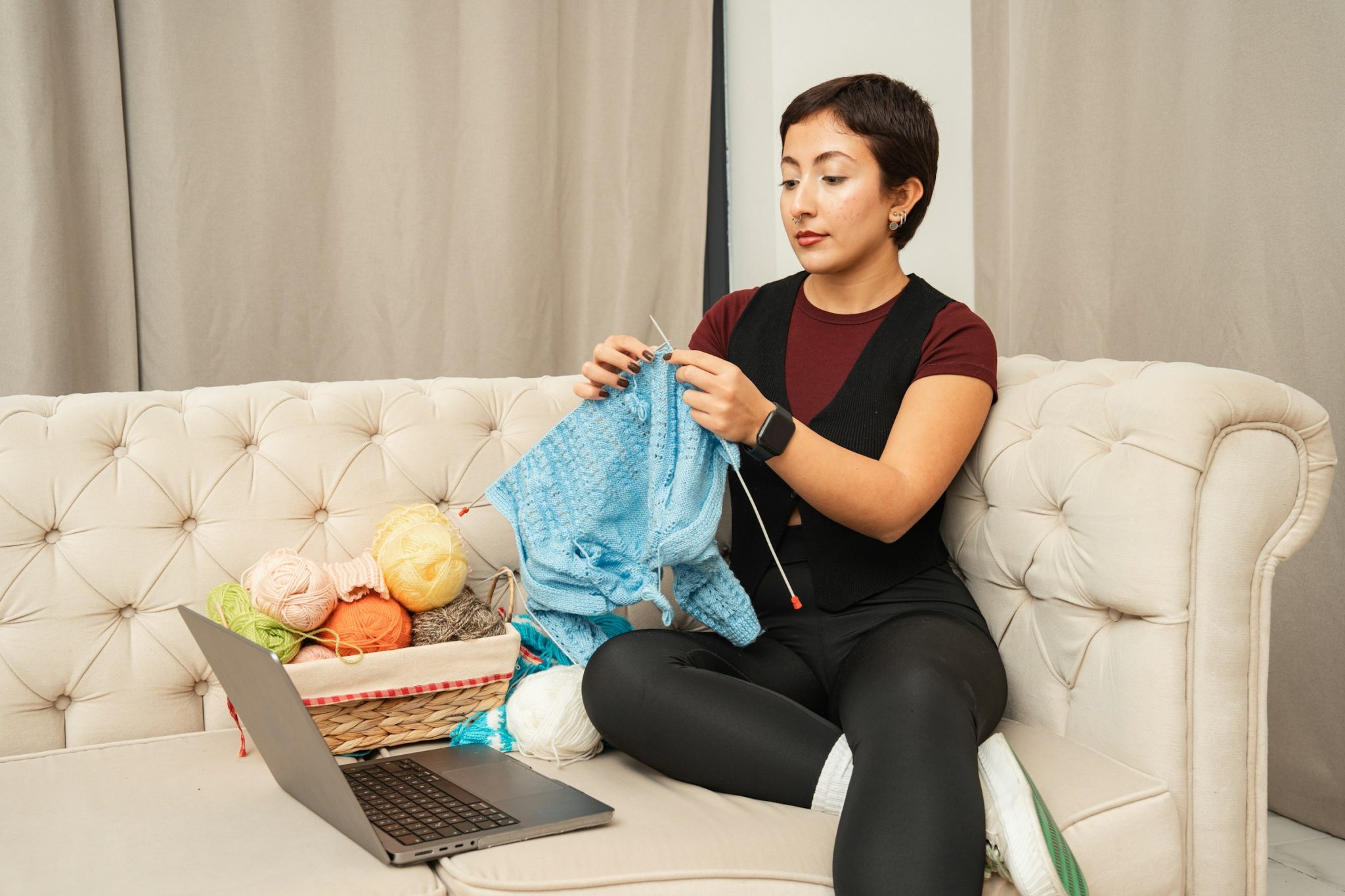
What makes DIY knitting projects so well suited to unwinding isn’t just the end result—a scarf, a blanket, a beanie—but the process itself. The quiet rhythm of the needles, the texture of the yarn, and the feeling of something gradually taking shape under your hands can be deeply grounding in a way that digital entertainment rarely is.
And you don’t need to be an “artistic person” to benefit. If you can count and follow basic instructions, you can knit. If you’re unsure how to begin, you can always discover a range of DIY knitting sets that bring together a simple pattern, yarn, and tools so you’re not guessing what to buy. That small bit of structure can make the difference between feeling intimidated and actually getting started.
Let’s look at why knitting is so effective for unwinding at home—and how to make it work for you, even if you’ve never picked up needles before.
Why Knitting Is So Calming
The rhythm that quiets your thoughts
Knitting uses repetitive, rhythmic movements: knit, purl, repeat. That repetition does something interesting to your brain. It gives your hands and a portion of your attention a gentle task, which often turns down the volume on intrusive thoughts and background stress.
Many people describe it as “moving meditation.” You’re focused just enough to stay present, but not so much that it feels like work. This is part of why knitting is often compared to mindfulness practices: it anchors you in the moment, stitch by stitch.
There’s also a physical component. Research into crafts and mental health has found that engaging in activities like knitting can reduce heart rate and promote relaxation, especially when done regularly. It’s not that knitting magically solves stress, but it does give your nervous system a chance to shift out of “fight or flight” and into a calmer state.
A rare mix of control and surprise
Our daily lives are full of variables we can’t manage, from work demands to the news cycle. Knitting offers a small, reassuring contrast: you follow a pattern, work through a sequence of stitches, and see predictable progress. That sense of control—“If I do this, that will happen”—can be quietly comforting.
At the same time, there’s enough variation to keep it interesting. You choose colours, textures, and shapes. You can see your skill improving over time. That combination of control and creativity is part of what makes knitting feel both relaxing and rewarding, especially at the end of a long day.
Making Knitting Work in a Home Setting
Designing a project that feels like a treat, not a task
The fastest way to kill the calming potential of knitting is to start with something too complex. An intricate lace shawl with multiple charts and tiny needles might be beautiful, but it’s not what you want when your primary goal is to unwind at home.
Instead, look for:
- Chunkier yarns (they knit up faster and feel cosy in your hands)
- Simple shapes (rectangles and basic hats are perfect)
- Short, repeatable patterns you can memorise after a few rows
Think of your first project like a low-stakes experiment. A straightforward scarf, a small cushion cover, or a basic blanket square lets you experience the calming rhythm of knitting without constantly stopping to decode instructions. Finishing that first piece is a quiet confidence boost that makes you more likely to pick up your needles again.
Creating a small “knitting ritual” at home
You don’t need a dedicated craft room, but a simple ritual can help your brain associate knitting with relaxation.
Pick a specific time: maybe ten minutes before bed, or half an hour on Sunday afternoons. Add a small sensory cue—a particular chair, a lamp you switch on, a cup of tea. Keep your project in a basket or bag so you’re not hunting for needles and yarn every time you sit down.
Over time, this routine becomes a signal: “This is my unwinding time.” The predictability of that ritual is as soothing as the knitting itself.
From Hobby to Ongoing Self-Care
Integrating knitting into your daily rhythm
Once the novelty wears off, a DIY hobby can easily slip to the back of the cupboard. To keep knitting as a genuine stress-relief tool rather than a one-off experiment, it helps to make it part of your existing habits rather than an add-on.
You might:
- Knit a few rows while your coffee brews in the morning
- Keep a project by the sofa and work on it during the quiet part of a TV show
- Use knitting as a buffer between work and home life—five or ten minutes after you log off
The point isn’t to be productive; it’s to give your mind a gentle transition. Over weeks and months, those small pockets of calm add up.
The quiet social side of knitting
Knitting is often associated with solitude, and there’s definitely value in those private, quiet moments. But there’s also a surprisingly rich social side, which can add another dimension to your wellbeing.
Online forums, local knitting groups, and social media communities offer spaces to share projects, ask questions, and exchange tips. That sense of connection—especially around a slow, analogue activity—can be grounding in its own right.
For some people, working on a simple, portable project at a café, on a train, or at a friend’s house becomes a way to bring that calming rhythm into life outside the home as well. The project in your bag can be a small anchor in a busy world.
Letting Knitting Be “Good Enough”
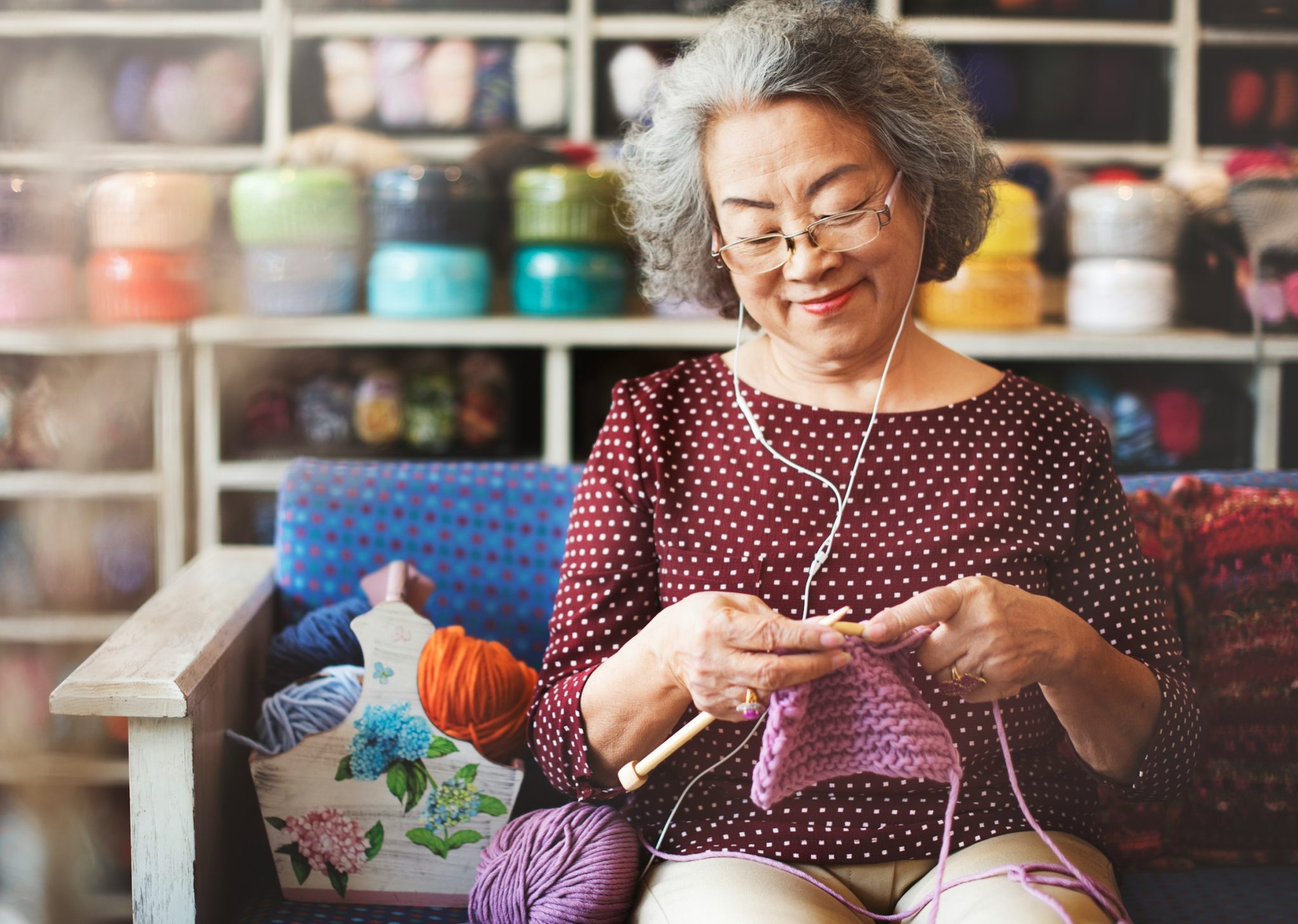
Perhaps the most important mindset shift is this: your knitting doesn’t need to be perfect to be worthwhile. Uneven stitches, small mistakes, and abandoned projects are part of the process, not proof that you’ve failed.
If your goal is to unwind, then the value lies in the time spent making, not just the finished item. The imperfect scarf that kept your hands busy and your mind calmer through a stressful month is already a success, even if you never show it to anyone.
In a culture that often equates hobbies with side hustles, deliberately choosing a slow, imperfect, offline activity can feel almost radical. But that’s exactly why DIY knitting projects fit so well into a modern self-care toolkit. They invite you to slow down, focus on something tangible, and take pleasure in small, steady progress—one stitch at a time.
- About the Author
- Latest Posts

Whether she is researching the latest trends in home decor, life-changing destination getaways, or the best way to maintain your finances, Dewey takes pride in leaving no stone unturned. She is passionate about distilling and delivering high-quality information that you can use to upgrade your life.


