
Some seeds wait decades for the right moment. They sit dormant in the soil through wet winters and dry summers, through drought years and El Niño storms, through generations of hikers passing overhead who never know they’re there. Then fire sweeps through. The heat cracks their seed coats. Smoke chemicals trigger ancient germination sequences. And for one brief spring, hillsides that looked like graveyards explode into gardens.
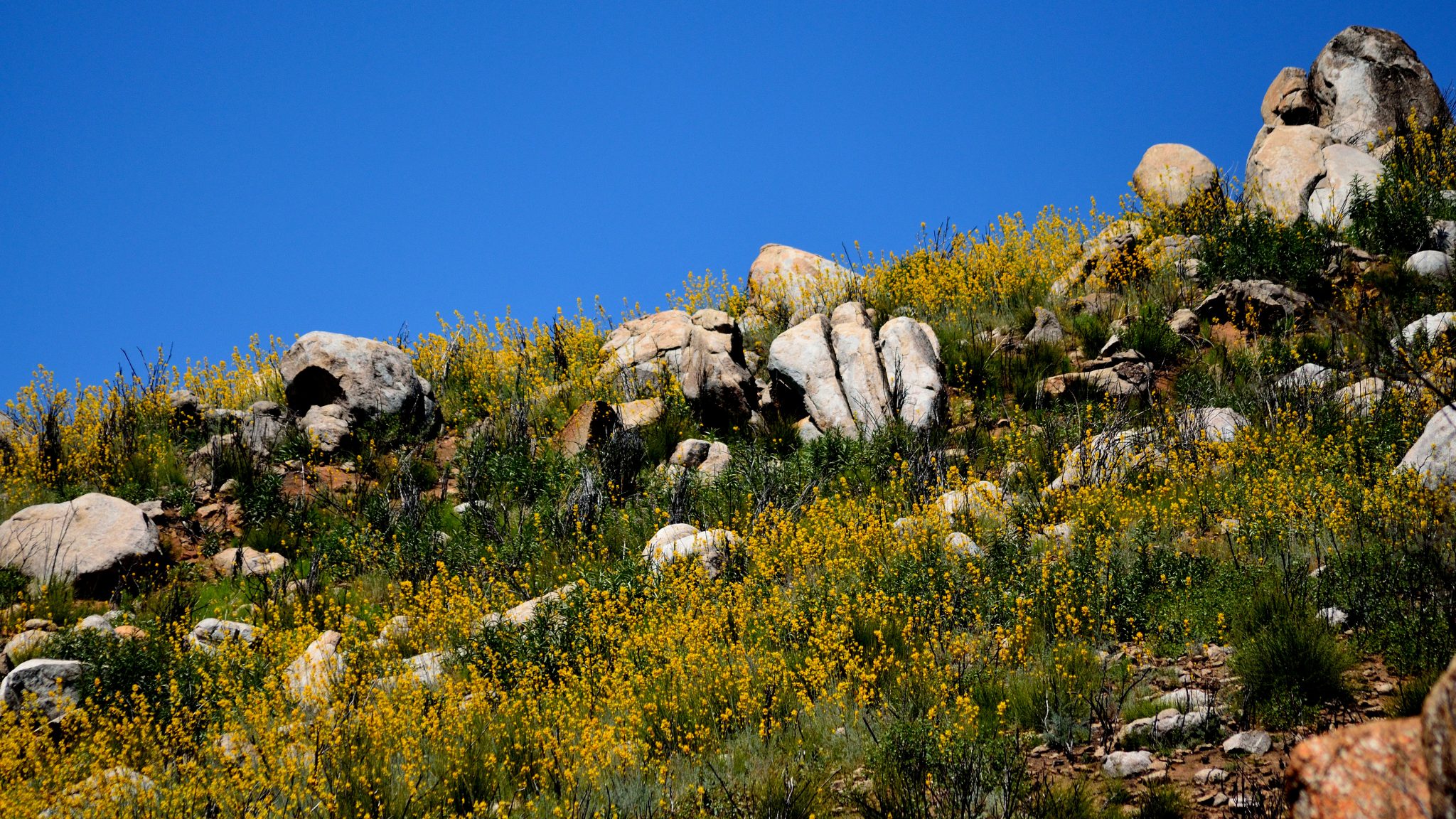
These are California’s fire followers. They’re among the rarest wildflowers you’ll ever see, and 2026 offers an unusual opportunity to find them.
The January 2025 fires that devastated Pacific Palisades and Altadena killed 31 people and destroyed over 16,000 structures. Those same burn scars will produce wildflower displays this spring that haven’t been seen in those areas for years. The 2024 Park Fire, California’s fourth-largest in recorded history, scorched 429,603 acres across Butte and Tehama counties. Fire followers are already emerging there. As trails gradually reopen across these burn zones, a small window exists to witness something genuinely rare.
This guide covers what fire followers are, why they only appear after flames, which species to look for in 2026, and where you might actually find them. To be completely transparent: many of the best locations remain closed due to safety concerns, and conditions change weekly. I’ll update this guide as trails reopen and reports come in.
Table of Contents
- Key Takeaways
- The Science: Why Some Flowers Need Fire
- Fire Follower Species Guide: What to Look For in 2026
- Where to See Fire Followers in 2026
- Before You Go: Practical Information
- Fire-Following Fungi: The Other Post-Fire Bounty
- The Bigger Picture: Fire Ecology and California’s Future
- Related Resources
- Frequently Asked Questions
- What are fire followers?
- When do fire followers bloom after a wildfire?
- What is the rarest fire follower wildflower?
- Can I see fire followers in the Palisades or Eaton fire areas in 2026?
- Are fire followers dangerous to touch?
- How long do fire follower displays last?
- Where can I see fire followers in Northern California?
- How do I identify fire followers?
- Do fire followers grow in gardens?
- Why do some flowers only bloom after fire?
- Is it safe to hike in burn areas?
- Where can I get fire follower bloom updates?
- Can I find morel mushrooms in California burn areas?
- What’s the difference between fire follower wildflowers and fire-following fungi?
- Changelog
Key Takeaways
- Fire followers are wildflowers that only bloom after wildfires, with seeds that can remain dormant for decades waiting for fire’s chemical and heat triggers
- 2026 offers rare viewing opportunities in January 2025 LA fire burn areas (Palisades, Eaton) and the 2024 Park Fire zone in Northern California
- Peak bloom timing is typically 2-4 months after post-fire rainfall, meaning March through May 2026 for most locations
- The fire poppy (Papaver californicum) is the most sought-after species, appearing only after fire and capable of dormancy for 50+ years
- Many trails remain closed due to debris flow risk and soil instability; always verify access before visiting
- First-year blooms are most spectacular; fire follower displays diminish rapidly in subsequent years
- Over 200 species of fire-following plants exist in California, though only about 10 are strict fire followers that never appear otherwise
- Fire-following fungi including prized morels appear the spring after a fire, making the 2024 Park Fire zone prime foraging territory for 2025-2026
The Science: Why Some Flowers Need Fire
California’s chaparral ecosystem evolved with wildfire. For millions of years, lightning strikes ignited the dense, oil-rich shrublands that cover much of the state’s coastal and foothill regions. Fire wasn’t a disaster to be prevented. It was part of the cycle.
Plants responded by developing two distinct survival strategies. Some, like chamise and manzanita, resprout from fire-resistant root crowns. Others took a different approach: their seeds evolved to require fire for germination.
The mechanisms are genuinely fascinating. Scientists have identified several triggers:
Heat scarification. Some seeds have coats so hard that water can’t penetrate. Fire temperatures crack these outer shells, finally allowing moisture to reach the embryo inside. Bush poppy seeds work this way, requiring temperatures between 150-200°F to break dormancy.
Smoke chemistry. This is where things get strange. Certain seeds respond not to heat but to specific chemicals in smoke. Karrikins, discovered in 2004, are compounds produced when plant material burns. They signal to buried seeds that fire has passed and conditions are favorable. Even more remarkably, nitrogen dioxide in smoke triggers germination in whispering bells at concentrations as low as one part per million.
Charred plant compounds. The chemical byproducts of burned vegetation leach into soil with winter rains. These compounds break seed dormancy in species like golden eardrops, which may sit underground for decades between fires.
According to research published in Madrono, the journal of the California Botanical Society, Plummer’s mariposa lily (Calochortus plummerae) “flowers abundantly after fire” but is “rarely observed in late seral chaparral during most years.” The bulbs survive underground, occasionally sending up leaves in wet years, but reserve their energy for post-fire blooms when competition has been eliminated.
The result? In the first spring after a major fire, hillsides can support 100 times more fire-follower blooms than in normal years. By the second year, displays diminish significantly. By the third, most fire followers have retreated underground, their seeds scattered across the soil, waiting for the next fire.
“Plants are important because they contribute to the recovery of the ecosystem,” explains Naomi Fraga, director of conservation programs at California Botanic Garden. Fraga, who oversees the California Seed Bank housing billions of native seeds, has spent years studying post-fire plant recovery across Southern California.
Fire Follower Species Guide: What to Look For in 2026
Of the more than 200 herbaceous species that respond to fire in California, only about ten are “strict fire followers” that never appear otherwise. The rest benefit from fire but can also germinate under other conditions. Here are the species most likely to reward your efforts in 2026.
Strict Fire Followers
These species appear only after fire. Finding them requires timing, luck, and access to recently burned areas.
Fire Poppy (Papaver californicum)

Appearance: Vibrant orange-red petals with a dark center, rising on slender stalks 12-18 inches above foliage. Similar to California poppy but smaller and more delicate.
Bloom period: April through May
Habitat: Below 2,500 feet in chaparral and oak woodland. Endemic to California, found primarily in coastal counties south of the San Francisco Bay Area.
Why it matters: The fire poppy is the holy grail of fire followers. Seeds can remain dormant for 50 years or more, requiring smoke exposure to germinate. Abundant the first year after fire, displays diminish to nothing by year three. When botanist Tom Chester surveyed post-fire sites, he found large fire poppy fields only in the immediate aftermath of burns.
Where documented: Santa Monica Mountains after chaparral burns; Mount Diablo area after 1977 and 2020 fires; Santa Barbara’s Rattlesnake Trail after the Jesusita Fire; Napa County’s Foote Botanical Preserve after the 2017 fires.
Whispering Bells (Emmenanthe penduliflora)

Appearance: Pale yellow or cream bell-shaped flowers hanging in clusters. Grows 1-2 feet tall with sticky, aromatic foliage. When dried, the papery flowers rustle in the breeze, creating the “whispering” sound.
Bloom period: February through June
Habitat: Dry slopes in chaparral, coastal sage scrub, and creosote bush scrub. Found from sea level to 7,200 feet across California.
Why it matters: One of the most common fire followers, often blanketing burned hillsides. Responds to nitrogen dioxide in smoke at remarkably low concentrations. The name comes from Greek meaning “flower that abides,” referring to how blooms remain attached as they dry.
2026 outlook: Expect significant displays in both the LA fire zones and Park Fire area.
Golden Eardrops (Ehrendorferia chrysantha)
Appearance: Tall spikes (up to 4 feet) of fragrant golden-yellow heart-shaped flowers. Gray-green, finely divided foliage with a bushy habit.
Bloom period: May through July
Habitat: Dry, brushy slopes in chaparral regions. Native to California and Baja California.
Why it matters: Seeds require fire to germinate. Was abundant after the 2018 Woolsey Fire in the Santa Monica Mountains. A perennial that can persist for several years after germinating but disappears as chaparral canopy closes.
Poodle Dog Bush (Eriodictyon parryi)

Appearance: Purple tubular flowers on tall stems (3-6 feet). Leaves covered in sticky hairs. Named for its fuzzy, poodle-like appearance.
Bloom period: May through July
Habitat: Higher elevation chaparral, typically above 2,000 feet.
Warning: Causes severe skin irritation similar to poison oak. The oils and hairs on leaves and stems trigger contact dermatitis in most people. Look but never touch. Stay on established trails.
Fire-Enhanced Species
These species can appear without fire but bloom far more abundantly in burned areas during the first spring after flames.
Plummer’s Mariposa Lily (Calochortus plummerae)

Appearance: Deep pink, lavender, white, and yellow blooms with three broad petals. “Mariposa” is Spanish for butterfly, describing the delicate wing-like petals.
Bloom period: May through July
Habitat: Coastal and inland hills of Southern California in chaparral communities.
Fire response: Bulbs survive deep underground. Can remain vegetatively dormant for years in mature chaparral, then flower abundantly (sometimes “hundreds of times more abundant”) in the years immediately following fire.
Phacelia Species (Multiple)

Appearance: Clusters of purple, blue, or white flowers, often coiled in a distinctive “caterpillar” shape. Many species, including lacy phacelia, large-flowered phacelia, and Parry’s phacelia.
Bloom period: March through June
Fire response: More common and abundant after fire, when reduced competition allows them to dominate burned slopes. Phacelia grandiflora has already been spotted in recovering LA fire areas.
Bush Mallow (Malacothamnus fasciculatus)

Appearance: Pink or white hibiscus-like flowers on shrubby stems 3-6 feet tall.
Bloom period: April through July
Fire response: Seeds require heat to crack the seed coat. Among the first plants to emerge after fire. Pollinator magnet with flowers large enough for bees to rest inside.
Lupines (Multiple Species)

Appearance: Spikes of pea-like flowers in blue, purple, pink, or white. Palmate leaves with 5-9 leaflets.
Bloom period: March through June
Fire response: Several species thrive in post-fire conditions, including Coulter’s lupine, miniature lupine, and stinging lupine. Vast swaths of blue lupine covered Malibu Creek State Park slopes after the Woolsey Fire.
Native Snapdragons (Antirrhinum species)

Appearance: Tubular flowers in pink, purple, or white on branching stems.
Bloom period: March through May
Fire response: Dense stands appear in burned chaparral during the first spring after fire.
Fire Follower Species at a Glance
| Species | Flower Color | Bloom Period | Type | Notes |
|---|---|---|---|---|
| Fire Poppy | Orange-red | Apr-May | Strict | Rarest; 50+ year dormancy |
| Whispering Bells | Yellow/cream | Feb-Jun | Strict | Most common fire follower |
| Golden Eardrops | Yellow | May-Jul | Strict | Tall spikes, fragrant |
| Poodle Dog Bush | Purple | May-Jul | Strict | Causes skin irritation |
| Plummer’s Mariposa | Pink/lavender | May-Jul | Enhanced | 100x more abundant post-fire |
| Phacelia spp. | Purple/blue | Mar-Jun | Enhanced | Multiple species |
| Bush Mallow | Pink/white | Apr-Jul | Enhanced | First to emerge |
| Lupines | Blue/purple | Mar-Jun | Enhanced | Carpets burned slopes |
Where to See Fire Followers in 2026
Here’s where things get complicated. The best fire follower displays will occur in areas that burned recently. Those same areas often have restricted access due to debris flow risk, unstable slopes, and ongoing recovery efforts. I can’t recommend specific trails in many burn zones because access changes weekly.
What I can do is outline the major burn areas with fire follower potential and provide guidance on checking conditions before you go.
Safety First: Burned areas pose genuine hazards. Loose soil causes landslides. Standing dead trees (“snags”) fall without warning. Debris flows during rainstorms can be fatal. Respect all closures. They exist for good reason.
Southern California: January 2025 Fire Zones
The Palisades and Eaton fires of January 2025 burned approximately 37,000 acres combined, including significant chaparral habitat. These areas will produce fire follower displays in spring 2026, but access remains extremely limited.
Santa Monica Mountains (Palisades Fire Area)
Fire size: 23,000+ acres
Current status: Partial reopenings. Will Rogers State Historic Park reopened November 2025 with limited trail access. MRCA opened many parks and coastal accessways in June 2025.
Fire follower potential: High. The Santa Monica Mountains have documented fire poppy populations that appear after burns. Golden eardrops were abundant here after the 2018 Woolsey Fire.
Best bet: Will Rogers State Historic Park’s Inspiration Point Loop (partially open). The scenic corridor along Mulholland Highway from Las Virgenes Canyon Road to Cornell Road may offer roadside viewing.
Check status: MRCA website for park closures
Eaton Canyon and Altadena Foothills (Eaton Fire Area)
Fire size: 14,000 acres
Current status: Eaton Canyon will remain closed through 2026 and possibly longer. Some Angeles National Forest trails reopened, including Mt. Lowe Trail Camp, Mt. Wilson Skyline Park, and Mt. Wilson Trail.
Fire follower potential: High. Chaparral habitat with documented fire-following species.
Best bet: Mt. Wilson Trail for accessible terrain with fire follower potential. Check with Angeles National Forest for current conditions.
Check status: LA County Trails
Woolsey Fire Recovery Zone (2018)
Current status: Fully accessible
Fire follower potential: Moderate. Now several years post-fire, strict fire followers have largely disappeared, but fire-enhanced species continue to perform well.
Recommended trails:
- Malibu Creek State Park: Crags Road trail through the park’s 8,215 burned acres. Blue lupine carpets have been spectacular in recent years.
- Paramount Ranch: Good diversity of fire-enhanced species.
- Cheeseboro/Palo Comado Canyons: Accessible trails with recovering chaparral.
- Upper Las Virgenes Canyon Open Space Preserve: Mix of recovering vegetation and wildflowers.
Northern California: 2024 Park Fire Zone
Butte and Tehama Counties (Park Fire Area)
Fire size: 429,603 acres (California’s fourth-largest on record)
Fire origin: Bidwell Park, Chico. Burned July-September 2024.
Fire follower potential: High in chaparral zones, though much of the fire burned mixed conifer forest with different post-fire ecology.
Documented activity: Big Chico Creek Ecological Reserve reported an “unanticipated second bloom of native milkweed” in the burn scar. Fire followers are emerging in chaparral zones.
Access: Check with Butte County and local land managers. Some areas of Bidwell Park may offer accessible fire follower viewing.
Historical Fire Follower Locations
These areas have documented fire poppy and other strict fire follower populations that appear after burns:
- Mount Diablo State Park: Large fire poppy fields documented after the 1977 fire; rare poppies found after the 2020 SCU Lightning Complex fire in the Morgan Territory/Round Valley area.
- Napa County: Land Trust of Napa County’s Foote Botanical Preserve on Mt. George produced fire poppy displays after 2017 fires.
- Santa Barbara: Rattlesnake Trail connector to Tunnel Road, Middle Fork Cold Springs above Tangerine Falls documented fire poppies after the Jesusita Fire.
When to Go
| Location | Elevation | Expected Peak | Key Species |
|---|---|---|---|
| LA Fire Zones (lower) | Under 2,000 ft | March-April 2026 | Fire poppy, whispering bells, phacelia |
| LA Fire Zones (higher) | 2,000-4,000 ft | April-May 2026 | Golden eardrops, poodle dog bush, mariposa lily |
| Park Fire Area | Varies widely | April-June 2026 | Whispering bells, lupine, phacelia |
Before You Go: Practical Information
Checking Trail Status
Conditions in burn areas change frequently. What was closed last week might be open today. What opened yesterday might close after the next rain. Always verify before driving.
- Southern California: LA County Trails, Mountains Recreation and Conservation Authority, Santa Monica Mountains National Recreation Area
- Angeles National Forest: USDA Forest Service
- Northern California: CAL FIRE incident pages, local park district websites
- Real-time reports: iNaturalist for recent wildflower sightings with photos
Photography Tips
Fire followers present unique challenges. Here’s what works:
- Timing: Early morning light works best. Many fire followers close their petals by midday.
- Perspective: Get low. Fire poppies and whispering bells are most striking when photographed at bloom height against a backdrop of charred hillside.
- Contrast: The juxtaposition of bright flowers against blackened earth tells the story. Don’t crop out the burn scar.
- Macro: Fire follower blooms are often small. A macro lens or close-focusing telephoto reveals details invisible at walking distance.
What to Bring
- Long pants and closed-toe shoes (burned terrain is rough; poodle dog bush causes rashes)
- Sun protection (no shade in burn areas)
- Plenty of water (more than you think; burned slopes are hot)
- Plant identification app (iNaturalist, PlantNet, or Google Lens)
- Paper map or downloaded offline maps (cell service often limited)
Ethical Viewing
Fire followers are rare. Some species appear only once every few decades in any given location. Your behavior matters.
- Stay on trails. Burned soil is fragile. Footsteps compact soil, damage recovering root systems, and crush seedlings you can’t see.
- Never pick. These plants need to set seed for the next fire cycle, which might be 30 years away.
- Don’t share precise locations of rare species like fire poppies on social media. Geotagging can lead to trampling.
- Respect closures. If a trail is closed, it’s closed. No wildflower photo is worth a debris flow burial.
Fire-Following Fungi: The Other Post-Fire Bounty

Wildflowers aren’t the only organisms that require fire to fruit. Pyrophilous fungi (“fire-loving” fungi) have evolved similar dependencies, and for foragers, they represent one of the most valuable harvests California’s burn scars produce.
The timing differs from wildflowers. While fire follower flowers bloom within months of a burn, most fire-following fungi appear the spring after a fire. This means the 2024 Park Fire zone is prime fungal territory for spring 2025 and 2026, while the January 2025 LA fires will produce fungi in spring 2026.
Morels: The Prized Fire Follower
Burn Morels (Morchella species)
Appearance: Distinctive honeycomb-patterned caps on hollow stems. Cut lengthwise to verify the hollow interior, which distinguishes true morels from toxic look-alikes.
Timing: Spring following a fire (typically March through early June), with peak fruiting one to three years post-burn.
Habitat: Mixed conifer forests. Unlike fire follower wildflowers that appear in chaparral, morels fruit in pine and fir forests that have burned.
Why they matter: Morels are among the most prized edible mushrooms, commanding high prices at farmers markets and restaurants. After major forest fires, they can appear in “crazy numbers,” drawing foragers from across the state.
Research from University of Montana professor Andrew Larson, conducted in Yosemite National Park after a 2013 fire, found morels most abundant where ground surface was 100 percent burned. The fungi may lie dormant for 50 years, waiting for fire to trigger fruiting.
I’ve foraged for morels in the Mount Shasta area, where the combination of elevation, moisture, and past fire activity creates ideal conditions. For a detailed account of what that looks like in practice (including the mistake of wearing flip-flops), see my guide to morel foraging at Mount Shasta.
Other Pyrophilous Fungi
Morels get the attention, but they’re not alone. Other fire-following fungi appear even faster after burns:
Pyronema (Pyronema omphalodes)
Appearance: Tiny orange cup-shaped fruiting bodies, often appearing in dense clusters on charred ground.
Timing: Among the first fungi to colonize burned soil, appearing within weeks of a fire.
Significance: Not edible, but ecologically important. Pyronema hyphae bind burned soil, reducing erosion and helping water penetrate fire-hardened ground.
Violet Fairy Cup (Peziza violacea)
Appearance: Purple to violet cup-shaped fungi on charred wood and soil.
Timing: Months to a year after fire.
Charcoal Eyelash Fungus (Anthracobia melaloma)
Appearance: Small orange cups with distinctive hair-like “eyelashes” around the rim.
Timing: Early colonizer, appearing within months of fire.
Research published in Forest Ecology and Management found that pyrophilous fungi like Geopyxis carbonaria, Pyronema omphalodes, and Morchella septimelata increased soil aggregation by up to 30 percent within ten days. These fungi aren’t just opportunists. They’re essential to post-fire recovery, binding soil that would otherwise wash away with winter rains.
2026 Morel Hunting Locations
| Fire | Year Burned | Acres | 2026 Morel Potential |
|---|---|---|---|
| Park Fire (Butte/Tehama) | 2024 | 429,603 | High (year 2 post-fire) |
| Caldor Fire | 2021 | 221,835 | Moderate (year 5) |
| Dixie Fire (Shasta/Lassen) | 2021 | 963,309 | Moderate (year 5) |
| January 2025 LA Fires | 2025 | 37,000 | Low (chaparral, not conifer) |
Foraging Requirements: National Forest lands typically require permits for mushroom harvesting. Check with local ranger stations before foraging. The Eldorado National Forest and Shasta-Trinity National Forest both issue recreational harvesting permits. Some burn areas remain closed; verify access before planning trips.
Safety Notes for Mushroom Foraging
- Positive identification is essential. Morel look-alikes exist, including the toxic false morel. Cut specimens lengthwise to verify the hollow interior.
- Never eat raw morels. They contain compounds that cause gastrointestinal distress unless thoroughly cooked.
- Soak in salt water for 5-10 minutes to flush out insects that hide in the honeycomb structure.
- Burn areas present hazards. The same warnings for wildflower viewing apply: unstable soil, falling snags, debris flow risk during rain.
The annual McCloud Mushroom Festival near Mount Shasta offers workshops on identification, preparation, and foraging techniques for those new to mushroom hunting.
The Bigger Picture: Fire Ecology and California’s Future
Fire followers exist because California’s chaparral evolved with fire. For millions of years, natural fire cycles cleared aging shrublands every few decades, triggering these dormant seeds to germinate, flower, and produce the next generation of buried seeds. The system worked.
Climate change is disrupting that balance. Fires are larger, hotter, and more frequent. The 2024 and 2025 fire seasons burned over 1.5 million acres combined. When fires return too quickly, even fire-adapted plants can’t recover. Fire follower seeds need time to germinate, grow, flower, and set seed before the next burn. If that cycle gets compressed, populations decline.
There’s also the question of what replaces native vegetation. In the December 2025 Santa Monica Mountains, recovery botanists found “non-native grasses fill quite a bit of the open space” alongside native species. Invasive plants colonize burn scars aggressively, sometimes outcompeting the fire followers that should dominate.
Scientists from California Botanic Garden, the Santa Monica Mountains Conservancy, and state parks are actively monitoring recovery in recent burn areas. Their work helps us understand which species are thriving, which are struggling, and how management can support native plant recovery.
Viewing fire followers isn’t just a botanical curiosity. It’s a window into an ecosystem under stress, adapting to conditions it never evolved for. The flowers are beautiful. They’re also evidence.
Related Resources
- 2026 California Super Bloom Wildflowers Guide: Comprehensive coverage of all California wildflower viewing, including locations not affected by recent fires.
- Mushroom Foraging for Morels at Mount Shasta: First-hand account of morel hunting in Northern California, including gear recommendations and identification tips.
- California Botanic Garden: Conservation programs and seed bank information.
- Theodore Payne Foundation: Wildflower Hotline (818-768-1802 ext 7) provides weekly updates starting March 1.
- iNaturalist California Fire Followers Guide: Community observations and species documentation.
- CalFlora: Database of California plants with location records.
Frequently Asked Questions
What are fire followers?
Fire followers are wildflowers whose seeds require fire to germinate. They evolved in California’s fire-prone chaparral ecosystem, developing seeds that respond to heat, smoke chemicals, or charred plant compounds. Some species can remain dormant in soil for 50 years or more, waiting for fire to trigger germination.
When do fire followers bloom after a wildfire?
Fire followers typically bloom 2-4 months after the first significant rainfall following a fire. For fires that burned in summer or fall 2024 and January 2025, this means peak blooms are expected between March and June 2026, depending on elevation and species.
What is the rarest fire follower wildflower?
The fire poppy (Papaver californicum) is considered the most sought-after fire follower. Its seeds can remain dormant for over 50 years, and it appears in significant numbers only in the first spring after fire. By the third year post-fire, fire poppies have typically disappeared entirely until the next burn.
Can I see fire followers in the Palisades or Eaton fire areas in 2026?
Partially. Some trails in these burn zones have reopened, including Will Rogers State Historic Park and portions of the Angeles National Forest. However, Eaton Canyon and many other areas will remain closed through 2026 due to debris flow risk. Always check current trail status before visiting.
Are fire followers dangerous to touch?
Most fire followers are harmless, but poodle dog bush (Eriodictyon parryi) causes severe skin irritation similar to poison oak. It grows at higher elevations in chaparral and has purple flowers with sticky, fuzzy leaves. Never touch this plant, and stay on established trails in burn areas.
How long do fire follower displays last?
Individual fire follower displays peak for 2-4 weeks, but the most spectacular shows occur only in the first spring after fire. By the second year, displays diminish significantly. By the third year, most strict fire followers have retreated to dormancy, and the area returns to typical chaparral until the next fire.
Where can I see fire followers in Northern California?
The 2024 Park Fire burn area in Butte and Tehama counties offers fire follower potential, though much of the fire burned forest rather than chaparral. Historical fire follower sites in Northern California include Mount Diablo State Park and Napa County’s Foote Botanical Preserve, both of which have produced fire poppy displays after past burns.
How do I identify fire followers?
The iNaturalist app can identify plants from photos and connects you to a community of botanists who verify identifications. PlantNet and Google Lens also work well. Look for the key fire followers: fire poppies (orange-red), whispering bells (yellow bells), and golden eardrops (yellow heart-shaped flowers on tall spikes).
Do fire followers grow in gardens?
Some fire-enhanced species like lupines and phacelia grow readily in gardens. Strict fire followers are much more difficult because their seeds require fire or smoke treatment to germinate. Theodore Payne Foundation and California Botanic Garden offer seeds and guidance for native plant gardening.
Why do some flowers only bloom after fire?
Fire followers evolved in California’s chaparral, where periodic fire has been part of the ecosystem for millions of years. Their seeds developed chemical triggers that ensure germination only when fire has cleared competing vegetation and enriched soil with nutrients. This strategy maximizes survival by timing growth to optimal post-fire conditions.
Is it safe to hike in burn areas?
Burn areas present real hazards including unstable slopes, falling dead trees (snags), and debris flows during rain. Many trails remain closed for these reasons. When trails do reopen, hike only in dry conditions, stay on established paths, and never ignore closure signs. No wildflower is worth risking your life.
Where can I get fire follower bloom updates?
The Theodore Payne Foundation Wildflower Hotline (818-768-1802 ext 7) provides weekly updates starting March 1. DesertUSA publishes wildflower reports. iNaturalist shows recent observations with photos and locations. Park websites update trail conditions as they change.
Can I find morel mushrooms in California burn areas?
Yes, but timing and habitat differ from fire follower wildflowers. Morels appear the spring after a fire (not the same year) and grow in conifer forests, not chaparral. The 2024 Park Fire zone in Butte and Tehama counties offers prime morel territory for 2025-2026. National Forest permits are typically required for mushroom harvesting.
What’s the difference between fire follower wildflowers and fire-following fungi?
Fire follower wildflowers bloom within 2-4 months of a fire in chaparral ecosystems. Fire-following fungi like morels fruit the spring after a fire (6-18 months later) in conifer forests. Both respond to fire but occupy different habitats and follow different timelines, so a single burn scar may offer wildflowers one spring and mushrooms the next.
Changelog
- January 26, 2026: Original publication. Trail status current as of January 26, 2026.
I’ll update this guide as trails reopen and conditions change. If you visit any burn areas and have reports on fire follower sightings, leave a comment below.


