
All-Natural Wood Conditioner for Garden Beds & Kitchen Tools
$28.00
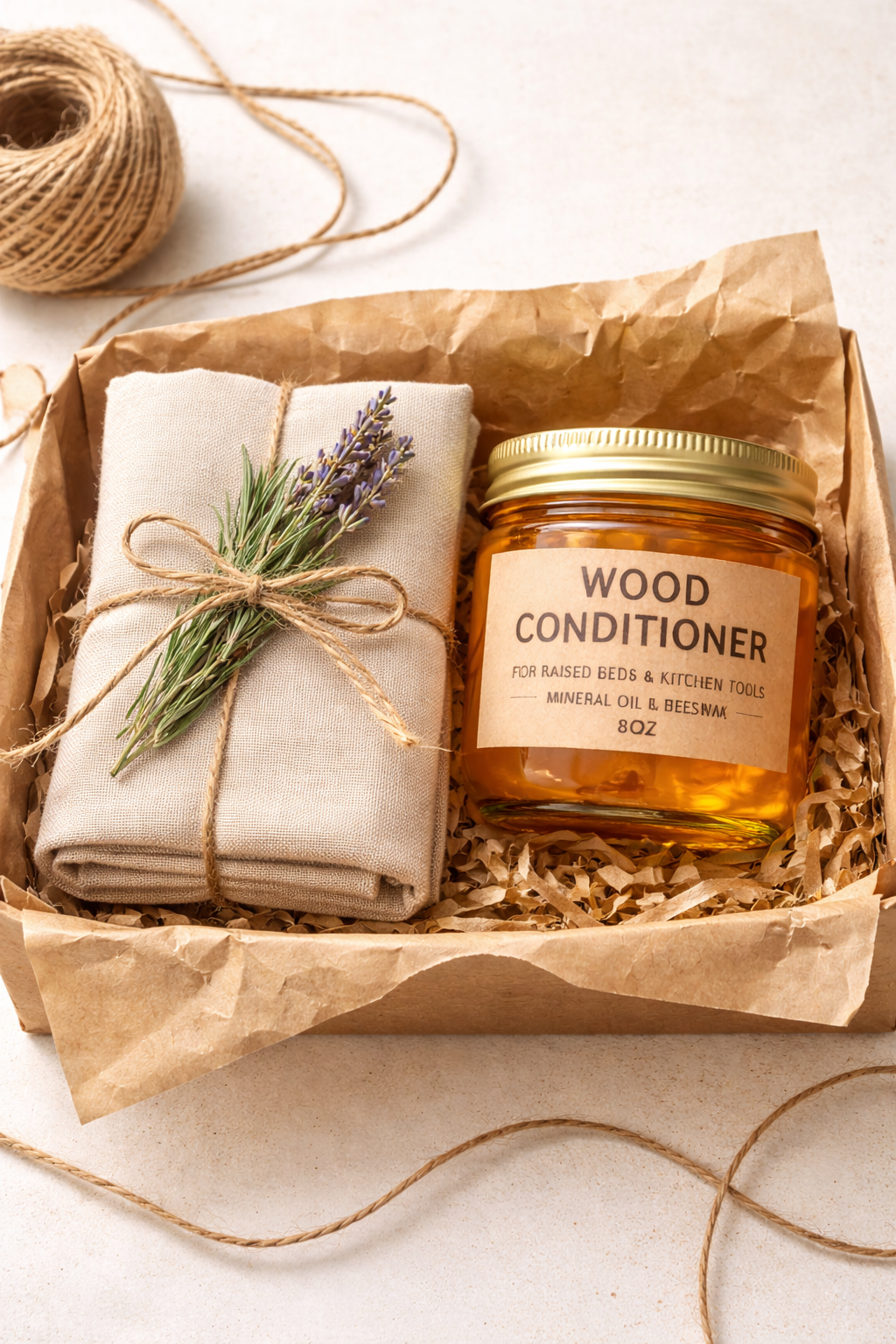
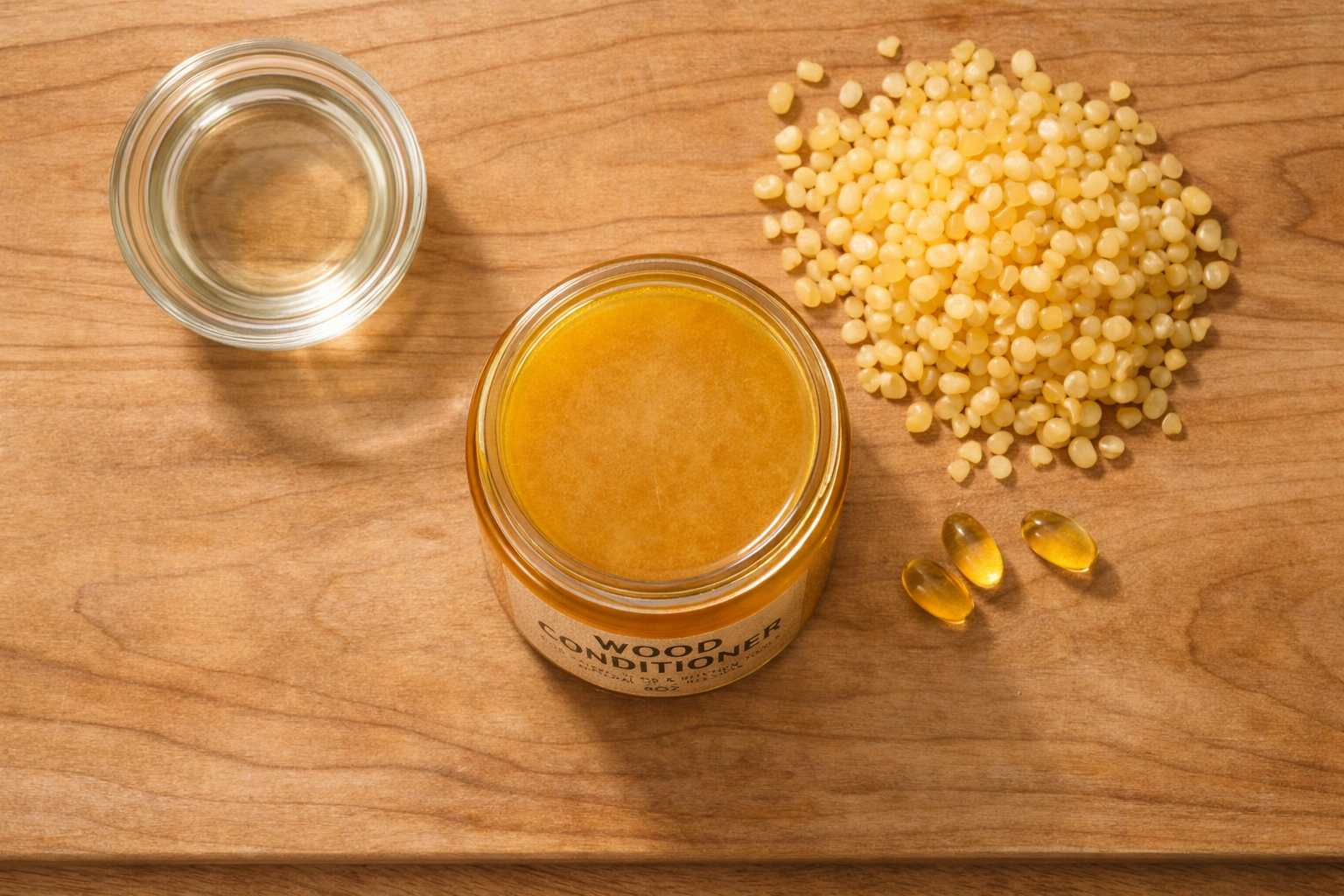
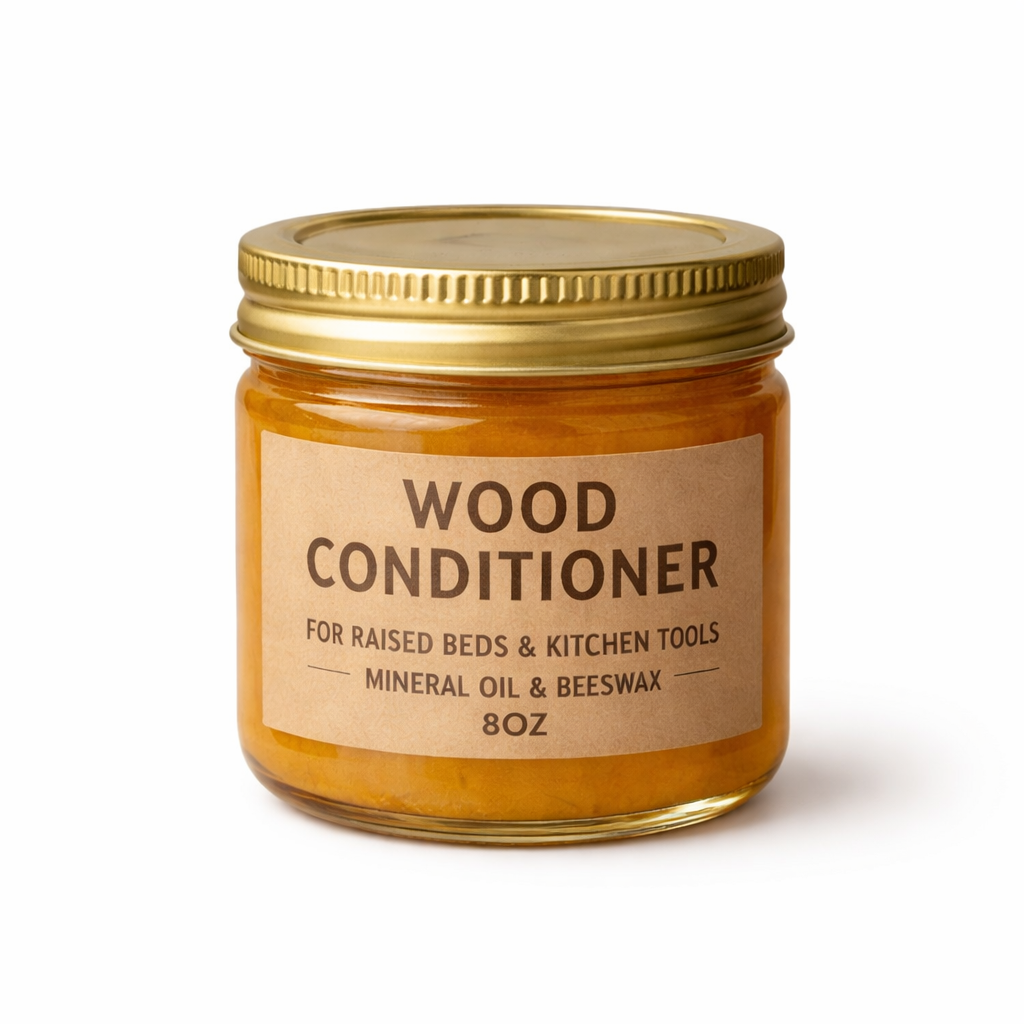
Three ingredients. Food-grade mineral oil, beeswax from a Sacramento beekeeper, and vitamin E. The same jar protects your raised garden beds and conditions your cutting boards. Hand-poured to order, shipped in a reusable glass mason jar.
Only 1 left in stock (can be backordered)
Description
Why This Exists
When I built cedar raised garden beds, I needed something to protect the wood. Simple enough. Except everything I found was either loaded with ingredients I couldn’t identify, explicitly not food-safe, or required ordering online and hoping it arrived before the next rain.
I wanted one product. Something I could rub into garden bed walls on Saturday morning and use on cutting boards Sunday night without thinking twice about what was in it. That product didn’t exist. So I made it.
What’s In It (All of It)
Food-grade mineral oil penetrates the wood grain, preventing it from drying out and cracking. Beeswax from a Sacramento beekeeper sits on the surface and creates a moisture barrier that helps repel water. Vitamin E oil extends shelf life naturally so the conditioner stays fresh between uses.
That’s the full ingredient list. No petroleum distillates. No synthetic fragrances. No mystery additives that require a Google search to decode.
I chose beeswax over paraffin and synthetic alternatives for a few reasons. It’s naturally antibacterial. It creates a better moisture barrier. It’s completely food-safe. And sourcing it from a local beekeeper means I know exactly where it comes from and what’s in it. The beeswax color varies slightly between batches because it comes from real hives, not a factory.
One Product, Two Jobs
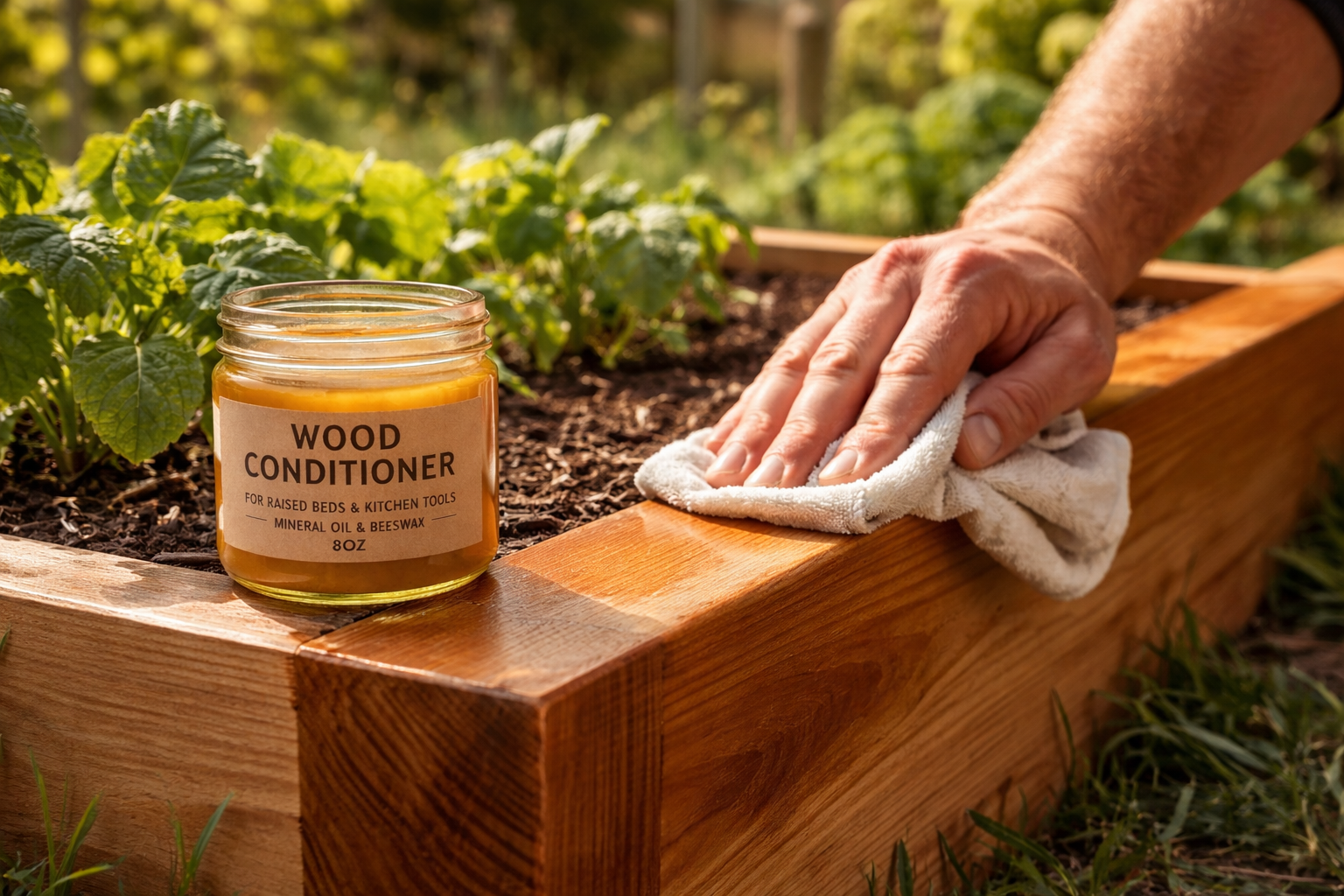
The same jar that conditions my cedar raised beds also treats the cutting boards, wooden spoons, and salad bowls in my kitchen. That was the whole point.
Works well on:
- Cedar, redwood, and fir raised garden beds
- Cutting boards and butcher blocks
- Wooden spoons, spatulas, and salad servers
- Salad bowls, serving pieces, and charcuterie boards
- Untreated outdoor furniture
Not recommended for:
- Pressure-treated lumber (already has chemical treatment)
- Surfaces that stay perpetually wet
- Painted or previously finished wood
How to Apply
Start with clean, dry wood. Scoop a small amount onto a clean cloth and rub it into the surface along the grain. For large surfaces like raised beds, a foam roller works faster. Let the wood absorb for one to two hours. It will drink in what it needs. Buff off any excess with a dry cloth until the surface feels smooth, not tacky.
How Often
- Outdoor raised beds: Once per season, or whenever the wood starts looking dry and thirsty
- Cutting boards and utensils: Every few months, or when water stops beading on the surface
- Butcher blocks and daily-use items: Monthly for boards that see heavy action
If the Conditioner Firms Up
In cooler weather, the beeswax will naturally firm up. That’s not a defect. Remove the metal lid and microwave for 15 to 30 seconds until it softens, or set the jar in warm water for a few minutes. Don’t overheat it.
How It’s Made
Each jar is hand-poured in small batches as orders come in. Your conditioner is freshly made, not pulled from a warehouse shelf where it’s been sitting for months. This means shipping may take a few extra days during busy stretches, but you’re getting a product that was made for your order.
It arrives in an 8 oz reusable glass mason jar with a metal lid. Glass doesn’t leach chemicals into the product, it’s infinitely recyclable, and the jar is sturdy enough to repurpose for anything once the conditioner is gone. No plastic.
Giving Back to Pollinators
$2 from every jar sold goes to The Bee Conservancy and Save The Bee, funding native pollinator habitat restoration. That $2 plants roughly 40 square feet of native habitat, enough to help hundreds of bees thrive. As a personal pledge, MK Library is donating at minimum $1,000 to nonprofits supporting honeybee and pollinator health, whether a single jar sells or not.
Frequently Asked Questions
Is this safe for surfaces that touch food?
Every ingredient is food-safe. The mineral oil is food-grade, the beeswax is natural, and vitamin E is commonly found in food products. I use the same jar on my cutting boards that I use on my garden beds.
How is this different from plain mineral oil?
Mineral oil alone soaks in but doesn’t provide water resistance. The beeswax creates a protective barrier that helps repel moisture while still letting the wood breathe. It also gives the finished surface a subtle, natural sheen.
Will this prevent my raised beds from rotting?
It helps. The conditioner creates a moisture barrier that slows water absorption, which is a primary cause of wood decay. Regular application extends the life of untreated wood. It won’t make cedar last forever, but it buys you more years.
How long does one jar last?
Depends on what you’re treating. A single jar covers a standard 4×8 raised bed multiple times over. For cutting boards and kitchen items, one jar lasts most households several months to a year.
Can I use this on any type of wood?
It works on most untreated, unpainted wood: cedar, redwood, fir, maple, walnut, cherry, bamboo. Skip it on pressure-treated lumber (which already has chemical treatment) and wood with existing paint or finish.
What does “made to order” actually mean?
Each batch is poured as orders come in. Nothing sits pre-made on a shelf. Your jar is fresh. The trade-off is that shipping may take a few extra days during busy periods.
Why a glass jar instead of plastic?
Glass doesn’t leach chemicals into the product and is infinitely recyclable. The mason jar is sturdy enough to reuse for storage, crafts, or anything else once the conditioner is gone. Metal lid, no plastic anywhere.
Does it have a smell?
A subtle, natural beeswax scent. No added fragrances. The smell fades as the conditioner absorbs into the wood.
Where does the beeswax come from?
A beekeeper in Sacramento. Local sourcing keeps the environmental footprint low and supports regional beekeeping operations. The wax color varies slightly between batches because it comes from real hives, not a standardized supply chain.
Why is the color different from the last jar I bought?
The beeswax is sourced from local hives, and natural beeswax varies in color depending on the season and what the bees have been pollinating. It doesn’t affect performance.