
The smoke alarm went off in my kitchen on a Tuesday in February. Nothing was burning, technically. A pan of bacon fat had flashed over the heat threshold and started smoking hard enough to set off the detector down the hall. I turned off the burner, slid a metal lid over the pan, opened a window, and watched my hands shake for a minute. The fat never caught fire. It was just smoke. But the gap between smoke and fire on a stovetop is measured in seconds, and I was reminded of how thin that margin actually is.
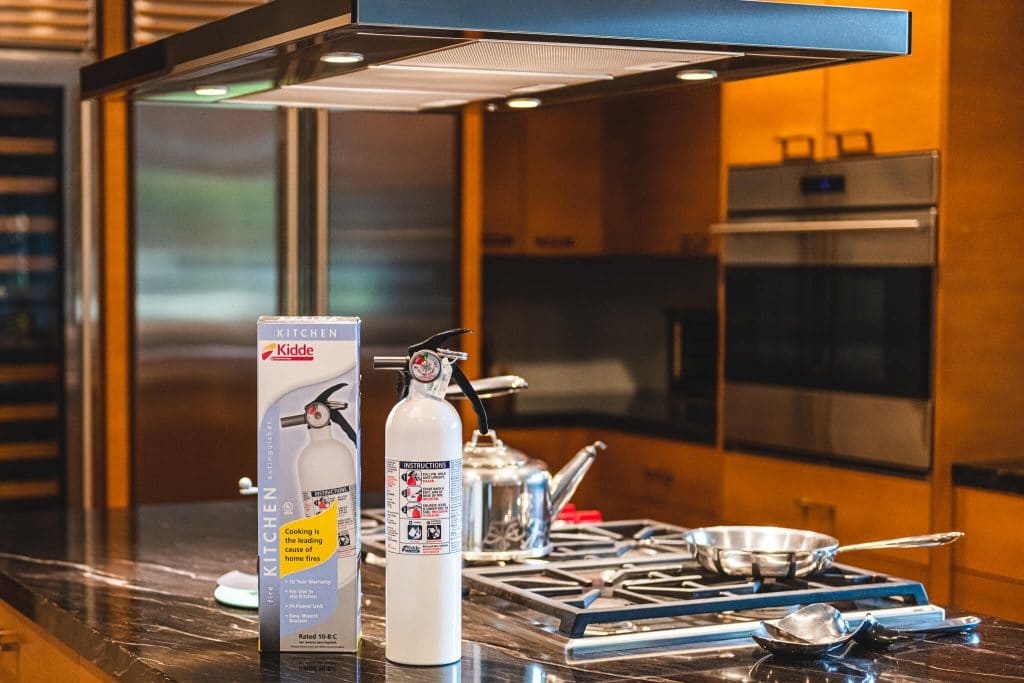
Cooking is the leading cause of home structure fires in the United States by a wide margin. The National Fire Protection Association attributes roughly 49 percent of all home fires to cooking activities, and Thanksgiving is consistently the worst single day of the year, followed by Christmas Eve and Christmas Day. Two-thirds of those holiday fires start when food itself ignites. Meaning grease.
I cook every day. I have made every mistake on this list at least once. The article below is the version I wish someone had handed me ten years ago. It covers what actually causes kitchen fires, how to put one out without making it worse, which extinguisher to keep within arm’s reach, and the prevention habits that quietly do most of the work.
Disclosure: this article was originally sponsored by Kidde Fire Safety as part of an Influencer Activation for Influence Central, and all opinions expressed here are my own. The article has been substantially rewritten and expanded in the years since publication.
Key Takeaways
- Cooking is the #1 cause of home fires. NFPA attributes about 49 percent of home structure fires to cooking, with Thanksgiving the single worst day annually.
- Never throw water on a grease fire. Water boils instantly, aerosolizes the burning oil, and creates a fireball. Slide a metal lid over the pan and turn off the heat.
- Flour is not a substitute for baking soda. Flour is combustible. Baking soda and salt smother grease fires safely; flour can ignite or worsen the fire.
- For a home kitchen, an ABC dry chemical extinguisher rated 5 pounds with a metal valve is the practical minimum. Class K extinguishers are commercial-grade and unnecessary for residential use.
- Discharge time is short. A 5-pound extinguisher empties in 12 to 15 seconds. Practice the PASS technique mentally before you ever need it.
- Install a combination smoke and carbon monoxide alarm. Especially with gas appliances. Interconnected alarms alert you in any room of the house, not just the one with the fire.
- Always call 911 after using an extinguisher. Embers can hide in walls, cabinetry, and ductwork and reignite hours later.
What Actually Causes Kitchen Fires
The NFPA’s most recent home cooking fire reports are remarkably consistent year to year. Roughly half of home structure fires involve cooking equipment. The leading single cause is unattended cooking. Frying, in particular, is responsible for the largest share of cooking fire injuries because hot oil ignites fast and burns hot. Ranges and cooktops cause far more fires than ovens. And the holiday-season spike around Thanksgiving and Christmas is large enough to be visible in the data on a single-day resolution.
The pattern in my own kitchen looks much the same. Every near-miss I have ever had came from leaving something on the stove, walking into another room to handle one quick task, and getting pulled into something else. The cooking I lose track of tends to be the cooking that goes wrong. Steaks, deep-fryer batches, anything with a Maillard reaction, anything where I think I have a few minutes. I do not.
The other reliable trigger is loose stuff near a burner. Paper towels, a wood spoon resting against the rim of the pan, the corner of a dishtowel, hair, the strings of an apron. None of it should be within reach of an open flame, and all of it is, in most kitchens, all the time.
How to Put Out a Kitchen Fire Without Making It Worse
The single most important thing to internalize about a grease fire is this: water makes it dramatically worse. The instant water hits hot oil it flashes to steam at about 1,700 times its liquid volume, and the explosive expansion sprays burning oil out of the pan in every direction. That is the fireball you have seen in viral firefighter training videos. The same physics applies in a smaller way to flour, which is combustible as a fine dust and can ignite on contact with the flame.
Never use on a grease fire: water, flour, sugar, milk, glass cookware lids, or a damp dishtowel. Anything wet creates the same steam-explosion problem. Glass lids can shatter from thermal shock.
Stovetop grease fire (the most common scenario)
- Turn off the burner. Cutting the heat source is the first move every time.
- Cover the pan with a metal lid. A skillet lid, a cookie sheet, even another pan. Slide it on from the side rather than dropping it from above so you do not displace burning oil. Leave it on until the pan is cold to the touch.
- If you cannot cover it, smother it. Baking soda or table salt poured generously onto the base of the fire will cut off oxygen. You need a lot. A teaspoon does nothing. Empty the entire box.
- If smothering fails, use an ABC dry chemical extinguisher. Aim at the base of the flames, sweep side to side, stay 6 to 8 feet back at first. The discharge will eject burning oil if you are too close.
- Get out and call 911. Even after the visible fire is out. Heat lingers in cabinetry, behind walls, and in ductwork.
Oven fire
Close the oven door and turn off the heat. The oven is engineered as a steel box; with the door shut and no fresh oxygen entering, most oven fires self-extinguish within minutes. Resist the urge to open the door to check on it. Fresh air is the worst thing you can give it. If smoke continues to escape after five minutes or you see flames at the door seal, evacuate and call 911.
Microwave fire
Same approach as the oven. Press stop, do not open the door, and unplug the unit if you can reach the cord safely. The contained space starves the fire. Then throw the microwave away. Even minor internal fires damage the magnetron and shielding in ways that are not worth gambling on.
Electrical fire (toaster, coffee maker, range hood wiring)
Cut power at the breaker if you can do it safely, then use an ABC extinguisher. Never use water on a live electrical fire. The dry chemical agent in an ABC extinguisher is non-conductive, which is why ABC and not BC is the right rating for a kitchen.
Choosing the Right Fire Extinguisher for a Home Kitchen
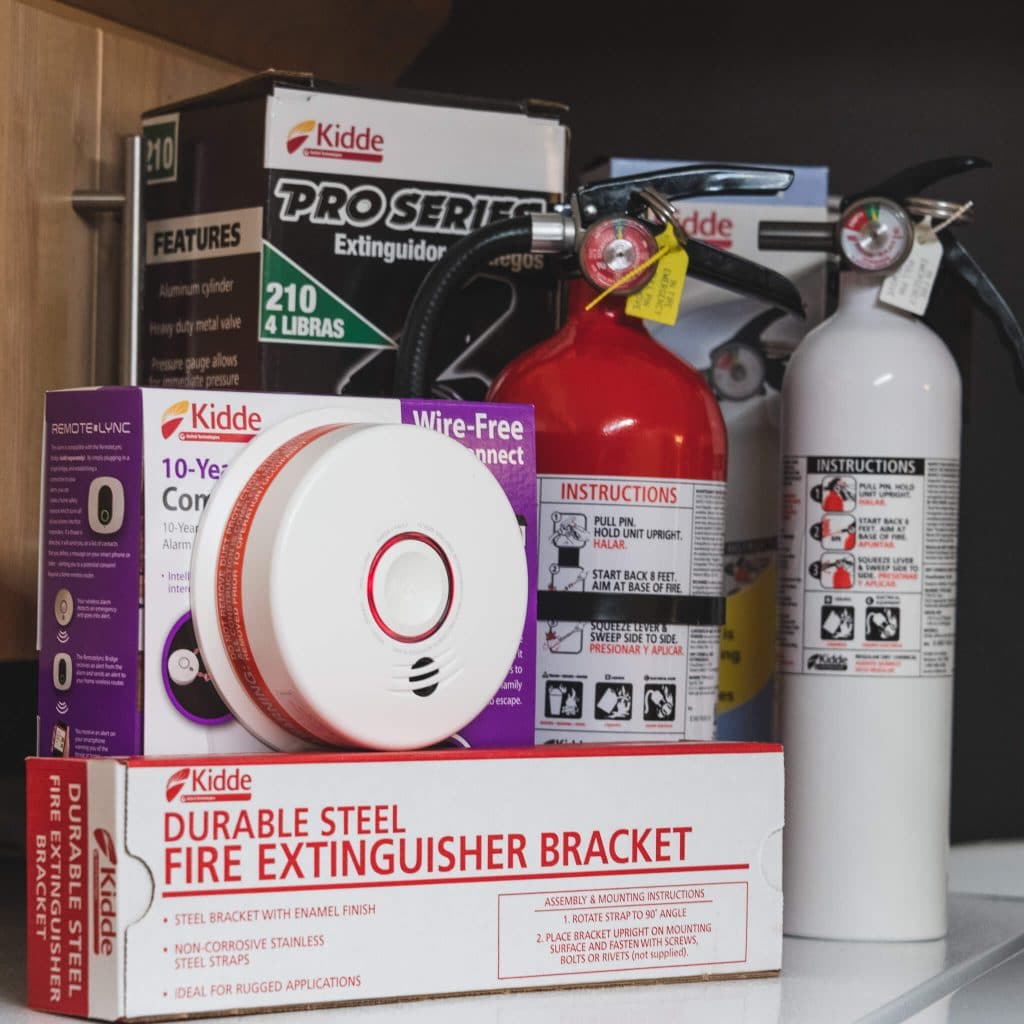
Most homeowners overthink this. A spray-can foam extinguisher is a gimmick. A residential model marketed as “compact” with a plastic valve and 2-pound capacity is barely worth the box it ships in. The standard a fire extinguisher needs to meet for use in a commercial facility is the same standard it needs to meet to actually put out a fire in your kitchen. There is no separate, lower bar for residential use that makes any physical sense. Buy the one that meets the commercial threshold.
UL fire extinguisher classes explained
| Class | Designed For | Home Kitchen Use? |
|---|---|---|
| A | Ordinary combustibles: wood, paper, fabric, trash | Yes (covered by ABC) |
| B | Flammable liquids: cooking oil, grease, gasoline, paint | Yes (covered by ABC) |
| C | Energized electrical equipment: appliances, wiring | Yes (covered by ABC) |
| K | Commercial cooking oils and deep fat fryers | Overkill. $300+ and intended for restaurant fryers. |
| BC (sodium bicarbonate) | Older formulation for liquid and electrical fires | Inferior to ABC for home use; misses paper and trash fires |
For a home kitchen, an ABC dry chemical extinguisher covers everything you would realistically encounter: a paper towel that caught a flame, a grease fire on the stovetop, and a smoking toaster wire. K-rated extinguishers exist for one reason: commercial restaurants switched from animal fats to vegetable oils, which have a higher auto-ignition point and sit in deep, well-insulated fryers that retain heat. The wet chemical agent in a K extinguisher cools the oil and forms a soapy foam that suffocates the fire. None of that is a problem at the volumes and temperatures of a home stovetop.
Minimum specs to look for
- Metal valve, not plastic. The recall history on plastic-valve consumer extinguishers is genuinely alarming. The valve is the part you bet your kitchen on; a few extra dollars for a brass or aluminum head is the easiest call in this entire article.
- 5-pound capacity, minimum. Smaller than that and you do not get a flexible discharge hose, which means you have to point the can directly at the base of the fire and stay close. A 5-pound extinguisher gives you 12 to 15 seconds of usable discharge, which is not a lot, but it is enough.
- UL listed. Look for a UL listing on the label with a numerical rating like 2-A:10-B:C or 3-A:40-B:C. Higher numbers are better. The numbers indicate effective fire size by class.
- Pressure gauge with green band. Check it monthly. If the needle drops out of green, the extinguisher is no longer reliable.
A good 5-pound ABC extinguisher runs $50 to $80 and lasts roughly 12 years if it stays out of temperature extremes and gets checked monthly. That works out to about six dollars a year for the only thing standing between a small mistake and a structure fire. Cheap insurance.
Where to Store It (and How to Actually Use It)
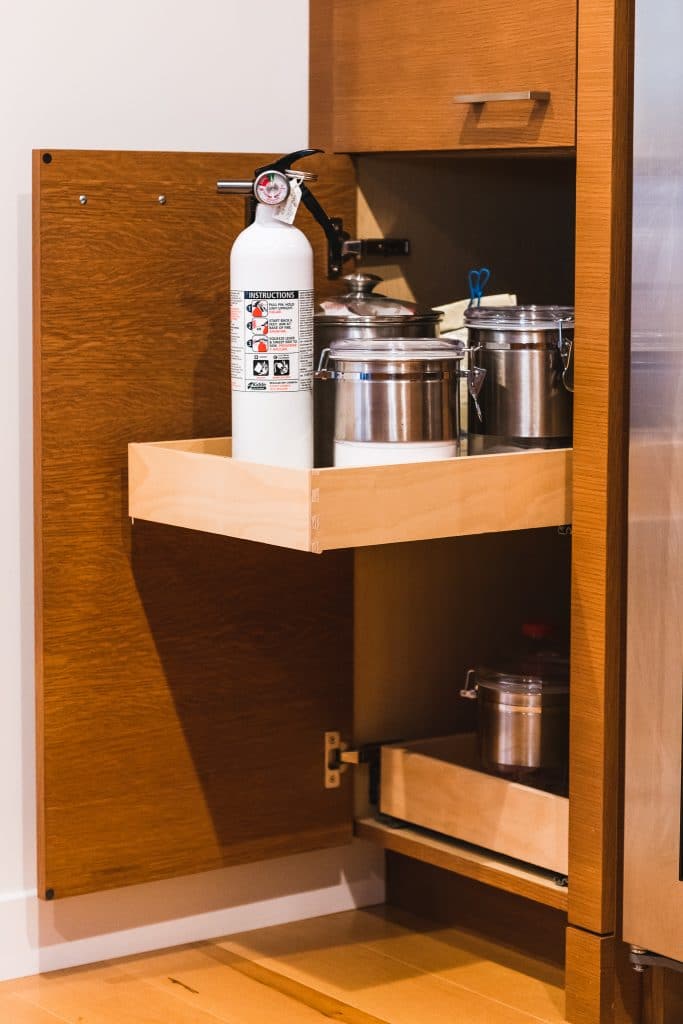
Storage rules
- Not next to the stove. If your stove is the source, you do not want to reach across the fire to get the extinguisher. Mount it near an exit so the fire is between you and the appliance, not between you and the door.
- Visible and unobstructed. Inside a deep cabinet or under the sink behind cleaning supplies is the same as not having one. Mount it on a wall or inside a shallow pantry where you can grab it in a single motion.
- Keep your egress clear. Whatever path you would take out of the house should never have the kitchen between you and freedom. Plan it now while nothing is on fire.
PASS technique
The NFPA acronym for using an extinguisher is PASS: Pull, Aim, Squeeze, Sweep. The mechanics matter, especially the order. Most people who panic in a fire instinctively get them wrong.
- Pull the safety pin while the unit is pointed at the floor. Stand 8 to 10 feet back from the fire.
- Aim at the base of the fire, not the visible flames. Flames are the result; the fuel is what is actually burning. The base is what you need to extinguish.
- Squeeze the handle slowly. Test the discharge briefly with the unit pointed at the floor before you commit. Confirm it works. Never approach a fire without verifying your equipment.
- Sweep side to side across the base of the fire while moving slowly forward to about 3 to 5 feet. Keep sweeping. Stopping in one place can splash the fuel and spread the fire.
- Back away once the fire is out. Never turn your back on a fire you just extinguished. Watch for re-ignition for several minutes.
- Call 911. Embers travel into walls, ductwork, and chimneys. Professionals have thermal imaging cameras that can confirm the fire is fully out in places you cannot see. A house fire that reignites at 2 a.m. usually started as a fire someone thought they had handled.
Source attribution: the technical guidance in the extinguisher selection and PASS technique sections incorporates input from professionals with 25-plus years in fire protection, who have conducted hundreds of live-fire training classes and discharged thousands of fire extinguishers in training and operational settings.
Prevention: The Habits That Actually Move the Needle
Almost all kitchen fire prevention reduces to a small number of repeated behaviors. None of them are surprising. Most of them get violated routinely in normal cooking. Reading them back will feel obvious; the discipline is in actually doing them.
- Stay in the kitchen when something is on heat. The single biggest risk factor in NFPA’s data is unattended cooking. The TV in the next room can wait. The text reply can wait. Frying needs your full attention because frying is what kills people.
- Keep flammables off the cooktop. Paper towels, dishtowels, oven mitts, food packaging, recipe cards, wood utensils resting against pan rims. The 18-inch zone around an active burner should be empty.
- Match oil to method. Deep frying belongs in a thermostatically controlled appliance, not a stovetop pot you eyeball. For pan frying, use just enough oil to coat the bottom; food should never be submerged in a hot pan you are not deep-frying in.
- Do not run the burner higher than the recipe needs. Most ignition events on a stovetop start with someone cranking the heat to “catch up” on cooking time. Heat catches up to you faster than you catch up to it.
- Replace failing appliances. An old toaster oven that smokes when it preheats, a coffee maker with a damp short, a range with a burner that arcs. The general rule of thumb is that if a repair costs more than half the price of a new unit, replace it.
- Dress for the kitchen. Loose sleeves catch fire. Loose hair catches fire. Drawstrings on hoodies catch fire. Apron strings tied at the back, sleeves rolled, hair pulled back. None of this is a fashion statement; it is geometry.
- Do not cook tired or impaired. The same cognitive impairment that makes driving dangerous makes operating a 1,500-degree open flame dangerous. Order takeout. Eat cereal. Save the cooking for tomorrow.
- Keep the kitchen population low. Crowded kitchens push flammable items closer to burners. They also create the conditions for someone to bump a pan handle off a stovetop edge.
- Install a combination smoke and carbon monoxide alarm in the kitchen. If your appliances are gas, this is non-negotiable. Interconnected models alert every alarm in the network when one trips, so a fire in the kitchen wakes you in the bedroom on the other side of the house. Newer units use sensors that distinguish cooking smoke from real fire smoke, which dramatically cuts down on nuisance alarms (and the temptation to disable them).
After a Kitchen Fire: What Happens Next
If you used an extinguisher and the fire was contained to a single pan or a small area, you still have work to do. Dry chemical residue is corrosive on metal cooktops and inside oven cavities; it should be wiped down within 24 hours with warm soapy water and dried thoroughly. Smoke odors penetrate fabrics, carpet padding, and porous surfaces, and they get worse over time as the volatile compounds settle. Open every window, run the range hood for an hour, and consider replacing any food in the immediate area whose packaging was breached.
For anything beyond a single-pan fire, document everything for insurance. Photograph the damage before you clean. Save the extinguisher (it counts as evidence). If the fire reached cabinetry, drywall, or wiring, the cleanup work is not a DIY project; restoration companies have the equipment to detect smoke damage in places you cannot see, and an insurance adjuster will want their assessment in writing. The full process is covered in detail in our guide to filing a homeowner’s insurance claim, which walks through the documentation, adjuster meetings, and timeline.
The broader picture, the maintenance habits that prevent the next kitchen fire from happening at all, is in our home maintenance checklist.
Why National Fire Prevention Month Exists

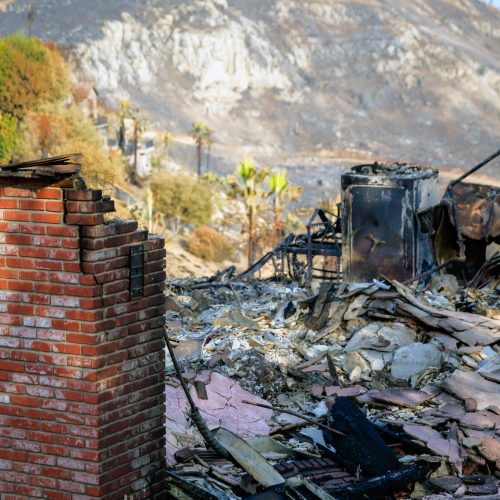
The annual observance traces back to the Great Chicago Fire of October 1871. The three-day event killed more than 250 people, displaced 100,000, and destroyed around 17,400 structures across 2,000 acres. President Woodrow Wilson declared the first official National Fire Prevention Day on October 9, 1920. President Calvin Coolidge expanded it to a full week in 1925, and the NFPA expanded it again to encompass the full month of October in 2000. The point of the observance is not the historical anniversary; the point is that fires are predictable, preventable, and stunningly common. Half of every American year of fatal residential fires comes from a category of accident this article is meant to address.
Frequently Asked Questions
What is the most common cause of kitchen fires?
Unattended cooking, by a wide margin, according to NFPA data. Frying is the highest-risk activity because hot oil ignites quickly and burns hot. Ranges and cooktops cause far more home fires than ovens. The single highest-volume day of the year for cooking fires is Thanksgiving, followed by Christmas Eve and Christmas Day.
What type of fire extinguisher is best for a home kitchen?
An ABC dry chemical extinguisher with a metal valve and a minimum 5-pound capacity. ABC handles ordinary combustibles (Class A), flammable liquids including grease (Class B), and electrical fires (Class C). Class K extinguishers are designed for commercial deep fryers and are unnecessary for residential cooking volumes.
How do you put out a grease fire?
Turn off the burner, then slide a metal lid over the pan from the side. Leave it on until the pan is cold. If you cannot cover it, dump baking soda or salt onto the base of the fire (use the entire box, not a sprinkle). If neither works, use an ABC dry chemical extinguisher from 6 to 8 feet away. Never use water, flour, sugar, milk, or a glass lid.
Can you put flour on a kitchen fire?
No. Flour is combustible as a fine dust and can ignite or worsen a grease fire. Sugar behaves similarly. The two safe pantry items for smothering a grease fire are baking soda and table salt, both of which release inert byproducts when heated and starve the fire of oxygen.
What common kitchen item can be used to extinguish a fire?
A metal pan lid is the best option for a stovetop fire. Slide it over the pan from the side and leave it in place until the cookware is cold. Baking soda and table salt are effective backups for smothering grease fires; both release carbon dioxide or inert vapor when heated. A wool blanket can smother small fabric or paper fires. None of these substitute for an ABC fire extinguisher in a serious situation.
How do you put out an electrical fire in the kitchen?
Cut power at the breaker if you can do it safely, then use an ABC dry chemical extinguisher. The dry chemical is non-conductive, which is why ABC (not BC alone) is the right rating for any room with appliances. Never use water on a live electrical fire; water conducts current and can electrocute you.
Do kitchen fire extinguishers expire?
Yes. Disposable consumer extinguishers typically last about 12 years from the manufacture date stamped on the bottom. The pressure can drop slowly over time even without use; check the gauge monthly and confirm the needle stays in the green band. Once the unit is past its service date or the gauge falls into red, replace it. Recharging is generally only economical for larger commercial units.
How long does a 5-pound fire extinguisher last when discharged?
About 12 to 15 seconds of usable discharge. That sounds short because it is. The PASS technique exists for that exact reason: there is no time to think through what to do once the handle is squeezed. Practice the sequence mentally before you ever need it.
Should I install a smoke alarm in the kitchen?
Yes, with caveats. Place it at least 10 feet from the cooktop to reduce nuisance alarms from normal cooking smoke. Use a photoelectric or dual-sensor model rather than ionization-only, which is more prone to false alarms from cooking. A combination smoke and carbon monoxide alarm covers both threats in one unit, which is especially important if your appliances are gas. Interconnected models alert every alarm in the network when one trips.
What should I do after using a fire extinguisher?
Call 911 even if the fire appears to be out. Embers can hide in walls, cabinetry, and ductwork and reignite hours later. Firefighters have thermal imaging equipment to confirm the fire is fully out. Replace the extinguisher (a partially discharged canister is unreliable). Document the damage with photos before any cleanup begins, since insurance will want a full record.
How do I get smoke smell out of the house after a kitchen fire?
Open every window for cross-ventilation. Run range hood and bathroom fans for several hours. Wipe hard surfaces with a vinegar-water solution. Wash all soft goods in the affected area; smoke compounds adhere to fabric and get worse over time. For larger fires, an ozone generator or a professional restoration service is usually required. Trapped odors in HVAC ductwork need a duct cleaning to fully resolve.
Can an ABC fire extinguisher be used on a grease fire?
Yes. The B in ABC covers flammable liquids including cooking grease. For residential kitchen volumes, ABC is the correct rating. The technique matters: stand 6 to 8 feet back at first to avoid splashing the burning oil with the discharge force, aim at the base of the fire, and sweep side to side while moving slowly closer.
Affiliate Disclosure: Some links in this article are affiliate links. If you make a purchase through these links, MK Library earns a small commission at no additional cost to you. This does not influence the recommendations, which are based on what I would actually keep in my own kitchen.
Article Updates
- May 1, 2026: Substantial rewrite. Restructured around what causes kitchen fires, how to put one out, and which extinguisher to keep. Added a UL extinguisher class comparison table, a step-by-step grease fire response with a no-water warning box, an oven and microwave fire section, an after-the-fire section with insurance and cleanup guidance, and a 12-question FAQ. Added Key Takeaways. Replaced the legacy reusable table-of-contents block with the standard SimpleTOC block. Repaired an Amazon affiliate link that was using the wrong tag.
- July 9, 2025: Minor copy edits.
- October 23, 2019: Initial publication, sponsored by Kidde Fire Safety as part of an Influence Central Influencer Activation.



Great article
Thank you Jake!